Whether a British Shorthair Has an Undercoat
One of the most common questions new British Shorthair owners ask me, often with a bewildered expression as they find tufts of fluff around the house, is whether their beloved furball actually has an undercoat. It’s a completely valid concern, especially when you feel that dense, plush fur and wonder if there’s more lurking beneath the surface than meets the eye. The truth is, yes, your British Shorthair absolutely has an undercoat, and understanding its unique characteristics is key to keeping their magnificent coat healthy and your home a little less hairy. This guide will walk you through everything you need to know about your British Shorthair's undercoat, its purpose, and how to best care for it.
Understanding the British Shorthair Coat Structure
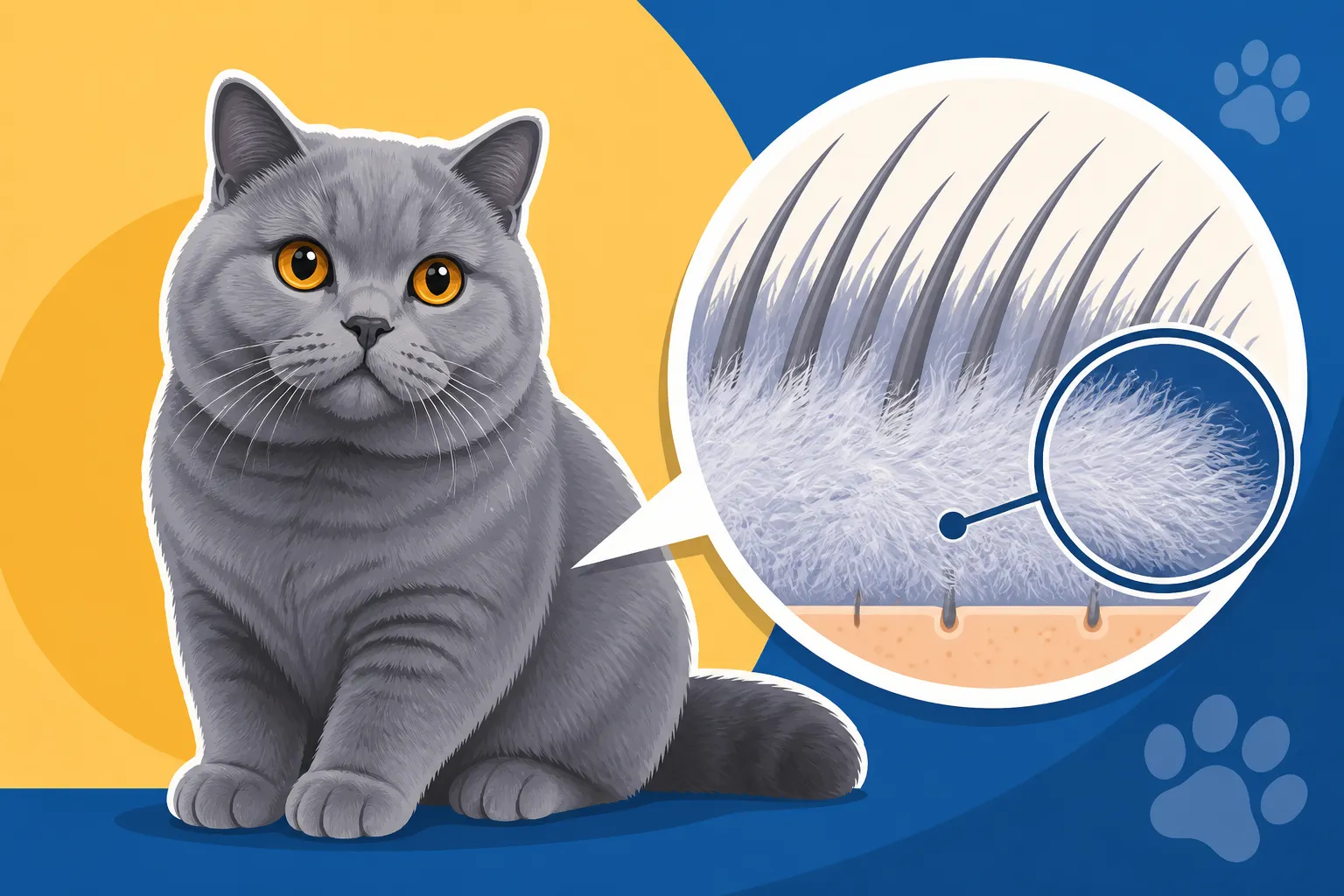
When you run your hand over a British Shorthair, you immediately notice a distinct texture – it’s not soft and silky like some breeds, nor is it coarse. It feels remarkably unique, often described as 'crisp' or 'dense'. This unique feel is a direct result of its double coat, consisting of both guard hairs (the topcoat) and the underlying undercoat. Many people, especially those new to double-coated breeds, assume that a short coat means less complexity, but with a British Shorthair, nothing could be further from the truth. Their coat is specifically designed for a purpose, and that purpose relies heavily on both layers working in harmony.
The 'Crisp' Topcoat: A Defining Feature
The topcoat, or guard hairs, are the outer layer you primarily see and feel. For a British Shorthair, these hairs are short, thick, and springy, standing away from the body rather than lying flat. This creates that iconic plush, teddy-bear-like appearance that so many adore. The crispness you feel comes from the resilience of these individual hairs. They're robust and designed to offer the first line of defense against the elements. You might think of it as a protective shield, perfectly adapted to their historical role as hardy, working cats in the British climate. Without this distinctive topcoat, your British Shorthair simply wouldn't have that characteristic dense, firm feel that makes them so recognizably British. What a British Shorthair's Coat Is Like details this beautifully.
The topcoat, while prominent, is also surprisingly deceptive. It looks incredibly neat and well-maintained on a healthy British Shorthair, often leading owners to believe that grooming won't be much of a chore. However, this seemingly tidy exterior often hides a significant amount of underlying fluff, which brings us to the crucial role of the undercoat. Understanding that this outer layer is just one part of the equation helps you appreciate the full grooming needs of your British Shorthair, and why just a quick brush-over might not be enough. The springiness of the hairs is also what prevents the coat from flattening, maintaining that perpetually "fluffy" look, even when they're sleek and healthy.
The Importance of the Undercoat in British Shorthairs
Beneath those crisp guard hairs lies a soft, fine, and incredibly dense undercoat. This is the unsung hero of the British Shorthair's insulation system. Unlike the protective guard hairs, the undercoat is all about warmth and comfort. It's packed tightly, providing an insulating layer that keeps them warm in cooler temperatures and helps regulate their body temperature. Think of it as a built-in down jacket. This dense, woolly layer is what contributes significantly to the overall volume and plushness of their coat, making them feel so wonderfully substantial when you pick them up (if they let you, that is!). Many people are surprised by the sheer quantity of this fine, soft hair once they start grooming in earnest.
Without a well-maintained undercoat, a British Shorthair would struggle to regulate its temperature effectively, and its characteristic dense appearance would be diminished. It's also the layer that causes the most shedding headaches for owners, as these fine hairs can become quite prolific around the house, especially during seasonal changes. This undercoat isn't merely decorative; it's a vital part of their physiology and a testament to their heritage as cats built to withstand varying climates. Neglecting this layer during grooming can lead to uncomfortable matting, skin issues, and a less effective insulating system for your furry friend. The health of the entire coat, and by extension, the comfort of your British Shorthair, depends heavily on the condition of this hidden layer.
The Undercoat's Role and Characteristics
The undercoat of a British Shorthair isn't just "extra fur"; it performs critical biological functions and has distinct qualities that differentiate it from the topcoat. Its density, texture, and growth cycle are all finely tuned to ensure the cat's comfort and well-being. Knowing these details helps owners understand why their grooming efforts are so important and why specific tools are needed to manage this particular type of fur.
Insulation and Protection: More Than Just Fluff
The primary role of the British Shorthair's undercoat is insulation. This dense layer traps air close to the body, creating a thermal barrier that helps keep the cat warm in chilly weather. This is particularly important for a breed that originated in a country known for its variable climate. While most British Shorthairs today live comfortable indoor lives, their coat retains this ancestral function. Beyond warmth, the undercoat also offers a degree of protection. It acts as a cushion against minor bumps and scrapes and provides an additional barrier against moisture, helping to keep the skin dry beneath the outer guard hairs. It's a marvel of natural engineering, perfectly suited to a hardy cat.
Imagine a chilly winter morning, and your British Shorthair is curled up on the sofa, looking perfectly content. That comfort isn't just because of the warm spot they've chosen; it's also because their thick undercoat is doing its job, trapping their body heat efficiently. Conversely, in warmer weather, a healthy, clean undercoat can still help regulate temperature by allowing air to circulate, preventing overheating – but only if it's not matted or excessively thick with dead hair. This dual function of insulation and protection really highlights why we need to pay attention to its care. An unhealthy, matted undercoat loses both its insulating and protective qualities, leaving your cat more vulnerable to environmental changes and skin irritation.
Density and Texture of the British Shorthair Undercoat
The density of the British Shorthair's undercoat is one of its most striking characteristics. It's incredibly thick, often described as woolly or cotton-like, and grows very close together. This density is what gives the British Shorthair its substantial feel and contributes to the overall 'cobby' appearance of the breed. Each individual hair in the undercoat is much finer and softer than the guard hairs, creating a plush layer that contrasts with the crisper topcoat. This combination of fine, soft hairs packed tightly together is a major factor in why this breed sheds so much and why dead undercoat can quickly become a problem if not removed.
When you examine a tuft of shed British Shorthair fur, you’ll likely notice these two distinct types of hair: the slightly stiffer, shorter guard hairs, and the much finer, fluffier undercoat hairs. It's the accumulation of these fine undercoat hairs that creates the notorious "dust bunnies" that seem to materialize from nowhere. Because the hairs are so fine and dense, they also tend to tangle and mat more easily, especially in areas where the cat grooms itself less effectively, like the back or flanks. Understanding this texture helps in selecting the right grooming tools – a brush that might work for a silky-coated cat will simply glide over this dense undercoat, leaving most of the shedding hair behind. How a British Shorthair's Coat Differs From a Plush Coat is another great read on this topic.
Shedding and the Undercoat
Shedding is a natural process for all cats, but with a double-coated breed like the British Shorthair, it can be a particularly noticeable event. The undercoat plays a significant role in the amount and type of fur you'll find around your home. Many owners are genuinely taken aback by how much fur can come off such a short-haired cat, and it's almost always the undercoat that's the primary culprit.
Seasonal Shedding: Blowing the Coat
British Shorthairs, like many double-coated breeds, experience seasonal shedding, often referred to as "blowing their coat." This typically happens twice a year, in spring as they prepare for warmer weather, and in autumn as they make way for a thicker winter coat. During these periods, the undercoat sheds in much larger quantities than usual. You might find yourself gathering handfuls of soft, woolly fur with each grooming session, and those ubiquitous fur tumbleweeds around the house become a daily occurrence. This intense shedding is the body's natural way of adapting to changing temperatures, getting rid of old, dead hair to make way for new growth. When a British Shorthair Blows Its Coat explores this phenomenon in more detail.
It's during these "blowing" periods that dedicated, consistent grooming becomes absolutely essential. If this dead undercoat isn't removed, it can quickly become impacted, leading to matting, skin irritation, and even hot spots. It also reduces the effectiveness of the coat's natural insulation, as trapped dead hair prevents proper air circulation. While it might seem daunting, establishing a routine during these peak shedding times is crucial for your British Shorthair's comfort and coat health. Don't be surprised if your grooming tool comes away packed with fur several times during a single session; it's a normal and healthy part of their coat cycle.
Managing Undercoat Shedding Year-Round
While seasonal shedding is intense, British Shorthairs do shed their undercoat year-round, albeit in smaller amounts. Living indoors with stable temperatures and artificial lighting can sometimes disrupt their natural shedding cycles, leading to more consistent, moderate shedding throughout the year. This constant trickle of fine undercoat hairs is what keeps British Shorthair owners reaching for their vacuum cleaners regularly. It’s also why regular grooming, not just during peak shedding, is so important. How Much a British Shorthair Sheds is a popular article on this topic.
To keep year-round shedding under control, consistent, gentle grooming is key. This isn't just about reducing hair on your furniture; it's also about preventing hairballs, which can be a real issue for cats ingesting so much loose fur. While you might not fill a comb as quickly as during spring or autumn, even a few minutes several times a week can make a significant difference. Products like those found on Chewy or Amazon can help you find appropriate grooming tools designed specifically for dense undercoats, making the task easier and more effective. Remember, every strand of hair you remove with a comb is a strand that won't end up on your favorite sweater or in your cat's stomach.
Grooming for a Healthy British Shorthair Undercoat
Grooming a British Shorthair's undercoat isn't like grooming a cat with a single, sleek coat. It requires specific tools and techniques to be effective without damaging their unique fur or irritating their skin. Many owners get frustrated because they feel like they're brushing constantly but still finding fur everywhere, and often, the issue is simply using the wrong equipment or approach.
The Right Tools: Why Combs Are Key
When it comes to tackling the dense undercoat of a British Shorthair, a standard brush simply won't cut it. Slicker brushes, while great for some breeds, tend to snag and pull at the undercoat, potentially damaging the guard hairs and causing discomfort. Wire pin brushes often just skim the surface. What you truly need is a good quality, wide-toothed metal comb or a deshedding tool designed for double coats. A comb with both fine and wide teeth can be particularly useful, starting with the wider teeth to work through any surface tangles and then moving to the finer side to really pull out the dead undercoat. Which Comb a British Shorthair Needs is essential reading.
Deshedding tools are often highly effective for British Shorthairs because they are specifically designed to reach through the topcoat and gently remove the loose undercoat without cutting or damaging the healthy guard hairs. However, caution is advised; these tools can be overused and can irritate the skin if not used correctly and gently. Always follow the manufacturer's instructions and pay attention to your cat's reactions. The goal is to remove dead fur, not to thin out their healthy coat unnecessarily. Investing in the right tools is genuinely half the battle when it comes to British Shorthair grooming.
Here's a quick comparison of common grooming tools and their suitability for a British Shorthair's undercoat:
| Tool Type | Description | Suitability for British Shorthair Undercoat | Notes |
|---|---|---|---|
| Wide-toothed Comb | Metal comb with widely spaced teeth, often with a fine-toothed side. | Excellent | Essential for reaching deep into the undercoat and detangling. |
| Deshedding Tool | Blade-like tool with fine teeth designed to pull loose undercoat. | Very Good (with caution) | Highly effective for removing large amounts of dead undercoat. Use gently to avoid skin irritation. |
| Slicker Brush | Brush with fine, short wires packed closely together. | Poor | Tends to snag, pull, and potentially damage the undercoat and guard hairs. Not recommended. |
| Pin Brush | Brush with widely spaced metal pins, often with rubber tips. | Fair | Can help with surface detangling but often doesn't penetrate deep enough to remove undercoat effectively. |
| Rubber Curry Brush | Rubber brush with nubs, often used for massage and light shedding. | Good (for surface & initial looseness) | Good for massaging, removing loose surface hairs, and distributing oils. Less effective for deep undercoat. |
Techniques for Effective Undercoat Grooming
Once you have the right tools, technique is everything. British Shorthairs generally tolerate grooming well, but they aren't always enthusiastic about it. Start with short, regular sessions, especially when they are kittens, to get them accustomed to the process. Always groom in a quiet, comfortable environment. Begin by using your wide-toothed comb, working in small sections, always combing with the direction of hair growth, never against it. Focus on areas where undercoat tends to accumulate, such as the back, sides, and around the tail. Be extra gentle around sensitive areas like the belly and hind legs.
When using a deshedding tool, use light, short strokes. You should see a surprising amount of fine, fluffy hair coming off. Don't press too hard, and limit sessions with these tools to once or twice a week, or as needed during heavy shedding periods, to avoid irritating the skin. The goal is to remove the dead, loose hair, not to pull at live hair or scrape the skin. Always finish with a general comb-through to ensure no tangles are left. If you encounter a mat, never try to pull or cut it out with scissors, as you can easily injure your cat. Seek professional help or use a mat splitter tool specifically designed for the job. Consistent, gentle grooming not only keeps their coat healthy but also strengthens the bond between you and your British Shorthair. How Often a British Shorthair Needs Combing gives more insights into frequency.
Common Misconceptions and Coat Health
It's easy to misunderstand the unique needs of a British Shorthair's coat, especially if you're used to other cat breeds. There are several common myths and overlooked factors that can impact the health and appearance of their magnificent double coat. Dispelling these misconceptions is crucial for providing the best care for your feline companion.
Distinguishing Undercoat from Mats and Knots
One of the biggest misconceptions, particularly for new owners, is the difference between loose undercoat and actual mats or knots. Loose undercoat, even when abundant, will typically come out relatively easily with the correct grooming tools. It's soft and fluffy and mostly detaches from the skin. Mats and knots, however, are tightly clumped sections of fur that have become intertwined and often pull on the skin, causing pain and discomfort. These occur when loose undercoat is not removed and becomes tangled with healthy hair. For a British Shorthair, their dense undercoat makes them prone to matting if grooming is neglected, especially behind the ears, under the armpits, and around the hind legs.
It's crucial to address mats as soon as they are discovered. Small tangles can often be worked out gently with your fingers and a fine-toothed comb, carefully separating the hairs. However, if a mat is large, tight, or close to the skin, it's best not to try and tackle it yourself with scissors, as the skin can be easily cut. These dense mats can hide skin infections or parasites, and attempting to remove them yourself can lead to injury. A professional groomer or veterinarian can safely shave out problematic mats, ensuring your British Shorthair's comfort and preventing further issues. Regularly checking for mats during your grooming sessions is an important preventative measure.
The Link Between Diet and Coat Health
Many owners focus solely on external grooming, but what goes into your British Shorthair's body is just as important as what comes off it. A high-quality diet plays a fundamental role in maintaining a healthy, lustrous coat and a strong undercoat. Cats are obligate carnivores, meaning their diet must be rich in animal protein. Essential fatty acids, particularly Omega-3 and Omega-6, are vital for skin hydration and coat quality. These nutrients help produce strong hair follicles, reduce excessive shedding, and give the coat its healthy sheen. If your British Shorthair's coat seems dull, dry, or sheds more than usual even with regular grooming, their diet might be a contributing factor.
When choosing food, look for reputable brands that list high-quality animal protein sources as the first ingredients. Some owners find that adding a vet-approved Omega-3 supplement, such as fish oil, can further enhance coat health. Always consult your veterinarian before introducing any new supplements, as too much of a good thing can sometimes be harmful. Just like with humans, a balanced, nutritious diet provides the building blocks for healthy hair growth from the inside out. A healthy British Shorthair coat isn't just about good looks; it's a strong indicator of overall well-being, reflecting a happy and well-nourished cat. For advice on protein levels, read Which Protein Level Suits a British Shorthair.
Disclaimer
This article is for general informational purposes only and does not constitute professional advice. Laws, prices and regulations vary by location and change over time. Consult a qualified professional for guidance on your specific situation.