Whether a Blue British Shorthair’s Coat Feels Different
Many British Shorthair enthusiasts are captivated by the stunning blue variety, often wondering if their famously dense, plush coat feels somehow different from other colors. It’s a common thought, given how distinctive the blue shade is, but the truth about coat texture is a little more nuanced than simply what meets the eye. This guide will dive deep into the British Shorthair coat, exploring what gives it its unique feel and whether color truly plays a role.
Understanding the British Shorthair Coat Standard
The British Shorthair is renowned for its distinctive coat, a hallmark of the breed that contributes significantly to its teddy-bear like appearance. When you run your hand over a well-cared-for British Shorthair, regardless of color, you expect a particular sensation. This sensation is what the breed standard aims for and what breeders work to maintain. It’s not just about the length, but the unique structure of each hair and how they collectively form a plush, resilient layer.
The Signature "Crisp" Feel
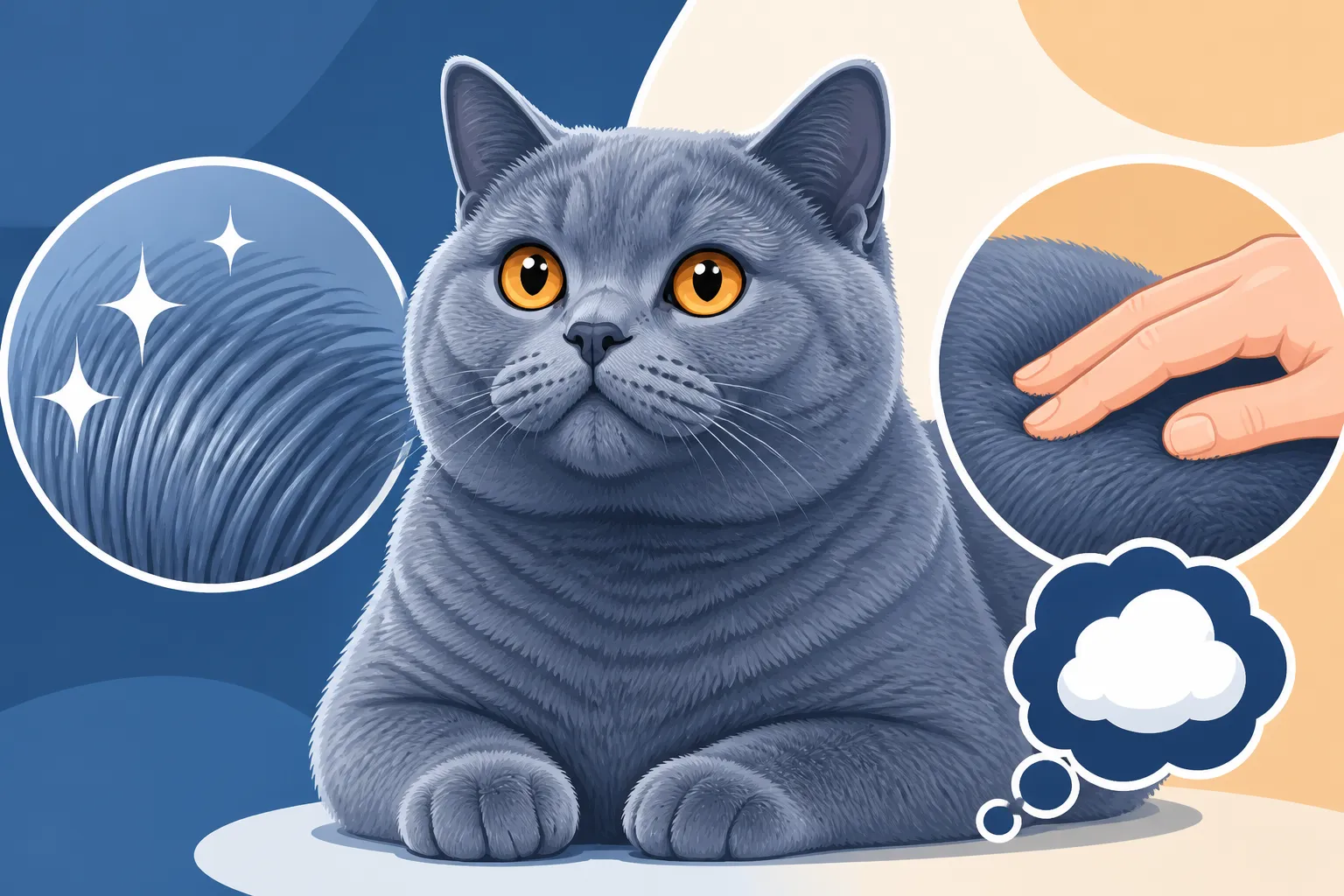
One of the most defining characteristics of the British Shorthair coat is its "crisp" feel. This isn't a stiff or rough texture, but rather a springy, firm resilience that allows the coat to stand away from the body without being fluffy or soft. Imagine pressing your hand into a dense, luxurious carpet; when you lift it, the fibers spring back immediately. That's the essence of the crisp feel in a British Shorthair's coat. It’s a testament to the quality and density of the fur. We've talked before about Why a British Shorthair's Coat Feels Crisp, and it truly is one of their most endearing traits.
This unique texture is largely due to the specific structure of their guard hairs and undercoat. The guard hairs are slightly coarser and provide structure, while the incredibly dense undercoat gives it volume and insulation. This combination creates a resilient cushion that makes the cat feel substantial and wonderfully tactile. It's not a silky, flowing coat like some long-haired breeds, nor is it a sparse, close-lying coat. It's distinctly British Shorthair.
Density and Undercoat
The British Shorthair possesses a double coat, which is a significant factor in its overall feel and appearance. This means it has an outer layer of guard hairs and a thick, woolly undercoat. It’s this dense undercoat that truly gives the British Shorthair its plush, deep pile and insulation. When you part the fur, you'll see just how many hairs are packed into each square inch, creating a rich, luxurious feel that begs to be petted. Whether a British Shorthair Has an Undercoat is a question many new owners have, and the answer is a resounding yes!
This density is crucial for the breed's historical background, providing excellent insulation against the often damp and chilly British climate. Even for an indoor cat today, this dense coat serves a purpose in maintaining comfort. It also means that while shedding generally isn't extreme year-round, there are times, particularly seasonally, when they do "blow" their undercoat, requiring more diligent grooming to prevent matting and keep the coat in top condition.
Does Color Impact Coat Texture?
Now for the burning question: does the iconic blue British Shorthair feel different simply because of its color? In short, no, not inherently. The genetics that determine coat color are generally separate from the genetics that determine coat texture. While it's a very common misconception, the standard for the British Shorthair coat texture applies universally across all acceptable colors.
Genetic Basis of Coat Color and Texture
Let's talk a little bit about genetics, without getting too bogged down in the scientific jargon. Coat color is determined by specific genes that control pigment production and distribution. For instance, the blue color in a British Shorthair is essentially a dilute black, caused by a "dilute" gene that spreads the pigment granules out, making the black appear blue. Other genes dictate patterns like tabby or shading. On the other hand, coat texture—its crispness, density, and length—is governed by a different set of genes. There isn't a known genetic link where the presence of the dilute gene (for blue color) automatically alters the hair shaft structure to make it feel softer or coarser than a black or cream cat.
Think of it like eye color and hair texture in humans. Someone with blue eyes doesn't automatically have curlier or straighter hair than someone with brown eyes. These are distinct genetic traits that can be inherited independently. The same principle applies to feline coat color and texture. The breed standard for the British Shorthair coat is quite specific about its density and crispness, and this ideal texture is expected whether the cat is blue, cream, black, or tabby.
Uniformity Across Colors
The beauty of a well-bred British Shorthair is its adherence to a consistent breed standard, regardless of the aesthetic variations like color. Whether you're admiring a classic blue, a striking silver tabby, or a warm cream, the expectation is that the cat will possess the characteristic rounded head, substantial body, and, critically, the dense, crisp coat. Breeders strive to produce cats that meet all aspects of the standard, not just the visual color. This means that a reputable breeder will select for excellent coat texture just as diligently as they select for correct head shape or eye color, ensuring that a blue British Shorthair's coat feels just as luxurious and well-textured as any other color variant.
So, if you encounter a British Shorthair whose coat feels significantly different — perhaps unusually soft, sparse, or coarse — it’s far more likely to be due to factors other than its color. These other factors could include its lineage, health, age, or even its daily care routine. The blue color itself is simply a visual trait, not a tactile one. Why the Blue Became the British Shorthair Everyone Pictures is an interesting historical point, but it doesn't mean those cats have a unique feel.
Factors That Truly Influence Coat Feel
While coat color doesn't inherently dictate texture, several other factors can significantly influence how a British Shorthair's coat looks and feels. Understanding these can help owners maintain their cat's magnificent coat in prime condition.
Age and Hormones
A British Shorthair kitten's coat will feel different from an adult's. Kitten coats are typically softer, silkier, and less dense than the mature adult coat. It takes time for that dense, crisp double coat to fully develop. Usually, by about one to two years of age, their adult coat has come in, displaying the characteristic plushness and resilience. You might notice a softer feel in older cats too; as they age, their metabolism changes, and their grooming habits might decline, leading to a slightly less pristine coat. Hormones also play a role; unneutered males and females can sometimes have coats that vary slightly in texture or oiliness compared to their spayed or neutered counterparts, though this effect is often subtle.
Nutrition and Health
This is arguably one of the biggest determinants of coat quality. A healthy coat is a reflection of a healthy cat. A diet rich in high-quality protein, essential fatty acids (like Omega-3 and Omega-6), vitamins, and minerals is crucial for skin and coat health. If a cat isn't getting adequate nutrition, their coat can become dull, dry, brittle, or greasy, losing its characteristic crispness and density. You might also notice excessive shedding or flakiness.
Considering quality food is paramount. Quality food, whether fresh or high-quality kibble and wet food, can make a noticeable difference in coat luster and texture. Remember that Which Food Suits a British Shorthair is a topic worth researching for optimal health, impacting everything from coat to overall vitality.
Grooming Practices
Regular grooming is not just about aesthetics; it's vital for coat health and texture. The British Shorthair's dense coat, while low-maintenance in some respects, still requires attention. If not combed regularly, particularly during shedding seasons, the undercoat can mat, leading to discomfort, skin issues, and a compromised coat texture. Mats pull on the skin and can make the coat feel lumpy and uneven. Even if not matted, a coat full of dead undercoat won't have the same springy, crisp feel.
Using the right tools is also essential. A wide-toothed metal comb or a good quality grooming rake is far more effective than a brush for reaching the dense undercoat. You can find excellent options on Amazon. How Often a British Shorthair Needs Combing depends on the individual cat and the time of year, but consistency is key. A clean, well-combed coat will always feel better than a neglected one.
Environmental Factors
The environment can also play a subtle role. In very dry climates, a cat's coat might tend to be a bit drier, potentially losing some of its natural sheen and softness. Conversely, high humidity could make it feel slightly heavier or less "crisp." While these effects are generally minor compared to genetics, diet, and grooming, they can contribute to the overall tactile experience of petting your British Shorthair. Keeping your home at a comfortable temperature and humidity level, especially with the use of humidifiers in dry winter months, can help maintain optimal coat health.
Comparing Coat Characteristics
To help illustrate the point, here's a table summarizing factors that affect a British Shorthair's coat feel:
| Factor | Impact on Coat Feel | Notes |
|---|---|---|
| Coat Color | No inherent impact on texture. The genetic pathways for color are separate from those for texture. | A blue coat should feel identical to a black or cream coat of the same quality. |
| Genetics/Lineage | High impact. Breeding for correct coat type (density, crispness) is crucial. A cat from a lineage with poor coat quality will likely have a less-than-ideal coat. | Reputable breeders prioritize overall breed standard, including coat texture. |
| Age | Moderate impact. Kitten coats are softer; adult coats develop density and crispness. Senior cats may experience changes due to metabolism or reduced grooming. | Full adult coat typically develops by 1-2 years. Caring for an Old British Shorthair often means accommodating changes in coat care. |
| Nutrition | High impact. A balanced diet rich in protein and fatty acids supports healthy skin and a lustrous, properly textured coat. Poor diet can lead to dull, dry, or greasy fur. | Look for high-quality cat foods. |
| Grooming | High impact. Regular combing removes dead undercoat, prevents matting, and maintains the coat's natural resilience and "crisp" feel. | Use appropriate tools like a metal comb. Which Comb a British Shorthair Needs is a crucial piece of information for owners. |
| Health | High impact. Underlying health issues (e.g., skin conditions, thyroid problems, parasites) can severely impact coat quality, leading to dryness, oiliness, shedding, or a generally unhealthy feel. | Regular vet check-ups are important. Whether a British Shorthair Is a Healthy Breed depends heavily on preventative care. |
| Environment | Low to Moderate impact. Extreme humidity or dryness can subtly affect hair moisture and texture. | Keeping indoor humidity balanced can be beneficial. |
Ultimately, the blue British Shorthair's coat should feel just as wonderfully dense, crisp, and plush as any other British Shorthair. If you notice a difference, it's a good idea to consider the cat's diet, grooming routine, age, and overall health before attributing it to color. Focusing on these practical aspects will ensure your British Shorthair's coat remains a joy to touch.
Disclaimer
This article is for general informational purposes only and does not constitute professional advice. Laws, prices and regulations vary by location and change over time. Consult a qualified professional for guidance on your specific situation.