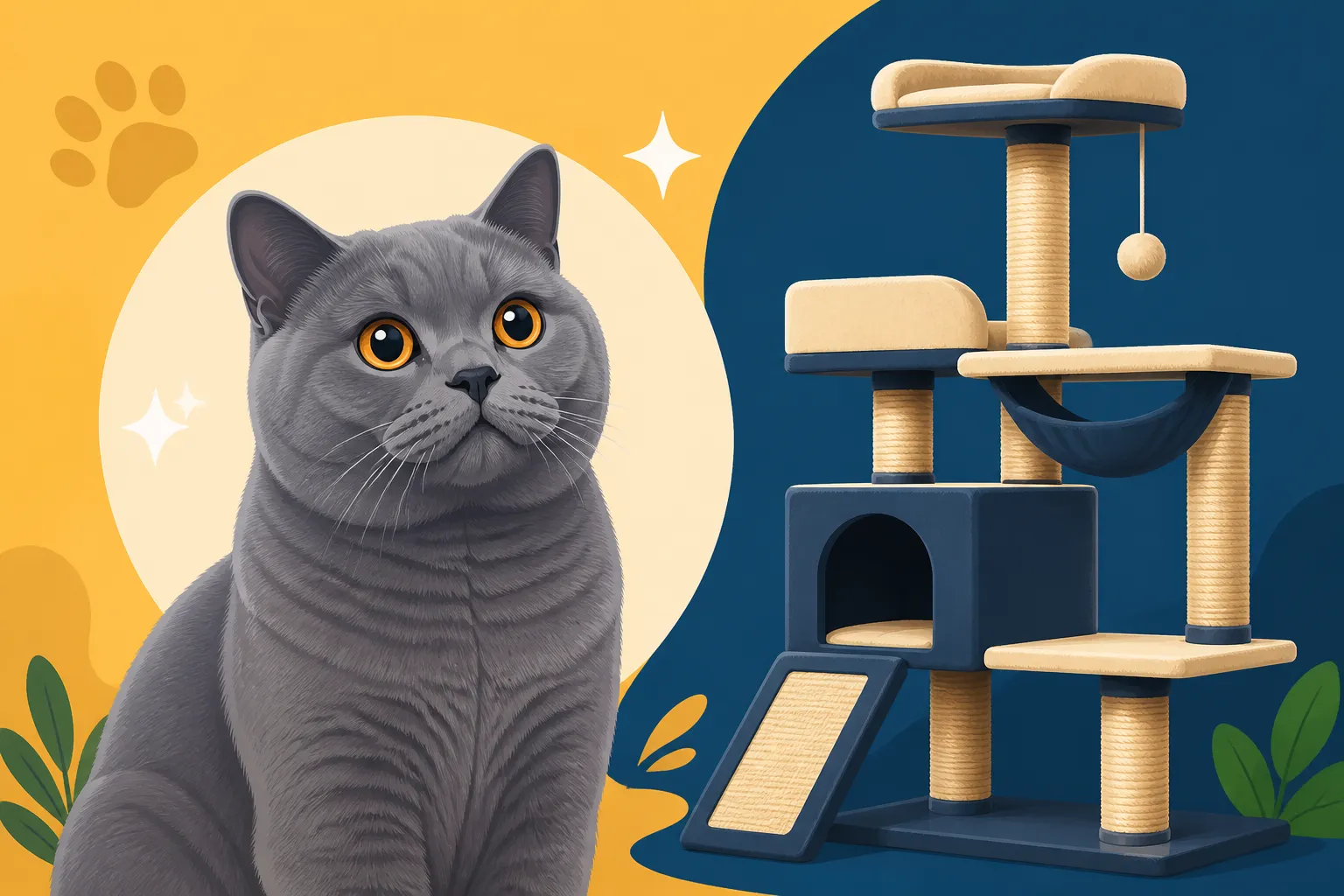
Which Cat Tree a British Shorthair Uses
Many British Shorthair owners find themselves facing a delightful dilemma: you want to provide your chunky, calm companion with all the best enrichments, including a majestic cat tree, but you’re not entirely sure if they’ll ever use it. Let's be honest, these cats are renowned for their sofa-loving, floor-dwelling tendencies, and the idea of them gracefully leaping to the highest perch can feel like a pipe dream. This guide is here to cut through the confusion and help you choose a cat tree that your British Shorthair will actually enjoy and, more importantly, safely use, considering their unique physique and personality.
Understanding Your British Shorthair's Unique Needs for a Cat Tree
Before you even start browsing the dizzying array of cat trees available, it's crucial to understand what makes your British Shorthair a little different from, say, a high-flying Bengal or a lithe Siamese. Their specific physical build and their generally laid-back nature dictate a very particular set of requirements for any elevated structure you bring into your home. It’s not just about aesthetics; it’s about safety, comfort, and encouraging use.
The British Shorthair Physique: Why Size and Sturdiness Matter
Let's face it, British Shorthairs are substantial cats. They are renowned for their cobby build, broad chests, and a weight that often surprises those unfamiliar with the breed. A fully grown male British Shorthair can easily weigh upwards of twelve to eighteen pounds, sometimes even more, and females are typically not far behind. This isn't a delicate, agile cat. They're built like little brick houses, wonderfully dense and solid. Because of this, any cat tree designed for a British Shorthair must prioritize stability above all else. You wouldn't put a sumo wrestler on a rickety garden stool, and you shouldn't ask your precious British Shorthair to navigate a flimsy, top-heavy cat tree.
Think about the sheer force involved when a twelve to eighteen-pound cat decides to launch itself onto a platform, or worse, to jump down from one. A poorly constructed tree will sway, wobble, and potentially collapse, leading to injury and, more critically, scaring your cat away from ever using it again. The base needs to be wide and heavy, often with multiple support posts, to counteract the weight and momentum of your British Shorthair. Furthermore, the platforms themselves need to be generously sized. A British Shorthair is a big cat that needs ample space to sit, stretch, and comfortably turn around without feeling cramped or unstable. A small, circular perch might be fine for a tiny kitten, but your adult British Shorthair will just look at it with disdain. Remember that Why a British Shorthair Is Built to Look Heavy, which makes finding suitably sturdy furniture paramount.
British Shorthair Temperament: Are They Even Climbers?
This is the million-dollar question for many British Shorthair owners. The truth is, while some British Shorthairs might surprise you with an occasional burst of vertical ambition, they are generally not known as avid climbers. They are calm, placid, and quite content to survey their domain from ground level, or perhaps the lowest shelf of a bookcase. Unlike breeds that crave height and enjoy scaling curtains, a British Shorthair typically prefers lounging in a sunbeam or snuggled on a soft blanket. This isn't to say they never climb, but their motivation is often more about seeking a quiet vantage point or a cozy nap spot rather than an athletic challenge.
Their preference for lower heights means that a towering, multi-level skyscraper cat tree might be completely ignored. They might venture up one level, perhaps two, but the very top perch might remain forever untouched. The key is to acknowledge their innate desire for comfort and security. A cat tree for a British Shorthair should offer easily accessible levels, rather than requiring dramatic leaps. Consider whether your British Shorthair truly enjoys How Much a British Shorthair Climbs. If yours is more of a ground-dweller, a low-profile, sturdy structure will be far more appreciated than something designed for a primate. The goal is to provide them with a gentle elevation that feels safe and inviting, not an obstacle course they'd rather bypass for the comfort of the sofa.
Key Features to Look for in a British Shorthair Cat Tree
Once you've wrapped your head around your British Shorthair's specific needs, it's time to translate that understanding into tangible features. Choosing the right cat tree involves looking beyond the pretty pictures and focusing on the engineering and design that will truly serve your beloved furball.
Stability and Construction: Avoiding Wobbly Wonders
This cannot be stressed enough: stability is paramount. A British Shorthair, with its substantial How Much a British Shorthair Weighs, demands a cat tree that feels rock-solid under their paws. Look for features that scream "unshakeable." A wide, heavy base is non-negotiable. If the base footprint is too small relative to the height, it's a wobbler waiting to happen. Consider models with multiple, thick support posts rather than a single, slender column. These thicker posts provide better weight distribution and reduce sway. Some of the sturdier options you might find on Amazon often highlight reinforced bases and larger diameter posts, which are exactly what you need.
Materials also play a huge role. Solid wood construction, particularly for the core frame and platforms, is infinitely superior to particle board or flimsy cardboard tubes that can degrade quickly or snap under pressure. Ensure that all connections are secure, preferably with metal hardware, and that there's no visible give or wobble when you try to shake the display model (or mentally shake it if buying online). A cat tree that feels stable will build your British Shorthair's confidence. If they experience a scare due to a wobbly structure, they'll likely avoid it forever, making your investment a costly dust collector.
Platform Size and Accessibility: Comfort for a Cobby Cat
Given their robust build, British Shorthairs need ample space. Small, cramped platforms simply won't do. Imagine trying to nap on a tiny stool; it's just not comfortable. Each platform should be large enough for your British Shorthair to fully stretch out, turn around comfortably, and ideally, have a little extra room for a dangling paw or tail. Think rectangular or generously sized square platforms rather than small, circular perches. For reference, a platform that's at least 18×18 inches (or larger) is a good starting point for an adult British Shorthair.
Accessibility is another critical factor. These aren't typically Olympic jumpers. Ramps, wider steps, or closely spaced platforms make climbing much easier and less intimidating. Avoid designs that require huge vertical leaps between levels, especially as your cat ages or if they have joint issues. What Obesity Does to a British Shorthair's Joints can become a real concern, and even if your cat is a healthy weight, too much high-impact jumping can cause problems down the line. Gradual inclines and easy transitions between levels will encourage exploration and make the tree a welcoming space for your British Shorthair.
Material and Durability: Built to Last (and Withstand a BSH)
The materials used for a cat tree affect not only its durability but also its appeal to your British Shorthair. Plush carpeting is a common choice, but check its quality. Thin, loosely woven carpet can unravel quickly, revealing the less appealing (and less durable) materials beneath. Look for dense, tightly woven carpeting that can withstand years of kneading and scratching. Sisal rope is excellent for scratching posts; ensure it's tightly wound and covers a good portion of the posts. This encourages appropriate scratching behavior, saving your furniture!
Beyond the scratching surfaces, consider the overall longevity. A good cat tree is an investment, and you want one that will stand the test of time. Reinforced columns, high-quality wood or dense MDF, and sturdy fasteners are indicators of durability. Some cat trees also feature removable, washable covers for platforms, which is a fantastic bonus for hygiene and keeping things fresh, especially with a cat that likes to lounge a lot. While you might initially be drawn to a budget option, remember that you often get what you pay for. A cheap, flimsy tree will likely need replacing much sooner, costing you more in the long run and potentially frustrating your cat.
Types of Cat Trees Best Suited for British Shorthairs
Now that we know what to look for, let's explore which types of cat trees actually fit the bill for our wonderfully unique British Shorthairs. It’s not a one-size-fits-all world, and understanding the different styles can help you make an informed decision.
The Low-Rise, Wide-Platform Advantage
For many British Shorthairs, less is more when it comes to verticality. A "low-rise" cat tree, perhaps two to three feet tall with just two or three generously sized platforms, is often the perfect solution. These trees are inherently more stable due to their lower center of gravity and provide exactly what a British Shorthair truly desires: a slightly elevated, secure spot to observe their surroundings without having to scale Everest. Imagine a cozy window perch, but bigger and sturdier. These often come with large square or rectangular platforms that allow your cat to stretch out fully, enjoying a deep nap or a leisurely grooming session.
The "wide-platform advantage" cannot be overstated. A spacious platform means comfort and security. Your British Shorthair won't feel precariously balanced or cramped, which can deter them from using the tree at all. This style of tree is also generally easier to integrate into a living space without overwhelming the room, making it a win-win for both you and your cat. It's about providing a comfortable elevated lounge, not a challenging climbing structure. These types of trees are particularly good for encouraging your British Shorthair to find a comfy spot off the floor without putting strain on their joints from excessive jumping. Whether a British Shorthair Prefers a Floor Bed often comes down to comfort and security, and a wide, low platform offers exactly that.
Modular and Customizable Options
Sometimes, finding the perfect pre-built cat tree is like searching for a needle in a haystack. This is where modular or customizable cat tree systems shine, especially for a specific breed like the British Shorthair. These systems allow you to choose individual components – sturdy bases, thick posts, large platforms, and ramps – and assemble them in a configuration that perfectly suits your cat and your home. You can prioritize stability and platform size, adding more scratching posts if your British Shorthair is a keen scratcher.
Brands like KONG or specific component systems found on Amazon allow you to create something truly bespoke. You can opt for fewer, larger platforms and avoid unnecessary height. This is fantastic if you have an older British Shorthair or one with mobility issues, as you can build a tree with very gentle inclines or even just one large, accessible platform. It gives you the flexibility to adapt the tree as your cat's needs change over time, ensuring it remains a safe and enjoyable part of their environment for years to come. This approach allows you to tailor the enrichment to their exact behavioral patterns.
Activity Centers Versus Cozy Perches
When considering a cat tree, it's important to distinguish between an "activity center" and a "cozy perch." Many multi-level cat trees are designed as activity centers, featuring dangling toys, tunnels, and numerous climbing challenges. While these can be great for more active, playful breeds, they might be largely ignored by a British Shorthair whose idea of "activity" is a leisurely stretch. For our British Shorthair friends, a cat tree is often more about providing a "cozy perch" – a comfortable, secure, elevated spot for napping, observing, or simply lounging.
Look for trees that emphasize plush bedding, enclosed cubbies, or hammock-style platforms where your cat can feel safe and hidden. These features cater directly to the British Shorthair's love for comfort and security. If the tree includes toys, ensure they are securely attached and robust enough to withstand a playful swat from a heavy paw. Often, a British Shorthair will enjoy a soft, enclosed space more than an open perch, offering them a sense of security and warmth. Think about how much your cat truly engages in active play versus seeking out a peaceful retreat. For many British Shorthairs, the latter is far more appealing, and a tree designed with cozy perches in mind will see much more use than a purely activity-focused one. Consider their innate preference for quiet observation; How Much a British Shorthair Uses a Window Perch is often quite high, and a cozy cat tree offers a similar benefit.
| Feature | Ideal for British Shorthair | What to Avoid |
|---|---|---|
| Stability | Wide, heavy base; multiple thick posts; solid wood construction | Small, light base; single slender posts; particle board |
| Platform Size | Generous (18×18 inches minimum); rectangular/square | Small, cramped, circular perches |
| Accessibility | Ramps, wide steps, closely spaced levels; low overall height | Large vertical jumps; very tall structures |
| Materials | Dense, durable carpeting; tightly wound sisal; metal hardware | Thin, loose carpet; exposed cardboard tubes |
| Comfort Features | Plush beds, enclosed cubbies, hammocks | Bare platforms, many dangling flimsy toys |
Placement and Encouragement: Getting Your British Shorthair to Use Their Tree
You've done your research, invested in a fantastic, sturdy cat tree perfectly suited for your British Shorthair. Now comes the next challenge: getting your discerning feline to actually use it! British Shorthairs can be creatures of habit, and convincing them to adopt a new piece of furniture requires patience and a little strategic thinking.
Strategic Placement for Maximum Appeal
The location of the cat tree is almost as important as the tree itself. British Shorthairs, while not always climbers, do appreciate a good vantage point, especially one that offers a view of their human companions or interesting outdoor activity. Placing the tree near a window where they can watch birds or squirrels is often a winning strategy. This taps into their natural curiosity without requiring intense physical exertion. How Much a British Shorthair Likes High Places is often tied to observation rather than athleticism.
Alternatively, consider placing it in a busy family room, but not in the main walkway. British Shorthairs love being near their people, even if they aren't directly on their laps. A cat tree in a corner of the living room allows them to be part of the action while maintaining a sense of personal space and elevated comfort. If you have multiple cats, or even a dog, a cat tree can offer a much-needed sanctuary and a safe perch from which to survey their domain. Avoid tucking it away in a lonely room where they won't feel connected to the household hubbub. The goal is to make it an inviting part of their preferred living area.
Enticing Your British Shorthair to Explore
British Shorthairs aren't usually known for their immediate enthusiasm for new things. It might take a while for them to warm up to their new cat tree. Don't force them onto it. Instead, make it an attractive destination. Use treats! Place a few of their favorite crunchy snacks on the lower platforms, then gradually higher up. This creates a positive association with the tree. You could also sprinkle a little catnip on the platforms, though be mindful that not all British Shorthairs react to catnip, and some may have a very strong, short-lived reaction.
Interactive play can also work wonders. Use a wand toy to lure them onto the lower levels, mimicking prey that's just out of reach. Encourage them to bat at toys while they are on the tree. Remember that Play for a British Shorthair That Would Rather Not needs to be gentle and engaging, not overly strenuous. A few minutes of enticing play each day can make a big difference. If they seem hesitant, just let them explore at their own pace. Leave a favorite blanket or a soft, familiar bed on one of the platforms to make it smell like "home" and encourage them to try it out for a nap.
Integrating the Cat Tree into Daily Enrichment
Once your British Shorthair starts using the cat tree, make it a regular part of their daily routine and enrichment. If they enjoy mealtime, try occasionally placing a small portion of their meal, or a puzzle feeder, on one of the lower, easily accessible platforms. This adds a little mental stimulation and further reinforces the tree as a source of good things. Remember that Getting a Low Energy British Shorthair to Move can be a challenge, so integrating their tree into feeding routines can be a subtle way to encourage activity.
Regularly rotate toys around the tree, or even add new ones. If the tree has a cubby, ensure it's always stocked with a cozy blanket or a soft bed. If your British Shorthair seems to particularly love a certain platform, make sure it's always clean and inviting. The more positive experiences they have with the tree, the more likely it is to become a beloved fixture in their life. Don't be discouraged if it takes time; consistency and positive reinforcement are key to helping your British Shorthair embrace their new elevated kingdom.
What to Avoid When Choosing a Cat Tree for Your British Shorthair
Just as there are features to seek out, there are definite red flags to watch for when selecting a cat tree for your British Shorthair. Avoiding these common pitfalls will save you money, frustration, and potential injury to your beloved pet.
Flimsy Structures and Small Platforms
This is probably the most critical avoidance. Resist the urge to buy a cheap, flimsy cat tree, especially if it's tall. These are often made with lightweight particle board, thin posts, and small bases. When a substantial British Shorthair attempts to climb or jump on such a structure, it will sway, creak, and eventually fail. This isn't just about wasted money; it's a significant safety hazard. A fall from a collapsing tree can cause serious injuries, from sprains and fractures to more internal trauma. Beyond the physical risk, a traumatic experience will likely ensure your British Shorthair never trusts another cat tree again.
Similarly, avoid trees with small, precarious platforms. A British Shorthair needs space to feel secure. Tiny, circular perches or narrow ledges are uncomfortable and unnerving for a cat of this build. They won't be able to properly balance, stretch, or settle down for a nap, defeating the entire purpose of an elevated space. These structures are often designed for much smaller, more agile cat breeds. When you're browsing online, especially on sites like Amazon, pay close attention to the dimensions listed in the product description, not just the overall height. Look for reviews from owners of larger cat breeds.
Trees with Too Many High Jumps
While some cats love to scale heights, most British Shorthairs prefer to keep their paws closer to the ground. A cat tree with excessively tall levels, requiring significant vertical jumps between platforms, is likely to be underutilized by your British Shorthair. Not only is it less appealing to their calm nature, but it can also pose a risk. Repetitive high-impact jumps, especially down from a height, can be hard on their joints over time. Why a Heavy British Shorthair Should Not Jump Down is an important consideration for their long-term orthopedic health.
If your British Shorthair does decide to venture to the top of a very tall tree, the descent can be awkward and dangerous. Their cobby build isn't always conducive to graceful, controlled landings from great heights. Instead of challenging them with extreme verticality, focus on providing comfortably accessible levels. If a tree has many levels, ensure they are closely spaced or offer ramps to ease the journey. You're aiming for a comfortable lounge, not an agility course.
Unappealing Materials and Unstable Bases
Finally, be wary of cat trees made from poor quality, uncomfortable materials or those with an inherently unstable base design. Rough, cheap carpet can be unpleasant for sensitive paws and bellies, deterring use. Exposed staples or sharp edges can also be a hazard. While you might think "any scratching post is a good scratching post," if the sisal is loosely wound or unravels quickly, your British Shorthair might opt for your sofa instead.
The base is the foundation of the entire structure. If it's too small, too light, or made of a flimsy material, the whole tree will be unstable. Imagine a tall, slender vase with a tiny base; it's just asking to be knocked over. For a British Shorthair, the base needs to be broad and heavy enough to firmly anchor the tree, even when they jump on it with enthusiasm. Some bases are weighted, while others rely on sheer surface area. Always opt for the design that feels the most grounded and robust. A well-designed, sturdy cat tree will be a much-loved addition to your British Shorthair's life, providing them with comfort, security, and a safe elevated vantage point.
Disclaimer
This article is for general informational purposes only and does not constitute professional advice. Laws, prices and regulations vary by location and change over time. Consult a qualified professional for guidance on your specific situation.