Whether a Breeder Should Have Run Every British Shorthair Test
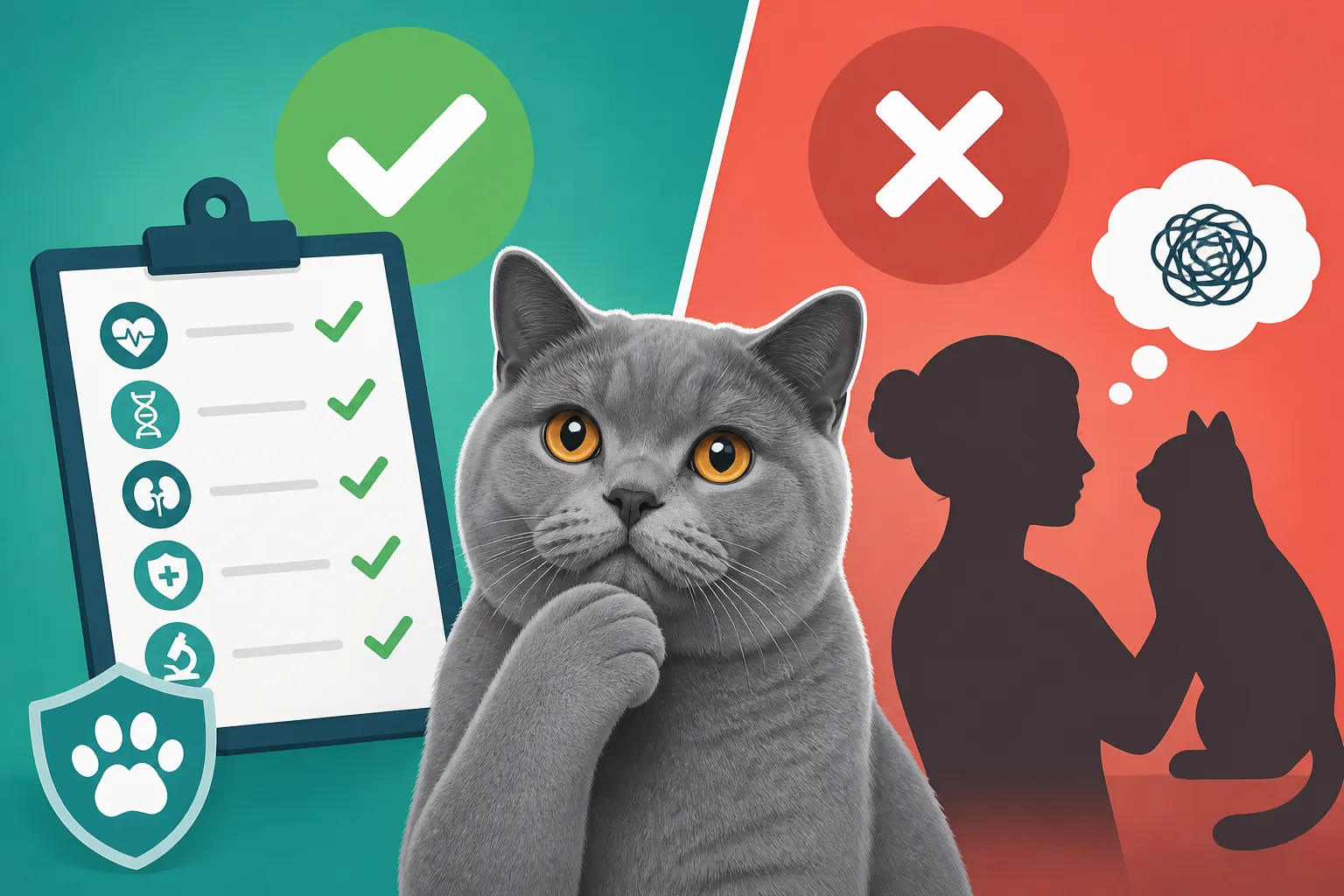
It's incredibly frustrating, isn't it? You're looking for a British Shorthair kitten, pouring over breeder websites, and suddenly you're faced with a dizzying list of health tests, acronyms, and claims. You want to do right by your future furry family member, but how do you know if a breeder has truly gone the extra mile, or if they're just ticking boxes? This guide aims to demystify the essential health screenings for British Shorthairs, helping you understand which tests are non-negotiable and why.
The Absolute Must-Have Health Tests for British Shorthair Breeders
When you're bringing a British Shorthair into your home, you're not just getting a fluffy companion; you're often investing in a breed known for certain genetic predispositions. A responsible breeder understands this and makes it their mission to minimize these risks through rigorous health testing. It's not about running "every" single test imaginable, but rather focusing on the ones that are truly impactful for the British Shorthair breed itself.
Hypertrophic Cardiomyopathy (HCM) Screening
This is hands down one of the most critical health concerns for British Shorthairs, and consequently, a paramount screening for any reputable breeder. Hypertrophic Cardiomyopathy, or HCM, is a condition where the muscular walls of the heart thicken, making it harder for the heart to pump blood effectively. It's a progressive disease, and tragically, it can lead to heart failure, blood clots, or even sudden death.
For British Shorthairs, the challenging part is that there isn't a universally recognized DNA test to identify affected animals or carriers, unlike some other breeds. This means breeders rely on echocardiograms (heart ultrasounds) performed by a board-certified veterinary cardiologist. These specialized scans allow the cardiologist to measure the thickness of the heart walls and assess heart function. Kittens can inherit the predisposition from their parents, so screening the breeding cats regularly is vital. You should expect a breeder to provide clear, recent echocardiogram results for both the queen and the stud of your kitten's litter, showing they are clear of HCM. Regular screening, often annually, is key because a cat can test clear one year and develop signs of HCM the next. You can learn more about The Yearly Echo That Replaces a British Shorthair Gene Test and Why There Is No British Shorthair HCM Gene Test.
Polycystic Kidney Disease (PKD) DNA Test
Unlike HCM, Polycystic Kidney Disease (PKD) is much simpler to screen for in British Shorthairs because there is a reliable DNA test available. PKD is an inherited condition that causes cysts to form in the kidneys, growing over time and eventually leading to kidney failure. It's a dominant gene, meaning a kitten only needs to inherit one copy from a parent to be affected.
The good news is that thanks to the DNA test, responsible breeders can definitively identify whether a cat is clear, a carrier, or affected. A clear cat will not develop PKD and cannot pass it on. A carrier has one copy of the gene but will not develop the disease itself, though it could pass it to offspring. An affected cat has two copies of the gene, will develop PKD, and will pass it to all offspring. Ideally, breeders should only use PKD-clear cats in their breeding programs to ensure no kittens are born with the predisposition. This is a one-time test for the lifetime of the cat, and you should absolutely expect to see proof of PKD clearance for both parents. The presence of PKD in British Shorthairs is largely attributed to the historical outcrossing with Persians, which you can read more about in Polycystic Kidney Disease Came Into the British Shorthair With the Persians. Asking Whether a British Shorthair Should Be PKD Tested is always a good question.
Blood Typing for Breeding Animals
While perhaps less directly about a disease, blood typing is an absolutely critical test for any British Shorthair breeder, especially to prevent a heartbreaking condition called Neonatal Isoerythrolysis (NI). This occurs when a queen with B blood type is bred to a tom with A blood type, and the kittens inherit A blood type. The B-type queen's colostrum (first milk) contains antibodies against A-type blood, which can be fatal to her A-type kittens.
British Shorthairs have a higher prevalence of Type B blood compared to many other breeds, making this an especially pertinent concern. Knowing the blood types of both breeding parents allows breeders to make informed pairing decisions to avoid NI or take necessary precautions, such as hand-feeding kittens for the first 24-48 hours. For pet owners, unless you plan to breed, blood typing might seem less relevant. However, it's still good information to have for emergency situations, like a blood transfusion, though a vet will always cross-match blood before a transfusion. For a comprehensive understanding of this, check out What Blood Type B Means in a British Shorthair and Which British Shorthair Pairing Causes Neonatal Isoerythrolysis.
Here's a quick overview of these essential tests:
| Test Name | Purpose | Method | Essential for Breeding? | Expected Outcome |
|---|---|---|---|---|
| Hypertrophic Cardiomyopathy (HCM) | Detects heart wall thickening and dysfunction | Echocardiogram | Yes | Normal/Clear |
| Polycystic Kidney Disease (PKD) | Detects gene causing kidney cysts | DNA Test | Yes | Clear |
| Blood Typing | Identifies blood group, crucial for preventing NI | Blood Sample Test | Yes | Type A, B, or AB |
Understanding Additional, But Still Important, Tests
Beyond the core three, there are other tests and health considerations that a truly dedicated breeder might undertake, contributing to the overall health and longevity of their lines. While perhaps not "every single test" in the universe, these definitely show a commitment to comprehensive care.
Hemophilia B DNA Test
Hemophilia B is a rare, X-linked bleeding disorder that can affect British Shorthairs, similar to how it presents in humans. Cats with hemophilia have a deficiency in clotting Factor IX, which means their blood doesn't clot properly. This can lead to excessive bleeding from minor injuries, during surgery (like neutering), or even spontaneous internal bleeding.
There is a DNA test available to identify cats that are clear, carriers, or affected. Because it's X-linked, male cats are more likely to be affected if they inherit the gene, while females are typically carriers. A breeder should definitely be testing for this, especially if it's known to be present in their lines or if they're introducing new bloodlines. While less common than HCM or PKD concerns, a breeder who tests for Hemophilia B demonstrates a thorough approach to genetic health. It's a test that can prevent significant suffering and unexpected costs for future owners. More details can be found in Hemophilia B in a British Shorthair.
General Wellness Exams and Feline Viral Tests
Beyond genetic conditions, any good breeder will ensure their cats and kittens receive regular veterinary check-ups and are free from common infectious diseases. This includes:
- Routine Physical Exams: Ensuring cats are healthy, well-nourished, and developing properly.
- Vaccinations: Kittens should receive their initial series of core vaccinations (FVRCP) and adult cats should be kept up-to-date.
- Parasite Control: Regular deworming and flea prevention.
- FIV/FeLV Testing: Feline Immunodeficiency Virus (FIV) and Feline Leukemia Virus (FeLV) are serious, contagious viral diseases. Breeding cats should be tested and confirmed negative to prevent transmission to kittens and other cats in the cattery. This is standard practice in responsible breeding.
While these aren't "British Shorthair specific" genetic tests, they are foundational to good animal husbandry and show a breeder's commitment to overall health. It's part of What a British Shorthair Breeder Should Have Tested.
Why "Every Single Test" Isn't Always Realistic or Necessary for a Pet British Shorthair
You might feel overwhelmed by the sheer number of potential tests available, and wonder why a breeder wouldn't just run every single one. The reality is, what's crucial for a breeding animal maintaining a healthy line isn't always directly relevant for a pet kitten.
Cost and Availability of Specialized Tests
Running comprehensive genetic panels and specialized diagnostic tests can be incredibly expensive. Each echocardiogram, DNA test, or viral panel adds to the cost of maintaining a breeding program. While a responsible breeder factors this into their operations, a kitten's price can only absorb so much. Some of the rarer genetic tests might also be performed by only a handful of specialized labs globally, making them less accessible or having longer turnaround times.
The focus for "every test" should really be on the ones that have a significant, known impact on the breed's health. For instance, testing for obscure genetic markers that have never been identified in British Shorthairs might not be the best use of resources when critical screenings like HCM echoes are ongoing necessities.
Different Needs for Breeding Animals Versus Pets
For a breeding queen or stud, extensive testing is a moral and ethical imperative. Their genetic makeup directly influences the health of future generations. If a cat is intended for breeding, knowing its blood type is non-negotiable to prevent conditions like Neonatal Isoerythrolysis. Similarly, testing for all known genetic diseases pertinent to the breed is crucial to ensure they are not passing on avoidable health problems.
However, for a pet kitten who will be spayed or neutered, some of these "breeder specific" tests become less relevant to the owner. For example, once your British Shorthair is neutered, their blood type is primarily a concern only if they ever need a blood transfusion. While it's always good to have that information, it's not a deal-breaker if the breeder didn't provide a full blood type certificate for a pet-only kitten, so long as the breeding parents were tested to ensure kitten health. Similarly, a pet owner might not need to understand complex genetic markers if the breeder has demonstrated a clear, healthy lineage through the most impactful tests.
When considering whether your individual pet British Shorthair needs specific tests, it often boils down to their individual health needs and your veterinarian's recommendations. For example, Whether a Neutered British Shorthair Needs Typing is a common question, and generally, for a pet, it's less critical than for a breeding cat, but still useful for emergencies.
Long-Term Monitoring vs. One-Time Tests
Some conditions, like PKD, are identified through a one-time DNA test. Once a cat is clear, they're clear for life. Other conditions, like HCM, require ongoing monitoring through regular echocardiograms. A breeder showing clear echo results from 3-year-old cats isn't enough; they should also be showing current, annual clear echoes for all breeding animals. This highlights that "every test" sometimes means "every recurrent test" as well, and it's important to ask for proof of ongoing screening, not just historical clearances.
In the end, while it's tempting to think that “more tests equal better,” the most important thing is that a breeder is transparent and proactive about the known, impactful health challenges for the British Shorthair breed. They should be able to explain what tests they perform, why they perform them, and readily provide documented results for the parents of your kitten. This transparency builds trust and gives you peace of mind that you're bringing home a kitten from a truly health-focused program. Checking for a breeder's willingness to share comprehensive health screening results is one of the most important steps you can take. If you're also considering pet insurance, reputable companies like Healthy Paws often look favorably on pets from health-tested lines, as it suggests fewer pre-existing conditions. For ongoing supplies, whether it's specialized food or engaging toys, knowing the health background can inform your choices.
Disclaimer
This article is for general informational purposes only and does not constitute professional advice. Laws, prices and regulations vary by location and change over time. Consult a qualified professional for guidance on your specific situation.