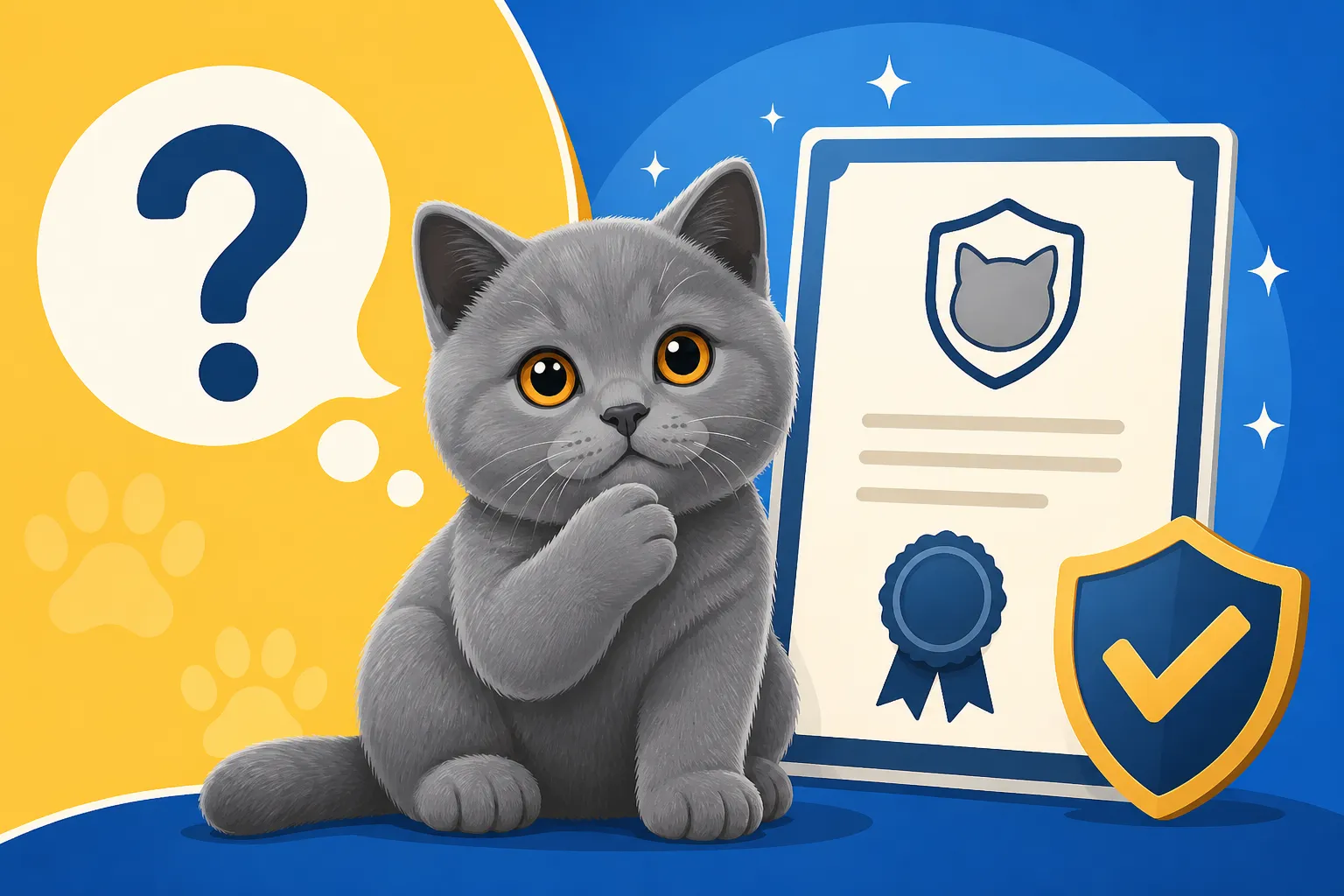
Whether a British Shorthair Kitten Comes With Certificates
Bringing home a British Shorthair kitten is an incredibly exciting time, filled with anticipation for those chubby cheeks and quiet purrs. But amidst all the joy, it's easy to feel a bit overwhelmed or even anxious about the paperwork that should accompany your new furry family member. You're shelling out good money for a purebred cat, and you want to be sure you're getting exactly what you paid for, complete with a clean bill of health and a clear lineage. This guide is here to unravel the mystery of British Shorthair kitten certificates, detailing what you absolutely should expect and why each piece of paper matters for your peace of mind and your kitten's future.
The Essential Certificates You Should Expect
When you bring home a British Shorthair kitten from a reputable breeder, you shouldn't just be handed a cute fluffball and a receipt. There's a stack of crucial paperwork that provides proof of their heritage, health, and initial care. Think of it as your kitten's official resumé and medical history, all wrapped into one. These documents aren't just fancy pieces of paper; they are assurances, protection, and vital information for your cat's long, happy life.
Pedigree and Registration Papers
A pedigree certificate is essentially your British Shorthair's family tree, tracing their lineage back several generations. It shows their parents, grandparents, and even great-grandparents, often with their registered names and titles if they were show cats. This isn't just about bragging rights; it's confirmation that your kitten truly is a British Shorthair and not a mix. It demonstrates that the breeder is serious about maintaining the breed standard and that your kitten comes from a verified, purebred line. You're buying a specific breed for a reason – perhaps you love their calm temperament or their distinctive round face – and a pedigree confirms that heritage.
Beyond the pedigree, registration papers are equally vital. These documents register your kitten with a recognized cat fancy association, such as The Cat Fanciers' Association (CFA), The International Cat Association (TICA), or the Governing Council of the Cat Fancy (GCCF) in the UK. For pet-quality kittens, breeders often provide "limited registration" papers after you provide proof that your kitten has been spayed or neutered. This is a common and responsible practice designed to prevent backyard breeding. It might mean you don't get the official registration certificate the very day you pick up your kitten, which can sometimes be confusing for new owners. However, a reputable breeder will explain this process clearly in your contract and ensure you receive the documents once the conditions are met. These papers validate your kitten's status as a purebred British Shorthair within the official registries, which is a big deal when you're looking for What a British Shorthair From a Registered Cattery Costs More.
Health Records and Veterinary Certificates
This is arguably the most critical set of documents you'll receive, as it pertains directly to your kitten's well-being. You should receive a detailed record of all veterinary care your kitten has received from birth until the day it comes home with you. This typically includes a vaccination record, clearly stating which vaccines were administered (usually feline distemper, calicivirus, herpesvirus, and often rabies if they are old enough) and when the next boosters are due. This allows you to seamlessly continue their vaccination schedule with your own veterinarian, preventing gaps in protection.
You should also get records of their deworming schedule, including the dates and the specific products used. Kittens are prone to intestinal parasites, and a good breeder ensures they are routinely dewormed. Furthermore, proof of microchip implantation and registration is essential. A microchip is a tiny device implanted under the skin that carries a unique identification number, which can be scanned to reunite you with your cat if they ever get lost. Lastly, a certificate or statement from the breeder's veterinarian, confirming that the kitten received a thorough health check and was deemed healthy before leaving for its new home, is a must-have. This initial vet check confirms basic health, checking for things like heart murmurs, clear eyes and ears, and healthy body condition. While it’s not a full health screening for genetic diseases, it’s a vital first step, assuring you that you’re not bringing home a kitten with immediate, obvious health issues.
Important Health Screening Certificates and Why They Matter
Beyond the routine vet records, a truly responsible British Shorthair breeder will provide documentation of specific genetic health screenings performed on the kitten's parents. This is where the real depth of health assurance comes in, safeguarding your kitten's long-term future and potentially saving you heartache and significant veterinary expenses down the road. Understanding these tests is part of knowing What a British Shorthair Breeder Should Have Tested.
Parent Screening Certificates for HCM and PKD
One of the most concerning health issues in many purebred cats, including the British Shorthair, is Hypertrophic Cardiomyopathy (HCM). This is a genetic heart disease that causes the muscular walls of the heart to thicken, eventually impairing its function. Unfortunately, HCM in a British Shorthair Has No DNA Test yet, unlike in some other breeds like the Maine Coon. This means the only reliable screening method is through regular cardiac ultrasound (echocardiogram) performed by a board-certified veterinary cardiologist. A reputable breeder will show you current, clear echo certificates for both the kitten's parents, proving they are clear of HCM. These echoes are not a one-and-done test; they need to be repeated periodically, typically yearly, as explained in The Yearly Echo That Replaces a British Shorthair Gene Test. Without these certificates, you have no guarantee that your kitten isn't predisposed to this serious, potentially fatal condition.
Another significant genetic health concern is Polycystic Kidney Disease (PKD). This inherited condition causes fluid-filled cysts to form in the kidneys, which can grow over time and lead to kidney failure. Fortunately, unlike HCM, there is a reliable DNA test for PKD, specifically for the PKD1 gene. Polycystic Kidney Disease Came Into the British Shorthair With the Persians generations ago, making it a critical screening. You should expect to see DNA test results for both parents, showing they are negative for PKD. This test only needs to be done once per cat, unlike the repeated echoes for HCM. Seeing these certificates provides immense reassurance that your kitten isn't carrying the gene for this devastating disease. This is why it's so important to understand Whether a British Shorthair Should Be PKD Tested.
Blood Type Certificates
While not a disease in itself, knowing a British Shorthair's blood type is incredibly important, especially for breeders, but it's also valuable information for pet owners. Cats, like humans, have different blood types, and in British Shorthairs, Type B is quite common, as explored in What Blood Type B Means in a British Shorthair. The main concern with blood types arises if a Type B queen (female cat) is bred to a Type A or AB tom (male cat). The kittens can inherit Type A or AB blood, and if they nurse from the Type B mother, her colostrum (first milk) contains antibodies that can attack the kittens' red blood cells, leading to a fatal condition known as Neonatal Isoerythrolysis.
For a pet kitten, knowing their blood type, and especially their parents' blood types, provides useful information for emergency situations. If your cat ever needs a blood transfusion, knowing their blood type can save critical time. A responsible breeder will have blood-typed their breeding cats and should be able to provide you with a certificate or clear documentation of your kitten's (and parents') blood type. This might come from a specialized veterinary lab or through a DNA test. While less common for pet owners to request, it's a mark of a truly diligent breeder who cares about the health aspects of their entire breeding program.
Understanding What "No Certificates" Might Mean
It’s tempting to fall in love with a kitten instantly, but if a breeder cannot or will not provide the appropriate documentation, it should be a major warning sign. This isn't about being overly demanding; it's about protecting yourself and ensuring the welfare of your future companion.
When a Breeder Doesn't Provide Documentation
A breeder who cannot furnish pedigrees, registration papers, or comprehensive health records for the kitten and its parents is, frankly, a red flag. They might claim the papers are "in the mail" or that they don't bother with such things for "pet quality" kittens. These excuses are often a cover-up for something less savory. Without a pedigree, you have no verifiable proof that your kitten is a purebred British Shorthair. It could be a mix, or worse, bred from unregistered parents with unknown genetic histories. This lack of transparency often goes hand-in-hand with inadequate health screening.
Imagine buying a kitten that's advertised as purebred, only to find out later it's not. Or worse, bringing home a seemingly healthy kitten that develops a severe genetic condition like HCM or PKD at a young age because its parents were never screened. You could be facing thousands in vet bills and unimaginable emotional distress. This scenario is precisely What a British Shorthair Sold Under a Thousand Signals – often, it's cheap for a reason. Always be wary if health claims are made verbally without accompanying documentation. A truly responsible breeder is proud of their health testing and will readily share the certificates and explain their importance.
The Difference for Rescue or Older British Shorthairs
If you're considering adopting a British Shorthair from a rescue organization or shelter, the situation with certificates will naturally be different. Rescue organizations often take in cats with unknown histories, so a full pedigree or multi-generational health certificates from parents are unlikely. However, reputable rescues will still provide a significant amount of documentation relevant to the cat's current health and immediate past.
You can and should expect a comprehensive veterinary history for a rescue British Shorthair, including proof of spay or neuter, up-to-date vaccinations, deworming, and microchipping. They will also often provide records of any known medical conditions or treatments the cat has received while in their care. Many rescues perform a general health check by their own veterinarians. Some might even have performed specific tests if the cat presented with symptoms or was known to be a purebred at risk for certain conditions. For instance, a rescue might have had an older British Shorthair screened for common senior issues like hyperthyroidism or even an echo if a heart murmur was detected. It's perfectly reasonable to ask Whether a Rescue British Shorthair Has Been Scanned for common breed-specific issues, especially if they came from a known breeder situation. While the pedigree might be absent, the commitment to the cat's immediate health and welfare should still be evident through their documentation.
Here's a quick comparison of what you might expect:
| Certificate Type | Reputable Breeder (Kitten) | Reputable Rescue (Adult/Kitten) |
|---|---|---|
| Pedigree | Yes, often multi-generational. | Unlikely, unless surrendered with papers. |
| Registration Papers | Yes, often after proof of spay/neuter. | Unlikely for past generations, current registration rare. |
| Vaccination Records | Yes, detailed dates and next due. | Yes, up-to-date. |
| Deworming Records | Yes, detailed dates and products. | Yes, up-to-date. |
| Microchip Registration | Yes, with transfer instructions. | Yes, with transfer instructions. |
| Initial Vet Check Statement | Yes, confirming pre-departure health. | Yes, confirming health upon adoption. |
| Parent HCM Echo Certificates | Yes, current & clear from a cardiologist. | Unlikely for parents; possibly for the rescue cat itself. |
| Parent PKD DNA Test Results | Yes, clear results for both parents. | Unlikely for parents; possibly for the rescue cat itself. |
| Blood Type Certificates | Yes, for breeding cats and often kittens. | Unlikely, unless specifically tested by the rescue. |
| Spay/Neuter Certificate | Often provided by vet after procedure (for pet kittens). | Yes, most rescues spay/neuter before adoption. |
How to Ensure You Get the Right Paperwork
Navigating the world of breeders and adoptions can feel like a minefield if you're not prepared. The best way to ensure you receive all the necessary and important documentation is to be proactive, do your homework, and communicate clearly.
Asking the Right Questions Before You Buy
Before you commit to a British Shorthair kitten, a critical step is to have a comprehensive list of questions for the breeder. Don't be shy; a good breeder will appreciate your thoroughness because it shows you're a responsible prospective owner. Here are some key questions to ask, specifically focusing on documentation:
- "Can I see the pedigree and registration papers for both the mother and father?" (Look for official registry names like CFA, TICA, GCCF.)
- "What health screenings do you perform on your breeding cats for HCM and PKD? Can I see the certificates for the parents of this litter?" (Insist on seeing actual veterinary reports for HCM echoes and lab results for PKD DNA tests. Don't just accept verbal assurances.) You need to understand What the British Shorthair PKD Test Costs and What a British Shorthair's Yearly Echo Costs so you appreciate why breeders invest in this.
- "Can you provide me with a detailed health record for the kitten, including vaccination dates, deworming dates, and proof of microchipping?"
- "Do you blood type your breeding cats, and can you tell me the blood types of this kitten's parents?"
- "What is your policy for providing registration papers for pet kittens, especially concerning proof of neuter/spay?"
Always ask to see the original documents or clear, legible copies. If a breeder is hesitant, evasive, or can only provide vague answers, consider that a significant warning. A responsible breeder will be transparent and proud to show off their health protocols, understanding that this transparency benefits everyone involved. This line of questioning aligns with Which Questions to Ask a British Shorthair Breeder. If they are a top-tier breeder, they should also be able to discuss Whether a British Shorthair Is a Healthy Breed and how their practices contribute to the breed's overall health.
The Kitten Contract and Its Role
A kitten contract is a legally binding agreement between you and the breeder, and it's your ultimate safeguard. A well-drafted contract will detail not only the terms of the sale (price, payment schedule, pick-up date) but also crucial information about the kitten's health, guarantees, and the provision of paperwork. It should specify that the kitten is purebred, its registration status, and what documentation you will receive and when.
Look for clauses that explicitly state:
- Health Guarantee: This usually covers a specific period (e.g., 48-72 hours) for general health, allowing you to have your vet check the kitten, and a longer period (e.g., 1-2 years) for genetic health conditions like HCM or PKD. The contract should outline what happens if a genetic condition is diagnosed within that timeframe.
- Spay/Neuter Agreement: For pet kittens, the contract will almost certainly require you to have the kitten spayed or neutered by a certain age and provide proof to the breeder before you receive the registration papers.
- Commitment to Documentation: It should explicitly list the certificates and records you will receive and the timeframe for their delivery.
Reading and understanding every word of the contract before signing is vital. Don't hesitate to ask questions about anything unclear. This contract protects both you and the breeder, ensuring that expectations are clear on both sides regarding the kitten's lineage, health, and the accompanying official documents. It's a key part of your investment in your British Shorthair. When considering pet insurance options like Healthy Paws, knowing your kitten's background and having these health certificates can also be useful for understanding potential exclusions or coverage for breed-specific conditions, even though the general goal of insurance is to cover unexpected future ailments. While good nutrition is important for a healthy British Shorthair, ensuring you start with a well-documented kitten is the first step toward a lifelong journey of proper care.
Disclaimer
This article is for general informational purposes only and does not constitute professional advice. Laws, prices and regulations vary by location and change over time. Consult a qualified professional for guidance on your specific situation.