How the British Longhair Split From the British Shorthair
The British Longhair did not emerge from a sudden change in the British Shorthair’s build or temperament. It became distinct because some British Shorthair kittens inherited long coats, and cat registries gradually developed separate names and standards for them. This guide explains how that happened, what the longhair gene means, and why registration rules can differ.
How the British Longhair emerged
The postwar rebuilding of the British Shorthair
The British Shorthair’s history helps explain why longhaired kittens can appear in its litters. After the Second World War, British Shorthair numbers had fallen, and breeders worked to rebuild the breed. Outcrosses, including Persians, were used in that recovery. Those pairings helped restore the population and influenced the breed’s development, but they also left genetic variation in the gene pool.
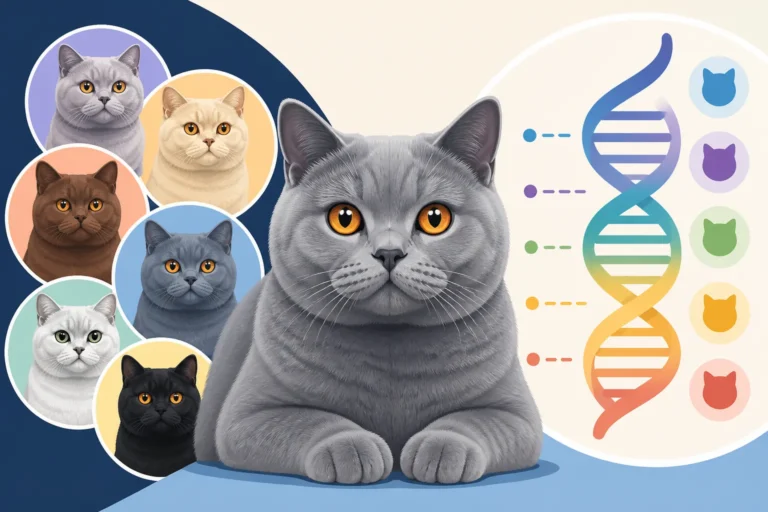
One legacy was the longhair gene. A cat can carry a gene associated with long hair without having a long coat itself. When two cats carrying the relevant recessive variant are paired, some kittens may inherit two copies and grow long coats. That does not mean a shorthaired parent is secretly a longhaired cat; it means the visible coat does not always reveal every inherited trait.
The history is more nuanced than “a Persian cross created the British Longhair.” The British Longhair is closely connected to the British Shorthair, and its appearance reflects inherited traits that persisted through breeding. For more context on the breed’s recovery and outside influences, see Which Breeds Rebuilt the British Shorthair and What the Persian Cross Gave the British Shorthair.
From an occasional longhaired kitten to a named type
For a long time, a longhaired kitten in a British Shorthair litter could be treated as an unexpected variation rather than as a separate breed. As breeders and registries paid more attention to these cats, the longhaired type became more consistently identified and developed its own name in some breeding communities.
That process was not one universal decision made on one date. Cat registries have their own rules, terminology, and recognition procedures. A cat might be described as a British Longhair in one context and be recorded differently in another, depending on the registry and the cat’s documented ancestry. The distinction may matter to breeders and people showing cats, while a household pet owner may mainly want to understand the cat’s coat, care needs, and background.
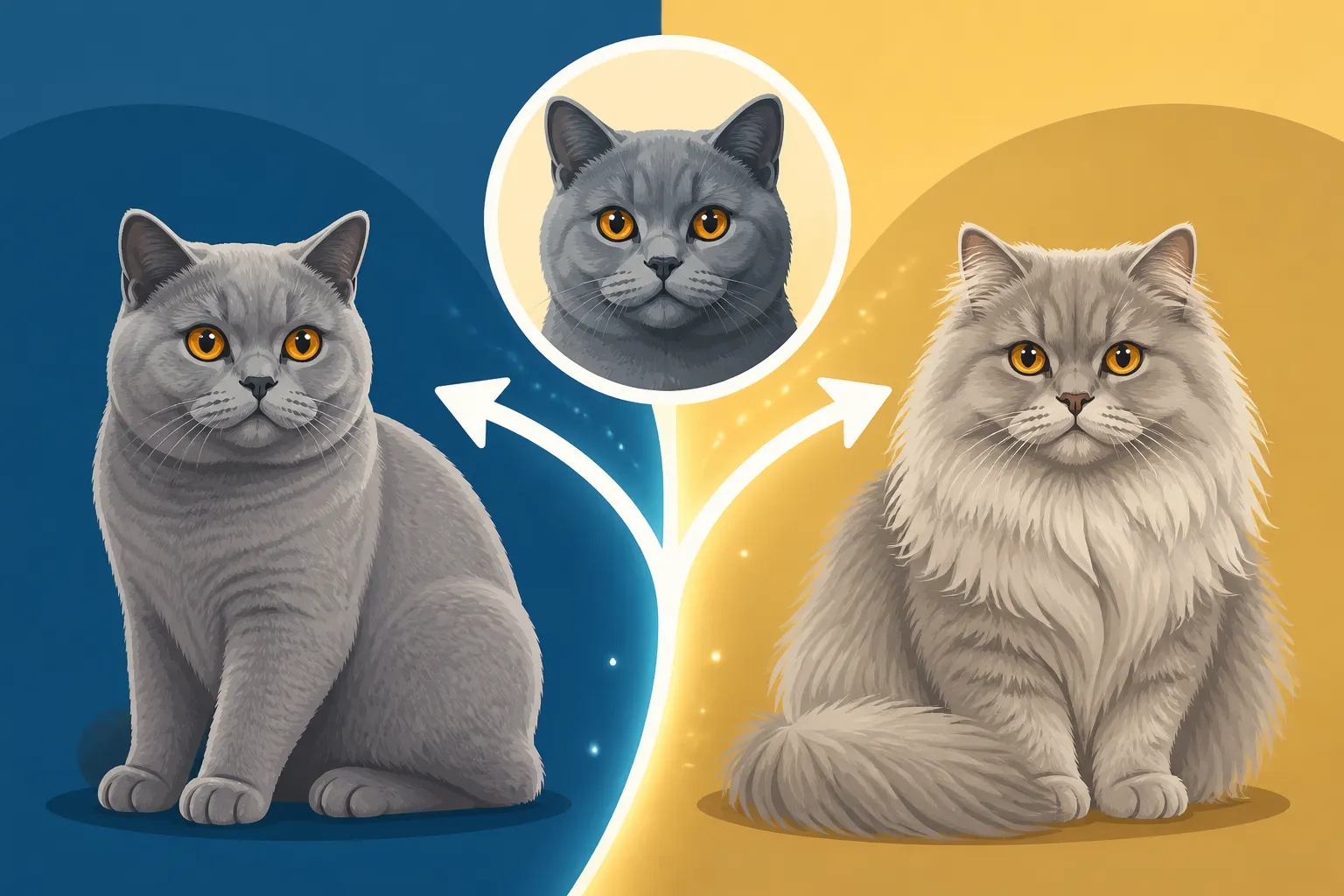
“Split” can therefore give the impression of a clean break that did not necessarily happen in every system. The British Longhair did not simply become unrelated to the British Shorthair. Rather, longhaired cats from that shared background came to be recognized and bred as a distinct type where registry rules allowed it. If you are checking how a particular registry handles the name, Whether a British Longhair Registers as a British Shorthair is a useful related topic.
What the longhair gene means in a British Shorthair family
How two shorthaired parents can have a longhaired kitten
The coat outcome depends on what each parent carries, not just on what each parent looks like. If both shorthaired parents carry a recessive longhair variant, a kitten may inherit a copy from each and develop a long coat. The parents can still have the familiar dense, short British Shorthair coat because one copy does not necessarily produce the longhaired appearance.
This is why a breeder may know that longhaired kittens are possible even when both parents look shorthaired. In a litter, coat lengths can vary. A kitten’s appearance does not mean the parents were misidentified, nor does a fluffy coat by itself establish a cat’s breed registration. Pedigree records and registry rules are separate from the basic question of how the coat looks.
The reverse can also create confusion: a longhaired kitten does not automatically prove a recent Persian parent. A gene may be passed through generations without producing a long coat, then become visible when inherited in the right combination. For a closer look at how the trait can remain hidden, read Why a Longhair Gene Hides in a British Shorthair Litter and Whether the Longhair Gene Is Still in the British Shorthair.
Why the coat alone cannot establish breed status
A fluffy kitten may look unmistakably longhaired, but coat length alone cannot confirm whether it is registered as a British Longhair, recorded under another designation, or simply described informally as a longhaired cat. Registration depends on the rules of the relevant organization and the cat’s documented ancestry. Breeders may also make decisions about which kittens are suitable for particular breeding plans.
If you are considering a kitten, ask what name appears on its registration paperwork, which organization issued the documents, and how the parents are recorded. It is reasonable to ask for a clear explanation if a seller uses “British Longhair” in an advertisement but has no registration or pedigree information to support the label. A cat can still be a much-loved companion without formal registration, but buyers should know what they are being told.
The same care applies to health and breed claims. A particular coat type does not guarantee a specific personality, adult size, or health outcome. Ask for information about the kitten’s parents and care rather than relying on photographs or a breed label alone. To understand how the trait can show up in a litter, see How a British Longhair Comes Out of a British Shorthair Litter and How a British Shorthair Kitten Turns Out Longhaired.
| Question | What to check |
|---|---|
| Is the kitten visibly longhaired? | Look at the coat, but do not treat appearance as proof of registration |
| Is it registered as a British Longhair? | Ask which registry recorded it and what the paperwork says |
| Could shorthaired parents have a longhaired kitten? | Yes, if both parents carry the relevant recessive trait |
| Does a long coat prove a recent Persian cross? | No; inherited traits can be passed through generations |
| Do long and short coats require identical grooming? | No; a longer coat usually needs more frequent attention to tangles |
How British Longhairs differ in appearance and care
A longer coat changes the grooming routine
The British Longhair shares the broad, sturdy impression associated with the British Shorthair, but its coat is longer and can need more hands-on upkeep. A dense coat may collect loose hair, and longer fur can tangle in areas where it rubs against the body, such as behind the legs or around the collar. Some cats tolerate combing calmly; others need short, gentle sessions built into their routine.
Start with a suitable comb and work slowly, especially if the cat is new to grooming. Rather than trying to remove every loose hair in one marathon session, make the experience brief and positive. If you are comparing basic grooming tools, a pet retailer such as Chewy may be one place to look at available comb styles; choose a tool based on the cat’s coat and comfort, not simply on a product label.
A long coat does not mean a cat needs frequent baths or a dramatic grooming routine. Regular checks are more useful: look for small tangles, debris, and changes in coat condition. If the cat resists, stop before the session becomes a struggle and try again later. For comparison, What a British Shorthair's Coat Is Like describes the shorthaired coat, while Whether a British Shorthair Has Guard Hairs explains another part of its structure.
The name does not predict personality
It is tempting to assume a British Longhair behaves exactly like a British Shorthair because of their shared background. Breed tendencies can offer a broad guide, but individual cats still differ. A cat’s early experiences, health, household environment, and temperament all influence how it responds to people and daily routines.
The long coat itself does not make a cat more affectionate, quieter, or more tolerant of being handled. A kitten that enjoys brushing may grow into an adult that accepts it readily, while another may need patience and careful handling. Ask a breeder or rescue about the individual cat’s behavior, including how it responds to grooming, unfamiliar people, and everyday household activity.
Likewise, the word “Longhair” describes coat length, not a promise that the cat will be a particular size or have a specific personality. If you are choosing a companion, consider the care you can realistically provide and the cat’s observed temperament. A breed name is helpful context, but it cannot replace getting to know the individual animal.
What the split means for prospective owners and breeders
Questions to ask when a kitten is advertised
If an advertisement calls a kitten a British Longhair, ask the seller to explain what that label means in their registry and breeding program. A responsible conversation should not become awkward just because you ask for paperwork. You can ask how the parents are registered, whether the kitten will come with documents, and whether the long coat is expected or was a surprise in the litter.
It is also useful to ask about grooming early. A seller who knows the kitten should be able to describe how it handles combing and what routine it is used to. If you are comparing combs or other basic care supplies, Chewy is one possible retail option, but shopping listings cannot verify a kitten’s pedigree or the claims made by a breeder. For that, rely on records and direct answers.
Be wary of being rushed into a decision because a kitten is described as rare or unusual. A long coat may be less common in some British Shorthair breeding programs, but rarity claims are not a substitute for documentation, thoughtful care, or a clear contract. The practical question is not only what the kitten is called, but also whether its needs and background are being represented honestly.
How breeding and registration can differ
Breeders may have different goals depending on the registry and the cats involved. Some work within a British Longhair program, while others may focus on British Shorthairs and treat longhaired kittens as pets rather than as breeding prospects. Rules about registration, permitted pairings, and showing are not identical across organizations, so a breeder’s explanation should be tied to the particular registry they use.
This is where the history of the two types still matters. They share close ancestry, and a long coat can arise from inherited variation within British Shorthair-related lines. Yet a shared background does not mean every registry treats the cats as interchangeable. For breeders, the paperwork and rules can determine how a kitten is recorded; for pet owners, those distinctions are usually most important when checking what has been promised.
If you are researching breeding rather than choosing a pet, look beyond coat length. Ask how the breeder selects pairings, maintains records, and considers the health and welfare of the cats. For more on the broader history, How Long the British Shorthair Took to Recover and Whether Outcrossing Is Still Allowed in the British Shorthair offer relevant background. If your immediate concern is everyday coat upkeep, Chewy may provide a place to compare grooming supplies, but guidance from a veterinarian or experienced groomer can help when a cat has persistent mats or skin concerns.
Disclaimer
This article is for general informational purposes only and does not constitute professional advice. Laws, prices and regulations vary by location and change over time. Consult a qualified professional for guidance on your specific situation.