How a British Shorthair Kitten Turns Out Longhaired
It can be quite a head-scratcher, can't it? You get a British Shorthair kitten, all fluffy and adorable, expecting that classic, dense, short coat, and then you watch it grow… and grow… until suddenly, you realize you have a longhaired cat! It's a common, if often surprising, occurrence that leaves many owners wondering how this happened. This guide will dive deep into the fascinating genetics behind how a British Shorthair kitten can unexpectedly turn out longhaired, explaining the history and the science so you understand just what's going on with your beautiful, plush feline.
Understanding the British Shorthair Coat Type
When you picture a British Shorthair, you invariably think of that iconic, plush, and short coat. It's one of their defining characteristics, right up there with their round faces and chubby cheeks. But what exactly makes a British Shorthair's coat "shorthair," and how can something so fundamental sometimes deviate?
The Standard British Shorthair Coat
The hallmark of a purebred British Shorthair is its distinctive coat. It's incredibly dense, short, and feels almost crisp to the touch, like a thick, luxurious carpet. This unique texture comes from a very specific structure: a robust double coat with plenty of guard hairs and an incredibly thick undercoat. When you run your hand against the fur, it should spring back immediately, standing away from the body rather than lying flat. This is part of what gives them their charming, teddy-bear-like appearance and contributes to their famously "cobby" build.
The breed standard for British Shorthairs is very clear about this coat type. It's meant to be short, dense, and evenly textured across the entire body. The density is particularly important, as it helps keep them warm and gives them that substantial, solid feel that's so characteristic of the breed. This luxurious, easy-care coat is one of the many reasons people fall in love with British Shorthairs, expecting precisely this look and feel when they bring a kitten home. What a British Shorthair's Coat Is Like
The Recessive Longhair Gene
Here's where the plot thickens! To understand how a British Shorthair can have long hair, we need a quick dive into basic genetics. The gene for long hair (often denoted as 'l') is recessive, while the gene for short hair (L) is dominant. What does "recessive" mean in practice? It means that if a cat inherits even one copy of the dominant short hair gene (L), they will have short hair. They need two copies of the recessive long hair gene (ll) to actually express long hair.
So, a British Shorthair who looks shorthaired can still carry one copy of the recessive long hair gene (Ll). They are what we call a "carrier." They don't have long hair themselves, but they can pass that hidden long hair gene on to their kittens. The surprise happens when two seemingly shorthaired British Shorthairs, both carriers (Ll x Ll), are bred together. In this scenario, there's a 25% chance with each kitten that it will inherit two copies of the recessive gene (ll), thus becoming a longhaired cat. This is why a perfectly standard-looking pair of parents can suddenly produce a fluffy, longhaired offspring, completely baffling unsuspecting owners! Why a Longhair Gene Hides in a British Shorthair Litter
How the Longhair Gene Persisted in the British Shorthair Line
The presence of the longhair gene isn't some random mutation that popped up recently. It's actually a historical echo from a time when the British Shorthair breed faced near extinction. Understanding this history helps demystify why this recessive trait occasionally appears in what should be a "shorthair" breed.
The Post-War Outcrosses
The British Shorthair breed, like many others, suffered immense losses during World War I and World War II. Breeding programs were severely disrupted, and the number of purebred British Shorthairs dwindled to alarmingly low levels. Breeders faced a critical challenge: how to save the breed from vanishing entirely while maintaining its distinctive characteristics.
To prevent extinction and broaden the gene pool, breeders in the post-war era made the difficult but necessary decision to outcross British Shorthairs with other breeds. One of the primary breeds used for these outcrosses was the Persian. Persians, as you know, are famous for their luxurious, long coats. By introducing Persian bloodlines, breeders were able to inject much-needed genetic diversity and rescue the British Shorthair. However, with the Persian genes came the dominant characteristic for a flatter face, and the recessive gene for long hair. The Persians That Rebuilt the British Shorthair After the War This was a trade-off considered acceptable at the time, given the breed's dire situation. The focus was on survival, and then gradually, over many generations, breeders worked to breed out the less desirable traits while retaining the health and type.
The Persistence of the Gene
Even after multiple generations of careful breeding, and despite breeders striving to eliminate the longhair trait, that sneaky recessive 'l' gene continued to linger in the gene pool. It's incredibly hard to completely eradicate a recessive gene once it's widespread, especially when the carriers look exactly like the desired shorthaired type. Unless a breeder specifically tests every cat for the longhair gene or only breeds cats whose ancestry has been proven free of the longhair trait for many generations, there's always a chance that two carriers will be unknowingly paired.
For many years, the primary way breeders could tell if a cat carried the longhair gene was by observing their offspring. If a supposedly shorthaired cat produced a longhaired kitten, then both parents had to be carriers. This reactive approach meant the gene was continually popping up. Modern DNA testing has been a game-changer, allowing breeders to definitively identify carriers before breeding, thus making it easier to manage and, if desired, eliminate the longhair trait from their lines. However, because it was so prevalent for so long, and because some breeders might not test, it continues to surface.
Identifying a Longhaired British Shorthair Kitten
So, you're looking at a litter of British Shorthair kittens, and one just seems a little… different. How do you tell if you have a surprise longhair on your hands? It's not always immediately obvious, especially with tiny newborns.
Visual Cues and Coat Development
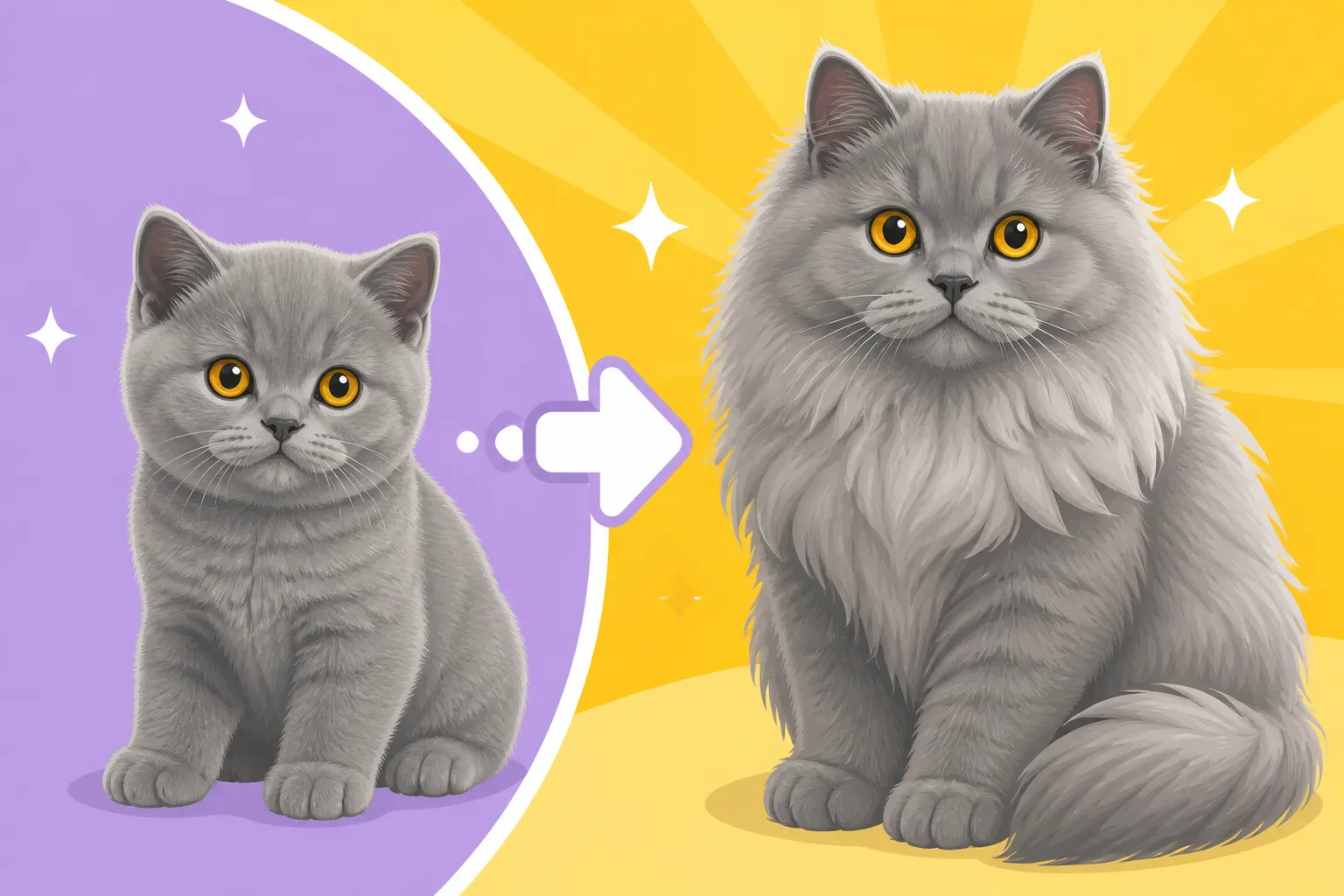
At birth, all kittens are pretty fluffy, so distinguishing a future longhair can be tricky. However, as they grow, certain visual cues start to emerge. A longhaired British Shorthair kitten will usually have noticeable tufts of fur between their toes, often referred to as "toe tufts," and little feathery furnishings on their ears. Their tail will be fuller and fluffier than their shorthaired littermates, and might even have a slightly plumed appearance. The coat on their body will start to look a bit longer and softer, not quite as dense and crisp as the standard British Shorthair coat that stands straight out. How a British Longhair Comes Out of a British Shorthair Litter
As they continue to mature, the differences become much more pronounced. By a few weeks old, the longer coat on a longhaired kitten will be undeniable, often creating a shaggier, less "plush" silhouette compared to its siblings. The fur won't lay as flat, nor will it have the same crisp texture. Instead, it will drape and flow, especially around the ruff, breeches (on the hind legs), and tail. It's a beautiful look, but definitely not the classic British Shorthair many people expect.
DNA Testing for the Longhair Trait
Thankfully, in today's world, we don't have to rely solely on visual inspection or waiting for a longhaired kitten to appear to know if a cat is a carrier. Genetic testing has become a valuable tool for responsible British Shorthair breeders. There are now specific DNA tests available from various veterinary genetics laboratories that can identify whether a cat carries the recessive longhair gene.
This test is usually performed using a simple cheek swab or a small blood sample. The results will tell a breeder if their cat is homozygous for short hair (LL, meaning they have two copies of the dominant gene and cannot produce longhaired kittens), a carrier (Ll, meaning they have one copy of each and can pass the longhair gene on), or homozygous for long hair (ll, meaning they are a longhaired cat). For breeders who want to ensure they are only producing shorthaired British Shorthairs, testing their breeding cats is crucial. This helps prevent accidental pairings of two carriers, and gives peace of mind to potential kitten buyers.
What to Expect with a Longhaired British Shorthair
So, you've got a British Shorthair with a longer coat. Is it still a British Shorthair? Absolutely! The fundamental characteristics of the breed remain, but you'll certainly have some different care considerations, especially when it comes to grooming.
Care and Grooming Differences
The most significant difference you'll encounter with a longhaired British Shorthair is the grooming routine. While a shorthaired British Shorthair is relatively low maintenance in the coat department, a longhaired one will require more frequent attention. Their longer, softer fur is more prone to tangles and mats, particularly in areas like behind the ears, under the armpits, and on their "britches" (the longer fur on their hind legs).
You'll need to invest in a good quality steel comb – often available from pet supply retailers like Chewy or Amazon – and commit to regular combing sessions, ideally a few times a week, if not daily, during shedding seasons. How Often a British Shorthair Needs Combing This helps prevent matting, removes loose fur, and keeps their coat healthy and shiny. Without consistent grooming, mats can quickly become painful for your cat, potentially requiring professional grooming or even shaving by a vet. Unlike their shorthaired counterparts, who might only need occasional brushing, your longhaired British Shorthair will definitely need you to step up your grooming game. Where a British Shorthair Mats
Health and Temperament
Beyond the length of their fur, a longhaired British Shorthair is, in essence, still a British Shorthair. Their health profile, temperament, and personality should be exactly the same as their shorthaired siblings. They'll retain that wonderful calm, placid, and affectionate nature that the breed is famous for. They'll still enjoy lounging near you, observing the household, and engaging in gentle play. You won't find them to be more vocal or more prone to specific health issues simply because of their longer coat, apart from the increased risk of hairballs if grooming isn't managed properly.
In fact, some registries now recognize these beautiful longhaired cats as a distinct but related breed: the British Longhair. They are essentially British Shorthairs in every way except for their coat length. This recognition acknowledges their origins and provides a pathway for breeders who wish to work with this lovely variation. So, while your cat might not conform to the traditional "shorthair" name, they are still very much a part of the British Shorthair family, with all the charming qualities that entails. How the British Longhair Split From the British Shorthair
Here's a quick comparison of the two coat types:
| Feature | British Shorthair (Shorthair) | British Shorthair (Longhair) |
|---|---|---|
| Coat Length | Short, dense, plush | Long, flowing, soft |
| Texture | Crisp, resilient, stands away from body | Silky, drapes, less dense than shorthair coat |
| Undercoat | Very thick, dense | Present, but hair length is uniform across layers |
| Tail | Thick, rounded tip | Plumed, very full and feathery |
| Ear Tufts | Minimal to none | Often present and prominent, feathering outside the ear |
| Toe Tufts | Minimal to none | Often present between paw pads |
| Grooming Needs | Low to moderate; weekly combing | Moderate to high; several times a week to daily combing |
| Matting Risk | Low | Moderate to high, especially in active or less groomed cats |
| Genetic Basis | LL (homozygous short) or Ll (carrier, looks shorthair) | ll (homozygous long) |
Embrace your longhaired British Shorthair! They are a testament to the breed's resilient history and a delightful variation on a beloved classic. Just be prepared for a bit more grooming, and enjoy all the cuddles their luxurious coat offers.
Disclaimer
This article is for general informational purposes only and does not constitute professional advice. Laws, prices and regulations vary by location and change over time. Consult a qualified professional for guidance on your specific situation.