How Much Food a British Shorthair Should Get Per Meal
It can be incredibly frustrating when you're trying to do your best for your British Shorthair, and all you want is a simple answer to "how much food per meal," only to be met with vague guidelines. You just want to make sure your beloved furball is getting enough sustenance without tipping over into the "chunky but adorable" territory that quickly becomes "overweight and unhealthy." This guide is here to cut through the confusion and help you understand how to determine the right portion sizes for your British Shorthair at each meal, taking into account their unique needs and how to spot if you're getting it wrong.
Understanding Your British Shorthair's Unique Metabolism and Build
British Shorthairs are magnificent cats, known for their dense, plush coats, round faces, and sturdy, cobby build. It’s easy to look at them and think they’re just naturally big, but there's a fine line between a healthy, well-muscled British Shorthair and one carrying too much weight. Their calm, often sedentary nature means they don't burn as many calories as a more active breed might, making portion control a critical aspect of their care. You might have heard people say they are "built to look heavy," and there's truth to that, but it doesn't mean they should actually be heavy. Their unique body shape can make it tricky to visually assess their weight, which is why understanding their dietary needs on a per-meal basis is so vital.
Why British Shorthairs Gain Weight Easily
One of the biggest challenges British Shorthair owners face is their cat's predisposition to weight gain. They tend to be less active than many other breeds, preferring a comfy spot on the sofa to chasing toys for extended periods. This naturally lower activity level means their caloric needs are often lower than what many standard feeding guides recommend for cats of their size. Couple that with their undeniable charm and habit of politely requesting food, and it’s a recipe for overfeeding. Many owners find themselves asking Why a British Shorthair Gains Weight So Easily after their furry friend starts piling on the pounds.
Their love for food, combined with their placid demeanor, means they're often willing to eat whatever is offered. This is why Why Free Feeding Ruins a British Shorthair is such an important topic. Leaving a bowl of kibble out all day, allowing them to graze whenever they please, almost guarantees they'll consume more calories than they need, especially if they have a strong food drive. It’s not their fault; they’re just following their instincts and enjoying what you provide! But it does put the onus on us, as their caretakers, to manage their intake carefully.
Caloric Needs Versus Food Volume
When we talk about "how much food," we're really talking about calories. The volume of food – whether it’s a scoop of kibble or a can of wet food – means very little without knowing its caloric density. A small amount of a calorie-dense food might provide more energy than a larger volume of a less caloric option. This is where the frustration often stems from. You might be feeding a "recommended" amount, but if the food is high in calories and your cat is low in activity, you're still likely overfeeding. It’s not just about filling the bowl; it’s about providing the right amount of energy to fuel their day without storing excess as fat. Understanding How Many Calories a British Shorthair Needs is the first step in successful portion control.
Calculating the Right Amount for Your British Shorthair
So, how do you figure out the magic number for your British Shorthair? It starts with their target weight, their activity level, and the caloric content of their food. This isn't a one-size-fits-all equation, and it certainly changes as they age or their lifestyle shifts. What works for a playful young kitten won't be right for a senior cat who spends most of their day napping.
Determining Your Cat's Ideal Weight
Before you can portion food, you need to know what your British Shorthair should weigh. A healthy adult British Shorthair typically weighs between 9 to 18 pounds, with males generally being heavier and larger than females. However, this is a broad range, and individual genetics play a huge role. It’s less about the number on the scale and more about their body condition. You should be able to feel their ribs easily under a slight padding of muscle and fat, but not see them. They should have a noticeable "waist" when viewed from above, and their belly shouldn't sag excessively. This can be tricky with their plush coat, but feeling for their ribs and spine is crucial. This is why knowing What a Healthy British Shorthair Weighs on the Scale is important, but equally important is knowing How to Feel a British Shorthair's Ribs Through the Plush.
Your veterinarian is your best resource here. They can assess your British Shorthair’s body condition score (BCS) and help you determine a healthy target weight. This target weight is the foundation for all your feeding calculations. If your cat is currently overweight, your vet will help you calculate how many calories they need to safely lose weight, typically a gradual reduction rather than a drastic cut, to prevent hepatic lipidosis (fatty liver disease).
Daily Caloric Needs Based on Activity
Once you have a target weight, you can estimate their daily caloric needs. General guidelines often suggest around 20-25 calories per pound of ideal body weight for an adult cat with a moderate activity level. However, for a famously calm breed like the British Shorthair, you might start at the lower end of that range, or even slightly below, especially if they are strictly indoor cats with minimal play.
Here's a very general idea, but remember, this is an example and your vet's guidance is paramount:
| Cat Activity Level (Adult) | Calories per Pound of Ideal Body Weight | Example for a 12lb British Shorthair |
|---|---|---|
| Low Activity (Typical BSH) | 18-20 calories/lb | 216-240 calories per day |
| Moderate Activity | 20-25 calories/lb | 240-300 calories per day |
| High Activity (Rare for BSH) | 25-30+ calories/lb | 300-360+ calories per day |
Remember, these are starting points. Your cat's individual metabolism, age, and any underlying health conditions will affect their actual needs. An older British Shorthair, for instance, might need slightly fewer calories as their metabolism slows, or more if they have a condition that increases their energy expenditure.
Splitting Daily Calories into Meals
Once you have a daily caloric target, the next step is to divide that into meals. For most adult British Shorthairs, two meals a day is a good starting point. This means simply taking your total daily caloric target and dividing it by two.
For example, if your 12lb British Shorthair needs 240 calories per day, each meal would consist of 120 calories.
Why not just one meal? While some cats might be fine with one large meal, splitting it into two helps regulate their metabolism, prevents them from getting overly hungry (which can lead to scarfing food too quickly and subsequent vomiting), and generally provides a more satisfying routine. For kittens, they need more frequent, smaller meals due to their rapid growth and higher energy demands.
The Role of Food Type and Consistency
The type of food you offer your British Shorthair significantly impacts how much they should get per meal, not just in volume, but in its overall benefit to their health. The debate between wet and dry food is ongoing, but for British Shorthairs, there are some clear advantages to considering wet food.
Wet Food Versus Dry Food Portions
Most dry kibbles are very calorie-dense. A small scoop can pack a significant caloric punch. Wet food, on the other hand, contains a much higher moisture content, meaning a larger volume of food will have fewer calories. This can be incredibly beneficial for a British Shorthair.
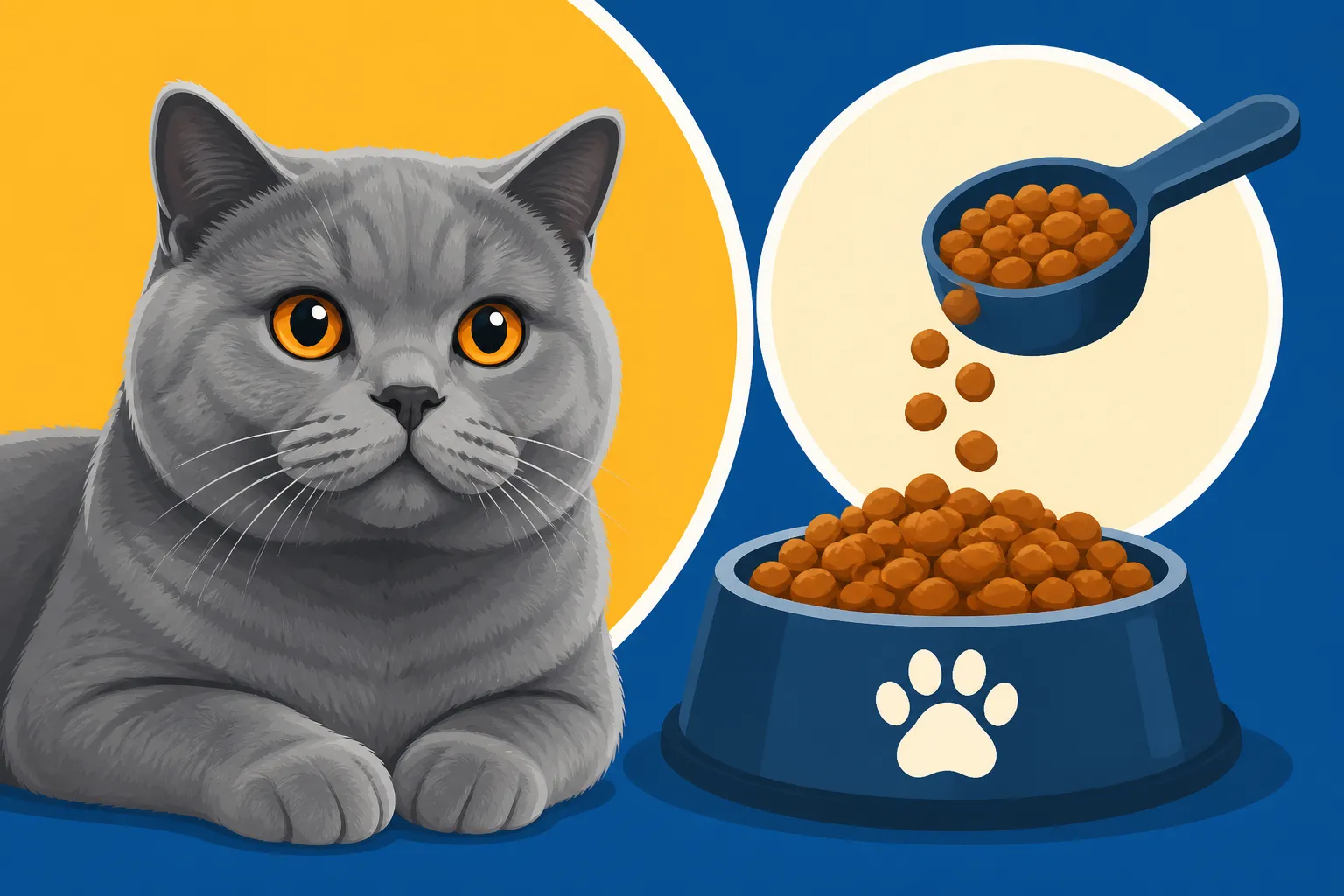
- Dry Food: If you choose dry food, measuring is absolutely non-negotiable. Don't just eyeball it. Use a kitchen scale to weigh out the exact portion, as measuring cups can be inaccurate due to kibble density variations. Check the caloric content on the bag, usually listed as "kcal/kg" or "kcal/cup," and do your math. If your cat needs 120 calories per meal, and the kibble has 400 kcal/cup, you'd feed about 1/3 of a cup (120/400). Many dry foods are available on platforms like Chewy or Amazon, making it easy to compare nutritional information.
- Wet Food: Wet food helps increase hydration, which is important for overall urinary tract health, especially given that many cats don't drink enough water. It also allows you to feed a larger volume of food for the same caloric intake, which can make your British Shorthair feel more satisfied. A typical 3-ounce can of wet food can range from 70-100 calories, but always check the label. If your cat needs 120 calories per meal, you might feed a can and a half of a 80-calorie can, for instance. This can feel like a more substantial meal, which is great for a cat who loves to eat. Whether Wet Food Keeps a British Shorthair Slimmer is a common question, and generally, the answer is yes, due to the volume and hydration.
A mixed diet, incorporating both wet and dry food, can also be a good option. For example, you might feed wet food in the morning and a precisely measured portion of dry food in the evening. This offers variety and the benefits of both.
High-Quality Ingredients and Macronutrients
Beyond just calories, the quality of the food matters. Look for foods with high-quality animal protein as the primary ingredient. Cats are obligate carnivores, meaning they need meat. Avoid foods with excessive fillers, by-products, or plant-based proteins as the main source. Foods that focus on whole, natural ingredients, perhaps even fresh-prepared options, can be excellent choices, though always review their nutritional breakdown for suitability for your BSH. Good nutrition supports muscle mass, a healthy coat, and overall vitality, even if your British Shorthair is a champion napper.
Monitoring and Adjusting Portions Over Time
Feeding isn't a set-it-and-forget-it task. Your British Shorthair's needs will change, and regular monitoring is essential to ensure they remain at a healthy weight.
The Importance of Regular Weigh-Ins
You should weigh your British Shorthair regularly, ideally once a month. A simple digital kitchen scale for kittens, or a human scale (weigh yourself, then weigh yourself holding your cat, and subtract the difference) for adults, can work wonders. Tracking their weight will help you spot trends early, allowing you to make small adjustments before a significant weight issue develops. If you notice a steady increase or decrease, it's time to re-evaluate their caloric intake and consult your vet.
Observing Body Condition and Behavior
Beyond the scale, get hands-on. Feel their ribs, spine, and hip bones. Are they easy to feel, or do you have to press hard? Look at them from above – do they have that subtle "waist" where the body narrows slightly before the hips? If they're looking a bit too round, or you can no longer easily feel their ribs, it's a clear sign you need to reduce their portions. Conversely, if they're looking too lean or you can feel their bones too sharply, you might need to increase their intake slightly.
Also, pay attention to their behavior. Are they constantly begging for food despite having just eaten? This might indicate they aren't feeling satisfied, perhaps due to low volume if you're feeding a very calorie-dense food. Puzzle feeders can help slow down eating and provide mental enrichment, which can also contribute to satiety.
When to Consult Your Veterinarian
Any significant weight change, whether gain or loss, warrants a trip to the vet. Unexplained weight loss, especially in an older British Shorthair, can be a sign of underlying health issues like hyperthyroidism or kidney disease. Conversely, sudden or rapid weight gain might indicate a metabolic issue that needs medical attention.
Your vet can also help you develop a personalized feeding plan if your British Shorthair has specific dietary needs, such as a prescription diet for Urinary Problems in a British Shorthair or Diabetes in a British Shorthair. They can guide you on specific calorie targets, recommended food types, and how often to feed for optimal health. Don't be shy about asking for help; they are your most valuable partner in your cat's health journey.
Practical Tips for Mealtime Success
Making mealtime a positive experience while maintaining strict portion control requires a bit of strategy, especially with a food-motivated British Shorthair.
Scheduled Feeding is Key
Forget free-feeding. Scheduled meals are your best friend. Decide on two to three fixed times per day and stick to them. This creates a routine that your British Shorthair will learn to anticipate, reducing anxiety and constant begging. If you're out during the day, a timed automatic feeder can be a lifesaver for delivering a precise portion of dry food while you're away.
Use a Kitchen Scale for Accuracy
As mentioned before, a kitchen scale is far more accurate than a measuring cup, especially for dry kibble. A few extra grams here and there can add up to hundreds of extra calories over weeks and months. Invest in a good digital kitchen scale; it's a small investment that pays off in your cat's long-term health.
Don't Forget Treats and Meal Replacements
Treats are lovely, and our British Shorthairs certainly know how to work their charm for them. However, those calories add up! Account for treats in your daily caloric budget. If your British Shorthair gets 20 calories in treats, reduce their main meal portions by 20 calories. Consider healthy, low-calorie options, or even use a portion of their regular kibble as "treats" during playtime. If you're using specialized meal-replacement diets, like those sometimes prescribed for specific health conditions, make sure you understand their caloric density completely. How Much Treats Ruin a British Shorthair's Diet is a very real concern for many owners.
Enrichment During Mealtime
For a British Shorthair who tends to eat quickly, food puzzles or slow-feed bowls can be incredibly beneficial. They slow down consumption, prevent digestive upset, and provide mental stimulation. This can be especially helpful for a breed that might not be interested in high-energy play. Turning mealtime into a bit of a game can make the small portions feel more satisfying and keep them engaged. You can find many options on Chewy or Amazon.
Ultimately, determining how much food a British Shorthair should get per meal is a dynamic process that involves understanding their breed-specific tendencies, individual needs, and diligent monitoring. It’s not about following a rigid chart for all cats, but about being an attentive owner who adjusts their care as their beloved British Shorthair grows and changes.
Disclaimer
This article is for general informational purposes only and does not constitute professional advice. Laws, prices and regulations vary by location and change over time. Consult a qualified professional for guidance on your specific situation.