Why a Longhair Gene Hides in a British Shorthair Litter
It can be incredibly surprising, even a little disorienting, to welcome a litter of adorable British Shorthair kittens into the world, only to find one or two sporting noticeably longer coats than their plush, teddy-bear siblings. You might find yourself questioning everything you thought you knew about purebred cats, wondering if there was a mix-up or if your beloved British Shorthair queen somehow met a rogue long-haired tomcat. Rest assured, this phenomenon, while unexpected for many, is a well-understood genetic quirk with deep roots in the breed's history. This guide will unravel the mystery of the hidden longhair gene, explaining precisely why and how these charming long-haired kittens can appear in an otherwise impeccably British Shorthair litter.
Understanding the British Shorthair Coat Type
Before we dive into the genetics of long fur, it’s essential to appreciate what makes a British Shorthair's coat so distinctive in the first place. It's not just "short"; it's a very particular kind of short.
The Iconic British Shorthair Coat
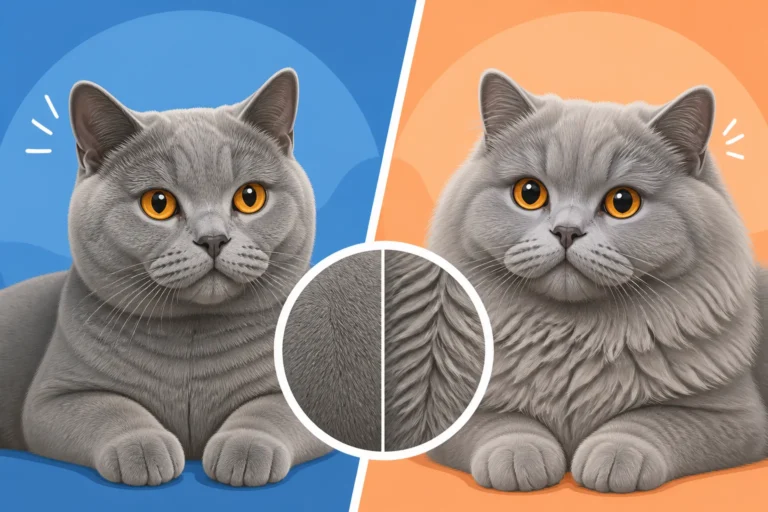
When you think of a British Shorthair, a specific image likely comes to mind: a stout, round-faced cat with a dense, plush, and incredibly soft coat. This isn't just a random trait; it's a hallmark of the breed, a defining characteristic that contributes to their beloved "teddy bear" appearance. The coat is often described as "crisp" or "double-coated," meaning it has a thick, woolly undercoat topped by slightly coarser guard hairs. This combination gives it a luxurious, almost springy feel that stands away from the body, rather than lying flat like some other shorthaired breeds. It's a coat built for resilience, historically offering protection against the damp British climate.
This unique texture and density are celebrated in the breed standard and are a significant part of their appeal. Owners often marvel at how incredibly soft yet substantial the fur feels when stroked. It's designed to be low-maintenance in comparison to longhaired breeds, requiring less intensive grooming, though regular combing is still beneficial, especially during seasonal shedding periods. What a British Shorthair's Coat Is Like goes into even more detail about this wonderful feature.
The Genetics of Shorthair Versus Longhair
At the heart of why some British Shorthairs unexpectedly produce long-haired kittens lies basic genetics, specifically how the trait for hair length is inherited. The gene responsible for coat length has two primary forms, or alleles: one for short hair and one for long hair. The short hair allele is dominant, which we can represent with a capital 'L'. The long hair allele is recessive, represented by a lowercase 'l'.
For a cat to display short hair, it only needs one copy of the dominant 'L' allele. So, a short-haired cat could either have two copies of the short hair allele (LL), meaning it's homozygous for short hair and cannot pass on the long hair gene, or it could have one copy of the short hair allele and one copy of the long hair allele (Ll). This second type of cat, an 'Ll' cat, looks short-haired because the dominant 'L' masks the recessive 'l', but it carries the gene for long hair. We call these cats "longhair carriers." For a cat to have long hair, it must inherit two copies of the recessive long hair allele (ll), one from each parent. This means that a long-haired cat will always have the genotype 'll'. The intriguing part is that you can have two perfectly short-haired British Shorthairs that are both carriers, and that's where the surprise kittens come in!
The Historical Roots of the Hidden Longhair Gene
Understanding how the gene works is one thing, but knowing why it's even present in the British Shorthair breed in the first place sheds light on the breed's fascinating history and the dedicated efforts to preserve it.
The Post-War Outcrossing with Persians
The British Shorthair breed, like many others, faced immense challenges during the World Wars. Breeding programs were disrupted, resources were scarce, and the population of purebred British Shorthairs dwindled dramatically. It was a perilous time, and the very existence of the breed was threatened. After the wars, passionate breeders were determined to revive the British Shorthair. To rebuild the numbers and re-establish the desired physical characteristics, judicious outcrossing to other breeds became necessary. One of the breeds chosen for this crucial task was the Persian.
Persian cats were selected for their cobby body type, round heads, and dense boning, which aligned with the British Shorthair standard, even though they possess long coats. The infusions of Persian blood helped restore the British Shorthair's robust structure and plush coat density. Without this strategic outcrossing, the British Shorthair breed as we know it today might not have survived. It was a trade-off, a necessary step for preservation, but it meant introducing new genetic material into the British Shorthair gene pool – including, inevitably, the recessive longhair gene. The Persians That Rebuilt the British Shorthair After the War delves into this period in more detail.
Unseen Carriers and Genetic Legacy
Following the outcrossing with Persians, many British Shorthairs, while appearing perfectly short-haired themselves, became carriers of the recessive longhair gene (Ll). Because the short hair gene is dominant, these cats displayed all the characteristic shorthair traits, their longhair gene remaining completely hidden. They were visually indistinguishable from cats that carried no longhair gene at all (LL).
Over generations, as breeders worked to solidify the British Shorthair type and eliminate undesirable traits, the longhair gene continued to be passed down. It's like a secret inherited trait, dormant until the right combination of genes comes along. Even if a breeder meticulously selects for short coats, if they unwittingly breed two carriers together, the possibility of a long-haired kitten emerges. This genetic legacy is a direct result of the breed's recovery efforts, a testament to the fact that genetics don't always follow a perfectly straight line. It's why, even decades later, you can still encounter these surprises in British Shorthair litters, proving the enduring impact of those critical historical breeding decisions.
The Mechanics of Longhaired Kitten Births
So, how does this hidden gene manifest itself? It all comes down to the simple probabilities of genetic inheritance when two carrier cats are bred together.
When Two Carriers Meet
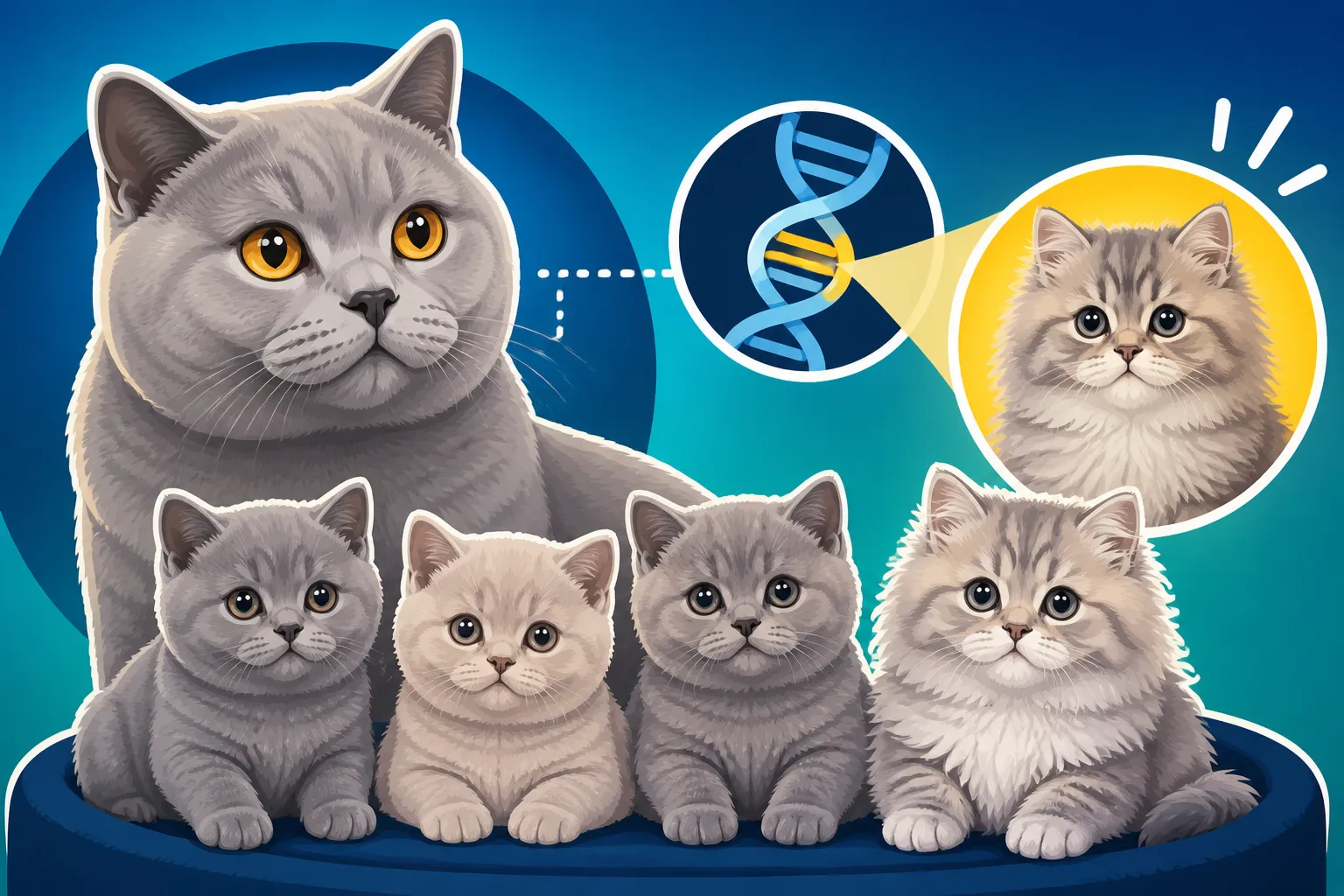
The appearance of a long-haired kitten in a British Shorthair litter is a perfect example of Mendelian genetics at work. It only happens when both the mother and the father are carriers of the recessive longhair gene (Ll). Let's imagine our two British Shorthair parents, Queen Luna and Tom Jasper. Both look typically short-haired, but unbeknownst to many, they both carry one copy of the hidden longhair gene.
When Luna and Jasper mate, each parent passes on one of their two coat-length genes to each kitten.
- Luna can pass on either an 'L' (shorthair) or an 'l' (longhair) gene.
- Jasper can also pass on either an 'L' (shorthair) or an 'l' (longhair) gene.
Here's how the combinations can play out for each kitten:
| From Luna | From Jasper | Kitten's Genotype | Kitten's Phenotype (Appearance) | Probability |
|---|---|---|---|---|
| L | L | LL | Short-haired (not a carrier) | 25% |
| L | l | Ll | Short-haired (a carrier) | 25% |
| l | L | Ll | Short-haired (a carrier) | 25% |
| l | l | ll | Long-haired | 25% |
As you can see from the table, there's a statistical 25% chance with each kitten born that it will inherit the 'l' gene from both parents, resulting in an 'll' genotype and, consequently, a long-haired coat. The other 75% of the kittens will remain short-haired, with half of those being carriers themselves, ready to potentially pass on the hidden gene in their own litters someday. It's a fascinating display of how hidden traits can resurface through generations.
What a Longhaired British Shorthair Looks Like
It's crucial to understand that a longhaired British Shorthair kitten isn't some kind of "mutt" or a "mixed breed." They are genetically 100% British Shorthair, possessing all the beloved physical attributes and temperament of the breed, save for their coat length. These kittens will still have the characteristic round head, full cheeks that give them that adorable grumpy or smiling expression, a cobby and muscular body, and short, sturdy legs. They’ll have the same beautiful copper, gold, or green eyes that are so striking in the breed. The only distinguishing feature is their fur, which will be noticeably longer, softer, and more flowing than their shorthaired littermates.
Instead of the dense, crisp short coat, they will have a medium-long coat that might feather around the ears, tail, and britches. This coat can sometimes be quite luxurious and, in many cases, is incredibly beautiful. They are essentially British Shorthairs in "long" clothing! For a long time, these kittens were considered "faults" in the purebred British Shorthair world. However, their unique charm has led to wider acceptance, and they are now increasingly recognized as a distinct breed: the British Longhair. How a British Longhair Comes Out of a British Shorthair Litter details this fascinating development, showing how breeders and enthusiasts have embraced these lovely cats.
Navigating the Longhair Gene in Breeding and Pet Ownership
For both breeders and pet owners, understanding the longhair gene offers clarity and helps in making informed decisions.
DNA Testing for the Longhair Gene
In the past, the only way to know if a British Shorthair carried the longhair gene was to breed them and see if any long-haired kittens appeared. This was a process of trial and error, sometimes leading to unexpected litters and ethical dilemmas for breeders. Fortunately, modern genetic science has provided a far more straightforward solution: DNA testing. Today, breeders can easily have their cats tested to determine their exact genotype for coat length. A simple, non-invasive cheek swab can reveal whether a cat is homozygous shorthair (LL), a longhair carrier (Ll), or even homozygous longhair (ll, though this would be visually obvious).
This testing is invaluable for ethical breeding programs. By knowing which cats are carriers, breeders can make informed decisions about pairings, either to avoid producing long-haired kittens entirely or to intentionally produce British Longhairs if that is their goal. For pet owners, while typically not necessary, if you are ever curious about your cat's genetic background, such tests are widely available through specialized veterinary labs and direct-to-consumer pet DNA services. Many basic supplies for such tests, like sterile swabs, can be found online through retailers like Amazon or specialized pet supply stores. These tests empower breeders to manage the longhair gene responsibly and transparently, ensuring that any long-haired kittens born are either intentionally bred or well-understood as a result of carrier pairings.
The British Longhair: A Recognized Variant
For a long time, the emergence of a long-haired kitten in a British Shorthair litter was seen as a breeding "fault" or an undesirable outcome. These kittens, despite their charming British Shorthair type and wonderful temperaments, often struggled to find recognition within the cat fancy. However, as appreciation for their beauty and recognition of their genetic purity grew, many cat registries around the world began to acknowledge them as a distinct but closely related breed: the British Longhair. This formal recognition has been a significant step forward, offering a legitimate path for these cats to be shown, bred, and celebrated in their own right.
British Longhairs are essentially British Shorthairs with longer coats, and they are gaining popularity for their stunning appearance and docile nature. While their care is very similar to their shorthaired counterparts, their longer fur does require a bit more attention, particularly regular grooming to prevent matting, especially during shedding seasons. A good quality steel comb, often available from pet retailers like Chewy, is indispensable for keeping their glorious coats in top condition. This acceptance highlights a positive evolution in the cat world, where genetic diversity and the beauty of all expressions of a breed are increasingly valued. So, if you encounter a long-haired British Shorthair, know that you are looking at a perfectly purebred cat, just one with a beautiful, historically inherited genetic variation.
Disclaimer
This article is for general informational purposes only and does not constitute professional advice. Laws, prices and regulations vary by location and change over time. Consult a qualified professional for guidance on your specific situation.