Whether a Microchip Feeder Works in a British Shorthair House
Oh, the eternal struggle of mealtime in a multi-cat household! It’s a scenario many British Shorthair owners know all too well: one cat is a leisurely nibbler, perhaps on a special veterinary diet, while the other is a food vacuum, ever eager to hoover up any and all kibble within reach. The result is often frustration, stolen meals, and worrying about whether everyone is getting the right nutrition. This guide is here to tackle that very common dilemma, exploring whether a microchip feeder is truly the answer to bringing peace and proper portion control to your British Shorthair’s mealtimes.
The Challenge of Mealtime in a Multi-Cat Home
Let's be honest, feeding multiple cats, especially when one or more of them are British Shorthairs, can feel like you're running a very particular kind of cafeteria. You've got the laid-back gourmet, the speedy gobbler, and sometimes, a cat on a strict diet while another needs to maintain weight. It's a delicate balance, and often, it feels like the scales are tipped against you.
The British Shorthair's Love Affair with Food
Our beautiful British Shorthairs are magnificent creatures, aren't they? That plush coat, those round eyes, the charmingly placid demeanor. But let's not sugarcoat it: many of them are also champion eaters. They often have a deep, abiding love for food that can, shall we say, get them into trouble. Their sturdy, cobby build can easily hide a few extra pounds, and before you know it, that endearing roundness starts veering into unhealthy territory. It's not uncommon to hear owners say their British Shorthair will eat whatever you put down.
Part of the issue is their famously calm, low-energy nature. While other breeds might zoom around the house, burning off calories, your British Shorthair is more likely to be found supervising from a cozy sofa cushion or a sunbeam. This lower activity level means they simply don't need as many calories as a more energetic cat, but their appetites don't always reflect that reality. This combination can make them incredibly prone to obesity if their food intake isn't carefully managed. You might find yourself constantly asking, How Many Calories a British Shorthair Needs, or wondering Why a British Shorthair Gains Weight So Easily. It's a frustrating cycle for many devoted owners who just want their beloved pets to be healthy.
The Problem of Food Theft in Multi-Pet Households
Now, imagine you have two British Shorthairs, or perhaps a British Shorthair and a more svelte, active cat. You put down food for both. The diligent British Shorthair slowly, methodically, enjoys their meal. Meanwhile, the other cat, finished with their own bowl in record time, sidles over and starts "helping themselves" to the remaining kibble. Or maybe you have a cat on a specific prescription diet for urinary health, and your British Shorthair, ever the opportunist, tries to sneak a bite. It's a common scene, filled with tension and often ending with the intended recipient getting only half their meal, or worse, consuming food that isn't good for them.
This "food policing" behavior isn't just annoying; it can lead to serious health issues. The cat on the special diet isn't getting the therapeutic benefits, and the food thief is likely consuming far too many calories, potentially leading to weight gain and associated problems. For a British Shorthair, unchecked eating can lead to serious conditions like Obesity Is the British Shorthair's Real Disease or even Diabetes in a British Shorthair. It also creates stress. The slow eater learns to gobble their food or feels anxious, while the thief might become territorial. It can even spark low-level food aggression, where one cat tries to physically block another from accessing their bowl. This kind of mealtime conflict can degrade the overall harmony in your home, which is the last thing you want for your generally peaceful British Shorthairs.
How Microchip Feeders Revolutionize Feeding
So, what's a dedicated British Shorthair parent to do when facing these mealtime dilemmas? Enter the microchip feeder – a clever piece of technology that many owners swear by for restoring order and ensuring every cat gets exactly what they need, and nothing more.
The Technology Behind Microchip Recognition
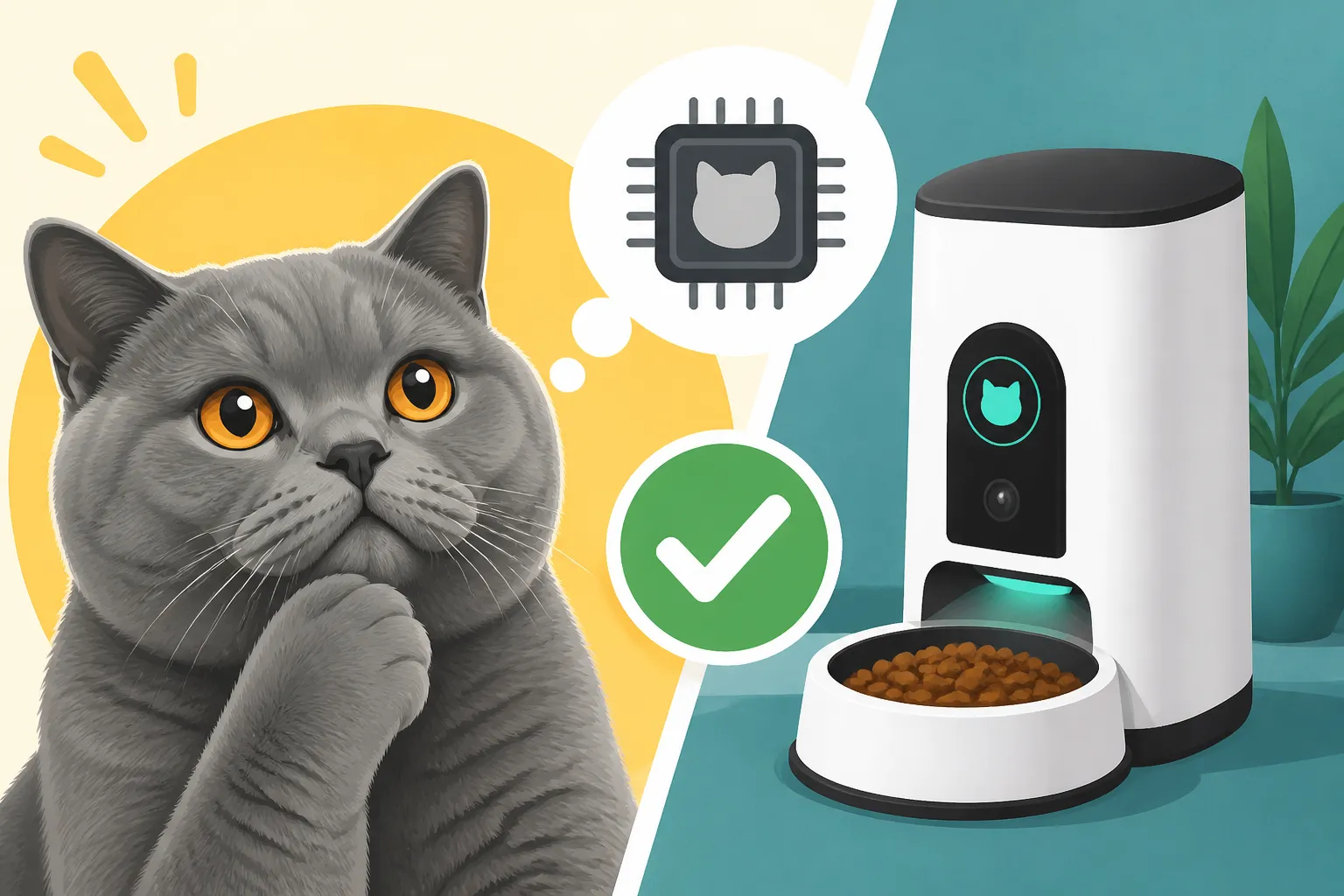
At its heart, a microchip feeder is surprisingly simple, yet incredibly effective. It's essentially a food bowl with a lid that only opens for a specific, authorized pet. How does it know who's who? It reads your cat's existing microchip – the very same one implanted by your vet for identification purposes – or a special RFID collar tag that comes with the feeder. When the designated pet approaches the feeder, its unique microchip or tag is scanned. If it matches the programmed ID, the lid slides open, granting access to the food. If not, the lid remains firmly shut. It's like having a bouncer at the door of your cat's personal buffet, ensuring only VIPs get in.
This controlled access is a game-changer. You can program each feeder for a specific cat, ensuring that your British Shorthair on a weight-loss plan only eats their diet food, while your other cat, who perhaps needs more calories, gets theirs without interference. Brands like SureFeed and PetSafe are popular choices, often available through retailers like Chewy or Amazon. Many models even allow you to control portion sizes and monitor how much your cat is eating, which is incredibly useful for managing conditions or simply ensuring healthy habits. The lid also seals the food, keeping it fresher and deterring pests, which is a nice bonus.
Setting Up and Training Your British Shorthair
Introducing a microchip feeder might seem daunting, especially with a cat that's set in their ways, but it's generally a smooth process. Most British Shorthairs, with their adaptable and calm temperaments, take to it quite well, though patience is always key.
Here’s a common approach:
- Start Uncovered: Initially, remove the lid or keep it open so your cat gets used to eating from the bowl itself. Place their regular food in it, perhaps mixed with a few high-value treats to create positive associations.
- Introduce the Movement (Without Microchip): If the feeder has a training mode or manual open/close option, use it. Let the lid open and close a few times without the microchip function activated, so your cat gets used to the sound and motion. Offer treats from the feeder while the lid is moving.
- Activate Microchip Detection: Once your cat is comfortable, activate the microchip recognition. Your cat will approach, the lid will open, and they can eat. If your cat is wary of the sound, you can gently guide them towards the feeder, using treats to encourage them. Many feeders have a 'training mode' that allows the lid to close more slowly, giving a shy cat more time to get used to it.
- Gradual Transition: If you have multiple cats, you might start by training the "victim" cat (the one whose food is usually stolen) first, and then introduce the feeder for the "thief" cat, ensuring they have their own feeder too, or are simply blocked from accessing the special diet food.
It’s crucial not to rush the process. Some cats will immediately understand and appreciate their exclusive dining experience, while others might need a few days or even a couple of weeks to fully adjust. Consistency and positive reinforcement (treats, praise) are your best friends here. Don't force them; make it a positive experience, and your British Shorthair will soon be a microchip feeder pro.
Benefits and Potential Drawbacks for British Shorthair Owners
Deciding whether to invest in a microchip feeder involves weighing its many advantages against a few potential downsides. For British Shorthair owners, in particular, the benefits often far outweigh the cons, especially given the breed's specific traits.
Ensuring Proper Nutrition and Weight Management
For a British Shorthair, a microchip feeder can be nothing short of a lifesaver for health management. We know these lovely felines are prone to packing on the pounds, and once they're overweight, it's a battle to get them back to a healthy size. An overweight British Shorthair can suffer from a cascade of issues, from What Obesity Does to a British Shorthair's Joints to a higher risk of Diabetes in a British Shorthair. A microchip feeder allows you to strictly control not just what your cat eats, but also how much.
Imagine your British Shorthair, let's call him Winston, is on a special diet prescribed by the vet to help him shed a few pounds or manage a chronic condition. Without a microchip feeder, you'd be constantly supervising Winston's meals, making sure his housemate, Daisy, doesn't sneak a bite of his expensive prescription food, or that Winston doesn't graze on Daisy's regular kibble. With the feeder, Winston's bowl opens only for him, ensuring he consumes only his designated food and no one else's. This level of precision is invaluable for adherence to dietary plans, ultimately supporting his long-term health. It helps you accurately track his intake, which is vital for calorie control and weight loss. This means you can truly implement proper Portion Control Is the Whole Job With a British Shorthair, making sure your British Shorthair gets precisely the calories they need to thrive without overdoing it. It saves you the headache of fretting over every meal and allows you to accurately measure progress if your vet has recommended a diet.
Reducing Stress and Conflict at Mealtime
Beyond the health benefits, the psychological impact on your cats and on you, the owner, can be profound. Mealtime in a multi-cat household can be a source of constant low-level stress. Cats are creatures of habit and hierarchy. When food is scarce or consistently stolen, it can create tension, leading to guarding behaviors, hissing, or even squabbles. The slow, deliberate eater might feel rushed or anxious, constantly looking over their shoulder for an approaching "food pirate."
With individual microchip feeders, each cat has their own private dining experience. The food is always available for them, and only for them. This drastically reduces the motivation for food guarding or sneaking, leading to a much calmer household environment. Your shy British Shorthair can take their sweet time eating without fear of being nudged away, and your greedy eater can't gorge on another's food. This newfound peace at the food bowls contributes to a generally happier, less stressed feline household, and let's be honest, less stress for you too! It allows cats to eat at their own pace, mimicking a more natural eating pattern rather than a competitive dash for sustenance.
Considerations and Common Hurdles
While microchip feeders are fantastic, they aren't without their considerations. It’s important to go in with open eyes.
- Initial Cost: These aren't your average plastic bowls. Microchip feeders are a technological investment, and the upfront cost can be higher than traditional feeders. However, many owners find this cost easily justified by the health benefits, reduced stress, and potential savings on vet bills from diet-related issues down the line. Check retailers like Chewy or Amazon for different models and pricing.
- Power Source and Maintenance: Most microchip feeders run on batteries, which will need to be replaced periodically. This isn't a huge chore, but it's something to remember, as a dead battery means a closed feeder! Keeping the feeder clean is also essential, just like any other food bowl, especially if using wet food.
- The Rare Wary Cat: While most British Shorthairs adapt well, a very sensitive or anxious cat might be initially put off by the feeder's moving lid or the soft whirring sound. As discussed, a slow, gentle introduction with positive reinforcement usually overcomes this. However, it's a possibility to keep in mind.
- Determined Thieves: In rare cases, a particularly clever and determined food thief might find a workaround, like sticking their head in with the authorized cat or nudging the feeder to try and open it. Most feeders are designed to prevent this, but it's not entirely impossible. Ensuring proper placement (e.g., against a wall) can help. Also, consider the size of your cats; a very small cat might be able to slip in alongside a larger British Shorthair if the feeder isn't adequately sized or positioned.
Despite these minor hurdles, for many British Shorthair owners struggling with multi-cat feeding dynamics, microchip feeders prove to be an invaluable tool.
Making the Decision: Is a Microchip Feeder Right for Your British Shorthair?
Now that we've delved into the intricacies of microchip feeders, the big question remains: are they the right solution for your British Shorthair and your household? The answer often lies in understanding your specific challenges and how this technology aligns with solving them.
Scenarios Where They Shine
Microchip feeders truly come into their own in specific situations, offering peace of mind and tangible benefits:
- Dietary Needs or Weight Management: This is perhaps the most common and compelling reason. If one of your British Shorthairs is overweight, trying to prevent future weight gain, or on a prescription diet for any health issue (such as Urinary Problems in a British Shorthair which often require special food), a microchip feeder is almost indispensable. It ensures that the right cat gets the right food, preventing cross-contamination of diets and making sure expensive therapeutic foods aren't wasted or stolen. This is crucial when considering What a British Shorthair Costs a Month on a Weight Diet or if your vet puts your British Shorthair on a prescription diet.
- Multi-Cat Homes with Varied Appetites: Do you have a British Shorthair who grazes slowly, while another cat scarfs down their food and then moves on to raid the other bowl? A microchip feeder allows the slow eater to enjoy their meal at their leisure without fear of it being stolen. This means less stress for both cats and ensures no one goes hungry or overeats.
- Homes with a Food Thief: If you have one cat that constantly steals food from another, leading to either one cat being overfed and another underfed, or both. This often results in the "thief" becoming overweight, and the "victim" potentially not getting enough nutrients. The feeder puts a definitive stop to this behavior.
- Preventing Undesirable Snacking: If you have a cat that's on strict portion control, or perhaps you just want to avoid the situation where Why Free Feeding Ruins a British Shorthair, these feeders ensure that access to food is precisely managed.
- Ensuring Specific Medications are Eaten: Some feeders can be used to dispense small, medicated treats or specifically prepared food for one cat, without others getting into it.
Alternative Solutions and When They Might Be Better
While microchip feeders are excellent, they aren't the only solution, and in some situations, alternatives might be more practical or sufficient.
- Separate Feeding Locations: If you have the space, simply feeding cats in separate rooms with the doors closed can work wonders. One cat in the kitchen, one in the bathroom, one in the spare bedroom. This allows each cat to eat in peace. The drawback is that it requires you to be present for every meal and actively manage the separation. It's often not feasible for free-feeding or multiple small meals throughout the day.
- Supervised Feeding: If your cats eat quickly and you're always home during meal times, you can simply stand by and supervise, intervening if one cat tries to steal from another. This is effective but demanding on your time and attention. It doesn't work if one cat is a very slow eater.
- Automatic Timed Feeders for Single Cats: If you only have one cat, or if all your cats have similar dietary needs and no one is a food thief, a standard automatic timed feeder might be enough. These dispense pre-set portions at scheduled times. However, they lack the "who gets what" intelligence of a microchip feeder.
- Manual Portioning and Scheduled Meals: For a single British Shorthair, or a multi-cat household where everyone gets along and has similar diets, simply measuring out food and feeding at specific times (rather than free-feeding) can be enough to manage weight. This is a fundamental step, but may not solve inter-cat food theft. Many owners also wonder How Much a British Shorthair Should Actually Eat and find that strict manual portioning is still challenging if one cat is very opportunistic.
Ultimately, the decision comes down to your unique household dynamics and the specific needs of your British Shorthair. For many British Shorthair owners, especially those with multiple cats or a feline friend on a special diet, a microchip feeder provides an elegant, effective, and stress-reducing solution that supports the health and harmony of their beloved pets. If you've got a British Shorthair, or several, and you’re tired of the mealtime merry-go-round, it’s definitely worth considering. It can genuinely make a positive difference in your daily routine and your cat's well-being. And if you're curious about managing food in a multi-cat home, you might also be interested in topics like Whether a Microchip Feeder Works in a British Shorthair House which speaks to how these devices are not just about food, but about individual cat welfare.
Here's a quick comparison of feeding strategies to help you decide:
| Feature/Consideration | Microchip Feeder | Manual Supervised Feeding | Separate Room Feeding | Standard Automatic Feeder (No Microchip) |
|---|---|---|---|---|
| Dietary Control | Excellent (specific cat, specific food) | Good (requires active supervision) | Good (requires active supervision and room separation) | Poor (all cats get same food, no individual control) |
| Weight Management | Excellent (precise portion control per cat) | Fair (relies on owner consistency) | Fair (relies on owner consistency) | Fair (portions set by timer, not cat ID) |
| Food Theft Prevention | Excellent (only authorized cat can access) | Good (if owner is present and vigilant) | Excellent (if rooms are truly separate) | Poor (anyone can access dispensed food) |
| Stress Reduction | High (individual feeding, no competition) | Low (can be stressful for owner and cats if disputes arise) | High (each cat eats in peace) | Low (still allows competition) |
| Cost | Higher initial investment | Free (time investment instead) | Free (requires physical space) | Moderate initial investment |
| Convenience | High (automated, minimal intervention) | Low (requires constant owner presence) | Moderate (requires owner presence for setup) | High (automated, but no individual cat ID) |
| Suitable for British Shorthairs | Highly recommended, especially in multi-cat homes | Possible, but demanding | Possible, but limits free access to food | Only for single BSH or very harmonious multi-cat homes |
| Best For | Special diets, weight control, food thieves | Few cats, owner always present, no special diets | Multi-cat homes with space, owner present for meals | Single cat, basic portion control, no dietary issues |
As you can see, the specific challenges posed by a British Shorthair's love for food, and the dynamics of a multi-cat household, often make the microchip feeder a standout solution. It brings a level of precision and peace to mealtime that other methods simply can't match. This can greatly contribute to ensuring your British Shorthair enjoys a long and healthy life, without the risks associated with obesity or dietary indiscretion. After all, ensuring your British Shorthair is getting the right nutrients is a key part of Caring for an Old British Shorthair and making sure they reach their full lifespan.
Disclaimer
This article is for general informational purposes only and does not constitute professional advice. Laws, prices and regulations vary by location and change over time. Consult a qualified professional for guidance on your specific situation.