How a British Longhair Comes Out of a British Shorthair Litter
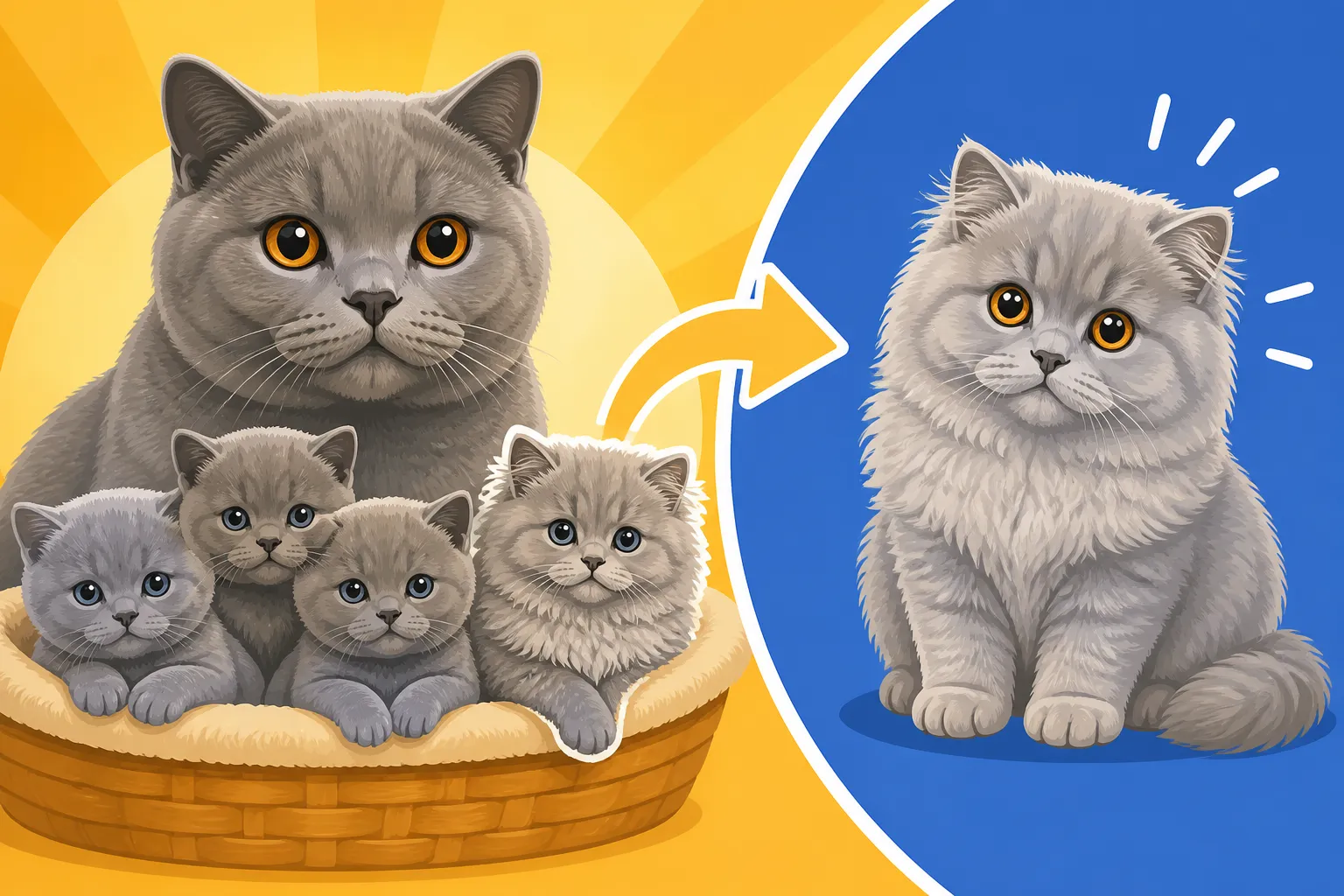
It’s a truly surprising moment for many British Shorthair breeders and new owners: you're expecting a litter of those classic, plush-coated, teddy-bear-like kittens, only to find one or two with noticeably longer, softer fur. You might stare at them, wondering if you've been sold a different breed or if there's been some kind of mix-up. This unexpected appearance of a British Longhair in a seemingly pure British Shorthair litter isn't a fluke or a mistake; it's a fascinating peek into the breed's genetic history and how recessive genes work. This guide will walk you through exactly why and how these beautiful longhaired kittens can emerge, what it means for their care, and how they fit into the British Shorthair world.
The Recessive Nature of the Longhair Gene
The sudden appearance of a longhaired kitten in a litter of British Shorthairs can be baffling if you don't understand the genetics at play. It's not about a "fault" in the breeding but rather a fascinating genetic lottery rooted deeply in the British Shorthair's past.
The Hidden Longhair Trait
The gene responsible for long hair is what geneticists call recessive. Think of it like this: for a kitten to have long hair, it needs to inherit two copies of the longhair gene – one from its mother and one from its father. If it only inherits one copy, or no copies at all, it will have short hair. The tricky part is that a cat carrying just one copy of the longhair gene will still look like a British Shorthair, with that wonderfully dense, plush coat we all adore. It’s a silent carrier, outwardly showing no signs of its hidden genetic potential. This is why sometimes breeders are completely unaware that their beloved British Shorthairs are, in fact, carriers of the longhair gene. They appear perfectly within standard, and their short coat gives no clues to the recessive gene nestled within their DNA. This hidden trait can quietly pass down through generations, making its sudden appearance feel like a genetic magic trick, when in reality, it's just the odds finally lining up. It’s a key reason Whether the Longhair Gene Is Still in the British Shorthair is such an important question for anyone involved with the breed.
How the Gene Can Remain Unseen for Generations
Because the longhair gene is recessive, it can easily go unnoticed for many generations, quietly lurking in the background. Imagine a family tree where a cat in a grandparent's generation carried the gene, but was bred to another cat who didn't carry it at all. All the kittens from that pairing would be shorthaired, and half of them would carry the longhair gene without anyone knowing. If one of those carriers was then bred to another non-carrier, the gene would continue to be silently passed down, diluted by dominant short-hair genes. It only becomes visible when two carriers happen to be bred together. In that specific pairing, there's a 25% chance with each kitten that it will inherit two copies of the longhair gene and, therefore, express long hair. This is why it can be such a shock, popping up seemingly out of nowhere, even in long-established lines that have always produced shorthairs. It's not a new mutation; it's simply a genetic inheritance pattern finally manifesting after years of being masked. Why a Longhair Gene Hides in a British Shorthair Litter is a topic that really highlights this intricate genetic dance.
The Persian Connection in British Shorthair History
The presence of the longhair gene in the British Shorthair breed isn't a mystery when you look at its history. After the World Wars, the British Shorthair breed faced dangerously low numbers, on the brink of extinction. To save the breed and expand the gene pool, breeders introduced other breeds, most notably Persians. Persians, as we all know, are famous for their luxurious, long coats. When Persians were used as outcrosses, they naturally brought their longhair genes into the British Shorthair gene pool. While careful selective breeding over decades focused on maintaining the desired plush, short coat, the recessive longhair gene remained, quietly woven into the DNA of some lines. Many of these early crosses produced kittens with a mix of characteristics, and while efforts were made to breed away from the longer coats, the gene itself couldn't be completely eliminated without extensive genetic testing, which wasn't widely available or understood at the time. This historical infusion of Persian genetics is the direct reason why the longhair gene persists in the British Shorthair today, a lingering echo of a time when the breed needed to be rebuilt. It’s a testament to the dedication of early breeders, but also a source of the occasional longhaired surprise. Understanding this history also sheds light on The Persians That Rebuilt the British Shorthair After the War.
Identifying a Longhair Kitten in the Litter
So, you're observing your adorable British Shorthair kittens, looking for those tell-tale signs. How do you actually spot a future British Longhair among its short-coated siblings? It's not always obvious from day one, but there are definitely clues that emerge over time.
Early Signs in a Newborn Kitten
When kittens are first born, they all tend to look quite similar, with soft, fine fur. It can be incredibly difficult to tell a shorthair from a potential longhair at just a few days old. Their coats are still developing, and the length difference isn't pronounced. However, if you know what to look for, there can be subtle indicators even in those first few weeks. A longhair kitten might have slightly longer fur around its ears, a noticeably fluffier tail, or more pronounced "trousers" (the longer fur on the back of the hind legs) than its littermates. It's often a feeling more than a visual certainty at this stage – a kitten that feels a bit softer, a bit more "downy" or "wispy" to the touch. The tufts between their toes might also appear a tiny bit longer, giving them a slightly "fluffier" paw. For most people, though, definitive identification won't come until a bit later, as the coat really starts to grow in. Don't worry if you can't tell right away; even experienced breeders often wait a few weeks for confirmation.
Coat Development Over Weeks and Months
The real differences in coat length become much more apparent as the kittens grow. By around 4-6 weeks old, the longhair kittens will start to distinguish themselves clearly from their shorthaired siblings. Their fur will appear less dense and more flowing than the characteristic plush, crisp coat of a British Shorthair. The tail, which might have been a subtle indicator earlier, will now be undeniably fluffier, almost like a plume. You'll notice the fur around their ruff (neck area) and on their belly is longer, and those "trousers" on their hind legs will be much more pronounced. By 8-12 weeks, there's usually no mistaking them. Their coat will continue to grow and develop, reaching its full length and glory by the time they are a year or two old, similar to how a typical British Shorthair takes time to fill out its body and head. This gradual development is why patience is key when trying to identify a British Longhair kitten. When a British Shorthair Kitten's Adult Coat Arrives gives a good timeline for overall coat development.
Distinguishing from a Simply Fluffy British Shorthair
It's important to remember that not every fluffy British Shorthair kitten is a true British Longhair. British Shorthairs naturally have a very dense undercoat and a plush, stand-off coat that can sometimes give them a deceptively "fluffy" appearance, especially when they are young or blowing their coat. What a British Shorthair's Coat Is Like describes this unique texture. A truly fluffy shorthair will still have that characteristic springy, resilient feel to its fur, and while it might look a bit bigger or softer, the individual hairs won't be as long as those of a longhair. The key distinction lies in the actual length of the individual hairs, particularly on the ruff, tail, and hind legs. A longhair's fur will visibly drape and flow, whereas even a very plush shorthair's coat will stand away from the body with a more uniform, shorter length. Think of it this way: a shorthair's coat is like a perfectly trimmed, dense carpet, while a longhair's is like a luxurious, flowing tapestry. If you're unsure, comparing the length of the fur on the ears and tail is usually the most reliable way to tell them apart.
The Impact on Breeding and Registration
The appearance of a British Longhair kitten can certainly throw a wrench into a breeder's plans and raises specific questions about pedigree, registration, and future breeding decisions. It's a situation that requires careful consideration of breed standards and ethical practices.
Breeding Program Decisions for Carriers
For breeders, discovering that one or both parent cats are carriers of the longhair gene (genetically "Lh/lh") means making some choices about their breeding program. If a breeder aims exclusively for British Shorthairs, they might decide to remove carrier cats from their active breeding program to prevent future longhair kittens. Alternatively, if the carrier cat has otherwise exceptional qualities that would benefit the breed, such as excellent type, temperament, or health, a breeder might choose to continue breeding them, but only to a cat that has been DNA tested and confirmed not to carry the longhair gene ("lh/lh"). This ensures that no longhaired kittens will be produced, though half of the resulting shorthaired kittens would still be carriers. Ethical breeders will always disclose this genetic information to potential buyers of carrier kittens, especially if those buyers intend to breed. It's a balance between maintaining breed standards and preserving valuable genetic lines. The question of Whether an Affected British Shorthair Should Be Bred (referring to a carrier) is a complex one, and good breeders approach it thoughtfully.
Registration Status of British Longhairs
For a long time, kittens born with long hair in British Shorthair litters were simply considered "pet quality" and not eligible for showing or breeding as British Shorthairs. They were essentially viewed as an unexpected, though beautiful, genetic variation. However, recognizing their unique charm and the desire of many owners to celebrate them, major cat registries like TICA (The International Cat Association) and FIFe (Fédération Internationale Féline) have now recognized the British Longhair as its own distinct breed. This means that a longhaired kitten born from British Shorthair parents can often be registered as a British Longhair, provided the parents are registered British Shorthairs and meet certain criteria. The cat fancy has evolved to appreciate these magnificent felines for their own merits, allowing them to have their own breed standard and participate in shows. This change has provided a legitimate pathway for these longhaired beauties to be celebrated. It's important to confirm the specific registration rules with your chosen registry, as they can vary. The journey of recognition for these cats is a testament to How the British Longhair Split From the British Shorthair.
The Split from the British Shorthair Standard
The formal recognition of the British Longhair as a separate breed represents a significant shift from the traditional British Shorthair standard. Historically, any deviation from the short, dense coat was considered a disqualifying fault in the show ring for a British Shorthair. Breeders worked diligently to produce cats that fit the "cobby," rounded, plush ideal. The British Longhair now has its own standard, which embraces the long, flowing coat while still retaining the classic British "type" – the broad, round head, the sturdy body, and the sweet expression. This distinction is crucial for both breeders and judges. When evaluating a British Shorthair, a long coat is still incorrect. However, a British Longhair is judged on how well its long coat, paired with the British Shorthair body type, meets its own specific criteria. This split acknowledges the genetic reality of the breed's history and allows for the development and appreciation of both types without compromising the integrity of either. Whether a British Longhair Registers as a British Shorthair directly addresses the consequence of this split.
Caring for a British Longhair from a Shorthair Litter
So, you've got this gorgeous longhaired surprise in your litter. What does that mean for their everyday life and care? While they share the wonderful temperament of their shorthaired relatives, their luxurious coats do come with some specific considerations.
Grooming Needs Compared to Shorthairs
One of the most immediate differences you'll notice with a British Longhair is their grooming requirements. Unlike the relatively low-maintenance coat of a British Shorthair, which typically only needs a weekly comb to remove loose fur and prevent tangles, a British Longhair needs more consistent attention. Their longer, softer fur, especially with a dense undercoat, is prone to matting if not regularly groomed. You'll likely need to comb them several times a week, if not daily, particularly during shedding seasons. A good quality metal comb, possibly even a specialized de-shedding tool (used sparingly and correctly to avoid damaging the coat), will become your best friend. Areas like behind the ears, under the "armpits," and on their "trousers" are common spots for mats to form. Investing in high-quality grooming tools from retailers like Chewy or Amazon can make a big difference in keeping their coat healthy and tangle-free. This regular grooming isn't just about aesthetics; it also helps prevent uncomfortable skin issues and reduces the amount of hairballs your cat might ingest. You’ll quickly find that How Often a British Shorthair Needs Combing is very different for a Longhair!
Temperament and Activity Levels
Genetically, a British Longhair is essentially a British Shorthair with long hair. This means they generally inherit the same wonderful temperament that makes British Shorthairs so beloved. They are typically calm, affectionate, and quiet cats, known for their easygoing nature. They enjoy being near their humans but aren't usually demanding lap cats, preferring to observe from a comfortable spot nearby. Their activity levels are generally low to moderate, often preferring a good nap to an intense play session. However, like all cats, they do need mental and physical enrichment. Short, interactive play sessions with wand toys or puzzle feeders can help keep them stimulated and maintain a healthy weight. Just because they have longer fur doesn't mean their personality changes dramatically; they're still those lovable, laid-back teddy bears. While How Active a British Shorthair Is generally means a calm disposition, these longhaired beauties will still enjoy a good play.
Finding Homes for British Longhairs
If you are a breeder and unexpectedly have British Longhairs in your litter, or if you're an owner who adopted a “shorthair” kitten that turned out to be a longhair, finding them suitable homes is usually not a problem. Their unique beauty, combined with the classic British Shorthair temperament, makes them very desirable companions. Many people are specifically looking for the “teddy bear” look with the added elegance of a flowing coat. When selling these kittens, transparency is key. Be upfront with potential buyers about their longhaired status, their registration (as British Longhairs, if applicable), and their specific grooming needs. Explain that while they are gorgeous, they do require more regular combing than a typical British Shorthair. Emphasize their delightful personalities and how they fit into a family environment. You might even find that some buyers actively prefer the longhaired version! Ensuring they go to homes prepared for their grooming needs will ensure a happy life for these stunning cats.
| Feature | British Shorthair | British Longhair |
|---|---|---|
| Coat Length | Short, dense, plush, crisp feel | Long, flowing, soft, dense, often with a ruff and tail plume |
| Grooming Needs | Low; weekly combing | Moderate to High; several times a week, or daily combing |
| Matting Risk | Low | Moderate to High, especially in certain areas (e.g., "armpits," "trousers") |
| Undercoat | Present, dense | Present, dense, contributes to fluffiness |
| Appearance | "Teddy bear" look, round all over | "Teddy bear" look with added elegance and length to fur |
| Temperament | Calm, quiet, affectionate, independent | Generally same as British Shorthair |
| Origin of Gene | Recessive gene from Persian outcrosses in history | Direct expression of two recessive longhair genes |
| Registration | Registered as British Shorthair | Registered as British Longhair (distinct breed) |
Disclaimer
This article is for general informational purposes only and does not constitute professional advice. Laws, prices and regulations vary by location and change over time. Consult a qualified professional for guidance on your specific situation.