How to Feel a British Shorthair’s Ribs
One of the biggest conundrums British Shorthair owners face is figuring out if their beloved chunky cat is actually a healthy weight or slowly becoming overweight. Their incredibly dense, plush coats and naturally cobby build can make it incredibly difficult to tell just by looking. This guide is here to walk you through the essential, hands-on method of feeling your British Shorthair's ribs, helping you confidently assess their body condition and ensure they stay happy and healthy.
The Unique Challenge of the British Shorthair's Physique
Let's be real, the British Shorthair is famous for its roundness! That adorable teddy bear look is part of their charm, but it's also a double-edged sword when it comes to weight management. Unlike more svelte breeds, a British Shorthair's natural conformation can easily mask those extra pounds creeping on, leaving even the most attentive owner scratching their head. It's not about denying their inherent build, but understanding how to properly gauge what lies beneath all that glorious fur.
Why Their Coat Hides Their True Shape
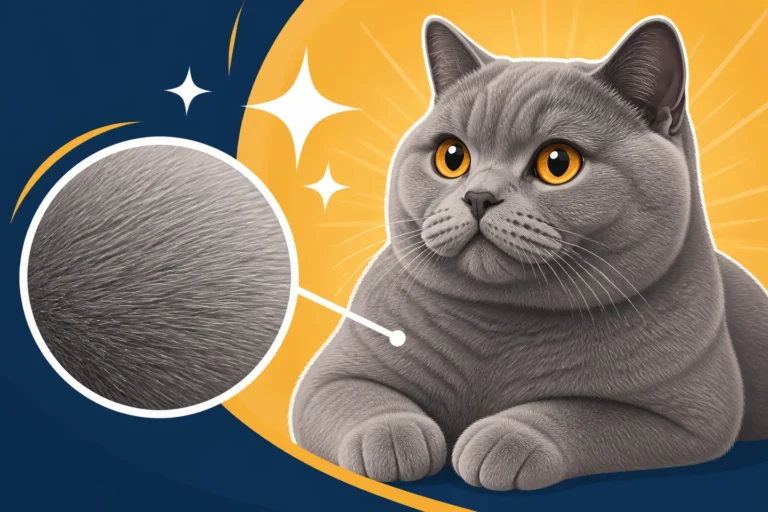
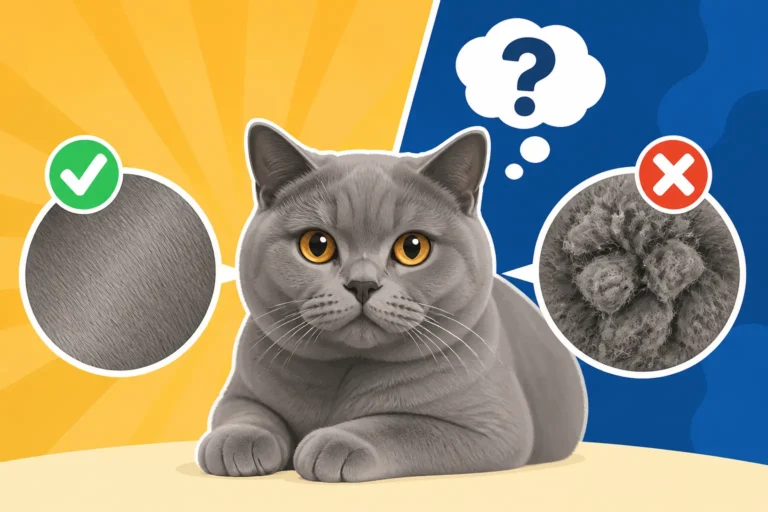
The British Shorthair's coat isn't just beautiful; it's a marvel of feline engineering designed for protection and insulation. It's short, yes, but incredibly dense with a thick undercoat that literally stands away from the body. This plushness creates a smooth, unbroken silhouette that can make any subtle changes in body shape – like a thickening waistline or ribs becoming harder to feel – completely disappear from view. You might think your cat looks perfectly fine because you can't see any obvious rolls or bulges, but the reality can be quite different under that luxurious fur. It's a common trap, and one that many owners, myself included, have fallen into at some point. It's why relying solely on visual inspection is a risky game for this particular breed. For a deeper dive into this, you might find Why a British Shorthair's Coat Hides Its Waist very illuminating.
Imagine trying to feel the shape of a bowling ball wrapped in a thick, fluffy blanket. That's a bit like what you're up against with a British Shorthair. Their fur acts as a natural buffer, smoothing out contours and making it seem like there's nothing but solid, round cat underneath. This optical illusion can lead to a false sense of security regarding their weight, especially for those who are used to breeds with sleeker, less dense coats where changes are much more visible. That's why the tactile approach – actually feeling their body – becomes paramount.
Distinguishing Cobby Build from Overweight
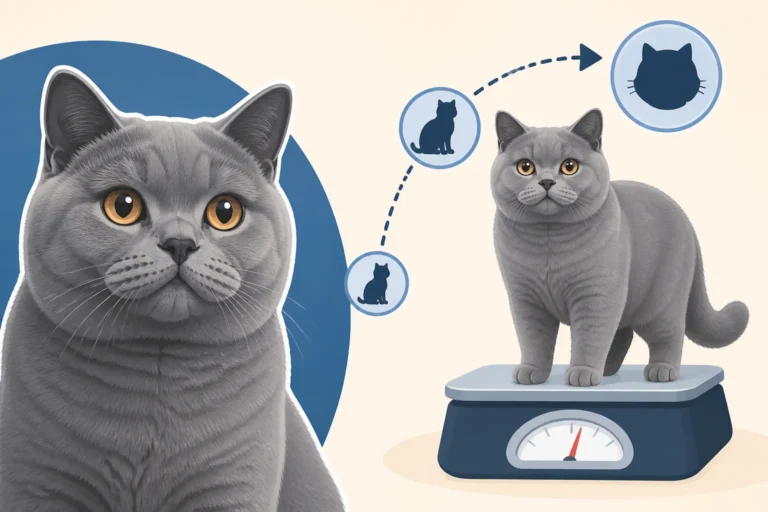
The term "cobby" is used a lot in the British Shorthair world, and it refers to their naturally sturdy, compact, and well-muscled build. They have broad chests, short, strong legs, and a generally powerful appearance. This isn't fat; it's just how they're built. However, this natural chunkiness can easily be mistaken for healthy weight when, in fact, an overweight cat will simply appear more cobby, exaggerating their natural lines in an unhealthy way. The challenge is in discerning where "cobby" ends and "chubby" begins. Why a British Shorthair Is Built to Look Heavy further explains this unique aspect of the breed.
A truly healthy British Shorthair should feel firm and substantial, not squishy or overly soft. Their muscles should be palpable, and while they might look like a fluffy cushion, their underlying structure should still be well-defined to your touch. When they become overweight, that substantial feel turns into a softer, less firm texture, and the outlines of their body become even more obscured by excess fat, not just fur. This is where the physical examination becomes your most reliable tool, allowing you to bypass the visual deception of their plush coat.
The Importance of Regular Body Condition Scoring
Body Condition Scoring (BCS) isn't just for vets; it's a crucial tool every British Shorthair owner should master. It's a standardized system that helps you evaluate your cat's fat reserves by feeling specific areas of their body, providing a more objective measure than simply stepping on a scale. Given the British Shorthair's predisposition to weight gain – they are, after all, quite content to lounge and enjoy their food – regular BCS checks are non-negotiable for their long-term health. Issues like Obesity Is the British Shorthair's Real Disease can dramatically impact their lifespan and quality of life.
Making BCS a part of your routine, perhaps during your weekly grooming session or cuddle time, can make all the difference. It allows you to catch slight weight creep before it becomes a significant problem. Early detection means simpler adjustments to their diet or activity, rather than facing a more challenging weight loss journey down the line. It empowers you as an owner to be proactive about their health, rather than reactive. For a comprehensive guide, check out How to Score a British Shorthair's Body Condition.
The "Rib Check" Method: A Hands-On Guide
Alright, let's get down to business. Feeling your British Shorthair's ribs might sound intimidating, but it's actually quite simple once you know how. The key is to be gentle, patient, and consistent. Remember, your cat might not be thrilled about being poked and prodded, especially if they're not used to it, so choose a calm moment when they're relaxed, perhaps while they're purring on your lap or after a meal. This isn't a wrestling match; it's a gentle inquiry into their well-being.
Finding the Right Spot
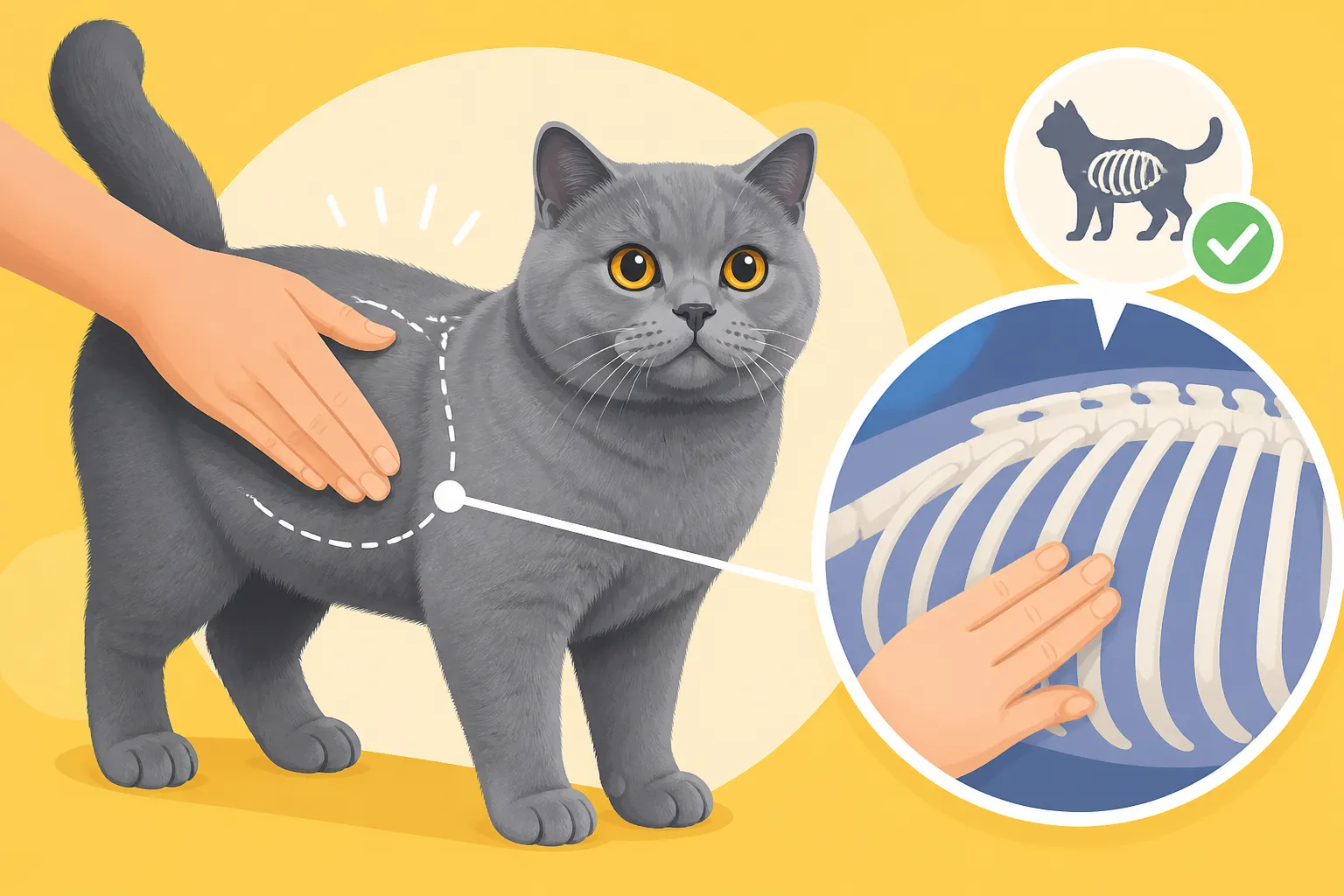
The ribs are located on your cat's sides, just behind their shoulders. To find them, gently place both of your hands on either side of your British Shorthair's chest, just behind their front legs. You'll want to apply very light pressure at first, almost like you're just stroking them. Your goal is to feel the underlying structure, not just the fur. Slowly move your hands along their sides towards their abdomen, keeping your fingers flat against their body.
Don't be afraid to experiment a little with the exact placement. Some cats have their ribs more easily felt higher up on their chest, closer to their spine, while others might be more accessible further down. The important thing is to make sure you're actually feeling the rib cage and not just soft tissue. You're essentially trying to find that bony framework beneath the plush exterior. Once you've identified the general area, you can then focus on the more specific palpation technique.
The Gentle Palpation Technique
Once your hands are in position over the rib cage, apply slightly more, but still gentle, pressure with your fingertips and palms. You want to use a motion almost like you're lightly raking your fingers across the surface, rather than pressing directly inward. The idea is to feel for individual ribs, not just a solid mass. Imagine you're trying to count them, even though you won't actually be able to count every single one. This light "raking" motion helps you distinguish between bone and the layer of fat and muscle covering it.
This process should be completely comfortable for your cat. If they flinch, try to pull away, or show any signs of discomfort, ease up on the pressure. A positive experience will make future checks much easier. You might even use a calming voice or offer a small, healthy treat afterward, maybe from a brand like Chewy, to associate the experience with something pleasant. The goal is to build a routine where your cat tolerates, or even enjoys, this little interaction.
What You Should and Shouldn't Feel
Here's the crucial part: what you're looking for and what it means. When your British Shorthair is at a healthy weight, you should be able to feel their ribs quite easily with gentle pressure, similar to how you can feel the knuckles on the back of your hand. You shouldn't have to press hard, and the ribs should feel distinct, almost like you could count them. There will be a slight layer of fat over them, giving a smooth feel, but the bones themselves should be readily apparent.
If you have to press firmly to feel the ribs, or if they feel like they're deeply buried under a cushion of flesh, your cat is likely overweight. On the other end of the spectrum, if the ribs feel sharp, prominent, and have no discernable fat covering, your cat might be underweight. While underweight British Shorthairs are less common than overweight ones, it's still something to be aware of. The ideal is that smooth, palpable sensation—a happy medium between boney and buried.
Interpreting Your Findings: Body Condition Scoring (BCS)
Now that you've got a handle on feeling those ribs, it's time to translate what you've felt into a formal Body Condition Score. This standardized system, typically on a 5-point or 9-point scale, helps you objectively categorize your British Shorthair's weight status. It's much more reliable than just saying "oh, they feel a bit chubby" because it gives you a clearer benchmark.
Understanding the BCS Scale
Most veterinarians use either a 1-5 scale (where 3 is ideal) or a 1-9 scale (where 5 is ideal). Let's focus on the 5-point scale, as it's often simpler for owners to grasp initially:
- BCS 1 (Emaciated): Ribs, spine, and hip bones are easily visible and palpable with no fat covering. Severe abdominal tuck.
- BCS 2 (Underweight): Ribs are easily palpable with minimal fat covering. Waist is very obvious.
- BCS 3 (Ideal): Ribs are easily palpable with a slight fat covering. Waist is visible but not exaggerated.
- BCS 4 (Overweight): Ribs are difficult to feel due to moderate fat covering. Waist is less apparent.
- BCS 5 (Obese): Ribs are very difficult to feel or not palpable at all under a thick fat layer. No waist or abdominal tuck; abdomen may sag.
This scale provides a universal language for discussing your cat's weight, making conversations with your vet much more productive. It helps you track progress if your cat is on a weight management plan, allowing for objective assessment rather than subjective guesses.
British Shorthair Specifics on the Scale
For a British Shorthair, a BCS of 3 on a 5-point scale (or 5 on a 9-point scale) is the target. However, remember their inherent cobby build. A British Shorthair at an ideal weight will still look robust and round, especially in the face and head, and their body will feel solid. The key is that while they are visually substantial, their ribs, and other bony prominences like the spine and hip bones (which we'll discuss later), should still be readily palpable with that gentle touch.
Don't expect them to look lean and angular; that's not their breed type, and aiming for that could actually make them underweight. The challenge is in finding that sweet spot where their natural bulk is supported by healthy muscle and a slight, protective layer of fat, rather than being overshadowed by excessive adipose tissue. It's about knowing the difference between "big-boned" and simply "big."
When to Seek Veterinary Advice
If your British Shorthair consistently scores a 4 or 5 on the BCS scale, or if you're struggling to even find their ribs, it's definitely time for a visit to the vet. They can provide an accurate assessment, rule out any underlying health issues contributing to weight gain, and help you develop a safe and effective weight loss plan. Trying to crash diet a cat can be incredibly dangerous, leading to serious liver problems, so professional guidance is essential. The vet can also advise on appropriate portion sizes and suitable diets, perhaps recommending specific brands or formulations you can find on platforms like Chewy or Amazon.
Even if you believe your cat is at an ideal weight (BCS 3), it's always a good idea to confirm your assessment with your vet during routine check-ups. They have a trained eye and hands, and can offer valuable insights. Plus, these regular visits are crucial for overall health monitoring. How Often a British Shorthair Needs a Wellness Exam can give you more details on routine care. Don't be shy about asking for a demonstration of how to perform a BCS check during your appointment; most vets are happy to teach you.
Beyond the Ribs: Other Indicators of a Healthy Weight
While the rib check is incredibly important, it's just one piece of the puzzle. A comprehensive body condition assessment involves looking at other areas of your British Shorthair's body. These additional checks provide supporting evidence and help you get a full picture of their weight status.
Checking the Waist and Abdominal Tuck
After feeling the ribs, the next area to focus on is the waist and abdominal tuck. From above, when you look down at your British Shorthair while they are standing, you should ideally see a slight indentation or "waist" just behind their rib cage, before their hips. This might be subtle in a British Shorthair due to their broad build and dense coat, but it should still be there. If their body forms a straight line from their ribs to their tail, or if it bulges out, they are likely overweight.
From the side, observe their belly. A healthy British Shorthair should have a slight "abdominal tuck" where the belly area rises gently upwards from the bottom of the rib cage to the groin. It shouldn't hang down or create a prominent pouch, though some cats, especially after being spayed or neutered, can develop a primordial pouch (a flap of skin and fat) that hangs loosely. The key is to distinguish between a healthy pouch and an actual fat-filled, sagging abdomen. If you're seeing a significant belly that sags, it's a strong indicator of excess weight.
| Body Area | Ideal British Shorthair (BCS 3) | Overweight British Shorthair (BCS 4-5) |
|---|---|---|
| Ribs | Easily palpable with slight fat covering; feel like knuckles. | Difficult to feel or not palpable; buried under fat. |
| Waist (from above) | Slight, discernible indentation behind the ribs. | Straight line or bulging out behind the ribs; no clear waist. |
| Abdominal Tuck (from side) | Gentle upward slope from rib cage to groin. Some primordial pouch is normal. | Sagging, prominent belly; no upward tuck or excessive, pendulous pouch. |
| Spine & Hip Bones | Palpable with gentle pressure, slight fat covering. | Difficult to feel under fat layer. |
Assessing the Spine and Hip Bones
Just like with the ribs, you can use your fingertips to gently palpate your British Shorthair's spine and hip bones. Run your hand down their back, from their neck to the base of their tail. At an ideal weight, you should be able to feel the individual bumps of their vertebrae, but they shouldn't feel sharp or prominent. There should be a smooth, thin layer of muscle and fat over them. If you can't feel the spine at all, or it feels like a soft, flat surface, it's another sign of excess fat.
Similarly, gently feel around their hip bones, which are located on either side of the base of their tail. In a healthy British Shorthair, you should be able to feel these bony points with light pressure, but they shouldn't protrude sharply. If they're completely buried under fat, it indicates an overweight condition. Conversely, if they're very prominent and have no cushioning, it could signal being underweight. Again, the dense fur can hide these areas, making the tactile check essential.
Behavioral Clues and Activity Levels
Beyond physical checks, your British Shorthair's behavior can offer significant clues about their weight. Are they moving less than usual? Are they struggling to jump onto their favorite window perch or the sofa? Overweight cats often exhibit reduced activity levels, becoming even more sedentary than their naturally calm disposition suggests. They might breathe harder after minimal exertion, or simply seem less interested in play. Signs a British Shorthair Is Overweight outlines many of these behavioral changes.
Another tell-tale sign is difficulty grooming, especially reaching their back and hindquarters. If you notice their coat looking unkempt in those areas, or if they start to develop mats there, it could be because they simply can't bend and reach due to their size. Pay attention to how enthusiastically they engage with toys or if they're more interested in food than anything else. A noticeable shift in their energy, mobility, or grooming habits warrants a closer look at their weight and a conversation with your vet. Getting a Low Energy British Shorthair to Move can offer tips if you're finding your cat too sedentary.
Maintaining a Healthy Weight for Your British Shorthair
Once you have a clear picture of your British Shorthair's body condition, the next step is to ensure they stay within that healthy range. This breed is particularly prone to weight gain, so a proactive approach to diet and exercise is paramount for their longevity and quality of life. It’s not just about looking good; it's about preventing a host of health problems.
The Role of Diet and Portion Control
This is arguably the most critical aspect of managing a British Shorthair's weight. These cats are often highly food-motivated and, thanks to their calm nature, don't burn many calories just going about their day. It's incredibly easy to overfeed them, even by just a few kibbles a day. Portion Control Is the Whole Job With a British Shorthair really hits the nail on the head. You need to be diligent about measuring their food precisely. Don't just "eyeball it" or fill the bowl when it looks low.
Work with your vet to determine the ideal daily caloric intake for your British Shorthair based on their current weight, target weight (if they need to lose some), age, and activity level. Stick to that number religiously. Opt for high-quality, protein-rich foods and consider incorporating wet food, as its higher moisture content can help with satiety and hydration. Brands often have weight management formulas which can be helpful. You can often find a good selection and competitive pricing on platforms like Amazon or Chewy, making it easy to get consistent food deliveries right to your door. Remember, even healthy treats count towards their daily caloric allowance, so factor them in or choose very low-calorie options. For an idea of how much they generally eat, see How Much an Adult British Shorthair Eats.
Encouraging Play and Activity
Let's face it, getting a British Shorthair to be an Olympic athlete is probably not going to happen. They are not typically high-energy cats, preferring a good nap over an intense chase. However, even small bursts of activity can make a big difference in calorie expenditure and muscle maintenance. The trick is to find what motivates your British Shorthair.
Wand toys are often a huge hit, as they allow you to control the movement and entice them without requiring too much effort from your cat. Feather teasers, soft balls they can bat around, or even a laser pointer (used carefully and ending with a tangible reward to prevent frustration) can encourage them to move. Aim for short, frequent play sessions throughout the day, perhaps 5-10 minutes a few times a day, rather than one long, exhausting one. Puzzle feeders are also fantastic for mental stimulation and making them "work" for their food, slowing down eating and burning a few extra calories in the process. Remember, consistency is key, even if it's just a gentle sway of a feather wand from the comfort of your sofa.
Regular Vet Check-ups and Monitoring
Even with all your best efforts, regular veterinary check-ups are indispensable for your British Shorthair's health. Your vet can provide accurate weight measurements, confirm your BCS assessment, and catch any subtle health issues that might affect their weight or overall well-being. They can also offer tailored advice, adjusting diet or exercise plans as your cat ages or if their health status changes. What a British Shorthair's Yearly Bloodwork Should Cover highlights other important health markers.
If your British Shorthair is on a weight loss journey, your vet can help monitor their progress safely, ensuring they lose weight gradually, which is critical for feline health. They might suggest specific prescription diets if needed. Think of your vet as your partner in keeping your British Shorthair in peak condition. Regular visits ensure you have professional eyes on your beloved pet, catching problems early and providing the best possible care throughout their long and happy life.
Disclaimer
This article is for general informational purposes only and does not constitute professional advice. Laws, prices and regulations vary by location and change over time. Consult a qualified professional for guidance on your specific situation.