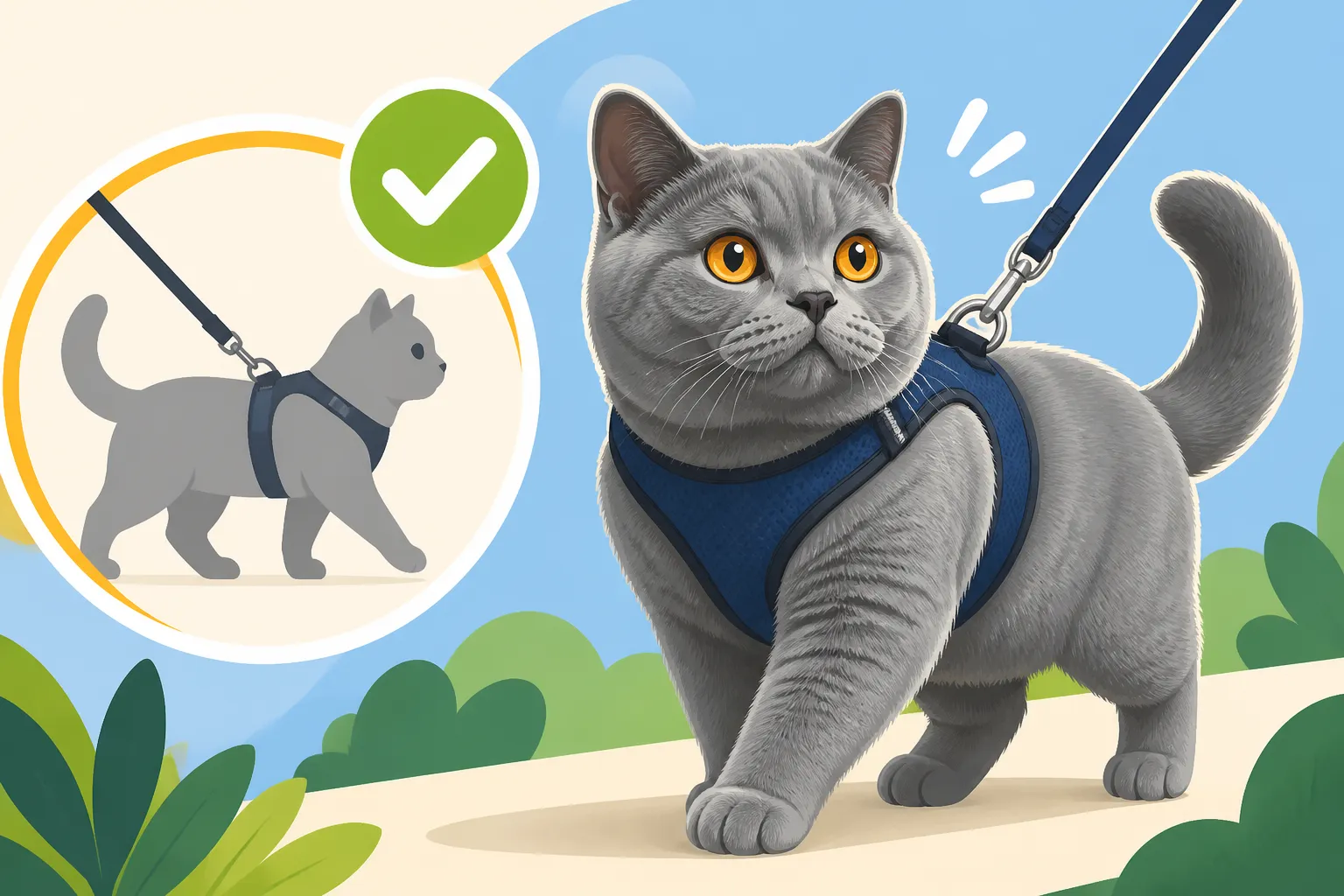
How Well a British Shorthair Can Be Harness Trained
It’s a common fantasy for many British Shorthair owners: picturing your beautiful, calm companion strolling gracefully alongside you on a leash, enjoying the fresh air and new sights. The reality, however, often involves a bewildered cat flopping dramatically to the ground, refusing to move a single paw, or attempting a Houdini-level escape from the harness. If you've ever felt that mix of hopeful anticipation and utter bewilderment when trying to introduce your British Shorthair to a harness, you are absolutely not alone. This guide is here to walk you through the nuances of harness training, helping you understand your British Shorthair's unique temperament and how to gently encourage them towards safe, enriching outdoor adventures.
Understanding Your British Shorthair's Nature and Why Training Can Be a Challenge
Before we even get to the "how-to," it's vital to appreciate the core personality traits that make British Shorthairs who they are. These traits, while endearing, can sometimes make harness training feel like an uphill battle. It's not that they're being difficult on purpose; it's simply how they're wired.
The Myth of the "Lazy" British Shorthair
Many people perceive British Shorthairs as inherently lazy, content to simply be a fluffy, purring rug. While it's true they are generally lower energy than some other breeds, this label doesn't quite capture the full picture. They are often calm and placid, certainly, but not necessarily "lazy" in a way that means they don't need mental or physical stimulation. Their stillness can sometimes be misinterpreted as a lack of desire for activity.
The truth is, a British Shorthair often prefers short bursts of play and quiet observation over vigorous, sustained exercise. They might seem perfectly happy lounging on the sofa, but that doesn't mean they wouldn't benefit from a change of scenery or a new challenge. The challenge with harness training isn't just getting them to move, but convincing them that the effort of wearing the harness and exploring is worth it. For a cat whose default is often "contentedly still," the addition of a restrictive item and an unfamiliar environment can feel like an unnecessary imposition on their serene existence. We explore more about their activity levels in How Active a British Shorthair Is.
The British Shorthair's Independent Streak
Despite their affectionate nature, British Shorthairs are typically very independent creatures. They often prefer to be near you rather than on you, and while they enjoy your company, they aren't usually described as clingy. This independence extends to their willingness to try new things, especially if it involves something they perceive as restricting their movement or personal space.
When you try to put a harness on a British Shorthair, you're essentially asking them to give up a degree of that independence and comfort. They're not always keen on being told what to do or having unfamiliar objects placed on them. This isn't defiance, but rather a strong sense of self-preservation and comfort. They might view the harness as an intrusion, and their initial reaction will often be to freeze, resist, or simply try to remove it. Their calm demeanor can sometimes hide a stubborn resolve! Understanding What a British Shorthair's Temperament Is Really Like can help set realistic expectations.
Sensitivity to New Experiences
British Shorthairs thrive on routine and predictability. They generally don't appreciate sudden changes to their environment or schedule. Introducing a harness and the idea of walking outdoors is a significant departure from their usual indoor life, which can be a source of stress or anxiety for them. Every new scent, sound, and visual stimulus encountered outside will be an intense experience.
Their plush coats and compact bodies, while adorable, also mean they might feel constricted by a harness more keenly than a svelter cat. The sensation of fabric against their fur, the buckle's pressure, and the pull of a leash can all be overwhelming at first. Patience is absolutely key here, as rushing the process can create a negative association that is very hard to overcome. Think about how they handle other changes, like How a British Shorthair Handles a House Move, and you'll get a sense of their preference for stability.
The Benefits of Harness Training for a British Shorthair
Even with these challenges, the rewards of successful harness training can be immense, offering enriching experiences that purely indoor living simply can't provide. It's about expanding their world safely and thoughtfully.
Enriched Environment and Mental Stimulation
While your British Shorthair might enjoy a good nap (and let's be honest, they're experts at it), a life spent entirely indoors can sometimes lack sufficient mental stimulation. The sights, sounds, and smells of the outdoors, even in a controlled setting like your backyard or a quiet park, offer a wealth of sensory input that can keep their minds sharp and engaged.
Think about it: the rustle of leaves, the scent of a passing dog, the chirp of a bird, the feel of grass beneath their paws – these are all novel experiences that can prevent boredom and promote a healthier, happier cat. For a breed that might not be inclined to Play for a British Shorthair That Would Rather Not for long periods, short, controlled outdoor excursions can provide a valuable form of enrichment that taps into their natural feline curiosity without requiring high-energy romps. It's less about exercise and more about exploration.
Safe Outdoor Exploration
The primary benefit, of course, is the ability to allow your British Shorthair to experience the outdoors safely. Free-roaming cats face numerous dangers: traffic, fights with other animals, exposure to diseases, parasites, and getting lost. A harness and leash eliminate many of these risks, giving you control while still letting your cat explore.
This controlled exposure is especially important for British Shorthairs who, due to their placid nature and lack of street smarts compared to a feral cat, would be particularly vulnerable if allowed to roam freely. It allows them to feel the sun on their fur, smell the flowers, and observe the world from a secure vantage point, without you having to worry about their safety. This can be a fantastic compromise for owners who want to give their cats some outdoor time but firmly believe Whether a British Shorthair Should Go Outside unsupervised is too risky.
Building Your Bond
Believe it or not, successful harness training can actually deepen the bond you share with your British Shorthair. The process requires immense trust, patience, and positive reinforcement from you. When your cat learns to associate the harness and outdoor adventures with pleasant experiences and your calm, supportive presence, it reinforces the idea that you are a safe, benevolent leader who introduces them to wonderful new things.
Think of it as a shared adventure. You're exploring the world together, and your cat relies on you for security and guidance. This shared experience can strengthen the emotional connection, making your British Shorthair even more attuned to you. It's a journey, not just a destination, and every positive step builds that bond a little more firmly.
Step-by-Step Guide to Harness Training Your British Shorthair
Now that we understand the "whys," let's dive into the "hows." Remember, slow and steady wins the race, especially with a British Shorthair.
Choosing the Right Harness
This is arguably one of the most crucial steps. A poorly fitting or uncomfortable harness will guarantee failure before you even begin. For British Shorthairs, with their compact, broad-chested, and plush build, a vest-style harness is often the best choice. These harnesses distribute pressure more evenly across their chest and shoulders, rather than concentrating it around the neck, which can be particularly uncomfortable for a cat.
Look for harnesses made from soft, breathable materials that won't chafe their dense fur. Adjustable straps are essential to ensure a snug, yet not restrictive, fit. You should be able to comfortably slip two fingers under the harness at any point. When you're browsing online, perhaps on sites like Amazon, look specifically for "cat harnesses" or "escape-proof cat harnesses" and pay close attention to reviews from owners of larger, cobby breeds. Avoid thin strap-style harnesses, as a determined British Shorthair can often back out of these with surprising ease. Measuring your cat carefully – around the neck and behind the front legs – is non-negotiable before ordering.
| Harness Type | Pros | Cons | Best for British Shorthairs |
|---|---|---|---|
| Vest Harness | Even pressure distribution, very secure, harder to escape | Can be bulky, some cats dislike the feel | Highly Recommended |
| H-Style Harness | Lighter, less bulky | Less secure than vest, can put pressure on throat | Can work for some, but less ideal |
| Figure-8/Strap | Very lightweight, minimal material | Easy to escape, concentrates pressure on throat | Not Recommended |
Introduction and Acclimatization
The harness needs to become a normal, non-threatening object first. Don't just spring it on them. Start by simply leaving the harness out in a common area where your British Shorthair can see, sniff, and investigate it at their leisure. Place it near their food bowl or favorite sleeping spot. You can even place treats on or near it.
After a few days, or when they seem completely unconcerned by its presence, gently place the harness on them for very short periods – literally 30 seconds to a minute initially. Distract them with a favorite treat or a Which Toys a British Shorthair Will Actually Chase moment during this time. The moment you take it off, offer another treat and lots of praise. Repeat this several times a day, gradually increasing the duration over several days or even weeks. Never leave them unattended with the harness on at this stage, as they might get tangled or panic. If they show signs of stress (flattened ears, hiding, struggling), take it off and try again later, shortening the duration next time.
First Steps with the Leash
Once your British Shorthair is comfortable wearing the harness for 10-15 minutes at a time without seeming bothered, it's time to introduce the leash. Attach the leash inside the house, letting it drag behind them for a few minutes while you supervise. This allows them to get used to the weight and feel of it.
Next, pick up the leash and let them wander around a small, familiar room with you gently holding the end. Don't pull or guide them initially; just follow their lead. Reward them with treats and praise for any movement while wearing it. If they flop, gently encourage them with a treat held in front of their nose. The goal here isn't to walk them, but for them to associate the leash with positive experiences and understand that it won't hurt them. Keep these sessions short and sweet, ending on a positive note. Remember, for a cat who is quite happy being still, getting them to accept this new restriction and still move is a big ask.
Graduating to Outdoor Adventures
Only when your British Shorthair is completely at ease with the harness and leash indoors should you consider venturing outside. Start with a very quiet, contained outdoor space, like a fenced backyard or a screened-in porch. Choose a calm time of day with minimal distractions.
Carry your cat outside in their harness and leash, and gently place them down. Let them explore at their own pace. Do not pull on the leash or try to force them to walk. Allow them to sniff, observe, and get accustomed to the new environment. Your role is primarily to supervise and ensure their safety. Again, bring treats and offer praise for any signs of curiosity or comfortable exploration. Keep these first outdoor sessions very brief – just a few minutes – and gradually increase the time as your cat becomes more confident. If they seem overwhelmed or scared, gently pick them up and bring them back inside. It’s better to end on a slightly less successful note and try again than to traumatize them. You're building a foundation for potential How Well a British Shorthair Can Be Harness Trained over time.
Common Hurdles and Troubleshooting for British Shorthair Harness Training
Even with the best intentions, you're likely to encounter a few challenges. Here's how to navigate them with your British Shorthair.
The "Statue Cat" Phenomenon
Ah, the classic British Shorthair response: you put the harness on, and they immediately become a furry, unmoving sculpture, often collapsing onto their side with a look of utter betrayal. This isn't laziness; it's a combination of feeling restricted, unsure, and possibly a bit dramatic. They're hoping if they just play dead, you'll remove the offending item.
The key here is patience and positive reinforcement. Don't try to pull them or force them to move. Instead, entice them with high-value treats (like Churu sticks or cooked chicken) placed just out of reach. Use a favorite toy to encourage a step or two. If they take even one wobbly step, shower them with praise and treats. Make it a game. You might also try starting with the harness on just before mealtime; their hunger might be a stronger motivator to move than their desire to be a statue. For cats with a generally low activity level, as noted in Getting a Low Energy British Shorthair to Move, this is a completely normal reaction and not a sign of failure on your part.
Escapologists and Safety Measures
Some British Shorthairs, despite their typically calm demeanor, can become surprisingly adept at slipping out of harnesses if it's not fitted correctly. Their dense coats can make it tricky to gauge the tightness, and a moment of panic can give them the adrenaline boost needed to squirm free.
Always double-check the fit before stepping outside. The harness should be snug enough that you can't easily pull it over their head or past their armpits, but not so tight that it restricts breathing or movement. As mentioned, vest harnesses are generally harder to escape than H-style or strap harnesses. If your British Shorthair shows signs of being an escapologist, consider a harness designed with extra security features, like a double closure or a chest plate that prevents backing out. Always supervise closely, especially in unfamiliar environments. It only takes a second for a scare to turn into a lost cat situation.
When It Just Isn't Their Thing
Here's the realistic bit: despite all your efforts, some British Shorthairs simply will not take to harness training. They might tolerate the harness indoors but become utterly terrified or distressed outdoors. Or they might simply refuse to move at all, every single time. And that's okay.
Not every cat is destined to be an adventure cat. Forcing an experience that causes fear or intense stress will not enrich their lives; it will only create anxiety and damage your bond. If after consistent, patient attempts over weeks or even months, your British Shorthair shows no enjoyment and only resistance or fear, it's perfectly fine to accept that this isn't for them. There are many other ways to provide enrichment indoors, such as puzzle feeders, vertical spaces like Which Cat Tree a British Shorthair Uses, or simply more dedicated playtime indoors. The goal is always their happiness and well-being, not fulfilling a human ideal of what a cat "should" do.
Let's look at a quick comparison of harness types that might help you decide:
| Feature | Vest Harness | H-Style Harness |
|---|---|---|
| Comfort | Generally higher, spreads pressure evenly | Can be less comfortable on the throat/chest |
| Security | Very secure, difficult for cats to escape | Easier for clever cats to back out of |
| Bulkiness | Can feel a bit bulky for some cats | Minimal bulk, lighter feel |
| Material | Often soft, breathable fabrics | Usually webbing straps, can be less forgiving |
| Best for BSH? | Yes, typically the best option | Can work, but requires a very secure fit |
| Price Point | Varies, often slightly higher due to material | Generally lower for basic models |
Remember, your British Shorthair is an individual. What works for one cat might not work for another, even within the same breed. Listen to your cat, be patient, and celebrate every tiny step forward.
Disclaimer
This article is for general informational purposes only and does not constitute professional advice. Laws, prices and regulations vary by location and change over time. Consult a qualified professional for guidance on your specific situation.