How to Get a British Shorthair to Play Daily
It’s a common scenario for many British Shorthair owners: you look at your beloved, fluffy companion, probably curled up in a perfect biscuit on the sofa, and wonder if they ever actually want to play. These wonderful cats are known for their placid, easygoing nature, which is undeniably part of their charm. However, this calm demeanor can sometimes be mistaken for outright laziness, leaving owners scratching their heads about how to encourage a bit more activity. You know your British Shorthair needs exercise for their physical and mental well-being, but getting them to engage can feel like an Olympic sport in itself. This guide is here to help you navigate the unique world of British Shorthair play, offering practical, empathetic strategies to get your cuddly cloud moving daily.
Understanding Your British Shorthair's Play Style
Before you can get your British Shorthair to play daily, you need to truly understand how they play. These aren't your typical high-octane, bouncing-off-the-walls felines. Their play style is often more nuanced, less frantic, and definitely requires a different approach than you might use with a more hyper breed. It’s easy to feel frustrated when your carefully chosen new toy sits untouched, but with a little insight, you’ll see that your British Shorthair is just being, well, a British Shorthair.
The British Shorthair's Natural Inclination Towards Calmness
If you've ever owned another cat breed before welcoming a British Shorthair into your home, you might have been surprised by just how still they can be. It’s easy to look at your British Shorthair lounging on the sofa, seemingly glued to the cushions, and wonder if they ever feel like playing. This isn't laziness, per se, but rather an inherent part of their delightful temperament. British Shorthairs are typically calm, dignified, and quite content to observe the world from a comfortable vantage point. They aren't usually found scaling curtains or performing acrobatic feats. Their dense, plush coats and sturdy, cobby bodies aren't built for prolonged, intense activity in the same way a sleek, lean Abyssinian or a playful Siamese might be. This characteristic calmness means that their need for play, while still present and important, manifests differently. It's about quality, not necessarily quantity, when it comes to their energy expenditure. Understanding that How Far a British Shorthair Is Lazy or Just Calm is crucial to setting realistic expectations and tailoring your approach to their unique personality. They enjoy comfort and security, and their environment plays a huge role in how much they feel inclined to move.
Recognizing Subtle Play Cues
One of the biggest mistakes owners make is expecting a British Shorthair to overtly demand play like some other breeds. You won't often find them batting at your leg incessantly or bringing you a toy in their mouth. Their play cues are far more subtle, requiring a keen eye and a bit of patience on your part. Instead of an obvious invitation, look for small flickers of interest. This might be a slight twitch of the tail tip as a toy passes their line of vision, or a subtle dilation of their famously round eyes. Sometimes, they might even stalk a toy with an almost imperceptible shift of weight, watching it for a solid minute before making a move. They're thinkers, strategists, taking their time to assess the "prey" before committing.
They might also exhibit a slow, deliberate stretch, a "predator stretch" if you will, that hints at an impending burst of energy. Don't mistake their stillness for disinterest; often, it's intense focus. They're processing, planning their attack, or simply enjoying the mental stimulation of watching. Learning these quiet signals is key to knowing when to engage them and when to respect their peaceful solitude. If you miss these subtle cues, you might think they never want to play, when in reality, they were just waiting for the perfect moment, or for you to present the "prey" in an enticing way.
The "Zoomie" Myth: Short Bursts versus Marathon Play
Forget the idea of your British Shorthair performing "zoomies" across the house for ten minutes straight, chasing a toy with boundless energy. While kittens and younger British Shorthairs might have more energetic bursts, even then, their play tends to be short and sweet. As they mature, these brief, intense sessions become the norm. They might pounce on a wand toy, capture it, give it a good bunny-kick, and then be done. Their idea of a strenuous workout might be a quick dash down the hall, a leap onto a low cat tree, and then a return to their favorite napping spot, all within a minute or two.
This isn't to say they don't need regular activity; quite the opposite. But expecting them to play for extended periods can lead to frustration for both you and your cat. Instead, embrace the short burst. Five minutes of focused, engaging play is far more effective than trying to coax them into a 20-minute session they simply aren't built for. A quick hunt, a successful "kill," and then a peaceful retreat mimics their natural instincts perfectly. Understanding How Much Play a British Shorthair Needs often involves appreciating these concentrated bursts of energy rather than expecting sustained periods of vigorous activity. In fact, How Long a British Shorthair Plays Before Stopping can often be measured in mere minutes, or even seconds, before they decide it's time for another nap.
Strategies for Engaging Your British Shorthair
Now that we understand their unique play style, let's talk about the practical strategies that actually work. British Shorthairs thrive on routine and subtlety, and their heavy build means that toys that encourage low-impact movement or mental engagement often yield the best results. The goal isn't to turn them into an Olympic athlete, but to provide consistent, enjoyable stimulation that keeps them healthy and happy.
The Art of the Wand Toy
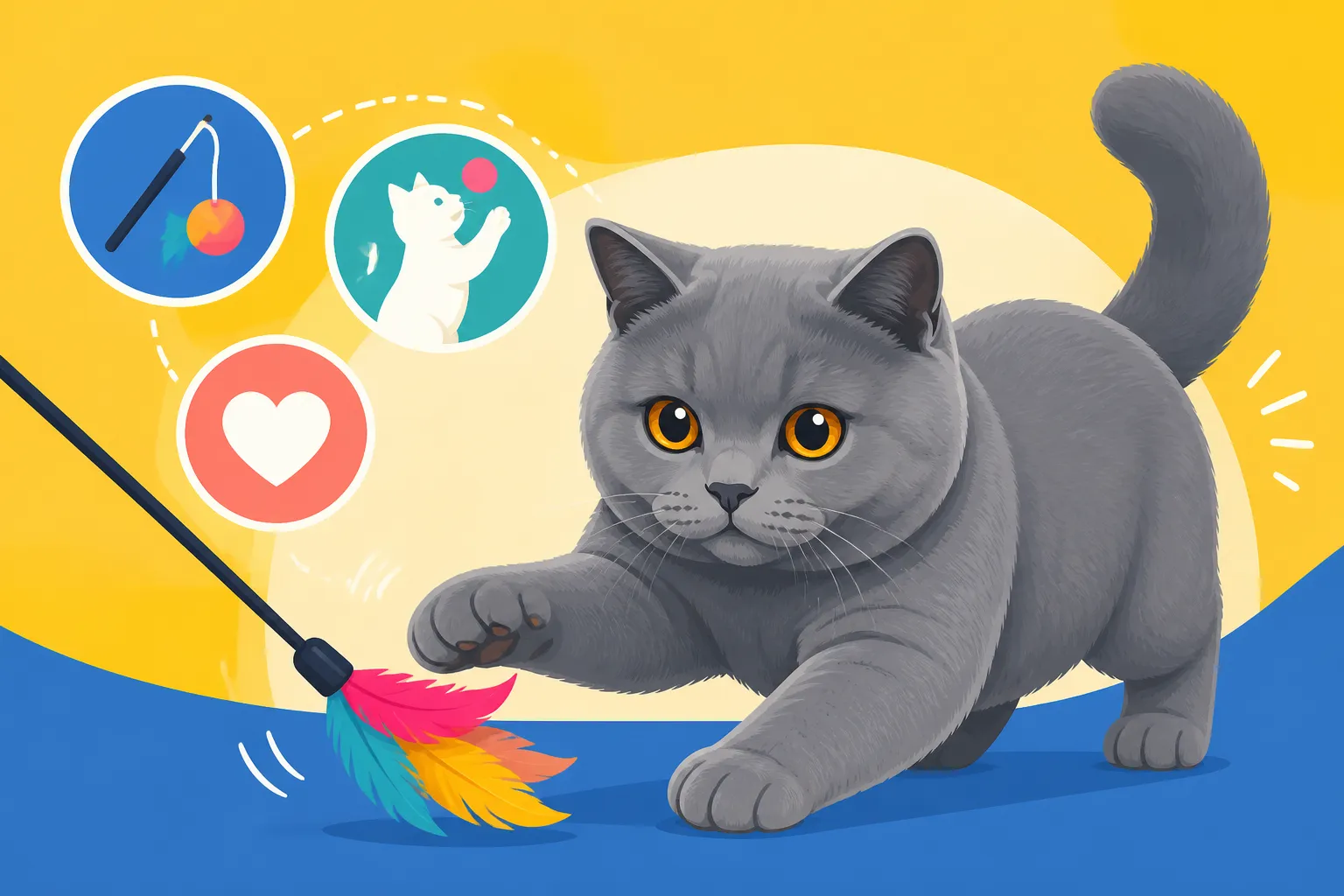
If there's one toy that consistently wins over the hearts (and paws) of British Shorthairs, it's the wand toy. The reason is simple: it allows you to mimic prey movement from a safe distance, engaging their hunting instincts without making them feel threatened or overwhelmed. A wand toy allows for subtle movements – the rustle of a feather, the slow crawl of a string – that capture their attention far more effectively than a toy dangled directly in front of their face. When using a wand toy, think like a mouse or a bird. Drag it along the floor, hide it behind furniture, let it peek out and disappear. This "hide and seek" approach taps into their natural predatory sequence: stalk, chase, pounce, capture.
Experiment with different attachments. Some British Shorthairs adore feathers, others prefer soft, fluffy items, and many can't resist a crinkly ribbon. You can find an excellent variety of wand toys and attachments on Amazon, allowing you to try out different styles to see what truly sparks your cat's interest. Don't wave it wildly; slow, deliberate movements followed by quick dashes are much more captivating. Always let them "catch" the toy at the end of a session, allowing them to feel the satisfaction of a successful hunt. This builds their confidence and encourages them to engage more readily in future play. Discovering Which Wand Toy a British Shorthair Will Chase is half the battle won when it comes to consistent engagement.
Utilizing Puzzle Feeders and Food Motivation
Many British Shorthairs are, let's be honest, quite food-motivated. This can sometimes lead to an issue with weight management, but it can also be a powerful tool for encouraging activity. Instead of simply placing their meals in a bowl, leverage their love of food with puzzle feeders. These ingenious devices require your cat to use their paws and brains to extract treats or kibble, turning mealtime into an engaging, active session. Puzzle feeders come in various forms, from simple treat balls they roll around to more complex mazes and trays. You can find a fantastic array of options for different difficulty levels on Amazon, catering to your British Shorthair's intelligence and patience.
Beyond structured puzzle feeders, you can also turn your home into a "hunt" for food. Hide small portions of their daily kibble in different low-level spots around the house – under a rug, behind a chair leg, or even in a cardboard box. This encourages them to get up, explore, and "forage," providing mental stimulation and gentle physical exercise. This strategy is particularly effective because for many British Shorthairs, the promise of a tasty reward is often Whether Food Is the Only Thing That Moves a British Shorthair. It converts their natural inclination to eat into a form of enriching activity, addressing both their need for mental stimulation and their physical requirement for movement, especially vital given their propensity to gain weight.
Creating an Enriching Environment
While British Shorthairs aren't typically known for their love of extreme climbing, they still benefit immensely from an enriched environment that offers various vantage points and interesting spaces to explore. A common misconception is that because they are less athletic, they don't need things like cat trees. This isn't true; they just need different kinds of climbing structures. Opt for sturdy, stable cat trees with large platforms and wide ramps or steps, as their solid build means they need secure footing. Consider how cost (What a Cat Tree for a Heavy British Shorthair Costs) might be a factor, as these more robust options can sometimes be pricier, but they are an invaluable investment in your cat's well-being. Look for trees that are shorter and wider, designed for lounging and easy access rather than vertical scaling.
Window perches are also a fantastic addition. British Shorthairs love to observe the world outside, and a comfortable, secure window perch provides hours of passive entertainment and mental stimulation. It allows them to feel engaged without expending a lot of energy. Knowing How Much a British Shorthair Uses a Window Perch can help you decide on placement and type. Cardboard boxes, crinkle tunnels, and even paper bags (handles removed for safety!) can provide simple, yet highly engaging, temporary hiding spots and play areas. Remember to rotate toys regularly to keep their interest piqued. A toy that's been put away for a few weeks feels brand new when it reappears. This constant novelty ensures that Whether Toys Are Wasted Money on a British Shorthair becomes a non-issue; if used correctly, every toy can offer value.
| Toy Type | Best For | Engagement Strategy | Benefits |
|---|---|---|---|
| Wand Toys | Mimicking prey, interactive play | Slow drags, sudden darts, hiding, letting them "catch" | Satisfies hunting instinct, builds bond, good exercise |
| Puzzle Feeders | Food-motivated cats, mental stimulation | Hide treats/kibble, encourage pawing/rolling | Slows eating, mental enrichment, gentle movement |
| Laser Pointers | Quick bursts of chase, low physical effort | Keep sessions short, always end with a physical toy catch | High engagement, gets them moving, but needs a "kill" |
| Ball/Track Toys | Solo play, gentle batting | Leave in accessible areas, rotate frequently | Low-effort entertainment, encourages independent movement |
| Crinkle Balls/Mice | Solo play, auditory stimulation | Scatter around house, especially under furniture | Appeals to sound, encourages stalking and pouncing |
| Cardboard Boxes | Hiding, exploring, scratching | Provide fresh boxes often, cut holes for entry/exit | Safe space, encourages exploration, acts as a temporary den |
Establishing a Consistent Play Routine
Consistency is paramount when it comes to encouraging daily play in a British Shorthair. These cats thrive on predictability and feel more secure when they know what to expect. By integrating play into their daily schedule, you not only ensure they get the necessary physical and mental exercise but also strengthen your bond and enhance their overall well-being. It’s about building a habit, for both of you, that respects their natural rhythms.
Timing Is Everything: When to Initiate Play
Cats, including British Shorthairs, are crepuscular, meaning they are most active during dawn and dusk. These are your golden hours for play. Their instincts tell them that these are the prime times for hunting, and you can tap into that natural drive. Try to schedule short play sessions early in the morning, perhaps right before your breakfast, and again in the evening, before their dinner. Engaging them before meals can be particularly effective, as it links the exciting activity of "hunting" (playing) with the satisfying reward of eating. This mimics the natural sequence of hunt-eat-groom-sleep, which makes the play feel more purposeful and rewarding to them.
While you might be thinking, "But my British Shorthair just wants to sleep all day," tapping into these natural rhythms can often unlock a surprising amount of energy. If you find your British Shorthair is nudging you for food first thing in the morning, that’s a perfect opportunity. Instead of rushing to the food bowl, grab a wand toy for a quick five-minute chase. It’s a great way to channel that wake-up energy. Understanding their biological clock, rather than trying to force play at an unnatural time, will yield far better results.
Short, Frequent Sessions Are Key
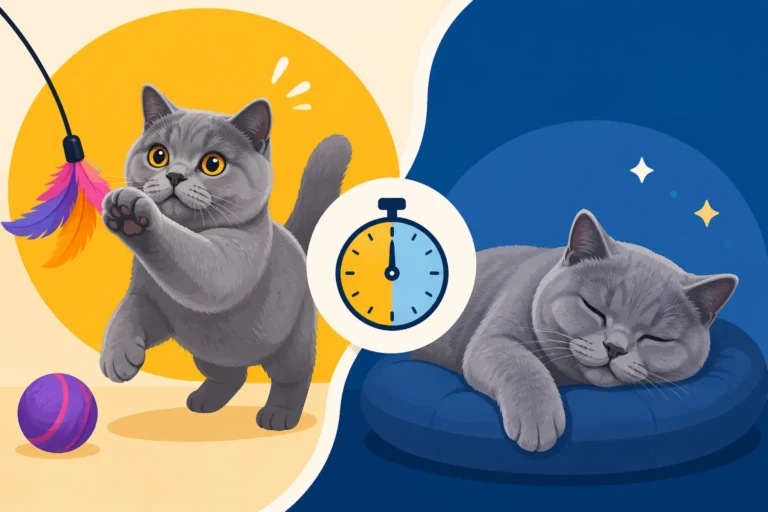
As we've discussed, British Shorthairs aren't designed for marathon play sessions. Trying to force them into a 20-minute intense workout will likely result in them flopping down halfway through, looking at you as if to say, "Are you done yet?" The secret to success with this breed is short, frequent bursts of play. Aim for two to three sessions of 5-10 minutes each day. These concentrated periods of activity are much more aligned with their natural energy levels and attention spans.
Think of it like this: a human might go for a long run, but a British Shorthair prefers several short sprints. These brief, engaging moments of play accumulate over the day, providing plenty of physical activity and mental stimulation without exhausting them or making play feel like a chore. The consistency of these frequent sessions is what builds the routine and keeps them engaged. They learn to anticipate these special times with you, even if their enthusiasm is expressed subtly. This consistent interaction also reinforces your bond, making them feel loved and attended to.
Making Play Irresistible (Even for the Reluctant)
Sometimes, despite your best efforts, your British Shorthair might still seem reluctant to engage. This is where patience and persistence come into play, along with a few tricks to make play utterly irresistible. Firstly, always end a play session on a high note – let them "catch" the toy. This is critical for their psychological well-being; it fulfills their hunting instinct and provides a sense of accomplishment. If you always pull the toy away before they can capture it, they might become frustrated and eventually lose interest. The "kill" is the reward for their effort.
Secondly, consider a small, high-value treat immediately after a successful play session. This positive reinforcement creates a strong association between playing and getting something delicious, making them more eager to participate next time. Thirdly, never force play. If your British Shorthair isn't in the mood, respect their decision and try again later. Forcing an interaction can create negative associations. The goal is to make play a fun, rewarding experience, not a stressful one. If your British Shorthair needs a little extra encouragement to get moving, remember that How to Get a British Shorthair to Move often involves making the activity worthwhile for them. Ultimately, How Much Play Keeps a British Shorthair Slim is less about intense cardio and more about consistent, enjoyable engagement that taps into their natural instincts and keeps them mentally and physically stimulated.
Disclaimer
This article is for general informational purposes only and does not constitute professional advice. Laws, prices and regulations vary by location and change over time. Consult a qualified professional for guidance on your specific situation.