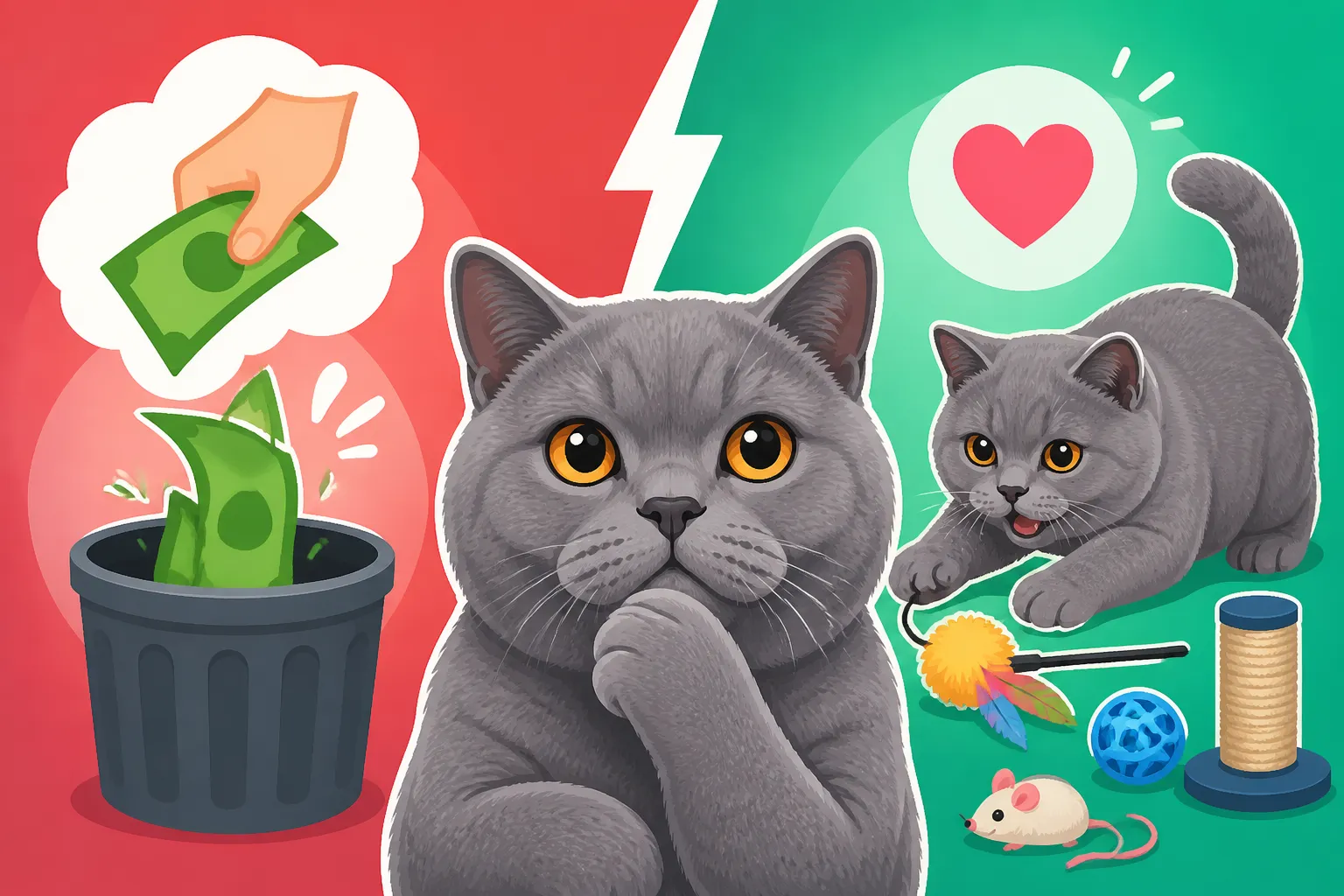
Whether Toys Are Wasted Money on a British Shorthair
It's a common and completely understandable frustration for British Shorthair owners: you spend money on all sorts of enticing cat toys, only to watch your beloved feline give them a disdainful sniff, maybe a half-hearted bat, and then resume their important nap. You might start wondering if toys are just wasted money on a British Shorthair that seems perfectly content with a sunbeam and a soft cushion. This guide is here to assure you that while your BSH might not be a wild, toy-chasing maniac, investing in the right kind of toys and understanding their unique play style is crucial for their physical and mental well-being, and definitely not a waste!
Understanding the British Shorthair's Unique Play Ethic
Let's be honest, British Shorthairs aren't known for their Olympic-level athleticism or boundless energy. They're more of the refined, dignified sort, preferring quiet contemplation to chaotic sprints. Understanding this inherent nature is the first step to making toy choices that resonate with their personality.
Why They're Not Your Typical Hyperactive Cat
British Shorthairs are magnificent creatures, renowned for their calm, placid demeanor. They're the quintessential "couch potato" of the cat world, happiest when observing the world from a comfortable perch rather than tearing through it. This isn't laziness in a negative sense; it's simply their breed characteristic. Unlike more high-energy breeds that might scale curtains or chase laser pointers for hours, a British Shorthair’s activity levels are naturally much lower. They possess a wonderfully robust, cobby body and a dense bone structure, which contributes to their substantial presence and often a reluctance for overly strenuous activity. If you've ever wondered How Much a British Shorthair Weighs, you'll know they're solid cats, and their build isn't designed for sustained, frantic play.
This inherent calmness can sometimes be misinterpreted by owners. You might see your cat lounging for hours, occasionally stretching, and conclude that they simply don't do play. However, beneath that plush exterior and serene gaze lies a cat that still possesses natural instincts and needs stimulation. The challenge isn't that they don't want to play; it's that their definition of "play" might be a bit different from what we expect from a more sprightly feline. Validating your observations that they are not hyperactive is important because it sets the stage for choosing appropriate toys and play methods.
The British Shorthair's Preferred Play Style
When it comes to play, think quality over quantity, and mental over purely physical. British Shorthairs often engage in short bursts of activity, followed by equally long periods of rest. They still have a strong hunting instinct, but it manifests more as a thoughtful stalk and pounce rather than a frenetic chase. They're less likely to be impressed by a toy that requires constant, high-speed pursuit, and more likely to engage with something that mimics natural prey movements or challenges their intellect.
Their preference often leans towards independent play or interactive play that is controlled and predictable. They might enjoy batting a toy around quietly on their own, or engaging with you using a wand toy for a few intense minutes before gracefully retreating for a nap. It's about triggering their predatory sequence – stalk, pounce, capture – rather than sustained aerobic exercise. They might observe a toy for a long time before deciding to interact, making you think they're uninterested when they're actually "planning their attack." This observational phase is part of their play, so don't write off a toy just because they don't immediately dive in.
The Truth About British Shorthair and Toys: Not a Waste, But an Investment
Given their calm nature, it’s tempting to think that toys are superfluous. But make no mistake, purposeful play with the right toys is not a luxury; it's an essential part of keeping your British Shorthair healthy and happy. It's an investment in their overall well-being.
More Than Just Entertainment: Health Benefits
One of the most significant reasons why toys are not wasted money on a British Shorthair is their direct impact on health. This breed is particularly prone to weight gain due to their relaxed lifestyle and hearty appetites. Obesity Is the British Shorthair's Real Disease, and it's a condition that can lead to a host of other health issues, including diabetes, heart problems, and significant strain on their joints. Regular, even if brief, play sessions are a vital tool in preventing and managing obesity. Every little bit of movement counts towards burning calories and maintaining a healthy metabolism.
Beyond just preventing weight gain, consistent physical activity from play helps to maintain muscle tone and flexibility. Their sturdy build can become quite stiff if not moved regularly, leading to issues like What Obesity Does to a British Shorthair's Joints. Play also offers crucial mental enrichment. Cats, even docile ones, need to stimulate their minds. Boredom can lead to stress, anxiety, and even behavioral problems like overgrooming or inappropriate elimination. Engaging toys can provide a healthy outlet for their natural instincts, keeping their minds sharp and their spirits high. Think of play as a form of preventative medicine, helping to ensure a longer, healthier life for your cherished companion, which can also help keep future vet bills in check, an area where companies like Healthy Paws can provide peace of mind.
Strengthening Your Bond Through Play
It’s easy to feel a strong bond with a cat who curls up on your lap for hours. But for a British Shorthair, who might prefer to sit near you rather than on you, interactive play can be a powerful way to deepen your connection. Even short, meaningful play sessions where you engage directly with your cat can build trust and reinforce positive associations between you.
When you take the time to understand their play preferences and engage them on their terms, it shows them you respect their boundaries and understand their unique personality. This shared experience creates a sense of companionship and mutual enjoyment. You learn to read their subtle cues – the twitch of a tail, the widening of eyes, the slight shift in posture – that indicate they're interested. This non-verbal communication during playtime strengthens your understanding of each other. It’s not just about tossing a toy; it’s about sharing a moment, even if it's just for five minutes of gentle wand play before they decide they've had enough excitement for the moment.
Choosing Toys That Actually Entice a British Shorthair
Since British Shorthairs aren't usually in a hurry to chase every single toy, selecting the right toys is paramount. This isn't about buying the most expensive or flashy items; it's about choosing toys that align with their specific instincts and physical capabilities.
Prioritizing Comfort and Durability
Given their solid build and sometimes surprisingly strong jaws (especially the males with their impressive jowls!), toys for British Shorthairs need to be robust. Flimsy toys will quickly succumb to their focused, if brief, attention. Look for items made from durable materials that can withstand a good pounce and a determined chew. Plush toys should have strong seams and be filled with safe, non-toxic stuffing. Avoid toys with small, easily detachable parts that could pose a choking hazard.
Materials like tough rubber, dense fabric, or even sturdy cardboard can be excellent choices. Online retailers like Chewy often have detailed descriptions and customer reviews that can help you gauge a toy's durability. It’s better to invest in a few high-quality, long-lasting toys than a pile of cheap ones that will quickly fall apart and end up as wasted money. Remember, their play might be less frequent, but it can be intense when they decide to engage, so the toys need to stand up to it.
Engaging Their Minds: Puzzle and Interactive Toys
For a breed that enjoys a mental challenge more than a physical marathon, puzzle toys are an absolute game-changer. These toys, which often require your cat to figure out how to release treats or kibble, tap into their natural problem-solving abilities and hunting instincts. They provide excellent mental stimulation, combat boredom, and have the added benefit of slowing down their eating, which is fantastic for weight management. If you've ever pondered Whether a Puzzle Feeder Motivates a British Shorthair, the answer is often a resounding yes, precisely because it engages their brain power.
Beyond food puzzles, consider interactive toys that don't always require your direct participation. Think about automatic laser pointers (used sparingly and always with a physical toy at the end to "catch"), motion-activated toys, or toys that dispense treats at random intervals. These can keep a British Shorthair mildly engaged for longer periods, providing stimulation even when you're busy. They cater to their independent nature while still offering an element of surprise and engagement.
The Allure of Simplicity: Wand Toys and Crinkle Balls
Sometimes, the simplest toys are the most effective. British Shorthairs often respond wonderfully to wand toys, precisely because you control the movement. This allows you to mimic prey behavior – darting, hiding, and pausing – which deeply appeals to their inner hunter. You can make the "prey" move slowly, then quickly, then let it hide, engaging their stalking instincts without requiring them to run laps around the house. When choosing, consider Which Wand Toy a British Shorthair Will Chase; often, feather attachments or soft, furry ends work best.
Don't underestimate the power of a simple crinkle ball or a lightweight, soft ball that they can bat around. These items are easy for them to manipulate with their paws and mouth, and the crinkling sound can be incredibly enticing without being overwhelming. Some British Shorthairs love chasing these quiet toys, pouncing on them, and then carrying them off for a private play session. Sometimes, a plain paper ball or even a balled-up receipt can be more fascinating than the most expensive engineered toy, tapping into that primal allure of something new and disposable.
Maximizing Toy Value: Strategies for Engaging Your British Shorthair
It's not just about what toys you buy, but how you introduce and manage them. With a British Shorthair, a thoughtful approach can turn seemingly "wasted" toys into cherished playthings.
The Element of Novelty: Toy Rotation
Imagine if you had access to every single book you've ever owned, all at once, all the time. Soon, even your favorites might start to lose their appeal. The same goes for cat toys. If all your British Shorthair's toys are always available, they'll quickly become part of the background, losing their "newness" and excitement. This is where toy rotation comes in.
Instead of leaving all toys scattered around, select a few to be available for a week or two, then put them away and bring out a different set. This simple strategy reintroduces an element of novelty and surprise, making old toys feel new again. When a toy reappears after a hiatus, your British Shorthair is much more likely to show renewed interest, sniffing it, batting it, and engaging with it as if they've never seen it before. It keeps their environment mentally fresh and ensures that your investment in toys continues to pay off over time.
Short, Frequent Play Sessions Are Key
Trying to force a British Shorthair into a 30-minute play marathon is a recipe for frustration for both of you. Their natural play style is characterized by short, intense bursts, often followed by a prompt return to rest. Rather than one long session, aim for multiple, brief playtimes throughout the day. Five to ten minutes, two or three times a day, is far more effective and enjoyable for them than a single, drawn-out session.
Fit these sessions into their natural routine: maybe a quick wand play before breakfast, another after your morning coffee, and a final one before bed. Observe your cat's cues; when they start to lose interest, when their tail stops twitching with excitement, that's your signal to stop. Ending a session while they're still slightly engaged leaves them wanting more, making them more likely to look forward to the next session. This respects their energy levels and natural rhythm. While How Much Exercise a British Shorthair Needs isn't a lot, these short bursts prevent them from becoming completely sedentary, helping to mitigate issues like Why a British Shorthair Is So Still.
Making Play Irresistible: Scent and Catnip
Sometimes, a toy just needs a little extra oomph to grab a British Shorthair's attention. Catnip is a classic for a reason! A quick rub of catnip on a new toy, or refreshing an old one, can often spark immediate interest. Not all cats react to catnip, but for those that do, it can transform a mundane object into an exciting plaything. Similarly, silvervine is another natural stimulant that many cats respond to, even if they're immune to catnip.
You can also use scent enrichment in other ways. Hiding toys and encouraging your cat to "hunt" for them can engage their natural sniffing and tracking behaviors. Sometimes, simply letting a new toy sit where it can pick up household scents before being introduced can make it more intriguing. Remember, a British Shorthair's world is heavily influenced by scent, so incorporating this into their play strategy can make toys far more appealing.
Beyond Store-Bought: DIY and Household Items
You don't always need to spend a fortune on fancy gadgets. Many of the most engaging "toys" for a British Shorthair can be found right in your own home, often for free!
Repurposing Common Household Objects
Before you rush to buy another expensive toy, take a look around. A crinkled piece of paper, a balled-up foil wrapper (supervise closely with foil!), or even a simple empty cardboard box can provide hours of entertainment for a British Shorthair. Boxes are particularly beloved; they offer a secure, enclosed space for hiding, observing, and pouncing. Which Cat Tree a British Shorthair Uses might depend on its sturdiness, but a cardboard box is always a hit. The novelty of something "new" from the recycling bin can often outweigh the appeal of a store-bought item.
When using household items, always prioritize safety. Ensure there are no small parts that can be swallowed, no sharp edges, and no toxic materials. Avoid string, yarn, or ribbon unless you are actively supervising play, as these can be extremely dangerous if ingested. A simple paper bag (with the handles cut off to prevent strangulation) can be a fantastic tunnel or hiding spot. The rustle and crinkle can be incredibly alluring to a British Shorthair, offering both auditory and tactile stimulation.
Creating a Stimulating Environment
Toys are just one piece of the puzzle. A truly engaging environment encourages natural behaviors and prevents boredom. While British Shorthairs aren't typically big climbers, a sturdy, low cat tree or a comfortable window perch can provide vertical interest and a prime spot for "bird TV." They might not scale it to the ceiling, but a moderate height allows them to survey their domain, which is a key part of feline well-being. How Much a British Shorthair Climbs is generally less than other breeds, so a modest, stable structure is often preferred.
Ensure you have appropriate scratching surfaces – both vertical posts and horizontal pads. This satisfies their natural need to scratch, helps maintain claw health, and can redirect destructive scratching away from your furniture. Which Scratching Post a British Shorthair Uses will depend on their individual preference for material (sisal, cardboard, carpet) and height. Providing a variety of textures and opportunities for quiet exploration within their environment, like hiding treats or leaving a soft bed in a new spot, can also act as enrichment, making their daily life more interesting even if they spend a lot of time observing. Thinking holistically about their environment, just as with their nutrition, can really pay off for their happiness.
Toy Options for British Shorthairs
Here's a quick overview of different toy types and how they might fit your British Shorthair's unique preferences:
| Toy Type | Pros for British Shorthairs | Cons for British Shorthairs | Best For |
|---|---|---|---|
| Wand Toys | Mimics prey; owner-controlled pace; encourages pouncing | Requires active human participation; can lose interest if too fast | Short, interactive sessions; engaging hunting instinct |
| Puzzle Feeders | Mental stimulation; slows eating; combats boredom | Can be ignored if too difficult initially; not all cats are food motivated | Solo play; preventing obesity; enriching mealtime |
| Crinkle Balls | Lightweight; satisfying sound; easy to bat around | Can get lost easily; may not entice all cats; not very durable | Independent play; quiet entertainment; satisfying batting instinct |
| Plush Toys | Soft for carrying/cuddling; good for "bunny kicking" | Can be ignored if not infused with catnip; less interactive | Solo comfort; gentle play; carrying around; catnip enjoyment |
| Laser Pointers | High engagement for some; good for quick bursts of movement | Can be frustrating without a "catch"; leads to unfulfilled hunt | Very short, supervised sessions (always end with a physical toy) |
| Cardboard Boxes | Provides security; perfect for hiding/pouncing; free | Takes up space; not very durable; no active play | Hiding; exploring; quiet comfort; ambush play |
Conclusion
So, are toys wasted money on a British Shorthair? Absolutely not! While their play style may be understated compared to other breeds, toys are a vital component of their physical health, mental well-being, and your bond with them. The key lies in understanding their calm, thoughtful nature and selecting toys that cater to their preference for short bursts of activity, mental challenges, and predictable prey-like movements.
By choosing durable, engaging toys, implementing a toy rotation schedule, and participating in short, frequent play sessions, you're not just buying objects – you're investing in a happier, healthier, and more engaged British Shorthair. Be patient, be creative, and most importantly, enjoy those precious moments of interaction. Your British Shorthair may not show it with wild acrobatics, but they appreciate the effort more than you know.
Disclaimer
This article is for general informational purposes only and does not constitute professional advice. Laws, prices and regulations vary by location and change over time. Consult a qualified professional for guidance on your specific situation.