What a British Shorthair Kidney Ultrasound Costs
When your beloved British Shorthair starts showing signs of being a little off, it's natural for your mind to race through all the possibilities. For many, a concern for kidney health often arises, especially if your vet mentions tests like a kidney ultrasound. The immediate thought isn't just about your cat's well-being, but also the daunting question of "how much will this cost?" It’s a completely valid worry, as diagnostic procedures can certainly add up. This guide aims to demystify the expenses associated with a British Shorthair kidney ultrasound, helping you understand the factors involved so you can better prepare for your furry friend's care.
Understanding Kidney Issues in British Shorthairs and the Role of Ultrasound
It's a tough pill to swallow when our cats aren't feeling their best, and kidney problems are definitely among the more serious concerns. British Shorthairs, like many purebred cats, can have predispositions to certain health conditions, and while they are generally a robust breed, kidney health is always something to keep an eye on. An ultrasound often becomes a critical tool in understanding what's really going on inside.
Why British Shorthairs Might Need a Kidney Ultrasound
Your British Shorthair might need a kidney ultrasound for a variety of reasons, often starting with subtle changes you notice at home or findings from a routine veterinary visit. Maybe you've noticed your calm, placid cat is drinking more water than usual, or perhaps they're making more frequent trips to the litter box. Sometimes, the change is less obvious, like a slight decrease in appetite or a general lethargy that just doesn't seem right for your typically relaxed companion. These are all signs that your vet might want to investigate further.
Beyond these general symptoms, British Shorthairs have a historical link to certain kidney conditions. For instance, Polycystic Kidney Disease Came Into the British Shorthair With the Persians during outcrossing periods. While responsible breeders have largely worked to eliminate this specific inherited condition through genetic testing, it means that kidney health remains a point of focus for the breed. If your vet suspects something like this, or even more common issues like kidney stones, infections, or other structural abnormalities, an ultrasound offers a non-invasive way to look directly at the organs. It's often the next step after blood and urine tests point to a potential problem, providing a visual confirmation or further detail that other tests can't.
What a Kidney Ultrasound Reveals
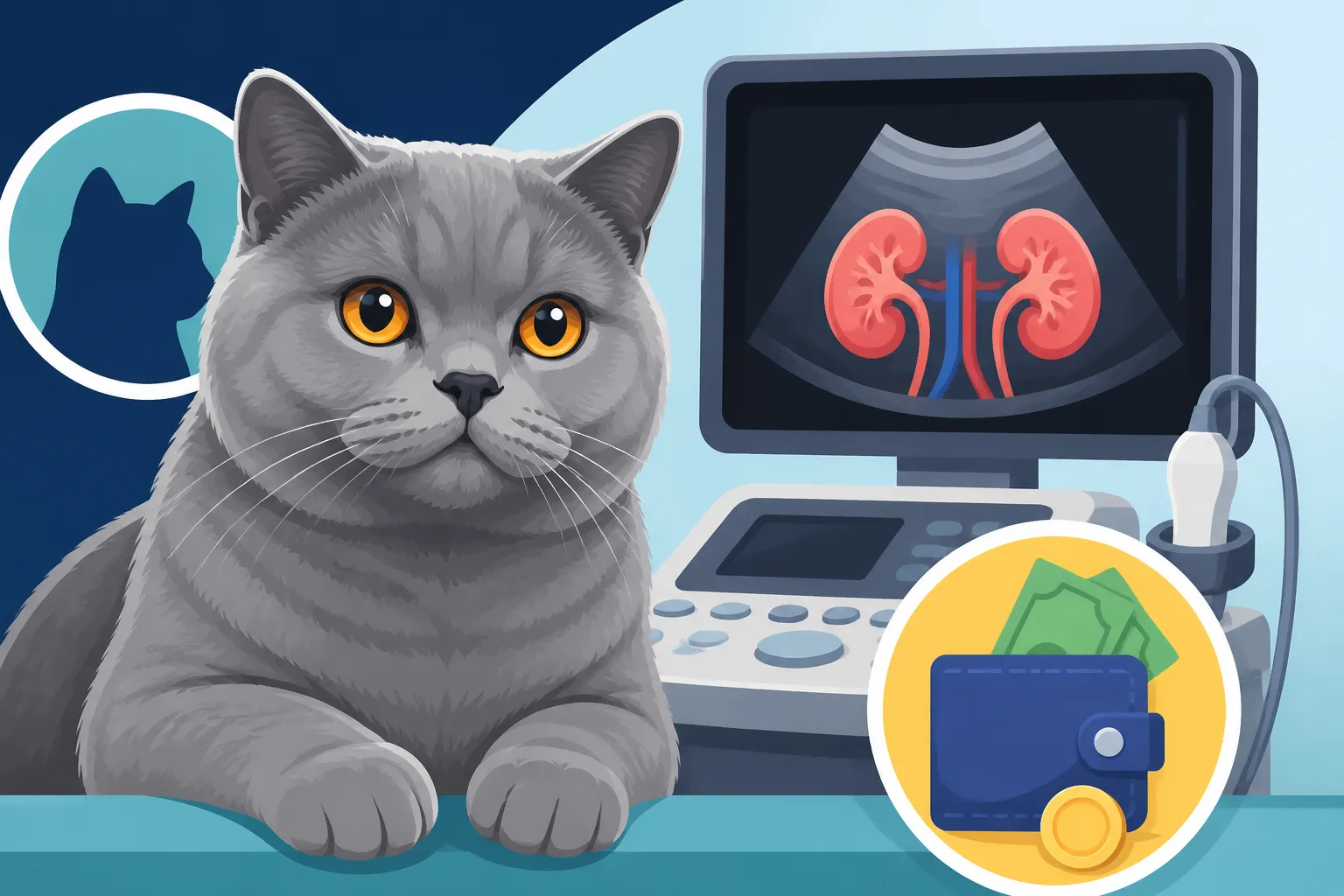
So, what exactly does a kidney ultrasound show that other tests don't? Think of it as a detailed internal map, created in real-time. Unlike an X-ray, which primarily shows bone and outlines of organs, an ultrasound uses sound waves to create dynamic images of soft tissues. For the kidneys, this means your vet or a specialist radiologist can see the actual structure, shape, and size of each kidney. They can identify if one kidney is larger or smaller than it should be, or if there are any unusual masses or fluid accumulations.
Crucially, an ultrasound can detect the presence of cysts, which would be a key indicator for Polycystic Kidney Disease, even if your cat has been cleared by a DNA test for PKD1. Cysts can develop from other causes, or in rare cases, a cat might have a different genetic variant. The ultrasound can also pinpoint kidney stones, often missed on routine X-rays unless they are very large and mineralized. Furthermore, it helps assess blood flow to the kidneys using Doppler ultrasound, identifying any blockages or abnormalities in the renal arteries and veins. This level of detail is invaluable for diagnosing complex kidney conditions, guiding further treatment, or even indicating if a more invasive procedure like a biopsy might be necessary. It helps the vet understand the severity of the issue and plan the most appropriate course of action for your cat's specific needs.
Factors Influencing the Cost of a British Shorthair Kidney Ultrasound
When you're faced with a vet bill, it often feels like a black box of charges. For a kidney ultrasound, the total cost isn't just a flat fee; it's a dynamic figure influenced by several key factors. Understanding these can help you anticipate the expense and ask the right questions at your veterinary clinic.
Geographic Location and Clinic Type
One of the biggest drivers of cost for any veterinary procedure, including a kidney ultrasound, is where you live and what kind of clinic you visit. Just like human healthcare, vet costs can vary wildly from one region to another. A veterinary practice in a bustling city center, for example, will almost invariably have higher overheads—rent, staff salaries, equipment maintenance—than a clinic in a quiet rural town. This translates directly into higher prices for services.
Beyond just the geographical location, the type of clinic makes a significant difference. A routine kidney ultrasound performed at your regular general practice vet will likely be less expensive than one done at a specialized veterinary hospital or by a mobile ultrasound service. Specialty hospitals often house board-certified radiologists, who possess advanced training and expertise specifically in diagnostic imaging. While their skills are invaluable, their specialized knowledge and the state-of-the-art equipment they use come at a premium. An emergency ultrasound, perhaps performed after hours or on a weekend, will almost certainly incur additional emergency fees, sometimes significantly increasing the total bill. If your British Shorthair's condition isn't an emergency, scheduling the ultrasound during regular business hours and potentially at a general practice clinic might be a more budget-friendly option.
Sedation, Anesthesia, and Additional Diagnostics
The image of your calm British Shorthair lying still for an ultrasound might be appealing, but the reality is that many cats, even the most laid-back BSH, find vet visits stressful. To obtain clear, diagnostic-quality images, the cat must remain absolutely still. This often necessitates sedation, or in some cases, light anesthesia. Administering sedatives or anesthetics isn't a simple, free add-on. It involves pre-sedation physical exams, potentially blood tests to ensure your cat is healthy enough for the drugs, the medication itself, and monitoring during and after the procedure. This safety protocol, while essential for your cat's well-being and for getting good images, adds significantly to the overall cost. For instance, a quick blood panel to check liver and kidney function before sedation could be equivalent to a portion of What a British Shorthair's Yearly Bloodwork Should Cover.
Furthermore, an ultrasound is rarely a standalone test. It's usually part of a broader diagnostic workup. If your vet suspects kidney issues, they will almost certainly perform blood tests to check kidney values (BUN, creatinine, phosphorus, SDMA) and a urinalysis to check for infection, protein loss, or concentrated urine. These tests are vital for a complete picture of kidney health and help guide the radiologist's focus during the ultrasound. In some cases, the ultrasound might reveal a mass or an anomaly that warrants further investigation, such as fine-needle aspirates or biopsies, which are additional procedures with their own set of costs. The cumulative effect of these necessary ancillary services can often be more than the ultrasound itself. When considering Whether an Owner Should Test an Adult British Shorthair for various conditions, remember that a comprehensive approach often requires multiple tests.
Breaking Down the Typical Costs
Navigating veterinary costs can feel like guesswork, especially when it comes to specialized procedures like ultrasounds. While exact figures are impossible to provide due to the variations mentioned earlier, we can break down what you're generally paying for and give you a realistic idea of the components.
The Core Ultrasound Fee
The "core" fee for a kidney ultrasound for your British Shorthair is the charge specifically for the imaging procedure itself. This typically covers the time spent performing the scan, the use of the specialized ultrasound equipment, and the interpretation of the images by the veterinarian or a consulting radiologist. It’s important to clarify if the interpretation fee is included or if it’s a separate charge, especially if a specialist outside your regular clinic is reviewing the images.
Generally, you can expect the core ultrasound fee for a kidney scan to vary based on clinic type and geographic location. A general veterinary practice might charge a certain amount, while a specialized internal medicine or diagnostic imaging center will likely have a higher fee. This fee often includes a detailed report for your vet, outlining the findings, which is crucial for diagnosis and treatment planning. It's often helpful to ask for an itemized estimate upfront to understand what exactly is included in this core fee. For comparison, it might be similar in range to What a British Shorthair's First Echo Costs, another specialized imaging procedure.
Here’s a general idea of how the core ultrasound fee might break down by facility type:
| Factor | General Vet Practice | Specialty Vet Hospital/Radiologist |
|---|---|---|
| Primary Cost | Ultrasound scan | Ultrasound scan, specialist interpretation |
| Expertise | General vet with ultrasound experience | Board-certified veterinary radiologist |
| Equipment | Standard veterinary ultrasound unit | Advanced, high-resolution ultrasound unit |
| Typical Range | (Lower end of range) | (Higher end of range) |
| Availability | Often in-house | May require referral |
Potential Ancillary Costs
Beyond the core fee for the ultrasound, there's a good chance you'll encounter a range of ancillary costs that can quickly add up. These aren't hidden fees; rather, they are necessary components for safe and accurate diagnostics and care for your British Shorthair.
First, there's the initial consultation fee with your regular veterinarian if they are the one referring for the ultrasound. This is usually separate from the ultrasound itself. Then, as discussed, many cats require sedation or even light anesthesia for a quality ultrasound. This means fees for the pre-sedation physical exam, the sedative drugs themselves, and the time spent monitoring your cat during and after the procedure. Your vet will almost certainly recommend pre-anesthetic bloodwork to ensure your British Shorthair is a good candidate for sedation, which includes a fee for the lab tests. This type of bloodwork often checks for kidney and liver function, which is particularly important if kidney issues are already suspected.
Further diagnostic tests are also very common. A urinalysis is almost always performed alongside an ultrasound for kidney concerns, and that's an additional lab fee. If the ultrasound reveals bladder stones or a significant infection, your British Shorthair might need immediate medication, such as antibiotics or pain relief, adding pharmacy costs. Sometimes, the vet might also recommend a specialized diet, like those found on Chewy or through dedicated prescription food programs, which are ongoing costs. In some scenarios, if the ultrasound indicates severe kidney disease or blockages, your cat might even require fluid therapy, either in-clinic or at home, which carries its own set of charges. The overall treatment plan after diagnosis, outlined in articles like How a British Shorthair With Kidney Disease Is Managed, will have its own expenses.
Managing and Mitigating Kidney Ultrasound Expenses
The thought of unexpected veterinary bills can be overwhelming, but there are proactive steps you can take to manage and potentially mitigate the costs associated with a British Shorthair kidney ultrasound. Planning ahead and understanding your options can make a significant difference.
Pet Insurance Considerations
One of the most effective ways to manage unexpected veterinary expenses, including those for diagnostic procedures like ultrasounds, is to invest in pet insurance. Companies like Healthy Paws offer policies that can reimburse you for a significant portion of veterinary bills related to accidents and illnesses. The key, however, is to enroll your British Shorthair before any health issues arise. Pet insurance typically has exclusion clauses for pre-existing conditions, meaning if your cat is diagnosed with kidney problems before you have a policy, future treatments for that specific condition might not be covered.
When considering pet insurance, it's vital to read the policy details carefully. Look at the deductible amount (what you pay out-of-pocket before coverage kicks in), the reimbursement percentage (how much of the remaining bill the insurance pays), and any annual limits. Some policies might cover diagnostic tests like ultrasounds fully, while others might have different coverage for specialists versus general practitioners. While a DNA test like What the British Shorthair PKD Test Costs might offer an upfront screening cost, an ultrasound due to symptoms could be a much larger, unexpected expense that insurance could help with. Having insurance in place provides a safety net, giving you peace of mind that you won't have to make tough decisions based purely on financial constraints during a stressful time.
Budgeting and Financial Planning
Even with pet insurance, there will always be some out-of-pocket costs, and not everyone chooses or can afford insurance. This makes budgeting and financial planning crucial for responsible pet ownership. Setting aside a dedicated emergency fund specifically for veterinary care is a smart move. Even putting away a small amount each month into a separate savings account can build up over time to cover unexpected expenses like an ultrasound or other diagnostics for your British Shorthair.
If you find yourself in a situation where your British Shorthair needs an ultrasound and you're concerned about the cost, don't hesitate to talk openly with your veterinary team. Many clinics understand financial constraints and can discuss payment plans, third-party veterinary credit options, or help you apply for grants from animal welfare organizations. Always ask for an itemized estimate before any procedures are performed. This allows you to understand exactly what you're paying for and enables you to ask questions about specific charges. Sometimes, certain tests can be prioritized, or less expensive alternatives might be available if the vet agrees it's appropriate for the situation. For instance, initial blood and urine tests that reveal Signs a British Shorthair's Kidneys Are Failing are usually much less costly than an ultrasound. Discussing all options, from diagnostics to ongoing care, and considering the long-term management outlined in How a British Shorthair With Kidney Disease Is Managed, is vital for your cat's health and your financial peace of mind. Ultimately, being prepared and proactive is the best approach to ensuring your British Shorthair receives the best possible care without undue financial stress.
Disclaimer
This article is for general informational purposes only and does not constitute professional advice. Laws, prices and regulations vary by location and change over time. Consult a qualified professional for guidance on your specific situation.