How a British Shorthair Copes With Boarding
Leaving your beloved British Shorthair when you need to travel can be a source of real anxiety for any cat parent. You worry if their calm, settled nature will cope with a new environment and different caretakers. This guide is here to walk you through how British Shorthairs typically handle boarding and, more importantly, what you can do to make the experience as stress-free as possible for your furry family member.
Understanding Your British Shorthair's Temperament and Boarding Stressors
British Shorthairs are generally known for their placid, easygoing demeanor. They aren't typically the most demanding or hyperactive of breeds, often content to observe the world from a comfortable spot on the sofa. This calm disposition might lead you to believe they'll take any change in stride, but in reality, British Shorthairs are creatures of habit. They thrive on routine and familiarity, and any significant disruption to their established world can cause unexpected stress. It's not necessarily that they suffer from extreme separation anxiety in the same way some dog breeds might; rather, it's the change itself that can be unsettling.
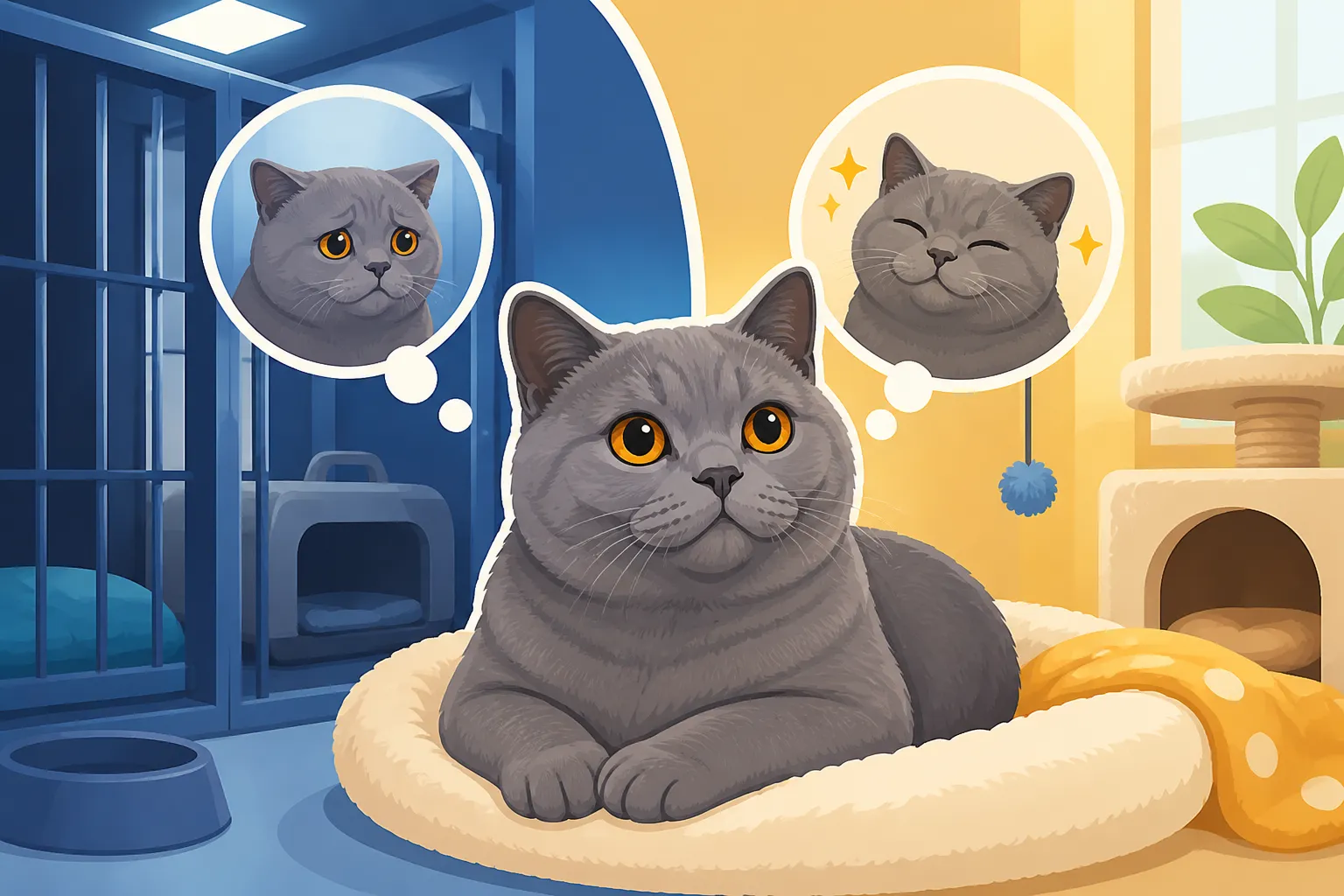
When your British Shorthair goes into a boarding facility, they're suddenly faced with a whole new sensory landscape. The familiar scents of home – your smell, their bed, their favorite scratching post – are replaced by a myriad of new, unfamiliar smells of other animals and cleaning products. The quiet hum of your household is swapped for different noises: other cats meowing, dogs barking, the sounds of staff moving about. Their eating schedule, litter box routine, and even the simple rhythm of their day are all thrown into disarray. For a cat that cherishes predictability, this can be quite overwhelming.
Furthermore, British Shorthairs are inherently territorial, even if they express it subtly. Their home is their sanctuary, a place they've marked as their own through scent glands on their cheeks and paws. Being removed from this secure territory and placed in a smaller, temporary enclosure, even a spacious one, can trigger feelings of vulnerability and insecurity. They might react by hiding, becoming withdrawn, or even refusing to eat. It's not defiance; it's a deep-seated instinct to protect themselves when their world suddenly feels less safe. They might generally be How a British Shorthair Copes With a Full Working Day, but a complete change of scenery is a different challenge altogether. Understanding these innate tendencies is the first step in ensuring their boarding experience is as smooth as possible. You know your cat loves its routine, and the sudden shift is Why a British Shorthair Hates Change.
Choosing the Right Boarding Facility for a British Shorthair
Selecting the perfect boarding facility is paramount for a British Shorthair. Their specific needs, stemming from their calm but routine-loving nature, mean that not just any cattery will do. You're looking for a place that prioritizes quiet, individual space and understands feline behavior, especially for a breed like the British Shorthair that values its personal bubble.
Start your search early and don't hesitate to visit several facilities. Pay close attention to the environment. Is it clean, well-ventilated, and quiet? A bustling, noisy environment with lots of foot traffic might be fine for some outgoing breeds, but it's likely to overwhelm a British Shorthair. Look for facilities that offer individual "cat condos" or spacious private suites, rather than small cages or communal areas. British Shorthairs generally prefer their own company and a secure, personal retreat where they can feel safe. A place where they can perch up high or hide away in a cozy bed within their own space is ideal, providing them with choices that mimic their natural behaviors.
Staff interaction is another crucial factor. While British Shorthairs aren't typically lap cats, they still appreciate gentle attention and reassurance. Ask about the staff's experience with cats, and specifically if they're familiar with the British Shorthair temperament. Will they spend time observing your cat, gently coaxing them out if they're shy, or simply ensuring food and water are topped up? A facility that offers individual playtime or cuddle sessions (if your cat enjoys them) can make a huge difference. Transparency is key; a good cattery will be happy to show you around, answer all your questions, and provide references. They should also inquire about your cat's specific habits and preferences, demonstrating a genuine interest in their well-being. This careful selection process is essential to determine Whether Boarding Suits a British Shorthair.
Preparing Your British Shorthair for a Successful Boarding Stay
Once you've chosen a reputable boarding facility, proper preparation is key to making your British Shorthair's stay as comfortable and stress-free as possible. It's all about bringing as much of "home" with them as you can, both physically and emotionally.
One of the best things you can do is to have your British Shorthair visit the cattery for a short "trial" stay before the main event. Even an overnight stay can help them acclimate to the new smells and sounds and show them that you will indeed come back for them. This familiarization can significantly reduce anxiety when it comes to the longer visit.
When it's time to pack, focus on items that carry your cat's scent or provide comfort. Their own bed or a favorite blanket from home, even if it's just a small towel that smells like you, can be incredibly reassuring. Don't forget their absolute favorite toys. While your British Shorthair might not be the most enthusiastic player, having a familiar toy, like a crinkle ball or a soft mouse, can provide a sense of normalcy. Many owners find durable, simple toys on Amazon that can withstand a few days away. Critically, send your cat's regular food. Changing food abruptly can cause digestive upset on top of the stress of a new environment. If your cat is on a specific diet, pack enough for their entire stay, plus a little extra, just in case.
Before the boarding dates, try to keep your British Shorthair's home routine as consistent as possible. Sudden changes in your presence or their feeding schedule just before boarding can add to their anxiety. Ensure all vaccinations are up to date, and provide the facility with detailed veterinary contact information, including any existing medical conditions or medications. Be open about your cat's personality – are they shy, playful, do they have any quirks? The more information the staff has, the better they can cater to your cat's individual needs. This thoughtful preparation acknowledges that Whether a British Shorthair Notices You Are Away and aims to minimize their distress. For the journey to the facility itself, remember that knowing How to Get a British Shorthair Into a Carrier smoothly will also reduce pre-boarding stress.
Here’s a handy checklist to help you prepare:
| Item | Description | Importance | Notes |
|---|---|---|---|
| Favorite Bed/Blanket | Smells like home, provides comfort and familiarity. | High | Essential for creating a secure space. |
| Regular Food | Avoids digestive upset and maintains routine. | High | Pack extra! Clearly label feeding instructions. |
| Familiar Toys | Provides entertainment and a sense of normalcy. | Medium | Choose durable toys; a wand toy (often found on Amazon) is great for staff interaction. |
| Grooming Comb | Helps maintain coat, provides familiar interaction. | Low/Medium | Good for bonding with staff; use a steel comb, not a slicker. |
| Medications | Clearly labeled with dosage and administration instructions. | High | Include vet contact for emergencies. |
| Vet Information | Name, number, and any relevant medical history. | High | Critical for urgent situations or health monitoring. |
| Litter Preference | If your cat is sensitive to litter types, provide your own. | Medium | Ensures consistent litter box habits. |
| Contact Information | Your phone, emergency contacts, and travel itinerary. | High | For quick communication and peace of mind. |
| Photo of Cat | For identification and a reminder of your cat's normal look. | Low | Useful for staff to note any changes. |
Monitoring During and Care After Boarding
Even with the best preparation, leaving your British Shorthair for boarding can still be a nerve-wracking experience. Open communication with the boarding facility during their stay is vital for your peace of mind and your cat's well-being. A good cattery will offer updates, whether it's a quick text, an email, or even photos and videos of your cat settling in. Don't hesitate to ask for these updates; it's perfectly normal to want to know how your furry friend is coping.
Keep an eye out for any signs of prolonged stress that the facility might report. While some initial hiding or reduced appetite is common as they adjust, a British Shorthair that remains withdrawn, refuses to eat for an extended period, or shows signs of illness needs immediate attention. Reputable facilities will notify you and your vet if they observe anything concerning. It's important to trust their judgment, but also to feel empowered to ask questions and discuss next steps. Sometimes, their quiet nature can make it hard to spot Signs a British Shorthair Is Unwell, as they tend to internalize stress.
When it's finally time for pick-up, don't be surprised if your British Shorthair seems a little aloof or even a bit clingy. Some cats will act like you've committed the ultimate betrayal, while others might be overly affectionate. This is all part of their re-adjustment process. Be patient and allow them to re-acclimate at their own pace. The most important thing is to re-establish their familiar home routine as quickly as possible. Feed them their regular food, at their regular times, and ensure their litter box is clean and accessible. Offer them their favorite cozy spots and perhaps a gentle play session if they seem up to it. High-quality treats, like those often available on Amazon, can also be a good way to reinforce positive feelings about being home.
Observe your British Shorthair closely for the first few days back home. Check their appetite, water intake, and litter box habits. It's not uncommon for them to sleep a lot or groom themselves excessively as they de-stress. If you notice any persistent changes in behavior, appetite, or litter use, or if they seem unwell, a call to your vet is always a good idea. Remember that British Shorthairs are particularly adept at hiding discomfort or pain, so even subtle changes can be significant. Ensuring a smooth return to routine and offering plenty of gentle reassurance will help your British Shorthair transition back into their happy, calm self. You might be surprised at how well they handle being left (How Many Hours a British Shorthair Can Be Left), but the post-boarding period is critical for their emotional well-being. Don't forget that How a British Shorthair Hides Pain is a common trait, so vigilance is key.
Disclaimer
This article is for general informational purposes only and does not constitute professional advice. Laws, prices and regulations vary by location and change over time. Consult a qualified professional for guidance on your specific situation.