How Affectionate a British Shorthair Is
Bringing home a plush, round-faced British Shorthair often comes with romanticized visions of an endless purr-machine resting peacefully on your chest while you read or watch television. However, many new owners quickly run into a baffling behavioral wall: their new feline companion seems deeply devoted yet stubbornly maintains a two-foot radius of personal space. If you find yourself wondering why your cat follows you into every room only to sit just out of arm’s reach, you are experiencing the quintessential British Shorthair paradox. This comprehensive guide unravels the quiet, dignified emotional world of the breed, explaining exactly how they show love, how to read their subtle signals, and how to build a deep, lasting bond on terms you both enjoy.
Understanding the British Shorthair Affection Profile
The Misconception of the Needy Lap Cat
The internet is flooded with images of British Shorthairs looking like living, breathing teddy bears. Naturally, human instinct drives us to wrap our arms around that velvety plush coat and squeeze. When people research What a British Shorthair’s Temperament Is Really Like, they often conflate physical softness with a desire for constant physical contact. The reality can feel like a cold shower for an unprepared owner who was hoping for a Velcro cat.
British Shorthairs are rarely needy. They do not typically scramble up your legs the moment you walk through the door, nor do they scream for constant handling. Instead, they possess an understated emotional restraint that stems directly from their working heritage. Expecting a British Shorthair to behave like a clingy Ragdoll or a vocal Siamese is a recipe for heartbreak. Once you reframe your expectations, you begin to realize that their subtle presence in a room is an active choice and a genuine expression of devotion.
Dignified Loyalty Over Clingy Behaviour
To truly understand how affectionate a British Shorthair is, you have to appreciate the concept of passive companionship. Where other breeds demand your attention by climbing onto your keyboard or sleeping on your neck, a British Shorthair practices quiet devotion. They love their humans deeply, but they express that love through quiet observation and constant presence rather than suffocating physical closeness.
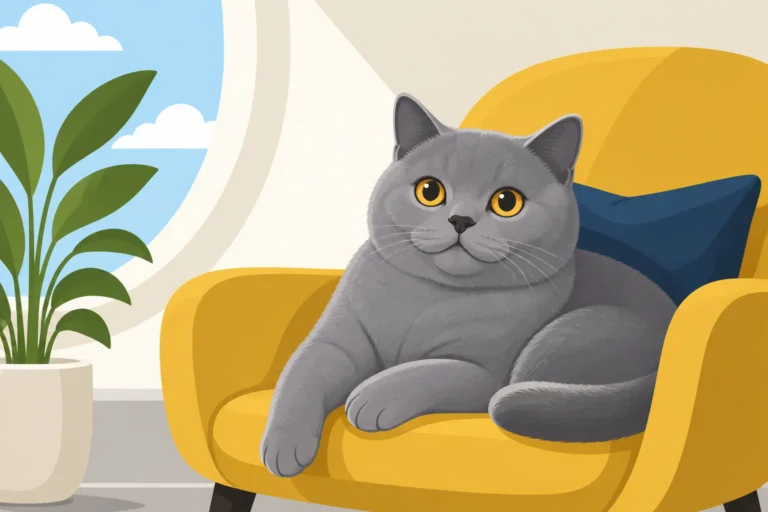
You will often notice a pattern during your evening routine: you sit on the couch to relax, and within three minutes, your cat pads into the living room, hops onto the armchair across from you, and curls up. They are not ignoring you. In their mind, sharing the same airspace and keeping a watchful eye on their favorite human is the highest form of affection. Understanding that A British Shorthair Sits Near You, Not On You allows you to stop feeling rejected and start feeling appreciated for the quiet harmony you share.
How Maturation Changes Their Social Style
A British Shorthair kitten can be a whirling dervish of energy, curious snuggles, and playful pounces. During those first six to twelve months, a kitten might sleep in your lap simply because they are exhausted from tearing across the carpet. New owners often assume this cuddle habit will last forever, only to feel confused when their eighteen-month-old cat suddenly transitions into a more reserved adult posture.
As these cats mature—a process that takes up to three or four years due to their heavy bone structure and slow physical development—their social confidence grows. They become self-assured adults who no longer rely on physical human warmth for security. While an adult cat might display fewer outward displays of frantic affection, their emotional bond with you actually deepens. They exchange energetic kitten clinginess for a steady, unwavering adult partnership that endures for their entire lifespan.
Subtle Ways a British Shorthair Expresses Devotion
BRITISH SHORTHAIR AFFECTION SIGNALS
| VISUAL & SPATIAL SIGNALS | PHYSICAL & AUDITORY SIGNALS |
|---|---|
| • Shadowing from room to room | • Firm headbutts (bunting) |
| • Slow blinking across the room | • Soft chirps and trills |
| • Tail held high with a hooked tip | • Kneading nearby soft blankets |
| • Sleeping within eye contact range | • Rubbing cheeks against legs |
Proximity and Shadowing Across the House
If you want to measure your British Shorthair’s love, do not count the minutes they spend on your lap; count the number of times they change rooms when you do. Shadowing is the ultimate hallmark of British Shorthair affection. If you move from the kitchen to the home office, you will almost certainly hear the soft pitter-patter of paws following behind a few moments later.
They will settle on a rug near your desk, sit on the hallway floor where they can watch both the bathroom and the bedroom, or perch on the back of the sofa behind your head. They want to be included in your daily ecosystem. When you look down and see that solid, round body curled up near your feet while you work, you are looking at a cat that considers you their anchor point in the world.
Slow Blinks, Soft Trills, and Facial Expressions
Because the breed is notoriously quiet, understanding How a British Shorthair Shows Affection requires paying close attention to their non-verbal cues. The slow blink is their ultimate gift of trust. When your cat sits across the room, catches your eye, and slowly closes and opens their eyes, they are giving you a feline kiss. Returning the gesture with a slow blink of your own reinforces a mutual feeling of safety.
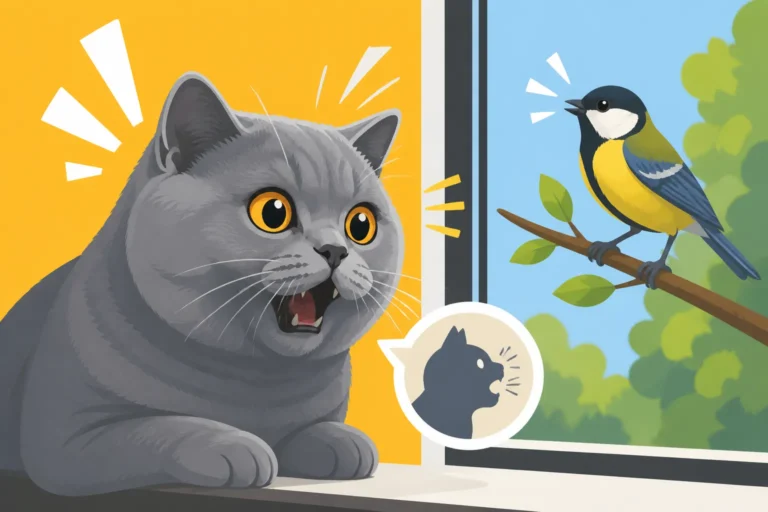
While they rarely meow in a demanding fashion, they communicate with adorable conversational noises. You might hear a soft, musical trill or a tiny chirp when you walk past them or greet them in the morning. If you are wondering How Vocal a British Shorthair Is, they save their sparse vocalizations for moments of true connection, making those soft greetings far more meaningful than the constant chattering of higher-energy breeds.
Headbutts, Bunting, and Tail Signals
When a British Shorthair decides to offer physical affection, it is deliberate and intense. Headbutting—known scientifically as bunting—is how your cat deposits their facial pheromones onto you, marking you as safe, familiar territory. A firm nudge against your shins, chin, or hand is an explicit declaration that you belong to them.
Tail posture is another key indicator of emotional warmth. When your cat approaches you with their tail held straight up in the air, perhaps with a slight quivering curve at the very tip, they are expressing genuine joy at your presence. This confident, upright tail posture combined with cheek rubbing against your furniture legs is their way of laying down a comfortable emotional footprint in your shared home.
Navigating Physical Contact and Handling
The Four-Paws-on-the-Floor Rule
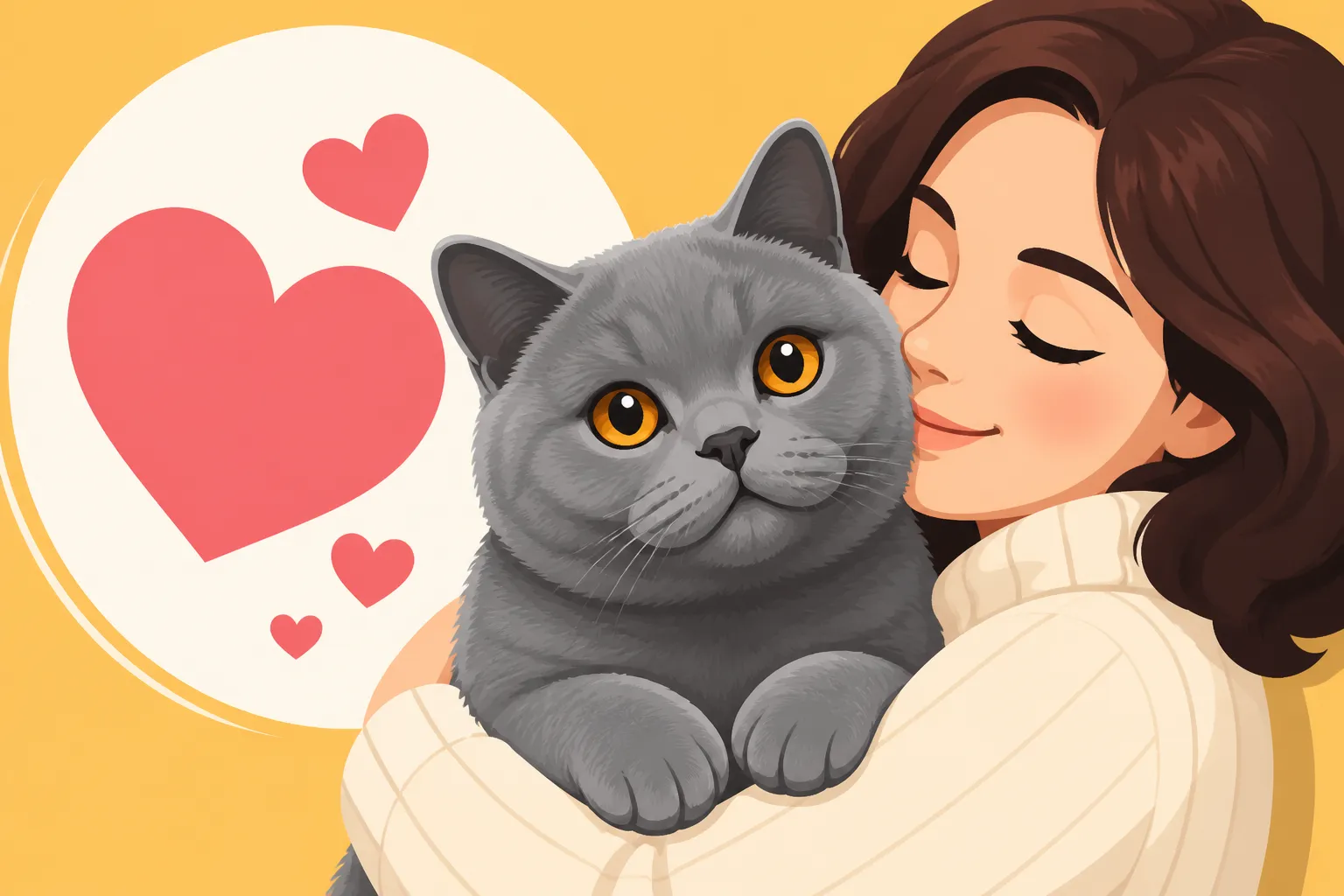
If there is one universal law governing this breed, it is that A British Shorthair Will Not Be Picked Up without some degree of protest. Understanding Why a British Shorthair Hates Being Picked Up comes down to their heavy physical structure and strong need for autonomy. These are sturdy, ground-dwelling cats with thick muscles and broad chests. Being hoisted into the air leaves them feeling unsupported, unbalanced, and stripped of control.
When picked up, a British Shorthair will typically stiffen their back legs, extend their front paws to push away from your chest, and look for the nearest flat surface to land on. This reaction is not a rejection of you personally; it is an instinctive dislike of feeling ungrounded. Respecting their preference for keeping four paws on the floor is the fastest way to earn their trust and keep them relaxed in your company.
HANDLING AND PHYSICAL CONTACT GUIDE
| ACTION | CAT’S REACTION | RECOMMENDED APPROACH |
|---|---|---|
| Lifting off floor | Stiffens body, pushes away | Avoid; pet on floor |
| Full belly rubs | Defensive swat, rolling away | Stick to chin/cheeks |
| Side-by-side sitting | Relaxed purring, leaning in | Highly encouraged |
| Shoulder scooping | Mild tolerance if feet supported | Use two hands under |
Preferred Petting Zones and Sensitivity
While they may dislike being carried around like a sack of flour, British Shorthairs absolutely adore structured, intentional scratching sessions. The key lies in reading their body language and touching them only where they want to be touched. Their favorite spots include:
- The base of the ears and behind the jawline
- Under the chin and along the sides of their plush cheeks
- The top of the head between the ears
- Along the spine, stopping right before the tail base
Avoid the belly at all costs. Even if your cat rolls onto their back and exposes their plush stomach while stretching, treating it as an invitation for a belly rub will often result in a swift defensive swat. Their dense coat traps heat, so short, firm, rhythmic petting sessions are much better received than long, heavy-handed full-body strokes that can cause overstimulation.
The Lap Cat Phenomenon: Rare Outlier or Seasonal Secret?
Every potential owner wants to know the absolute truth regarding How Much of a Lap Cat a British Shorthair Is. While individual personalities vary based on breeding lines and early socialization, true, unconditional lap cats are rare in this breed. However, there is an exception to this rule: seasonal temperature shifts.
During colder winter months, even the most independent British Shorthair might compromise their strict boundary rules in search of warmth. You may find them hopping up onto your lap while you wear a heavy fleece blanket, or resting their heavy head against your leg while you sit at your desk. Enjoy these cozy winter moments when they happen, but do not feel hurt when warmer weather prompts them to retreat back to Where a British Shorthair Sits Instead—usually a cool hardwood floor or a tile entryway.
Breed Comparison and Gender Differences in Affection
How British Shorthairs Compare to Velcro Breeds
To fully appreciate the British Shorthair social dynamic, it helps to contrast them with other popular pedigree cats. Breeds like the Ragdoll, Sphynx, or Oriental Shorthair actively demand human contact, often following owners from room to room while vocalizing loudly for lap space.
BREED AFFECTION & HANDLING COMPARISON
| BREED | LAP CAT FREQUENCY | HANDLING TOLERANCE | INDEPENDENCE |
|---|---|---|---|
| British Shorthair | Low to Moderate | Low | High |
| Ragdoll | High | High | Low |
| Maine Coon | Moderate to High | Moderate | Moderate |
| Siamese | High | Moderate | Low |
While high-intensity affection suits some households, it can be exhausting for busy owners or quiet families. The British Shorthair offers a ideal middle ground: deeply affectionate without being needy. They give you space when you are busy, manage long stretches of time calmly, and offer calm companionship without constant emotional maintenance.
Male vs Female Affection Dynamics
When asking whether a tom or a queen makes a more loving pet, experienced breeders generally agree that males tend to be slightly more open and laid-back with their physical affection. Male British Shorthairs often possess an easygoing, clumsy warmth that makes them more accepting of spontaneous chin scratches and casual handling.
Females, on the other hand, are often the self-appointed overseers of the home. They are intensely loyal and deeply affectionate, but they tend to display it on a strict schedule. A female British Shorthair may have specific times of day—such as early morning or right before bedtime—when she demands affection. Outside of those self-chosen windows, she prefers to maintain a watchful, queenly distance. Both genders bond deeply with their families, but males are generally more easygoing, while females offer structured, deliberate devotion.
Practical Steps to Deepen Your Bond
Respecting Autonomy and Building Trust
The single most effective way to make a British Shorthair more affectionate is to completely stop forcing physical contact on them. These cats value personal autonomy above almost everything else. When you constantly scoop them up, restrain them for unwanted cuddles, or invade their space when they are resting, they learn to keep an extra arm’s length away to protect their independence.
Try practicing the “finger test” instead. Extend a single index finger at your cat’s nose level from a short distance away and remain completely still. Allow them to walk forward, sniff your finger, and choose whether to rub their cheek against it. If they bump your hand, you have explicit permission for a quick chin scratch. If they sniff and step back, respect their decision and return to what you were doing. When a British Shorthair realizes that you respect their boundaries, their confidence grows, and they will naturally start spending more time closer to you.
BUILDING TRUST: DO’S AND DON’TS
| DO | DON’T |
|---|---|
| • Offer a quiet finger for sniffing | • Pick them up off the floor unexpectedly |
| • Let them initiate cuddle sessions | • Corner them when they want space |
| • Use daily interactive play routines | • Force them onto your lap or chest |
| • Reward brave approach with treats | • Raise your voice when teaching bounds |
Using Enrichment and Routine to Encourage Closeness
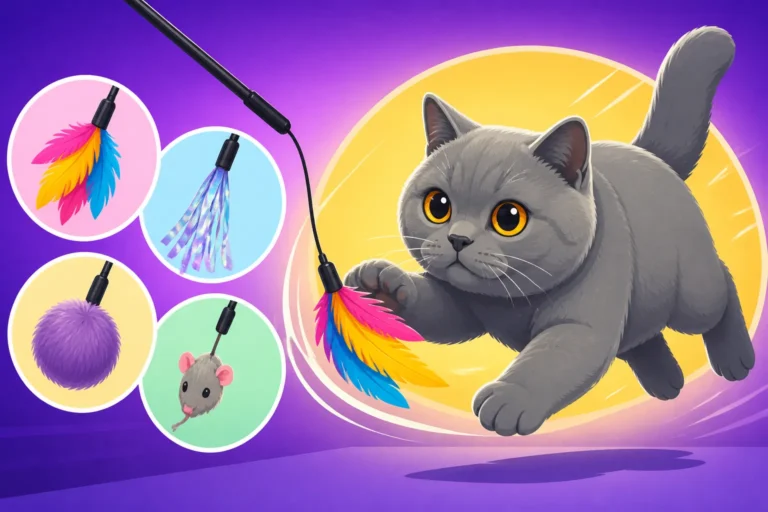
Even though they are a low-energy breed, British Shorthairs love structured interactive play. Engaging their brain through daily play builds a positive association between your presence and fun experiences. Spending fifteen minutes a day waving a feather wand or tossing small plush mice helps burn off idle calories and deepens your emotional connection.
You can easily browse through options on Amazon to find high-quality wand toys, wool balls, or catnip-infused mice that suit their ground-hunting play style. Pairing these play sessions with mealtime establishes a natural hunting-eating-grooming-sleeping cycle that leaves your cat feeling deeply secure. A secure British Shorthair is far more likely to seek out quiet lounge time right next to you after a successful play session.
Grooming as a Bond-Building Exercise
Because of their dense double coat, grooming is an essential part of British Shorthair care. However, it also doubles as an exceptional bonding opportunity if done correctly. The key is to make grooming feel like a soothing massage rather than a wrestling match.
Investing in a proper dual-length metal comb on Amazon is much better than using harsh slicker brushes, which can pull at their sensitive undercoat and cause pain. Start with short, gentle strokes along their back while offering high-value treats. As they learn to associate the comb with relaxation and tasty rewards, grooming becomes a mutual affection ritual where your cat purrs happily while you care for their velvet coat.
Recognizing Sudden Shifts in Affection
Distinguishing True Aloofness From Hidden Pain
One of the greatest challenges of owning a British Shorthair is their incredible ability to hide discomfort. Because their baseline personality is quiet, independent, and calm, owners often miss the subtle early warning signs of illness, assuming their cat is simply being a bit more aloof than usual.
If a cat that normally shadows you from room to room suddenly starts hiding under the bed, avoiding eye contact, or reacting aggressively when touched, this is not a random personality shift. It is a distress signal. Recognizing subtle Signs a British Shorthair Is Unwell requires comparing their current behavior against their normal baseline. Pay close attention to subtle red flags:
- Refusing meals or ignoring high-value treats
- Hiding in dark, enclosed spaces they usually ignore
- A hunched sitting posture with a tightly tucked tail
- Uncharacteristic vocalizations or growling when approached
- Neglecting their coat, leading to an unkempt or greasy look
If you notice these behaviors alongside weight loss or changes in litter box habits, do not brush it off as typical breed independence. Schedule a comprehensive checkup with your veterinarian right away, including bloodwork and a thorough physical exam to rule out underlying medical issues like dental pain or joint discomfort.
Environmental Stress and Behavioral Shutdowns
British Shorthairs are creatures of habit who thrive on stability, quiet routines, and predictable environments. Sudden changes—such as moving to a new home, introducing a noisy new dog, hosting long-term houseguests, or shifting your work schedule—can trigger a quiet emotional shutdown.
When stressed, a British Shorthair rarely displays destructive behaviors like scratching up furniture or sprinting across curtains. Instead, they retreat inward. They sit motionless in safe corners, reduce their social interactions, and maintain maximum distance from house activity.
To help a stressed cat re-emerge, preserve their daily routines as strictly as possible. Set up a quiet retreat space equipped with a comfortable bed, a wide litter box, and their favorite scratching posts. You can order a few Feliway plug-in diffusers on Amazon to release calming synthetic pheromones throughout their safe room. Give them time, avoid forcing interactions, and allow their natural curiosity to draw them back out into the heart of your home when they feel secure again.
Final Thoughts on the British Shorthair Bond
Owning a British Shorthair requires appreciating subtle, quiet beauty. They are not loud, needy, or demanding pets who constantly seek validation. Instead, they offer a calm, steadfast loyalty that feels like a steady warm hearth in your home.
When you stop trying to transform your cat into a cuddly lap pet and begin valuing the slow blinks across the room, the soft trills of greeting, and the quiet shadow following your footsteps, you unlock the real magic of this breed. Their affection is not given away easily to just anyone—it is earned through patience, respect, and mutual understanding. Once you earn the love of a British Shorthair, you have a faithful companion for life.
Disclaimer
This article is for general informational purposes only and does not constitute professional advice. Laws, prices and regulations vary by location and change over time. Consult a qualified professional for guidance on your specific situation.