Whether a British Shorthair Needs a Water Fountain
We all want our beloved British Shorthairs to live long, healthy lives, but sometimes getting these calm, often stoic cats to drink enough water can feel like a genuine struggle. You might see their water bowl sit untouched for hours, only for them to take a few polite sips. This guide is here to help you understand why hydration is so crucial for your British Shorthair and whether a water fountain could be the game-changer you've been searching for to encourage better drinking habits.
The Absolute Necessity of Hydration for Your British Shorthair
It’s easy to overlook something as fundamental as water intake until a problem arises. For British Shorthairs, who are known for their quiet demeanor, it’s even easier to miss subtle signs of inadequate hydration. But trust me, proper hydration is one of the foundational pillars of their long-term health, impacting everything from their internal organs to their beautiful, dense coat.
Protecting Precious Kidneys and Preventing Urinary Woes
One of the biggest concerns for cat owners, including those of us with British Shorthairs, is kidney health. Cats, by their very nature, don't always have a strong thirst drive, often stemming from their desert-dwelling ancestors who got much of their moisture from prey. In a domestic setting, especially if fed a diet primarily of dry kibble, this can quickly lead to chronic low-level dehydration. When a cat doesn't drink enough, their urine becomes more concentrated, which can put a strain on their kidneys over time and increase the risk of crystals or stones forming in the bladder.
Imagine the discomfort of persistent urinary issues for your calm, cuddly British Shorthair. It’s not just uncomfortable; it can become a serious medical emergency, particularly for male cats who are prone to blockages, a condition that is both terrifying and incredibly costly to treat. Ensuring they drink plenty helps to keep their urinary tract flushed, diluting urine and making it much harder for those nasty crystals and stones to develop. This proactive approach can potentially save your British Shorthair from a lot of pain and prevent those emergency vet visits. Adequate water intake is a key component in preventing Urinary Problems in a British Shorthair.
Aiding Digestion and Overall Vitality
Beyond kidney health, good hydration plays a vital role in your British Shorthair’s digestive system. Their plush, thick coats mean they are often ingesting a fair amount of fur during self-grooming. Hairballs are a common occurrence, and while usually benign, severe cases can lead to blockages. Sufficient water helps food and hair move through the digestive tract more smoothly, making it easier for them to pass hairballs or even avoid them entirely. Think of it like a well-lubricated machine – everything just works better.
Furthermore, hydration supports every single bodily function. From nutrient absorption to temperature regulation, water is essential. A well-hydrated British Shorthair is more likely to have a healthy appetite, vibrant energy levels (even if their energy is typically low!), and a soft, supple coat. Conversely, even mild dehydration can leave them feeling sluggish, impacting their mood and their overall zest for life. It’s one of those silent background elements that contributes significantly to their overall health, often going unnoticed until its absence causes issues. Knowing Signs a British Shorthair Is Unwell can sometimes point back to dehydration.
The Frustrations of the Conventional Water Bowl
We've all been there: you put down a fresh bowl of water, only for your British Shorthair to sniff it disdainfully or, even worse, ignore it completely and try to drink from the leaky faucet or a glass on the bedside table. It's frustrating, and it makes you wonder if they're just being finicky, but there are some very real reasons why traditional water bowls often fall short for our feline friends.
Stagnant Water: A Feline Turn-Off
Cats, by instinct, are drawn to running water. In the wild, still water sources are more likely to harbor bacteria, parasites, and debris, making them less safe to drink. A flowing stream, on the other hand, is usually fresher and cleaner. While your kitchen tap might not be a mountain stream, your British Shorthair's ancient instincts kick in. They perceive still water as potentially unsafe or, at the very least, unappetizing. The water in a bowl can quickly become room temperature, collect dust, stray kibble bits, and even hair (especially with a British Shorthair's glorious fluff!). This makes it less appealing than that lovely, cool, fresh-tasting water from a moving source.
This innate preference often translates into your British Shorthair avoiding their bowl. You might see them attempting to drink from the shower after you've used it, or showing an unusual interest in the toilet bowl (yikes!). It's not necessarily a sign of misbehavior; it's often a desperate attempt to find a more palatable water source. This is why many owners find themselves asking Whether a British Shorthair Drinks Enough.
The Unseen Battle: Whisker Fatigue
Another significant, yet often overlooked, issue with traditional water bowls is "whisker fatigue." Your British Shorthair's whiskers are incredibly sensitive tools, packed with nerves, and vital for their navigation and perception of the world around them. When a cat drinks from a bowl that is too narrow or too deep, their whiskers can constantly brush against the sides. This can be irritating and even painful over time, leading to what's colloquially known as whisker fatigue.
Imagine having to press your face into something uncomfortable every time you wanted a drink – you'd probably start avoiding it too! For a British Shorthair, with their wonderfully broad faces and full cheeks, a standard bowl can be a real nuisance. They might hover over the bowl, gingerly lap at the very top of the water without fully submerging their face, or simply give up altogether. Switching to a wider, shallower bowl can sometimes help, but it still doesn't address the fundamental issue of stagnant water.
The Ever-Present Problem of Slime and Particles
Let's be honest, how often do we scrub out our cat's water bowl? Daily, hopefully, but even then, within hours, a thin film of biofilm can start to develop. This invisible layer, a mix of bacteria and their secretions, can make the water taste stale and unpleasant to a cat's sensitive palate. Add in stray bits of food, dust, and their own shed fur, and that pristine bowl you put down in the morning can quickly become far less appealing by afternoon.
This constant accumulation means that even if your British Shorthair does drink from their bowl, they might not be getting the cleanest water. This isn't just about taste; it's about hygiene. Regularly consuming water with accumulated impurities isn't ideal for their long-term health, and it’s yet another reason why many cats gravitate towards other, seemingly fresher, sources of hydration around the house.
Water Fountains: A Hydration Revolution for Your British Shorthair
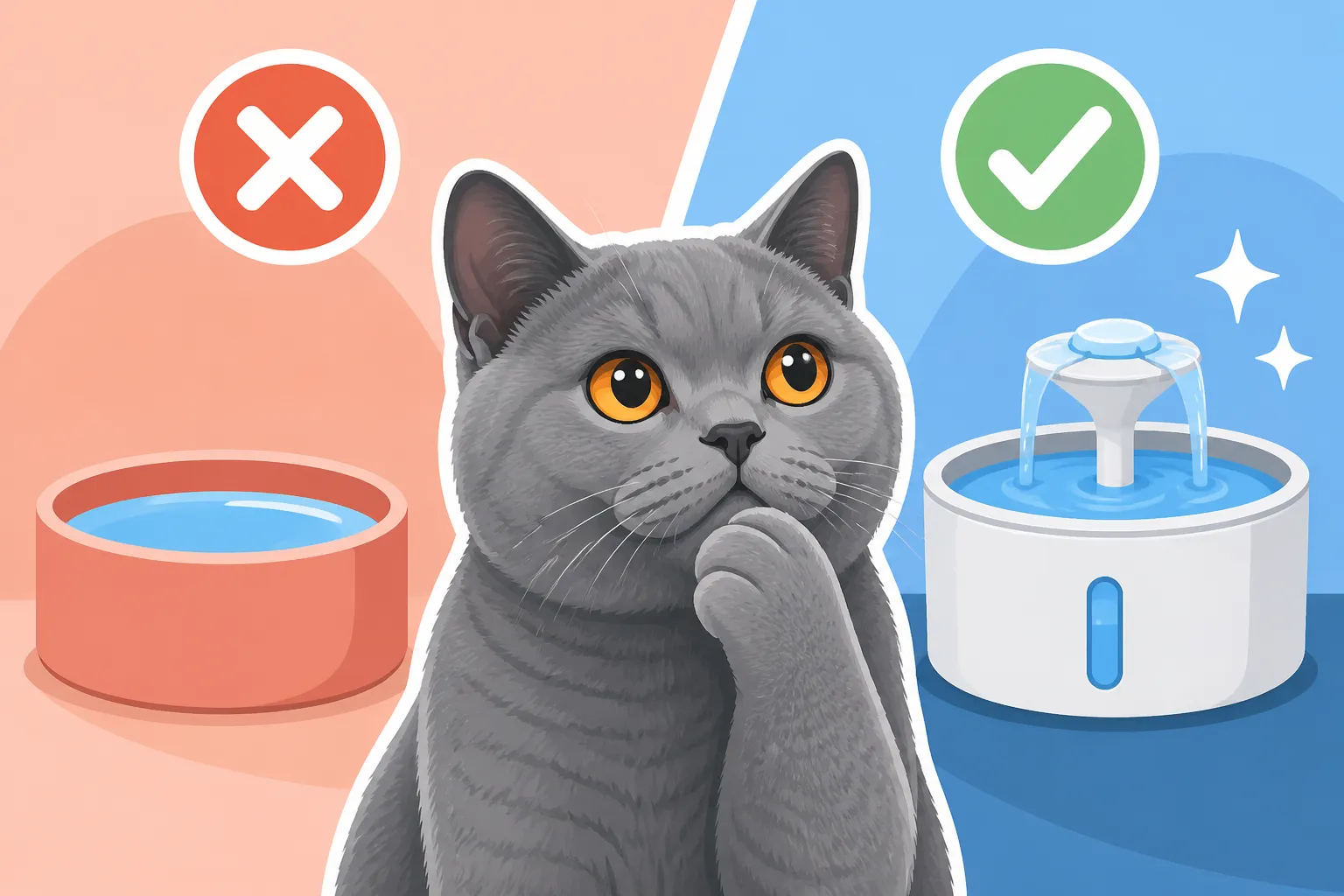
So, if traditional bowls are often a bust, what's the solution? Enter the pet water fountain. These devices aren't just fancy gadgets; they're designed to tap into a cat's natural instincts and address many of the issues that make still water unappealing. For a British Shorthair, who might need a little extra encouragement to stay active and hydrated, a fountain can be a game-changer.
Tapping into Instinct: The Allure of Flowing Water
The primary benefit of a water fountain is its ability to provide constantly moving, circulating water. This appeals directly to your British Shorthair's primal instinct that fresh, running water is safer and tastier than still water. The gentle burbling, trickling, or bubbling sound often piques their curiosity, drawing them closer to investigate. Once they realize it's a consistent source of fresh water, many cats find it irresistible.
Think about it: instead of a flat, uninteresting surface, they have a dynamic, inviting stream. It’s an environmental enrichment that caters specifically to their feline nature. This subtle shift can significantly increase how often your British Shorthair visits their water source, leading to more frequent sips throughout the day. This consistent access to enticing water can make a huge difference in How Much Water a British Shorthair Should Drink.
Filtered Freshness, Around the Clock
One of the unsung heroes of a good pet water fountain is its filtration system. Most fountains come equipped with charcoal or activated carbon filters that work tirelessly to remove impurities, odors, and tastes from the water. This means no more stale-tasting water, no more weird smells, and significantly reduced levels of dust, hair, and other debris that would normally accumulate in a static bowl. Some even include foam filters to catch larger particles like fur and food.
This constant filtering ensures that your British Shorthair is always drinking clean, fresh-tasting water. It also helps to prevent the rapid buildup of that pesky biofilm and slime, making the water healthier and more appealing. For owners who are concerned about water quality, a fountain provides peace of mind, knowing their furry companion is getting the best possible hydration.
Visible Improvement: Increased Water Intake
The proof is in the puddling (or, rather, the lack of puddling from dehydration-related issues!). Owners consistently report a noticeable increase in their British Shorthair's water intake after introducing a fountain. This translates directly into better hydration, which in turn supports their overall health. You might find your cat making more frequent trips to the fountain, taking longer drinks, and generally showing more interest in their water source than ever before.
This improved hydration can have a ripple effect on their health. Better kidney function, smoother digestion, and a healthier coat are all direct benefits. For a breed like the British Shorthair, which can be prone to conditions like Obesity Is the British Shorthair's Real Disease or Arthritis in an Older British Shorthair, maintaining optimal hydration is a simple yet powerful preventative measure that supports their wellbeing. Think of it as investing in their long-term health, potentially reducing future vet bills that can factor into What a British Shorthair Costs Over Its Lifetime.
Choosing the Perfect Water Fountain for Your British Shorthair
With so many options on the market, picking the right water fountain for your British Shorthair can feel a bit overwhelming. But focusing on a few key factors will help you narrow down the choices and find one that both you and your cat will love.
Material Matters: Plastic, Ceramic, or Stainless Steel?
The material of your fountain isn't just about aesthetics; it has implications for durability, hygiene, and even your cat's health.
- Plastic Fountains: These are often the most budget-friendly and come in a wide array of designs. However, plastic can sometimes harbor bacteria in tiny scratches over time, potentially leading to feline acne or a strange taste. If you choose plastic, opt for high-quality, BPA-free options and be diligent about cleaning. They are also lighter, which a sturdy British Shorthair might be able to tip over if they're particularly playful.
- Ceramic Fountains: Ceramic fountains are heavier, making them very stable and less likely to be pushed around. They are also incredibly easy to clean and don't scratch easily, reducing the risk of bacterial buildup. Many owners find them aesthetically pleasing and quieter than plastic models. The main downsides are their higher price point and the risk of chipping or breaking if dropped.
- Stainless Steel Fountains: These are often considered the gold standard for pet water fountains. Stainless steel is non-porous, highly durable, easy to clean, and resistant to bacteria. It’s also very hygienic and generally doesn't impart any taste to the water. They tend to be a middle-to-higher price range option, but their longevity and ease of maintenance often make them a worthwhile investment. Brands you might find on retailers like Chewy often offer a good selection of all three materials.
Features to Look For: Capacity, Filtration, and Flow
Beyond material, several operational features will impact your British Shorthair's experience and your own convenience.
- Water Capacity: Consider how much water the fountain holds. For a single British Shorthair, a capacity of around 60-80 ounces (1.8-2.4 liters) is often sufficient for a few days between refills. If you have multiple cats or want to refill less frequently, look for larger capacities. Remember that the water level needs to be maintained for the pump to work effectively.
- Filtration System: Most fountains use activated carbon filters to remove odors and tastes, and a pre-filter (often foam) to catch hair and debris. Some advanced models might offer additional filtration layers. Check how readily available replacement filters are and their cost, as this is an ongoing expense. You can usually find replacement filters easily on sites like Chewy.
- Water Flow Options: Some fountains offer adjustable flow settings, allowing you to choose between a gentle bubble, a quiet stream, or a cascading waterfall effect. Observe your British Shorthair's preference; some cats like a strong flow, while others are startled by it. A quieter pump is always a bonus, especially for easily spooked or sensitive cats. Noise level should definitely be a consideration – you don't want a fountain that sounds like a leaky faucet running all day!
| Feature / Material | Plastic Fountain | Ceramic Fountain | Stainless Steel Fountain |
|---|---|---|---|
| Durability | Moderate | High | Very High |
| Cleaning Ease | Moderate | High | High |
| Weight | Light | Heavy | Moderate/Heavy |
| Price Range | Lower | Higher | Moderate/Higher |
| Bacteria Risk | Higher (scratches) | Lower | Lowest |
| Aesthetics | Varied | Elegant/Earthy | Modern/Sleek |
| Stability | Low | High | High |
| Noise Level | Can vary | Often Quieter | Can vary |
Strategic Placement and Power Considerations
Once you've picked a fountain, where you put it matters. Placement can greatly influence whether your British Shorthair adopts it as their primary water source.
- Quiet & Accessible Location: Place the fountain in a quiet, low-traffic area where your British Shorthair feels safe and comfortable drinking. Avoid high-traffic hallways or noisy spots. It should be easily accessible, but not directly next to their litter box or food bowl (cats generally prefer their water source to be separate from these areas).
- Proximity to an Outlet: Fountains require power, so ensure there's a safe electrical outlet nearby. Use a pet-safe cord protector if needed to prevent your cat from chewing on the wire. Safety first, always!
- Consider Multiple Locations: If you have a large home or multiple British Shorthairs, you might consider having more than one water source, including a fountain and perhaps a wide, shallow bowl in another room, especially if you're caring for an older British Shorthair who might have reduced mobility. Caring for an Old British Shorthair often means making their environment as accessible and comfortable as possible.
Living with a Water Fountain: Maintenance and Troubleshooting
A water fountain isn't a "set it and forget it" solution, but the minimal effort required for maintenance is a small price to pay for the benefits of improved hydration. Understanding what's involved will ensure your fountain continues to provide fresh, appealing water for your British Shorthair.
Regular Cleaning is Non-Negotiable
While the filtration system does a fantastic job, fountains still need regular cleaning to prevent slime, mold, and bacterial buildup, especially on the pump and reservoir. I recommend a thorough cleaning at least once a week. This involves disassembling the fountain, scrubbing all parts (including the pump impeller, which can get gunked up with mineral deposits and cat hair) with warm, soapy water, and rinsing thoroughly. If you live in an area with hard water, you might need to clean the pump more frequently to prevent mineral buildup from affecting its operation.
Neglecting cleaning will quickly negate the benefits of the fountain, turning it into just another stagnant, unappealing water source. Consistency is key here. Think of it as a small weekly ritual that contributes massively to your British Shorthair's health.
Filter Replacement: An Essential, Ongoing Task
The filters in your water fountain are working hard, and they don't last forever. Most manufacturers recommend replacing charcoal filters every two to four weeks, and foam pre-filters every one to two months, depending on usage and water quality. Skipping filter changes means the fountain will lose its ability to purify the water, and you'll be back to square one with stale-tasting water.
Keep a stock of replacement filters on hand so you never run out. You can often buy them in multi-packs from online retailers like Chewy, which can be more cost-effective. While this is an ongoing expense, consider it an investment in your British Shorthair’s health. Preventing costly medical issues related to dehydration or urinary tract problems can save you a significant amount in the long run. Good preventative care, like consistent hydration, contributes to a healthier life and can sometimes even reduce the likelihood of needing to use pet insurance benefits from providers like Healthy Paws for certain conditions.
Gently Encouraging the Switch to the Fountain
Introducing a new water fountain to a British Shorthair might require a bit of patience. They are creatures of habit, and while their instincts might draw them to the flowing water, some might be wary of a new, unfamiliar object, especially if it makes a sound.
- Keep the Old Bowl: For the first few days or even a week, keep their old water bowl alongside the new fountain. This allows them to investigate the fountain at their own pace without feeling forced to use it. Once you see them consistently drinking from the fountain, you can gradually phase out the old bowl.
- Positive Reinforcement: When your British Shorthair approaches or drinks from the fountain, offer quiet praise or a small, healthy treat. This creates positive associations with the new water source.
- Experiment with Flow: If your fountain has adjustable flow settings, try different levels. Some cats prefer a gentle trickle, others are fascinated by a bubbling spring. Find what seems to pique their interest the most.
- Consider Catnip: A sprinkle of catnip near (but not in) the fountain can sometimes encourage curiosity.
- Hydration is a Journey: Remember, getting your British Shorthair to drink more water is a journey, not a sprint. Every little sip counts towards better health. If you are concerned about their overall fluid intake, or if you notice any changes in their drinking habits, always consult your veterinarian. They can help assess What a British Shorthair's Yearly Bloodwork Should Cover to check kidney function and ensure everything is in order.
In conclusion, a water fountain can be an incredibly beneficial addition to your British Shorthair's environment, actively encouraging them to drink more and supporting their long-term health. While it requires a bit of maintenance, the peace of mind and the visible health benefits for your beloved companion are truly invaluable.
Disclaimer
This article is for general informational purposes only and does not constitute professional advice. Laws, prices and regulations vary by location and change over time. Consult a qualified professional for guidance on your specific situation.