Whether the British Shorthair Is Britain’s Most Popular Cat
The British Shorthair is one of Britain’s best-known pedigree cats, but being famous is not quite the same as being the country’s most popular cat. The answer depends on what “popular” means: registrations, household numbers, search interest, or everyday visibility. This guide explains how those measures differ and why the breed’s reputation can outgrow what the available evidence proves.
Is the British Shorthair really Britain’s most popular cat
The answer depends on what you count
There is no single, complete count of every cat living in Britain, let alone a definitive league table of all cats by breed. Many cats are mixed-breed or have no documented pedigree. Their owners may call them domestic shorthairs, moggies, or simply cats, and those descriptions do not appear in pedigree registration totals.
That distinction matters. If someone says the British Shorthair is Britain’s most popular cat, they may mean it is a leading pedigree breed, a familiar breed in photographs and advertising, or a cat many people say they would like to own. Those are different claims. One can be true without proving the others.
A cat’s visibility can also make it seem more common than it is. The round face, dense coat, and stocky build are easy to recognize, particularly in the familiar blue coat. A breed that appears often in media and online conversations may feel ubiquitous, even if no national census shows that it outnumbers mixed-breed cats.
For a closer look at the distinction between breed popularity and registration data, see Where the British Shorthair Ranks in Registrations. Registration figures can tell you something useful about pedigree breeding, but they are not a head count of all the cats curled up on British sofas.
Pedigree rankings are not the same as all-cat rankings
Pedigree registries record cats whose births and lineage are registered through that organization. These records can help compare recognized breeds within the registry, but they leave out most cats without registered pedigrees. A registry ranking therefore answers a narrower question: which breeds are being registered most often in that system?
Even within pedigree rankings, results can vary according to the organization, the period being measured, and the way registrations are counted. A breed might rank highly in one registry’s annual figures but differently in another. That does not automatically make either ranking wrong; they are measuring different sets of records.
The British Shorthair is often described as one of the leading or best-known pedigree breeds in Britain. That is a reasonable way to express its standing without claiming it is definitively the nation’s most numerous cat. For a broader explanation of how breed positions are compared, see Where the British Shorthair Ranks Among Cat Breeds.
| What “popular” means | What it can tell you | What it cannot prove |
|---|---|---|
| Pedigree registrations | How many cats of a breed were registered in a particular system and period | How many cats of that breed live in Britain overall |
| Household surveys | How often owners report having a certain kind of pet | A complete breed count, especially when breed identification is uncertain |
| Search and social activity | What people are curious about or discussing | How many cats are actually owned |
| Media visibility | Which breeds are frequently shown in advertising, entertainment, or online content | Whether that breed is the most common |
| Shelter and rescue listings | Which cats are currently available through participating organizations | The total population or national popularity of a breed |
Why the breed can feel more common than it is
The British Shorthair has an unmistakable look. Its broad head, full cheeks, sturdy body, and plush coat make it easy for people to recognize, even if they do not know the breed’s formal name. The blue variety is especially familiar, so some people may assume that every solid blue, round-faced cat belongs to the breed.
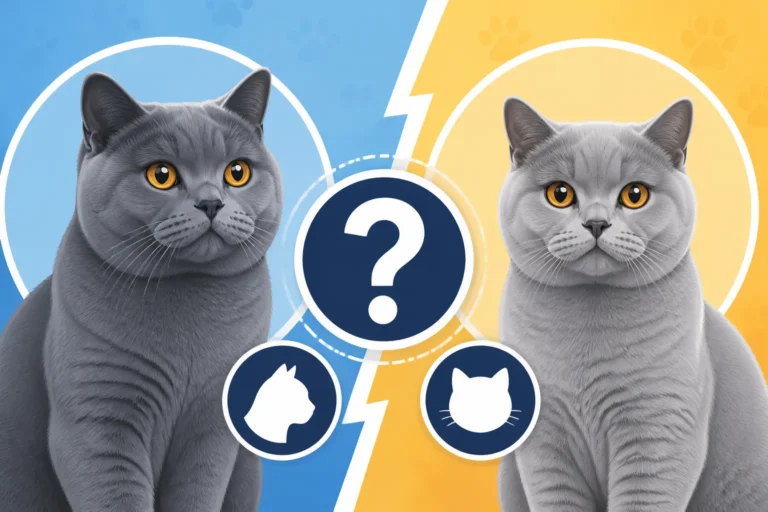
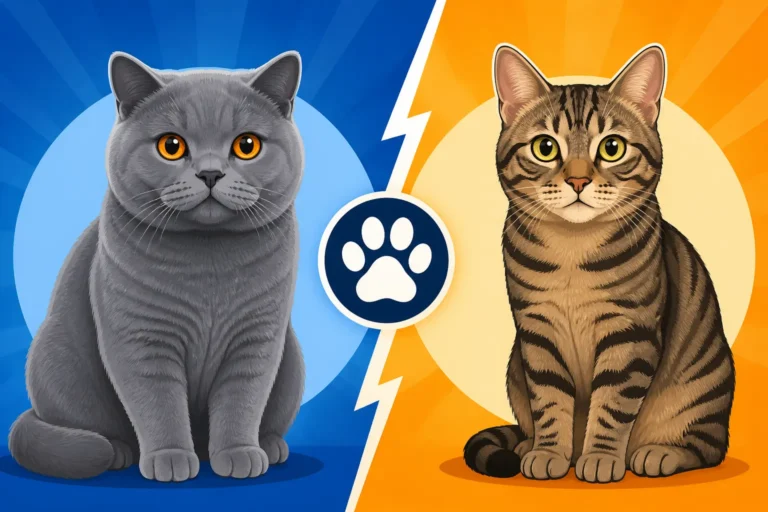
That assumption can inflate impressions of popularity. A blue-grey domestic shorthair might look vaguely similar, but coat color alone does not establish pedigree. Breed identification usually depends on documented ancestry, not just appearance. How to Tell a British Shorthair From a Moggy explores why lookalikes can be difficult to distinguish.
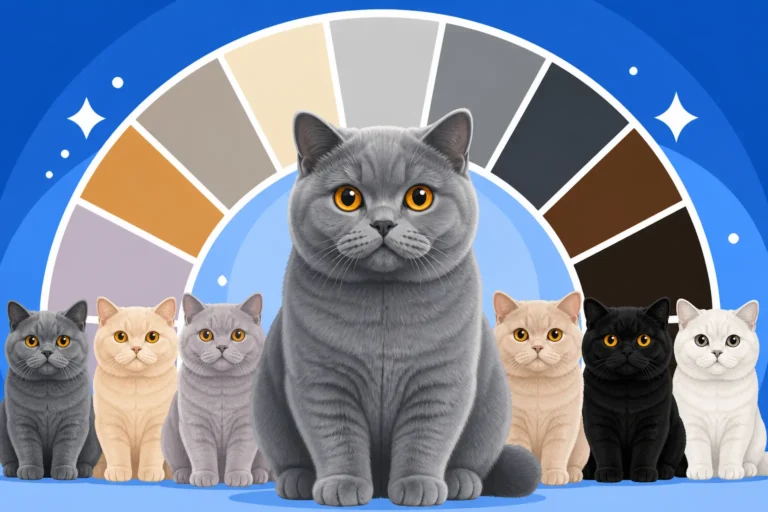
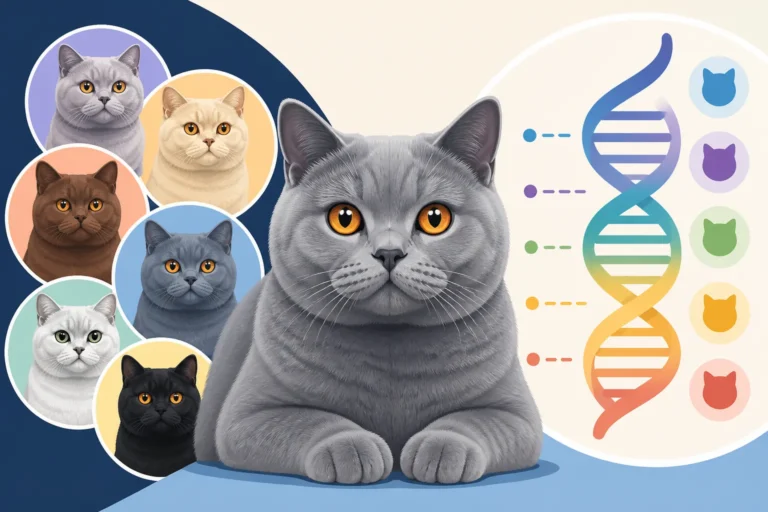
Popular images also tend to repeat a narrow version of the breed. People often picture a blue British Shorthair with copper-colored eyes, although the breed comes in many colors and patterns. That familiar image helps the breed stick in people’s minds, but it does not tell us how many are living in Britain. See Why Blue Is the Only British Shorthair Color People Know and A British Shorthair Comes in More Colors Than You Think for more on how the breed’s image took shape.
Why the British Shorthair has such a strong reputation
A recognizable look makes the breed memorable
A cat does not need to be the most numerous to become the cat people instantly recognize. The British Shorthair’s distinctive outline helps: a compact, substantial body; rounded head; and dense coat that stands away from the body rather than lying flat. It often looks solid and plush, like a teddy bear, which makes it especially striking in photographs.
That distinctive appearance also travels well across different settings. You might see a British Shorthair in a breeder’s profile, a television feature, an online post, or a product illustration and recognize the general look straight away. Repeated exposure builds familiarity. Familiarity, in turn, can be mistaken for prevalence.
Color contributes too. The blue coat is strongly associated with the breed, and the phrase “British Blue” is sometimes used casually as though it names a separate breed. In fact, blue refers to a coat color; the breed is the British Shorthair. The history behind this association is covered in Why the Blue Became the British Shorthair Everyone Pictures.
Long history and modern visibility reinforce each other
The British Shorthair has roots in Britain and a long history as a developed pedigree breed. Its familiar image is not new, but modern photography and online sharing have given that image fresh reach. A striking, consistent appearance is particularly easy to remember and share, and the breed’s round features have helped it become a recognizable part of popular cat culture.
Still, a longstanding presence does not equal the largest population. A breed can have cultural importance, a well-established identity, and strong recognition while mixed-breed cats remain more numerous in homes. Popularity is often a blend of affection, visibility, and actual ownership; those parts do not always move together.
If you are curious about the breed’s history beyond its present-day image, The British Shorthair Started as a British Street Cat looks at its earlier story. For context on how the breed developed into the cat people recognize today, see How Old the British Shorthair Breed Is.
Shopping interest is another signal, not a population count
People sometimes use shopping activity as a shortcut for measuring popularity. If a type of cat appears frequently in searches for food, litter, carriers, or grooming supplies, it might suggest that owners are interested in it. But retailers serve particular customers and locations, and shopping activity does not confirm how many cats of a breed are in the country.
For example, Chewy is a retailer whose customer activity could reflect demand among its own shoppers, rather than the population of British Shorthairs across Britain. A retailer such as Chewy may be useful as one small illustration of consumer interest, but it cannot substitute for a national cat census or a complete record of breed registrations.
The same caution applies to social media polls, search trends, and online breed quizzes. Each can reveal something about attention or interest. None should be treated as a direct count of British Shorthair cats in British households. Chewy’s customer patterns, for instance, would reflect its own market, not a comprehensive view of cat ownership in the UK.
How to judge claims about Britain’s most popular cat
Check what the ranking actually measures
When you encounter a headline calling the British Shorthair “Britain’s most popular cat,” look for the measurement behind it. Does it refer to annual pedigree registrations? A survey of pet owners? Searches on a website? Social media engagement? The wording may sound definitive while the underlying data answers a much narrower question.
Pay attention to the location and time period as well. A ranking based on one registry or a particular survey should not automatically be presented as a ranking of every cat in Britain. If a source counts only registered pedigree cats, it cannot establish which breed is most common across all households.
It is also worth checking how the survey defines breed. Some owners may identify a cat based on its appearance, while others rely on pedigree paperwork. Those answers are not interchangeable. A fluffy, round-faced cat may be described as British Shorthair by an owner who has no lineage records, even though it may be a mixed-breed cat.
Chewy might show which products its customers buy or browse, but those records would represent retail activity, not an independent census of British cat breeds. In the same way, a poll on a cat-focused website may tell you what that site’s audience prefers without representing every cat owner in Britain.
Keep popularity separate from suitability
A breed’s popularity does not tell you whether it will suit a particular household. The British Shorthair is often valued for its calm presence and distinctive appearance, but individual cats vary. A prospective owner should think about daily care, temperament, health needs, and the responsibilities of keeping any cat—not just whether the breed is fashionable.
It helps to consider what you want from a companion. Some people hope for a cat that will sit quietly nearby; others picture a lap cat that welcomes being carried. Those expectations do not always match a particular cat’s personality. A breed description can offer general guidance, but it cannot guarantee how an individual animal will behave.
There is also a practical difference between wanting a breed and finding a responsibly bred, well-matched cat. Popularity can make people feel rushed, especially when a kitten is advertised as rare or highly sought after. It is sensible to take time to ask about health, upbringing, and documentation rather than letting a ranking make the decision for you. What People Get Wrong About the British Shorthair covers some assumptions that can shape expectations.
Look beyond the breed label when adopting
Many cats in rescues and shelters are listed as domestic shorthairs or mixed breeds, even if they share a few features with a British Shorthair. Their background may be unknown, and appearance alone cannot confirm pedigree. If you are open to adopting, it is better to focus on the individual cat’s needs and personality than to expect a shelter listing to verify a particular breed.
That can be a relief for people who are drawn to the British Shorthair’s general look but do not need a pedigree certificate. A round face or dense coat may appeal to you, but a cat’s comfort, health, and fit with your home matter more than a label. Whether a Shelter Cat Can Be a British Shorthair explains why breed identification can be uncertain in rescue settings.
The broader point is simple: “most popular” can mean most registered, most recognized, most discussed, or most wanted. Those measures can point in different directions. Chewy’s retail activity, registry records, and social media interest each offer a limited view, so none should be treated as a complete answer on its own.
What the popularity question means for a future owner
The British Shorthair is a prominent breed, but not necessarily Britain’s most common cat
The most careful answer is that the British Shorthair is one of Britain’s most recognizable and prominent pedigree breeds, but there is no single all-cat count that proves it is the country’s most popular cat overall. Pedigree registrations can show the breed’s standing among registered cats; they cannot include every moggy and mixed-breed cat in British homes.
That answer may feel less tidy than a simple number-one ranking, but it is more useful. It separates reputation from population and makes clear why different sources can reach different conclusions. If a source gives the breed a top ranking, the next question is not simply whether it is right or wrong. It is: top among which cats, in which records, and over what period?
For readers comparing international interest, popularity can also differ by country. The British Shorthair’s reputation in Britain does not automatically tell you how it ranks elsewhere. Whether British Shorthair Popularity Is Rising in America considers a different market and helps show why country-specific claims should be kept separate.
Choose a cat for the life you can offer
If you are considering a British Shorthair, its popularity can be a starting point for learning, not a reason to hurry. Explore the breed’s needs, ask thoughtful questions, and spend time getting to know the individual cat. A breed’s reputation cannot tell you whether a particular kitten or adult cat will be a good match for your household.
The same advice applies if you are adopting a cat whose breed is unknown. A cat does not need to be officially identified as a British Shorthair to be affectionate, handsome, or the right companion. For many people, the best match is the cat whose temperament and care needs fit their real daily life—not the breed that appears most often in a ranking.
Disclaimer
This article is for general informational purposes only and does not constitute professional advice. Laws, prices and regulations vary by location and change over time. Consult a qualified professional for guidance on your specific situation.