Why a British Shorthair’s Legs Are Short
A British Shorthair can look surprisingly close to the floor, especially beside a tall, slender cat. That compact shape can make owners wonder whether short legs are normal, a sign of dwarfism, or a reason to limit jumping. Here’s how the breed’s proportions create that distinctive look, what healthy movement should look like, and when a change in your cat’s gait deserves a veterinary check.
Why a British Shorthair Looks Short-Legged
The breed is built to look compact
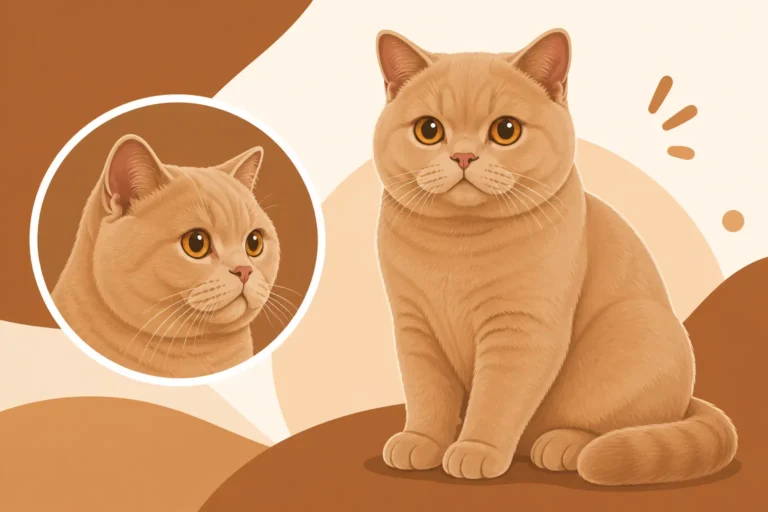
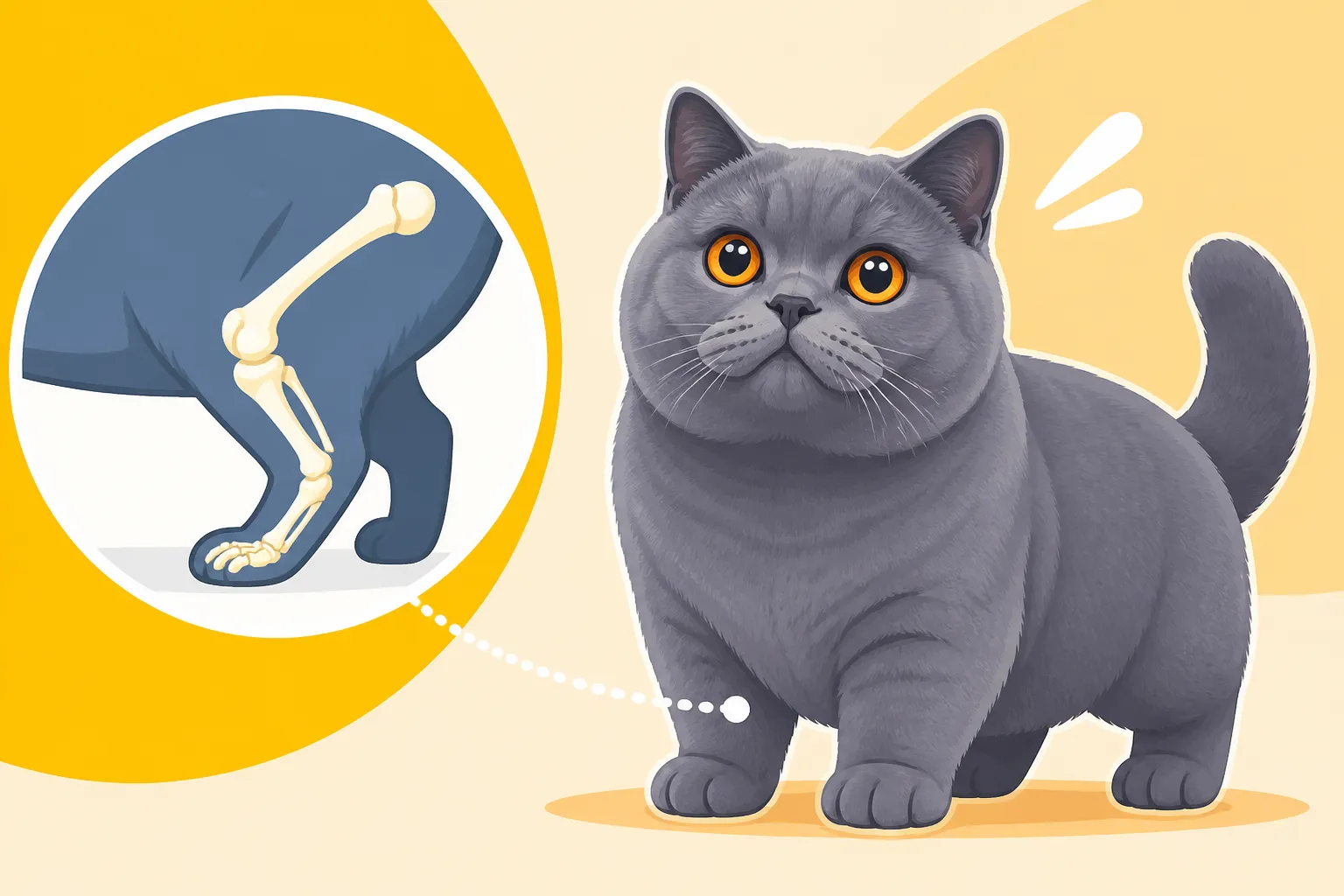
British Shorthairs are known for a sturdy, rounded outline: a broad chest, solid body, muscular limbs, and a thick coat that stands away from the skin. Their legs are generally short to medium in proportion to their body, rather than long and fine. That combination makes the whole cat look low-set, even when the legs are functioning normally.
The breed’s compact build is often described as “cobby.” That word refers to a stocky, solid shape, not to a particular medical condition. The legs still need to support the cat’s body, and a healthy British Shorthair should be able to walk, stretch, climb, and jump in ways that suit its individual fitness and age. What Cobby Means in a British Shorthair
Because the body is broad and rounded, the legs can seem even shorter by comparison. A long-legged cat’s height is easy to notice; on a British Shorthair, the eye is drawn to the wide body, round head, full cheeks, and plush coat. The legs may be perfectly in proportion to the cat’s frame but look small beside all that visual “bulk.” Why a British Shorthair Looks Heavier Than It Is
Coat and posture change the impression
A British Shorthair’s dense coat adds an especially strong visual effect. It can soften the outline of the legs and make the body appear to hang lower, particularly when the cat is sitting or crouching. A relaxed cat with its paws tucked under its chest can look almost legless from across the room. That pose alone is not evidence of a problem.
Compare your cat while it is standing naturally on a level floor. Look at how its legs support its weight, rather than judging from a photograph taken while it is loafing, curled up, or viewed from above. A camera angle can exaggerate the width of the body and shorten the visible length of the legs.
Age and body condition matter, too. A young cat’s proportions may change as it grows, while excess weight can make the body look lower and put more strain on the limbs. A cat’s outline is not a reliable substitute for a hands-on body-condition check. For a broader look at adult size and proportion, see What a British Shorthair Weighs and How Big It Gets and Whether a British Shorthair Is a Large Breed.
| What you notice | A likely explanation | What to pay attention to |
|---|---|---|
| Your cat looks low-set while sitting | Tucked paws and a broad body can hide the legs | Check how it stands and walks |
| The legs look short beside a plush body | Breed proportions and dense coat affect the outline | Look for comfortable, even movement |
| Your cat seems lower than it used to | Weight gain, aging, or a health change may affect posture | Note changes and discuss them with a veterinarian |
| Your cat avoids jumping or limps | Pain or reduced mobility may be involved | Arrange a veterinary assessment |
Short Legs Do Not Automatically Mean Dwarfism
A normal breed outline is different from a health concern
The British Shorthair’s appearance comes from its overall build and the traits selected for the breed’s characteristic shape. A typical British Shorthair is not defined by the extremely shortened limbs associated with some dwarf-type cats. In other words, seeing a compact cat is not, by itself, a reason to assume it has a skeletal disorder.
It is also worth separating appearance from function. Two cats can look similarly short-legged but move very differently. One may walk and jump comfortably, while another may show stiffness, an uneven stride, or reluctance to move. The gait and the cat’s day-to-day behavior tell you more than the visual impression alone.
If the cat is advertised as a British Shorthair but has unusually short limbs, especially alongside an atypical body shape or movement difficulties, ask about its background and veterinary history. Appearance alone cannot establish breed, ancestry, or diagnosis. A comparison with How to Tell a British Shorthair From a Moggy may help explain why a cat’s look does not always tell its whole story.
Look for changes, not just proportions
A cat that has always had the same compact outline and moves freely is different from a cat whose movement has changed. Watch for limping, stiffness after resting, difficulty rising, hesitation before a familiar jump, or a new habit of avoiding stairs. Cats can be subtle about discomfort, so a small routine change may be more revealing than a dramatic cry or obvious injury.
Pay attention to whether the change is sudden or gradual. A sudden limp, inability to bear weight, or obvious distress deserves prompt veterinary attention. A gradual decline in jumping or grooming also merits a check, even if your cat still eats and behaves affectionately. Cats often continue their normal routines while quietly adapting around discomfort.
A veterinarian can assess the joints, muscles, paws, and overall movement, then decide whether further investigation is needed. Do not try to diagnose a leg or joint problem from photos or online comparisons. The useful distinction at home is simple: the breed’s usual shape is not the same thing as a new or worsening problem with movement.
How a British Shorthair Should Move
Observe everyday movement without testing limits
You do not need to encourage high jumps to find out whether your cat is healthy. Instead, notice ordinary activities: walking across a room, stepping into a litter box, getting onto a favorite chair, stretching after a nap, and turning around comfortably. A relaxed, even stride and willingness to move about are more useful clues than whether the cat can reach a high shelf.
Avoid repeatedly making your cat jump down from furniture as a test. A cat may manage a jump despite discomfort, and repeated challenges can create unnecessary strain or fear. If you are curious about typical jumping behavior, How High a British Shorthair Can Jump offers related context, but an individual cat’s comfort matters more than any general expectation.
A sudden reluctance to jump can have several possible explanations, including pain, injury, reduced confidence, or a change in fitness. It is not possible to identify the cause just by watching from the sofa. Note what your cat stops doing, when the change began, and whether it affects one side more than the other. Those details can help make a veterinary conversation more useful.
Make necessary routes easier
If your cat seems hesitant about reaching a bed, sofa, or window perch, consider changing the route rather than insisting it use the old one. A stable step or ramp can reduce the need for a high leap. Keep it from wobbling, place it where your cat already likes to travel, and give the cat time to investigate it without pressure.
For a heavy-bodied cat, a broad, secure landing surface may be more appealing than a narrow, steep route. Keep food, water, litter, and resting places accessible, especially if the cat is older or has known mobility concerns. When a British Shorthair Needs Ramps covers signs that household adjustments may be helpful.
If you shop for accessibility items through Chewy or another retailer, check the listed dimensions, stability, and surface grip before choosing a ramp or step. Consider the height of the furniture and the space available in your home, not only the product photo. Chewy listings can be one place to compare options, but the best choice is the one your cat can use comfortably and safely. If a product is too narrow, slippery, or steep, it may sit unused.
Supporting a Healthy British Shorthair’s Legs
Keep body condition and activity in view
A compact cat can be difficult to assess by sight, and the plush coat can hide the waist. Ask your veterinarian to check body condition during routine visits and to help you decide whether your cat’s weight is appropriate. Extra weight can make movement more demanding, while a crash diet is not a safe shortcut. If weight needs to change, make a gradual plan with veterinary guidance.
Gentle, regular play can help maintain activity without turning exercise into a contest. Try a wand toy moved along the floor, a short game before a meal, or a puzzle feeder that encourages a little movement. Let your cat set the pace. Some British Shorthairs prefer several brief play sessions over a long, vigorous one, and a sudden drop in enthusiasm should be considered in context rather than dismissed as laziness.
Chewy and other pet retailers offer toys and feeding puzzles in many styles. Look for something suited to your cat’s interest and ability: a toy that moves at floor level may be more inviting than one that demands repeated high leaps. If a new activity seems to make your cat sore or reluctant to move afterward, stop and ask your veterinarian for advice.
Know when a veterinary check is worthwhile
Arrange a veterinary appointment if your cat develops a persistent limp, seems stiff after sleeping, struggles to use the litter box, or no longer manages familiar movements. It can help to record a short video of the gait at home, because some cats move differently in a clinic setting. Note when you first noticed the change and whether it is getting better, staying the same, or worsening.
Seek prompt care for a sudden severe limp, an apparent injury, marked pain, or inability to use a limb. Do not give human pain medication unless a veterinarian specifically directs you to; some common medicines can be dangerous for cats. If you are unsure how urgently your cat needs help, call your veterinary clinic and describe what you are seeing.
A British Shorthair’s short-looking legs are usually part of a compact, sturdy silhouette, not a diagnosis. The most useful guide is your own cat’s normal movement over time. If it walks comfortably, moves through the home willingly, and has no new signs of pain, its low-set appearance may simply be part of the breed’s familiar shape. When movement changes, focus on that change and get professional guidance rather than assuming the legs are “just short.”
Disclaimer
This article is for general informational purposes only and does not constitute professional advice. Laws, prices and regulations vary by location and change over time. Consult a qualified professional for guidance on your specific situation.