Why a British Shorthair Looks Heavier Than It Is
A British Shorthair can look like a little furry barrel even when its weight is healthy. A broad chest, short legs, round head and dense coat all add visual bulk, so the mirror can be misleading. This guide explains why the breed looks heavier than it is, how to assess body condition at home and when a change in shape deserves a vet’s attention.
Why a British Shorthair looks so solid
The build creates a compact silhouette
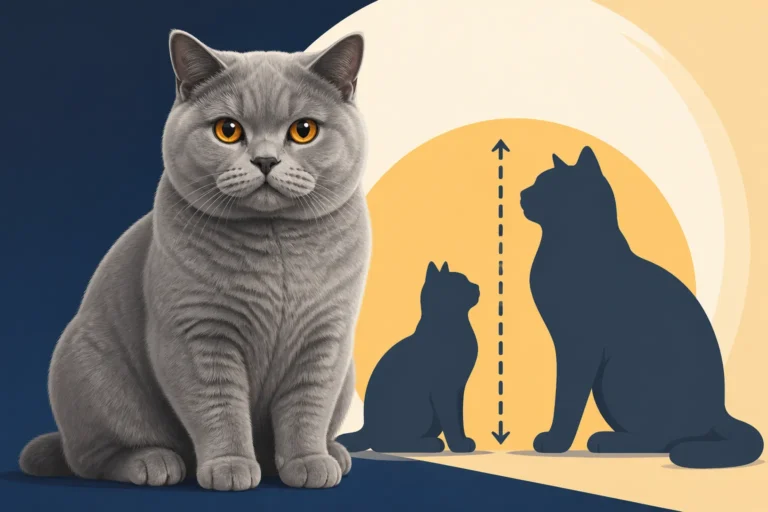
British Shorthairs are sturdy, compact cats. Their bodies tend to look broad and substantial rather than long and slender, and their relatively short legs can make the torso seem closer to the ground. Put those features together and even a healthy, active cat may appear heavier than a similarly sized cat with a more elongated shape.
The breed’s round head and full cheeks add to the impression. When you look at a British Shorthair from the front, you see a wide face, a thick neck and a solid chest. From above, the body may look more like a rounded rectangle than a narrow oval. Those are clues to the breed’s overall type, not proof that a cat is overweight.
The term cobby is often used to describe this compact, substantial body style. It refers to shape and structure, not a target number on the scale. For more on the term, see What Cobby Means in a British Shorthair. And because body proportions change as a young cat matures, a kitten’s current silhouette may not predict its adult one. What a British Shorthair Weighs and How Big It Gets offers more context on the breed’s size and development.
Dense fur adds visual volume
A British Shorthair’s coat stands away from the body rather than lying flat. Its dense texture gives the cat a plush outline, especially around the sides, chest and rear. That extra-looking volume can make it difficult to spot the waist or judge the shape of the ribs just by looking.
This is why photos can be deceptive. A cat photographed while sitting may look rounder because its body is compressed, and a thick coat can blur the transition between the waist and hips. A close-up portrait may show the famous round face but reveal very little about the cat’s body condition.
Instead of relying on one view, observe your cat standing naturally and look from above and from the side. You can also use your hands to assess the body beneath the coat. The visual clues are useful, but they’re only part of the picture.
Breed shape is not a health assessment
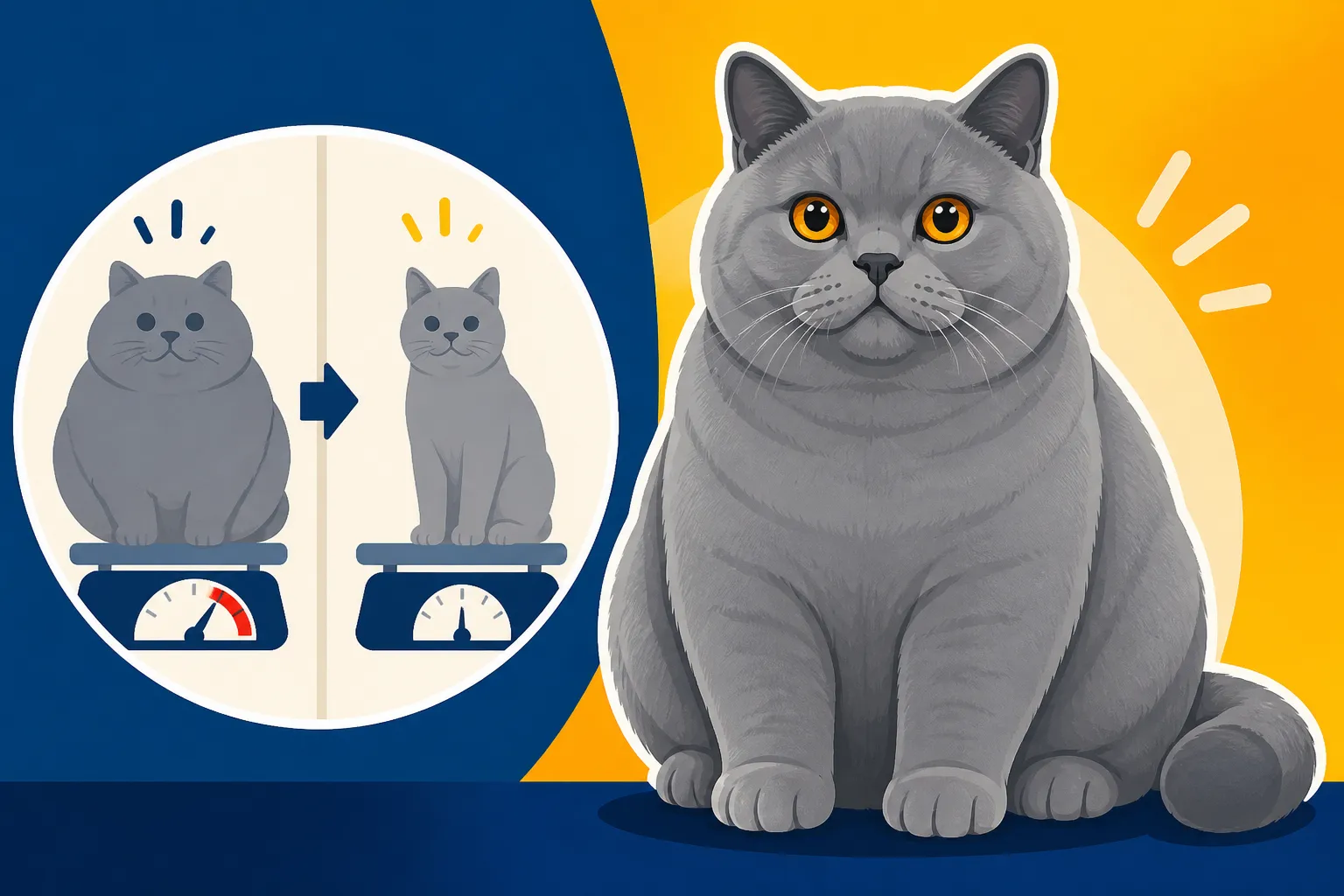
A broad body can be completely normal for this breed, but it doesn’t mean every heavy-looking British Shorthair is at a healthy weight. Some cats carry extra fat under a plush coat, and gradual weight gain can be easy to miss when the change happens month by month.
It helps to separate two questions: “Does this cat look like a British Shorthair?” and “Is this cat at a healthy body condition?” The first is about appearance and structure. The second is about how much fat the cat is carrying and whether its shape, movement and weight are appropriate for its individual build.
A vet can assess body condition alongside weight, age, muscle tone and health history. That matters because two British Shorthairs can have different healthy weights. A number that suits one cat may be too high or too low for another.
How to tell solid build from excess weight
Look at the whole body, not just the belly
A hanging pouch near the abdomen can be alarming, but it is not enough on its own to diagnose obesity. Cats have a loose flap of skin and tissue along the lower belly called the primordial pouch. It can swing as a cat walks and may be visible in cats of different body conditions.
Look at the cat standing on all four paws. From above, a healthy adult cat usually has some narrowing behind the ribs before the hips. From the side, the abdomen may rise gently toward the hind legs. These outlines can be subtle in a British Shorthair because the coat softens the shape, so don’t treat a perfectly visible waist as the only marker of health.
Pay attention to movement as well. Does your cat walk, turn and groom comfortably? Can it reach its back and rear without struggling? A change in mobility or grooming may have several causes, including age or pain, but it’s worth mentioning to your vet rather than assuming the cat is simply “built chunky.”
Use touch to check the ribs and waist
Your hands can often tell you more than your eyes. With your cat relaxed and standing, gently run your fingertips along the rib cage. You should generally be able to feel the ribs beneath a thin layer of covering without pressing hard. If you have to push firmly through thick padding to find them, ask your vet to assess body condition.
Then feel along the sides behind the ribs to check for a slight waist. The coat may hide the outline, so use light, even pressure with your fingertips rather than squeezing or trying to flatten the fur. If your cat dislikes being handled, keep the check brief and calm. You can try again another time instead of turning it into a wrestling match.
A body-condition score gives these observations a shared framework. Many veterinary clinics use a nine-point scale, with the middle range generally considered ideal. Don’t assign a score based on coat shape alone; ask your vet to show you how to feel the ribs and identify the waist on your own cat. For a practical hands-on explanation, see How to Feel a British Shorthair's Ribs Through the Plush and How to Tell a Chunky British Shorthair From a Fat One.
Use the scale as one piece of evidence
Weighing your cat regularly can help you catch a gradual change that would be hard to notice by sight. A home routine doesn’t need to be elaborate: use the same scale, weigh under similar conditions and write down the result with the date. The trend is often more useful than one isolated reading.
If your cat is comfortable being held, you can weigh yourself alone and then while holding the cat, then calculate the difference. This method may be less reliable if the scale fluctuates or the cat wriggles, so a pet scale or a clinic’s scale may be easier for some households. If you buy a scale through a retailer such as Chewy, compare its capacity, stability and ease of cleaning before choosing one. A dependable process matters more than a particular device.
Keep in mind that scale weight doesn’t tell you where the weight comes from. Muscle, frame size and body fat all contribute to the number. Ask your vet to record both weight and body-condition score so you have a more useful baseline. For a step-by-step look at home weighing, see How to Weigh a British Shorthair at Home.
| What you notice | What it may suggest | A useful next step |
|---|---|---|
| A broad chest and short-looking legs | Normal compact breed structure | Compare body condition using touch as well as appearance |
| A soft-looking belly flap | Could be a normal primordial pouch | Check ribs and waist; ask your vet if you’re unsure |
| Ribs are difficult to feel beneath the coat | Possible excess body fat | Book a body-condition assessment |
| A steady increase on repeat weigh-ins | A changing weight trend | Review portions and activity with your vet |
| Trouble grooming, jumping or moving comfortably | Possible weight-related strain or another health issue | Arrange a veterinary assessment |
How to monitor weight without overreacting
Create a baseline you can repeat
Start with a veterinary check if you don’t know your cat’s ideal body condition. Ask the vet to record the current weight, body-condition score and any relevant notes about muscle tone or mobility. That gives you a reference point that is more meaningful than comparing your cat with another British Shorthair.
At home, note weight at a consistent interval that suits your cat and your vet’s advice. Weighing every day is usually unnecessary for a healthy cat and can make normal fluctuations feel alarming. A simple notebook or phone note can track the date, weight, food changes and any notable activity changes.
You can also take occasional photos from above and from the side, with your cat standing naturally. Use similar lighting and positioning so you’re comparing like with like. Photos won’t replace hands-on checks, but they can help you notice a gradual change that’s difficult to see when you’re with your cat every day.
Review portions and activity as a household
Food portions can creep up without anyone meaning to overfeed. One person tops up the bowl, another gives treats, and a cat that seems to be asking for food gets an extra serving. If more than one person feeds your cat, agree on who is responsible for each meal and how treats are counted.
Use the food’s feeding guidance as a starting point, not a personalized prescription. Your cat’s needs depend on factors such as age, activity, health and whether it has been neutered. Ask your vet to help adjust the amount if weight is trending upward. If you buy a kitchen scale through a retailer such as Chewy, weighing food can make portions more consistent than estimating with a scoop.
Movement doesn’t have to mean expecting a low-key cat to sprint around the house. Try brief, inviting play sessions with a wand toy, a food puzzle or a toy moved slowly across the floor. Follow your cat’s comfort level and build a routine it will actually engage with. Why a British Shorthair Is Built to Look Heavy explores how the breed’s frame can contribute to its appearance, while Why a British Shorthair Gains Weight So Easily looks at why weight management can take extra attention.
Avoid sudden dieting
If your cat needs to lose weight, don’t sharply cut its food or try a crash diet. Cats need a carefully managed plan, and rapid weight loss can be dangerous. A vet can set a suitable goal and help you make gradual changes while monitoring progress.
Keep the plan practical. Measure meals, count treats as part of the daily intake and make changes one at a time so you can tell what is working. If you have several cats, separate feeding may prevent one cat from eating another’s portion. A timed or microchip-controlled feeder may also help in some homes, but the best setup depends on how your cats eat and interact.
The goal is not to make a British Shorthair look narrow or delicate. It is to support comfortable movement and a healthy body condition for that individual cat. If the vet recommends a specific diet or a weight-loss plan, follow their guidance rather than relying on a generic target or another cat’s food routine.
When a change in shape needs attention
Notice changes that happen over time
A British Shorthair may look naturally round, but a noticeable change from its usual shape is worth tracking. The same applies to weight: both a steady increase and unexplained weight loss deserve attention. Write down what you have observed and when it began, rather than relying on memory during an appointment.
Watch for more than appearance. A cat that becomes less interested in play, has trouble reaching the litter box, stops grooming part of its body or seems uncomfortable jumping may need help. These changes can be related to weight, but they can also point to pain or other health concerns.
Don’t wait for a cat to look dramatically different before asking about it. A vet can compare today’s measurements with previous records and help determine whether the change is meaningful. What a Healthy British Shorthair Weighs on the Scale can help explain why an individual target matters more than a breed-wide number.
Know when to call the vet
Arrange a check if you can no longer feel the ribs easily, the waist seems to have disappeared, or your cat’s weight is trending upward. Also get advice if the cat loses weight without a planned change to its diet. Weight shifts can have causes beyond food intake, so it’s better not to assume.
Seek veterinary guidance promptly if weight or shape changes come with reduced appetite, vomiting, increased thirst, changes in urination, weakness or a sudden decline in activity. A particularly urgent change in breathing or severe difficulty moving also calls for immediate veterinary attention.
It’s easy to blame every rounded outline on the breed’s plush coat, especially when British Shorthairs are famous for looking like teddy bears. But you don’t have to choose between accepting the breed’s natural build and taking weight concerns seriously. Learn your cat’s normal shape, check it consistently and ask your vet when something changes.
Disclaimer
This article is for general informational purposes only and does not constitute professional advice. Laws, prices and regulations vary by location and change over time. Consult a qualified professional for guidance on your specific situation.