Which Litter Box Size Fits a British Shorthair
It’s a common misconception that all cat litter boxes are created equal, or that one size fits all. But if you’re sharing your life with a magnificent British Shorthair, you’ve probably already realized that "average" doesn't really apply to them, especially when it comes to their needs. Their unique build and calm demeanor mean that a standard litter box can quickly become a source of discomfort, leading to frustrating accidents outside the tray. This guide is here to help you navigate the world of litter boxes, ensuring your plush-pelted companion has the spacious, comfortable, and accessible facilities they deserve, preventing problems before they even start.
Understanding Your British Shorthair's Unique Needs
When you bring a British Shorthair into your home, you're not just getting a cat; you're getting a substantial, robust, and dignified feline presence. Their physical characteristics and personality traits play a huge role in what makes a litter box suitable, and it's something many first-time British Shorthair owners might overlook. You can't just grab any old box off the shelf and expect it to be a perfect fit for a cat that's literally built to be a teddy bear.
The British Shorthair's Stature and Build
Let’s be honest, British Shorthairs are not delicate little wisps of fur. They are known for their "cobby" body type – a descriptor that means they are sturdy, compact, and powerfully built. This translates to broad shoulders, a deep chest, and a relatively thick, strong tail. A full-grown male can easily weigh upwards of 12-15 pounds, sometimes more, and females are similarly robust, just a touch daintier. This solid physique means they take up a fair bit of real estate, even when simply squatting to do their business. You might be surprised to learn that their weight and build can contribute to why How Much a British Shorthair Weighs and What Cobby Means in a British Shorthair are significant factors in litter box selection.
Imagine trying to use a tiny airplane lavatory when you're a broad-shouldered person. It's awkward, uncomfortable, and you probably can't turn around without bumping into everything. Your British Shorthair feels the same way in a small litter box. If they can’t comfortably squat, turn around to cover their waste, or even stand without touching the sides, it’s a recipe for disaster. They might end up hanging partway out of the box, leading to urine or feces landing on the floor, or they might simply decide the box isn't worth the effort and find a more accommodating spot elsewhere in your home. This isn't naughtiness; it's a practical problem caused by an unsuitable environment.
The Importance of Personal Space
British Shorthairs are typically very clean animals who take their bathroom habits seriously. They appreciate privacy and sufficient space to perform their rituals without feeling cramped or exposed. A tiny, flimsy litter box undermines this natural instinct for cleanliness and dignity. They want to dig, squat, and cover, all within the confines of the box, without feeling constrained. If they feel constricted, they might rush the process, leading to less thorough digging and covering, or worse, deciding the spot outside the box offers a more desirable alternative.
Furthermore, a British Shorthair’s naturally calm and somewhat reserved temperament means they are unlikely to complain loudly about an inadequate litter box. They’re not usually the type to voice their displeasure with incessant meows or dramatic protests. Instead, their unhappiness might manifest in more subtle ways, such as avoiding the box entirely or developing behavioral issues related to elimination. They value their quiet routine, and a litter box that doesn't respect their need for ample space can disrupt that, potentially leading to issues like Why a Heavy British Shorthair Misses the Box if they physically can't maneuver properly. Providing a spacious, appropriate litter box is a fundamental way to show respect for their nature and prevent these underlying frustrations.
The Ideal Litter Box Dimensions for a British Shorthair
So, what exactly are we looking for in terms of size for our British Shorthair companions? It's not about finding the biggest box, necessarily, but finding one that is proportionate to their substantial build and allows them to move freely and comfortably. Think of it less as a container and more as a private, functional bathroom stall for your feline friend.
Minimum Length and Width
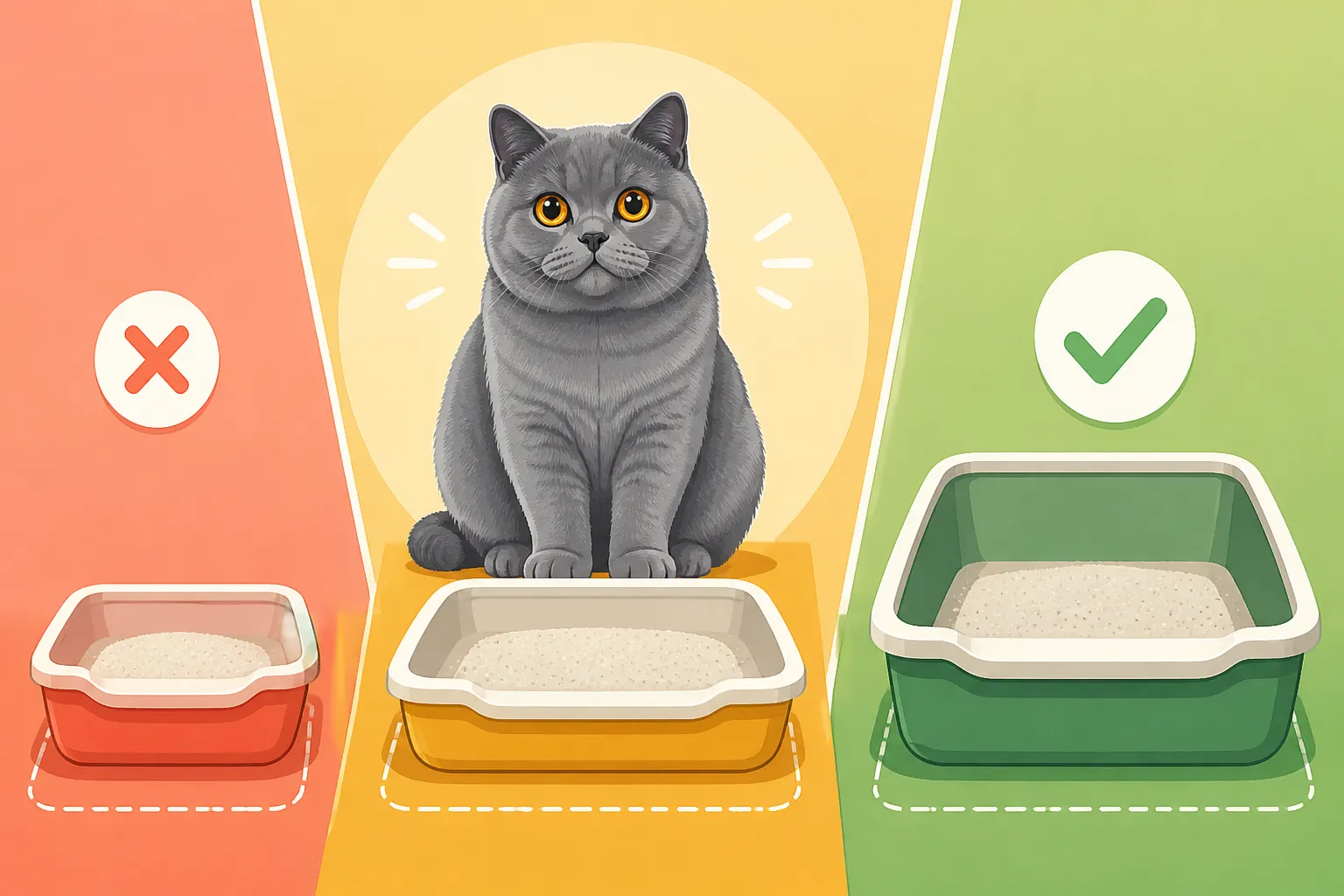
A good rule of thumb for any cat, but especially a larger breed like the British Shorthair, is that the litter box should be at least 1.5 times the length of your cat, from nose to the base of their tail. This allows them to step in fully, turn around, and dig without feeling squished. For a typical adult British Shorthair, this often means you're looking for a box that's roughly 20-24 inches long and 15-18 inches wide, at a minimum. Some cats will appreciate even more generous dimensions.
The reasoning here is purely practical. When your British Shorthair steps into their litter box, they should be able to turn a full 360 degrees without their nose or tail brushing the sides. They should also have enough space to choose a spot, dig a satisfactory hole, do their business, and then turn again to cover it meticulously. If the box is too narrow or too short, they might squat with their hindquarters too close to the edge, leading to accidents over the side. Or, they might feel unable to adequately cover their waste, which can be upsetting for a fastidious cat and lead to unpleasant odors for you. It's about providing an environment where they can perform all their natural behaviors without compromise.
Considering Height and Entry Points
Beyond length and width, the height of the litter box walls is another critical consideration. British Shorthairs are known for their enthusiastic digging and sometimes rather vigorous covering routines. If the walls are too low, you'll find litter kicked out onto the floor regularly, and if Whether a British Shorthair Kicks Litter is something you want to avoid, higher walls are a must. Aim for walls that are at least 6-8 inches high, ideally even higher on three sides, to contain the mess.
However, a critical caveat to high walls is the entry point. While you want to contain litter, you also need to ensure your British Shorthair can easily get in and out. For young, agile cats, this might not be an issue. But as your British Shorthair ages, or if they are prone to Obesity Is the British Shorthair's Real Disease, a very high lip can become a painful barrier, especially if they develop Arthritis in an Older British Shorthair. For senior British Shorthairs or those with mobility issues, a box with one side significantly lower (around 4-5 inches) or even a ramp can make a world of difference. This consideration is particularly important when Caring for an Old British Shorthair, as mobility can decline and prevent them from easily accessing higher-sided boxes. Think about a box that’s high enough to prevent scatter but has a comfortable step-over height. For a heavier British Shorthair, a low-entry point is crucial, as explained in Why a Heavy British Shorthair Needs a Low Sided Box.
Here's a quick guide to help visualize the ideal dimensions:
| British Shorthair Age/Size | Minimum Length (inches) | Minimum Width (inches) | Wall Height (inches) | Entry Height (inches) |
|---|---|---|---|---|
| Kitten (up to 6 months) | 16 | 12 | 4-5 | 3-4 |
| Adult (average) | 20 | 15 | 6-8 | 5-6 |
| Large Adult / Overweight | 24 | 18 | 7-9 | 4-5 |
| Senior / Arthritic | 24 | 18 | 6-8 (with low entry) | 3-4 (low entry side) |
Types of Litter Boxes and Their Suitability
With the dimensions in mind, let's talk about the different styles of litter boxes available on the market. Each comes with its own set of pros and cons, and what works best for one British Shorthair household might not be ideal for another. It's about balancing your cat's preferences with your own practical needs.
Open-Top Pans vs. Covered Boxes
This is one of the most fundamental choices you'll make. Open-top litter pans are exactly what they sound like – a simple tray with open access.
- Pros for British Shorthairs: They offer maximum space and ventilation, which many cats prefer. There’s no lid to bump their head on or restrict their movement, making them feel less confined. Good ventilation also helps to dissipate odors, though this doesn't replace daily scooping!
- Cons for British Shorthairs: The main drawback is litter scatter. If your British Shorthair is an enthusiastic digger, you'll likely find more litter outside the box. They also offer less privacy for the cat and less aesthetic concealment for you.
Covered litter boxes, on the other hand, have a lid, often with a small opening or a swinging door for entry.
- Pros for British Shorthairs: They excel at containing litter scatter and odors, making your home tidier and fresher. They also offer your cat a sense of privacy, which some British Shorthairs might appreciate.
- Cons for British Shorthairs: The biggest concern for a British Shorthair is space. Many covered boxes, while appearing large from the outside, can feel cramped inside due to the sloped roof or restrictive entry points. The trapped odors can also be overwhelming for a cat with a sensitive nose, potentially deterring them from using the box. The door flap can also be intimidating or difficult for some cats to navigate. It's crucial to ensure any covered box is extra-large to compensate for the internal space constraints.
High-Sided, Low-Entry, and Large Storage Bins
For a British Shorthair, standard litter boxes often fall short, which is why many owners seek out specialized or creative solutions. High-sided litter boxes are fantastic for containing kicked litter. These are typically open-top but feature significantly taller walls, often 10-12 inches or more. They solve the litter scatter problem without creating a confined, smelly environment. Some popular brands offer these, and you can often find them on sites like Chewy or Amazon.
Then there are low-entry high-sided boxes, which are a godsend for cats with mobility issues. These boxes have three very high sides and one side with a much lower entry point, making it easy for an older or arthritic British Shorthair to step in without having to hoist themselves over a high lip. This thoughtful design allows them the comfort of a private, high-walled space without the pain of difficult access. This is especially important for Caring for an Old British Shorthair who might suffer from arthritis.
Finally, a cost-effective and often very spacious solution is using large storage bins. Many pet owners find that extra-large plastic storage bins (without lids, of course, or with a modified entry) make excellent, roomy litter boxes. You can find these at most big-box stores or online platforms like Amazon. Just ensure the plastic is safe for pets and the sides are sturdy. You can cut a low entry point into one side if needed, creating a DIY low-entry, high-sided solution perfect for your British Shorthair's substantial build. Just make sure to smooth any rough edges to protect their paws.
Self-Cleaning and Automated Boxes
The allure of a self-cleaning litter box is undeniable – who wouldn't want less scooping? These devices automatically rake, rotate, or flush waste after your cat uses the box.
- Pros: Hands-free waste management, consistent cleanliness, and excellent odor control (as waste is removed quickly).
- Cons for British Shorthairs: The primary concern remains size. Many automated boxes are designed for average-sized cats, and a British Shorthair might find them too small or restrictive. The mechanisms (rakes, rotating drums) can also take up internal space, further reducing the usable area. Some cats are also deterred by the noise or movement of the machine, preferring a quiet, static environment. Before investing, it's crucial to check the internal dimensions and reviews from owners of large breeds to ensure it's a comfortable fit for your British Shorthair. Their robust build can be a challenge for some of these sleek, modern designs.
Placement and Maintenance for Optimal Use
Even with the perfect size and type of litter box, optimal placement and diligent maintenance are key to ensuring your British Shorthair uses it consistently and happily. These factors are just as important as the box itself in preventing unwanted accidents.
Strategic Placement for Comfort and Privacy
Where you put the litter box matters immensely to a British Shorthair. They are creatures of habit who value a predictable, calm environment. Just like us, they don't want to do their business in a bustling, high-traffic area. Avoid placing the litter box in laundry rooms where noisy appliances might startle them, or in busy hallways where family members and guests are constantly passing by.
Instead, seek out quiet, easily accessible locations. A corner of a guest bedroom, a quiet spot in a large bathroom, or a seldom-used utility room can be ideal. Ensure the box isn't hidden away in a dark, scary corner but rather in an inviting, well-lit space that offers a sense of security and privacy. If you have a multi-level home, consider having a box on each floor, especially as your British Shorthair gets older, to make access easy and reduce the chance of accidents. Remember, the goal is to make the litter box a desirable and stress-free place for your cat. This becomes even more important in a multi-cat household where How Many Boxes a British Shorthair Household Needs might even exceed the standard "N+1" rule.
How Many Boxes Do You Really Need?
This is a question many cat owners grapple with, and the answer is usually "more than you think!" The general rule of thumb for any cat household is to have "N+1" litter boxes, where N is the number of cats you own. So, if you have one British Shorthair, you should ideally have two litter boxes. If you have two, aim for three, and so on.
Why so many? Cats are incredibly particular about their elimination habits. Some prefer to urinate in one box and defecate in another. In a multi-cat household, even if your British Shorthair gets along well with others, they might not want to share a bathroom, especially if one cat is more dominant or if one box gets dirty faster. Having multiple options reduces competition and ensures that there's always a clean, accessible spot available. This is particularly relevant if you have multiple British Shorthairs, or a British Shorthair living with other breeds, as it alleviates stress and promotes good litter box habits for everyone.
Keeping it Spotless: A British Shorthair's Preference
No matter how perfectly sized or ideally placed your British Shorthair’s litter box is, it won't matter if it's not clean. British Shorthairs are inherently fastidious creatures. They have a strong aversion to using a dirty litter box, and a lack of cleanliness is one of the most common reasons cats stop using their tray. You might find that Why a Heavy British Shorthair Misses the Box can sometimes be traced back to an unsanitary environment they simply refuse to enter fully.
Daily scooping is non-negotiable. Aim for at least once a day, and preferably twice if possible, especially if you have multiple cats. Scoop out all solid waste and urine clumps. Beyond daily scooping, the entire box needs a thorough deep clean regularly. This means emptying all the litter, washing the box with mild soap and water (avoid harsh chemicals or strong-smelling cleaners, as these can deter your cat), and then refilling it with fresh litter. How often you do this depends on the type of litter, the number of cats, and your specific cat's habits, but generally every 2-4 weeks is a good starting point. Keeping their bathroom pristine is one of the easiest ways to ensure your British Shorthair remains a happy and well-adjusted member of your family.
Disclaimer
This article is for general informational purposes only and does not constitute professional advice. Laws, prices and regulations vary by location and change over time. Consult a qualified professional for guidance on your specific situation.