Whether a Timed Feeder Helps a British Shorthair
It's a common dilemma, isn't it? You adore your British Shorthair's calm demeanor and round face, but you also know they have a notorious love for food and a penchant for inactivity, making weight management a real challenge. You worry about their health, but life gets busy, and sometimes maintaining that perfect feeding schedule feels like another impossible task on your never-ending to-do list. This guide dives deep into whether a timed feeder can actually be a game-changer for you and your beloved British Shorthair, addressing those daily frustrations and helping you find a better way to manage their meals.
Understanding the British Shorthair's Eating Habits and Needs
British Shorthairs are, in a word, charmingly rotund. Their dense, plush coats and sturdy build already give them a substantial appearance, but beneath that adorable exterior often lies a cat who would happily eat all day if given the chance. This breed isn't known for its athletic prowess or high energy levels; they're more likely to be found napping in a sunbeam than chasing a laser pointer for hours on end. This combination of a hearty appetite and a relaxed lifestyle creates a perfect storm for weight gain, which is a major concern for their overall health.
The British Shorthair's Predisposition to Weight Gain
Let's be honest, those big, expressive eyes and soft purrs can make it incredibly hard to resist giving in to your British Shorthair's pleas for more food. They're masters of the "feed me, human" stare. Unfortunately, this breed is particularly prone to packing on the pounds. Their naturally cobby body shape can sometimes mask early signs of obesity, making it easy to overlook a gradual increase in weight. It's a frustrating cycle: they love food, they're not super active, and before you know it, you're wondering Why a British Shorthair Gains Weight So Easily.
This isn't just about aesthetics; excess weight can lead to a host of health problems for your British Shorthair, from joint issues to diabetes. It's not a matter of spoiling them; it's about protecting their long-term well-being. Knowing how easily they gain weight means every meal, every snack, needs to be considered.
The Importance of Structured Meal Times
Many cat owners, understandably, free-feed their cats. It seems convenient, right? Just leave a bowl out and let them graze. However, for a breed like the British Shorthair, free-feeding is often a direct path to obesity. With unlimited access to food, most British Shorthairs lack the internal "off" switch that tells them when they've had enough. They'll simply keep eating, often out of boredom or habit, rather than true hunger.
Structured meal times, typically two or three small meals a day, mimic a cat's natural hunting and eating patterns. In the wild, cats eat several small meals throughout the day, catching prey as needed. While our pampered British Shorthairs aren't out hunting mice, providing smaller, consistent meals helps regulate their metabolism and prevents them from overeating. It's a foundational step in managing their weight and ensuring they get How Many Calories a British Shorthair Needs. This controlled approach prevents the constant availability of food that can contribute to a sedentary cat becoming an overweight cat.
Portion Control: The Core Challenge
If structured meal times are important, then portion control is the absolute linchpin. It's the "whole job" when it comes to feeding a British Shorthair, as we often say. Deciding exactly How Much Food a British Shorthair Should Get Per Meal and consistently delivering that amount can be surprisingly tricky. Measuring cups aren't always accurate, and a slight overfill at each meal, day after day, adds up quickly.
This is where the frustration often sets in for owners. You try your best to measure, but sometimes you're rushing out the door, or you're just tired, and the scoop might be a little heavier than intended. Or perhaps your cat, with their unwavering dedication, manages to convince you that they absolutely, positively, have not eaten in days, even if you just fed them. The constant battle against their persuasive antics and your own busy schedule makes consistent, accurate portioning a real daily challenge that many British Shorthair owners face.
How Timed Feeders Address British Shorthair Feeding Challenges
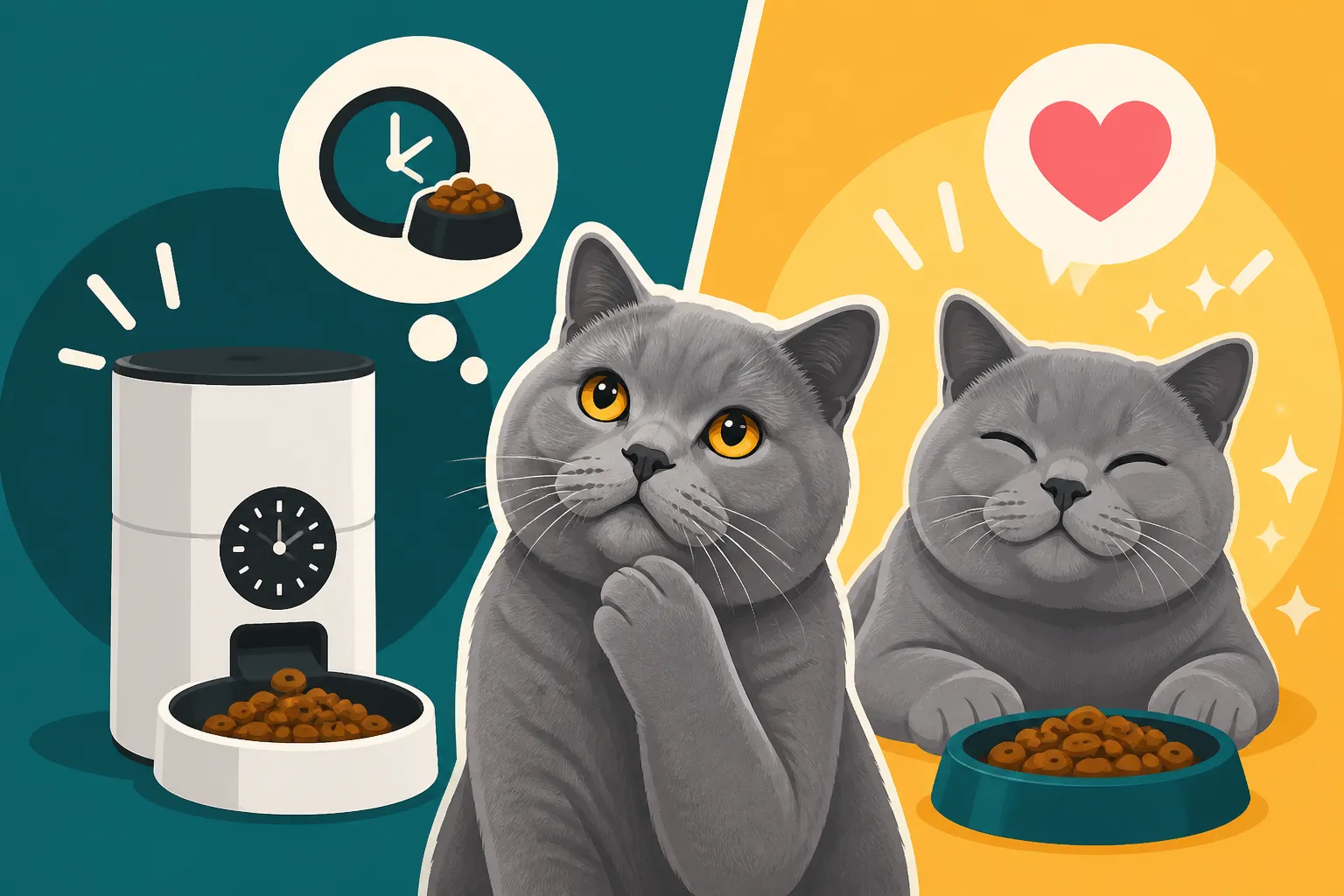
So, how can a piece of technology help with this very feline and very human struggle? Timed feeders are designed to take the guesswork and the emotion out of feeding, offering a consistent, reliable solution that can profoundly impact your British Shorthair's health and your peace of mind.
Ensuring Consistent Portion Sizes
One of the most significant benefits of a timed feeder is its unwavering precision. Unlike a human who might accidentally over-scoop, these devices are programmed to dispense an exact amount of food at designated times. This means that if your British Shorthair needs, say, half a cup of kibble split into two meals, the feeder will deliver precisely a quarter cup, twice a day, every single day. There's no room for error, no succumbing to those adorable begging eyes, and no accidental overfeeding.
This consistency is absolutely crucial for weight management. For a breed already prone to Obesity Is the British Shorthair's Real Disease, knowing that their caloric intake is strictly controlled can make all the difference in achieving and maintaining a healthy weight. It eliminates the daily mental math and the temptation to add "just a little bit more" that can derail even the best intentions. It also makes it much easier to stick to a vet-recommended diet plan, knowing that the exact portions will be delivered without fail.
Establishing a Routine and Preventing Begging
Cats thrive on routine, even if they sometimes pretend they don't. When meals are delivered at predictable times by a timed feeder, your British Shorthair quickly learns the new schedule. This predictability can significantly reduce incessant begging, a behavior that many owners find incredibly frustrating. Instead of constantly bothering you for food, your cat learns that food will appear at specific intervals, whether you're there or not.
This shift in behavior can lead to a calmer household and a less anxious cat. The focus moves from hounding you for food to simply waiting for the feeder to activate. It trains them to expect food from the machine, rather than from your hand or by staring intently at your face. Over time, you might notice your British Shorthair settling into a more relaxed rhythm, knowing exactly when their next meal is coming.
Managing Multiple Cats or Special Diets
If you have more than one cat, especially if one is a British Shorthair who tends to be a food hog, meal times can become a chaotic free-for-all. One cat might gobble down their food and then try to steal from the slower eater, or worse, from the cat on a specific prescription diet. Timed feeders, particularly those with advanced features or microchip recognition, can be a lifesaver in these scenarios.
For households with multiple cats, you can set up individual feeders for each cat, programmed to their specific dietary needs and portion sizes. Some advanced models even come with microchip technology, like those found on Chewy or Amazon, which only open for the cat whose microchip matches the programmed ID. This ensures that Whether a Microchip Feeder Works in a British Shorthair House is no longer a question, and that each cat, especially a British Shorthair on a weight-loss diet, gets only their allocated food, preventing food theft and allowing you to manage multiple dietary requirements seamlessly.
Convenience for Busy Lifestyles
Let's face it, modern life is hectic. Long work hours, unexpected errands, or even a spontaneous weekend getaway can throw a wrench into your carefully planned feeding schedule. This is where a timed feeder truly shines as a convenience tool. It removes the stress of needing to be home at specific times to feed your cat.
Knowing that your British Shorthair will be fed consistently, regardless of your schedule, provides immense peace of mind. No more rushing home, no more asking neighbors to pop in for a quick feeding, and no more guilt about leaving your hungry feline friend waiting. It's particularly beneficial for those who work long days or have irregular hours, ensuring your British Shorthair maintains their routine, even when yours is unpredictable. This consistency can be invaluable for their overall well-being.
Types of Timed Feeders and Their Features
The world of timed feeders has evolved quite a bit, offering a range of options to suit different needs and budgets. From simple, no-frills models to high-tech gadgets, there's likely a feeder out there that fits your British Shorthair's requirements and your lifestyle.
Basic Timed Feeders
These are your entry-level options, often very straightforward in design and function. Typically, they consist of a food hopper and a timer-activated dispenser. You load the dry food, set the timer for one or two meals, and the feeder dispenses a pre-set or manually measured portion at the appointed time. Some may have rotating trays with multiple compartments, suitable for wet food for a single meal if consumed quickly.
The pros of basic feeders are their affordability and ease of use. They get the job done without complex programming. However, their features are limited. They usually don't offer much flexibility in terms of meal frequency, portion size variability, or remote control. For owners looking for simple automation, perhaps for a British Shorthair who just needs consistent morning and evening meals, these can be a great starting point, often available on platforms like Amazon for a reasonable price.
Programmable and Smart Feeders
Stepping up in sophistication, programmable and smart feeders offer a wealth of advanced features. These often connect to your home Wi-Fi and can be controlled via a smartphone app. You can typically schedule multiple meals a day (sometimes up to 10 or more), customize portion sizes down to very specific increments, and even record a voice message to call your cat to eat – a feature that can be quite endearing for a quiet cat in the house (The Quietest Cat in the House) like a British Shorthair.
The benefits are extensive: unparalleled flexibility in scheduling, the ability to monitor feeding history, and the convenience of adjusting settings from anywhere. If you're delayed at work, you can remotely dispense an extra snack. Many also have battery backup in case of power outages. The downsides include a higher upfront cost and the potential for technological glitches, though reputable brands generally offer reliable products. For those who embrace smart home technology and want maximum control and flexibility, these feeders, often found on Chewy or other online retailers, are excellent choices.
Microchip-Activated Feeders
These are the specialized problem-solvers of the timed feeder world, particularly useful in multi-cat households where food aggression or specific dietary needs are an issue. A microchip-activated feeder works by scanning your cat's implanted microchip (or a collar tag if they aren't chipped) and only opening its lid for that specific cat. This means you can program it so only your British Shorthair can access its weight-management kibble, while another cat on a different diet can only access theirs from their own feeder.
The primary advantage is targeted feeding, preventing food theft and ensuring each cat adheres to their individual diet. This is invaluable if one of your British Shorthairs is on a prescription diet for Urinary Problems in a British Shorthair or is strictly managing their weight. The main drawback is their higher price point, and the need for each cat to be chipped (or wear a specific RFID collar tag). However, for managing complex feeding dynamics, they are often seen as an indispensable tool, effectively solving problems that no other feeder can.
Potential Downsides and Considerations
While timed feeders offer many advantages, they're not a magical fix, and there are some important considerations to keep in mind before investing in one for your British Shorthair. Being prepared for potential challenges will help ensure a smooth transition and long-term success.
Mechanical Failures and Backup Plans
Like any electronic device, timed feeders can occasionally fail. Batteries can die, power can go out, a motor might jam, or a software glitch could occur. Imagine leaving for a weekend trip, confident your British Shorthair is all set, only to return and find the feeder stopped working on day one. It's a terrifying thought for any pet parent.
It's absolutely vital to have a backup plan. Always test the feeder thoroughly before relying on it for an extended period. For longer absences, consider having a trusted friend or pet sitter check in periodically, even if just to ensure the feeder is operating correctly and to provide fresh water. Always have manual bowls and an emergency stash of food on hand in case you need to revert to hand-feeding. Don't put all your eggs in one technological basket; redundancy is key when it comes to your cat's well-being.
Adapting Your British Shorthair to a Feeder
British Shorthairs are creatures of habit, and while they can adapt, a sudden change to their feeding routine can be met with suspicion or even outright refusal. Some cats might be wary of the new object in their feeding area, especially if it makes noise when dispensing food. Others might miss the personal interaction of being fed by you.
To ensure a smooth transition, introduce the feeder gradually. Start by placing it next to their regular food bowl, feeding them from the bowl as usual. After a few days, put some food in the feeder and activate it manually while they watch and eat from their regular bowl. Slowly begin to use the feeder for small portions, while still using the regular bowl for the main meal, until they are comfortable approaching and eating from it. It's also a good idea to ensure their first experience with the feeder dispensing food is positive – perhaps with a particularly tasty treat. This patience will prevent your British Shorthair from associating the feeder with stress or fear.
Maintaining Cleanliness and Hygiene
While dry food might seem straightforward, timed feeders still require regular cleaning. Kibble dust and oils can accumulate in the hopper and dispenser chute, attracting pests or becoming rancid over time. If you're using a feeder designed for wet food (typically those with rotating, lidded compartments for single meals), hygiene becomes even more critical. Wet food can spoil quickly, especially in warmer temperatures, leading to bacterial growth if the compartments aren't thoroughly cleaned after each use.
Neglecting cleaning can lead to unpleasant odors, unappetizing food for your cat, and potentially health issues. Make sure to disassemble and wash all removable parts of the feeder according to the manufacturer's instructions regularly. This often means daily cleaning for wet food compartments and weekly or bi-weekly cleaning for dry food components. Keeping the feeder sparkling clean ensures your British Shorthair always has access to fresh, safe food.
Not a Substitute for Interaction
A timed feeder is a fantastic tool for managing your British Shorthair's diet, but it should never replace your personal interaction with your cat. It's easy to fall into the trap of thinking, "The feeder handles the food, so I don't need to worry." However, feeding time is often a significant bonding opportunity. Your British Shorthair still needs your attention, affection, and playtime.
A cat who is fed exclusively by a machine might miss the human connection, potentially leading to behavioral issues or a weaker bond with you. Remember, even a sedentary British Shorthair needs mental and physical stimulation. Interactive play, even for short bursts, is vital for their well-being and can help burn a few extra calories. Don't let the feeder become a replacement for the cherished moments you share with your feline friend; instead, view it as a tool that frees up more of your time for quality interaction. After all, a British Shorthair will not necessarily play on its own; sometimes you have to get them moving. Getting a Low Energy British Shorthair to Move often takes effort, even with a feeder doing the food delivery.
Making the Choice: Is a Timed Feeder Right for Your British Shorthair?
Deciding whether a timed feeder is the right move for your British Shorthair really comes down to a few key factors: your cat's individual needs, your personal lifestyle, and how committed you are to consistent implementation. It's not a universal solution, but for many, it can be a transformative one.
Assessing Your Cat's Needs
First and foremost, think about your British Shorthair. Is your cat prone to overeating, constantly begging for food, or has your vet recommended weight management? If you're struggling to keep them at a healthy weight, or if they've been diagnosed with Obesity Is the British Shorthair's Real Disease, a timed feeder could be incredibly beneficial. The consistent portion control it offers is often the missing piece of the puzzle for successful weight loss and maintenance.
Consider their personality too. Is your British Shorthair generally adaptable, or are they highly sensitive to change? If they're a bit finicky, be prepared for a slower, more patient introduction to the feeder. However, once they adapt, the predictability of the feeder can actually reduce anxiety for some cats, as they know exactly when to expect their next meal, rather than having to cajole you for it.
| Factor | Timed Feeder Benefits for British Shorthairs | Considerations |
|---|---|---|
| Weight Management | Precise, consistent portion control, crucial for weight loss/maintenance. | Still requires owner to calculate correct daily calorie intake. |
| Begging Behavior | Establishes routine, reduces constant food-seeking from owner. | Initial adaptation period may involve increased begging. |
| Multi-Cat Households | Prevents food stealing (especially with microchip models), manages diverse diets. | Requires separate feeders or microchip technology for effectiveness. |
| Owner Schedule | Provides peace of mind for busy, traveling, or irregularly scheduled owners. | Requires reliable device, power source, and backup plan. |
| Wet Food Delivery | Some models can dispense single wet food meals if eaten quickly. | Wet food spoils, requiring frequent cleaning; not for all meals. |
| Overall Health | Promotes healthier eating habits, can reduce risk of obesity-related illnesses. | Doesn't replace vet check-ups or appropriate diet formulation. |
Evaluating Your Lifestyle
Now, turn the spotlight on yourself. How busy is your daily life? Do you work long hours, have an unpredictable schedule, or travel frequently? If you often find yourself rushing through meal prep or worrying about your British Shorthair being hungry while you're away, a timed feeder can significantly alleviate that stress. It ensures your cat's meals are delivered punctually, even when you can't be there.
If you struggle with consistency in measuring food or find yourself giving in to begging, the automated nature of a timed feeder can be a huge help. It acts as an impartial dispenser, adhering strictly to the programmed schedule and portions, freeing you from the daily struggle of resisting those adorable, yet manipulative, cat eyes. Think of it as a helpful assistant that ensures your British Shorthair's nutritional needs are met without adding more pressure to your already packed day.
Practical Advice for Implementation
If you decide a timed feeder is right for your British Shorthair, here’s some practical advice. First, research models carefully. Consider the material (BPA-free plastic or stainless steel are good), the capacity (how often do you want to refill it?), and the ease of cleaning. Look at reviews, especially on sites like Chewy or Amazon, to see how other cat owners, perhaps even British Shorthair owners, have fared with specific brands.
When you bring it home, introduce it slowly, as discussed earlier. Don't just switch overnight. Ensure your cat always has access to fresh water, perhaps even considering a water fountain, as hydration is vital, especially if they're eating mostly dry food. Monitor your cat's weight and body condition regularly, and adjust the feeder's portions as needed, always consulting with your vet about their ideal weight and dietary requirements. A timed feeder is a tool, and like any tool, its effectiveness depends on how well it's used and maintained, and the thought that goes into managing your cat's diet.
Disclaimer
This article is for general informational purposes only and does not constitute professional advice. Laws, prices and regulations vary by location and change over time. Consult a qualified professional for guidance on your specific situation.