How Long a British Shorthair Takes to Warm to a Visitor
It’s a common scenario, isn't it? The doorbell rings, and you excitedly open the door, only for your beloved British Shorthair to vanish in a flash, leaving you to sheepishly explain that "he's just a bit shy." Many British Shorthair owners wonder exactly how long it takes for their plush companions to warm up to visitors, or if they ever truly will. This guide will walk you through the nuances of their personality and offer realistic expectations and tips for smoother introductions.
Understanding Your British Shorthair's Unique Personality with Strangers
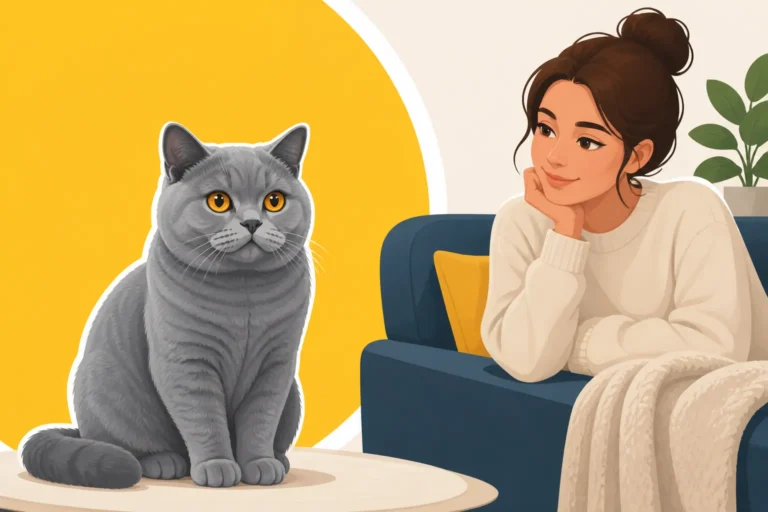
Let's be honest, British Shorthairs aren't usually the type of cat to greet every new face with exuberant purrs and leg rubs. Their charm lies in their dignified, calm, and often reserved nature. This isn't a sign of unfriendliness or rudeness; it's simply how they're wired. They are observers, thinkers, and creatures of habit, and a new person in their territory represents a break in their carefully curated routine.
Their Reserved Nature Isn't Shyness, It's Discretion
Many cat breeds rush to the door, demanding attention from anyone who enters, but that's rarely the British Shorthair way. Instead, they prefer to assess the situation from a safe distance. Think of it as a quality control check; they're not going to rush into anything until they've determined it's safe and worth their precious attention. This often means disappearing under a bed, behind a sofa, or even retreating to an entirely different room until the initial hubbub dies down. This behavior often leads owners to wonder How a British Shorthair Hides From Guests.
It’s crucial to understand that this isn’t necessarily fear, but rather a display of their inherent caution and a strong preference for predictability. They value their peace and quiet, and a new, noisy human can feel like an intrusion. They are not known for being overtly needy or clingy, and their independence means they don't feel the immediate compulsion to be the center of everyone's world. This dignified approach is part of What a British Shorthair's Temperament Is Really Like, and it's something owners learn to appreciate, even if it sometimes means a visitor never truly sees them.
The Importance of Their Routine and Territory
British Shorthairs thrive on routine. Their days are often structured around specific meal times, nap spots, and play sessions. When a visitor arrives, especially unexpectedly, it disrupts this comfortable rhythm. Their home is their sanctuary, and the introduction of a new scent, sound, and presence can feel like an invasion of their safe space.
For many British Shorthairs, their first instinct is to withdraw to a place where they feel secure and can observe the "threat" from a safe vantage point. This could be a high shelf, a quiet corner of the room, or even just behind your legs. This allows them to process the new stimuli without feeling overwhelmed or forced into interaction. Over time, as the visitor's presence becomes less novel and more predictable, they might begin to relax and emerge.
Factors That Influence Warm-Up Time
The question of "how long" is never a simple answer because it depends on a multitude of factors, both internal to your cat and external from the visitor and environment. There's no magic clock that ticks when a new person walks through the door, dictating when your British Shorthair will decide to make an appearance.
Individual Personality and Life Experiences
While British Shorthairs share many breed-specific traits, each cat is an individual with their own unique personality quirks. Some might be naturally bolder and more curious, venturing out within minutes, while others might be incredibly shy and take hours, or even multiple visits, to even sniff the new person's shoes. Early socialization plays a huge role here; a British Shorthair kitten exposed to many different people, sights, and sounds from a young age may be more adaptable than one who had limited exposure.
Age can also influence their response. Young kittens might be more playful and curious, sometimes overcoming their initial caution more quickly to investigate a new scent or sound. Older British Shorthairs, especially those who have established strong routines and comfort zones, may be less inclined to deviate from their habits for a fleeting visitor. If your cat has had negative experiences with strangers in the past, their warm-up time will naturally be much longer, as they've learned to associate new people with discomfort.
The Visitor's Demeanor and Approach
This is perhaps one of the most significant external factors. How a visitor acts directly impacts how quickly (or slowly) your British Shorthair will feel comfortable. Loud voices, sudden movements, or insistent attempts to pick up or pet the cat are almost guaranteed to send them running for cover. British Shorthairs, like many cats, prefer gentle, quiet, and respectful interactions.
The best approach for a visitor is often to completely ignore the cat. No direct eye contact, no reaching out, no loud greetings. Let your British Shorthair initiate contact on their own terms. When they do eventually approach, a slow, extended finger for them to sniff can be a good starting point. If they rub against it, a gentle stroke on the head or cheeks might be welcomed. Patience is key. You'll also want to gently remind your guests that A British Shorthair Sits Near You, Not On You, so they shouldn't take it personally if your cat prefers to keep a small distance.
Frequency and Duration of Visits
Is this a one-time guest, or someone who visits regularly? The frequency of visits makes a huge difference. A stranger who appears for a few hours and then disappears may never fully earn your British Shorthair's trust. They simply don't have enough repeated positive interactions to form a bond.
However, if it's a family member who visits every week, or a pet sitter who comes by daily, the warm-up time will progressively shorten with each visit. Familiarity breeds comfort for a British Shorthair. They will start to associate the person with predictable, non-threatening behavior, and perhaps even with positive reinforcement like treats or quiet play. Over time, a regular visitor might find themselves being greeted with a soft chirp or a rub against their leg, a clear sign of growing acceptance.
Strategies to Help Your British Shorthair Adjust
While you can't force your British Shorthair to love every visitor, you can certainly create an environment and implement strategies that encourage them to feel safer and more comfortable around new people. It’s all about empowering your cat and managing the situation proactively.
Creating a Safe Haven for Your Cat
Before any guests arrive, make sure your British Shorthair has a designated safe space they can retreat to. This could be a spare room with their bed, food, water, and litter box, or a high-up cat tree where they can observe from a safe vantage point. A tall Which Cat Tree a British Shorthair Uses from Amazon, positioned strategically, can be a perfect observation post. It should be a place where they know they won't be bothered and can relax without feeling exposed.
Communicate this to your guests: "Please don't try to pull Mittens out from under the bed; she needs her space." Respecting their need for retreat is paramount. Forcing interaction will only increase their stress and prolong their hiding. A comfortable cat is a confident cat, and knowing they have an escape route can actually encourage them to be more brave and adventurous when they feel ready.
Positive Reinforcement and Gentle Introductions
If your British Shorthair does decide to make an appearance, positive reinforcement can work wonders. Ask your guests to have a few small, delicious treats on hand (with your permission, of course) that they can gently toss towards your cat, rather than trying to hand-feed. This creates a positive association with the visitor without demanding direct physical interaction.
Sometimes, quiet play can also be a fantastic icebreaker. A gentle feather wand, maybe one you picked up from Amazon, can tempt a shy British Shorthair out of their shell without being too overwhelming. Have your guest sit quietly and dangle a Which Wand Toy a British Shorthair Will Chase a short distance away, allowing the cat to approach and engage at their own pace. Remember, the goal isn't to force interaction, but to create opportunities for positive experiences.
Educating Your Guests About British Shorthair Etiquette
It's your job to manage your guests' expectations and educate them on how best to interact (or not interact) with your British Shorthair. Explain that your cat is not anti-social, but simply has a more reserved personality. Let them know that quiet voices and calm movements are appreciated. Emphasize that your British Shorthair will come out when they're ready, and trying to coax them out or pick them up will only prolong the process.
A quick rundown of your cat's body language can also be helpful. For example, a slow blink is a sign of trust, while a swishing tail might indicate annoyance. You can explain that your cat generally prefers to be petted on the head or cheeks, and not necessarily on their belly. This simple act of communication can prevent misunderstandings and create a more harmonious environment for both your cat and your guests. You want your cat to eventually show signs of acceptance, and knowing How a British Shorthair Shows It Is Pleased will help your guests understand their progress.
What to Expect: Timelines and Signals
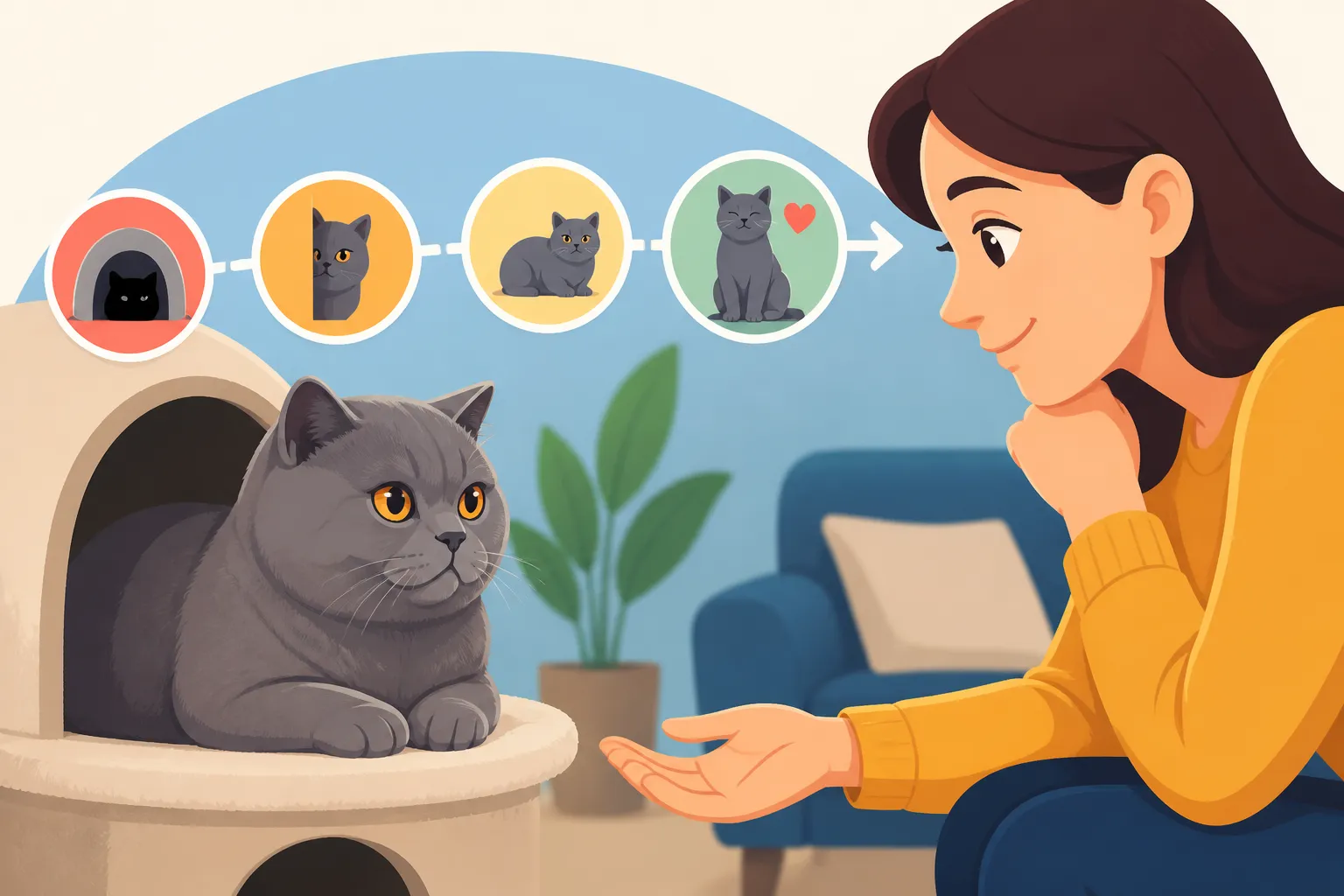
So, after all this, how long does it take? The truth is, there's no single answer. It could be minutes, hours, or even several visits before your British Shorthair decides a new person is "okay." The key is patience and recognizing the subtle signals they give.
The Initial Observation Period
When a new person enters your home, expect your British Shorthair to go into observation mode. This might mean watching from a distance, perhaps from under a coffee table or a high shelf. They might dart glances, occasionally flick an ear, or slowly twitch their tail. This is their way of gathering information: are they loud? Are they still? Do they smell strange? This period can last anywhere from a few minutes to an hour or more, depending on the cat and the visitor.
During this time, it's best to let your British Shorthair dictate the pace. Don't call them, don't try to lure them out, and certainly don't let guests attempt to approach them. The goal is for the cat to feel entirely safe and unthreatened. As they start to relax, you might notice subtle shifts: their ears might face forward, their body language might soften, and they might even stretch out a bit from their hiding spot.
| Stage of Warm-Up | Typical Behavior | What it Means | Recommended Guest Action |
|---|---|---|---|
| Initial Arrival | Hiding, observing from afar, ears back/swiveling, tail low. | Assessing threat, seeking safety. | Ignore cat, speak softly, sit still. |
| Passive Observation | Watching from a distance, occasionally peeking, relaxed posture, slow blinks. | Feeling slightly more secure, gathering more data. | Continue ignoring, avoid direct eye contact, don't approach. |
| Tentative Approach | Creeping closer, sniffing air, exploring floor near guest (not touching). | Curiosity outweighing caution, testing boundaries. | Remain still, extend a slow finger if cat approaches, offer small treat. |
| Direct Interaction | Rubbing against legs, allowing gentle pets, purring, asking for attention. | Trust established, comfortable with presence. | Gentle petting (head/cheeks), soft voice, brief play. |
From Cautious Sniffs to Casual Acceptance
Once your British Shorthair feels secure enough, they might begin to venture closer. This often starts with sniffing the visitor's shoes, bag, or even their pant leg. This is a huge step, as scent is a primary way cats gather information about their environment and others. If they rub against a guest's leg, that's a definite sign of acceptance and a request for interaction. How Much a British Shorthair Likes Being Stroked is individual, but a gentle touch is usually appreciated.
Even then, don't expect them to become a lap cat immediately, or even ever. British Shorthairs are typically not big on being held or sitting directly on laps, often preferring to be near you rather than on you. They might settle on a nearby chair, or even just on the floor a few feet away, content to simply share the same space. If your British Shorthair eventually feels comfortable enough to share a room and perhaps even follow you and your guests casually between rooms, it shows they feel safe and integrated. This gradual easing into comfort and even How Closely a British Shorthair Follows You indicates a positive shift in their acceptance.
Ultimately, the goal isn't to force your British Shorthair to be something they're not, but to create an environment where they feel safe enough to be themselves, even when new faces are around. With patience, understanding, and a respectful approach from your guests, your British Shorthair will eventually warm up on their own terms, no matter how long it takes.
Disclaimer
This article is for general informational purposes only and does not constitute professional advice. Laws, prices and regulations vary by location and change over time. Consult a qualified professional for guidance on your specific situation.