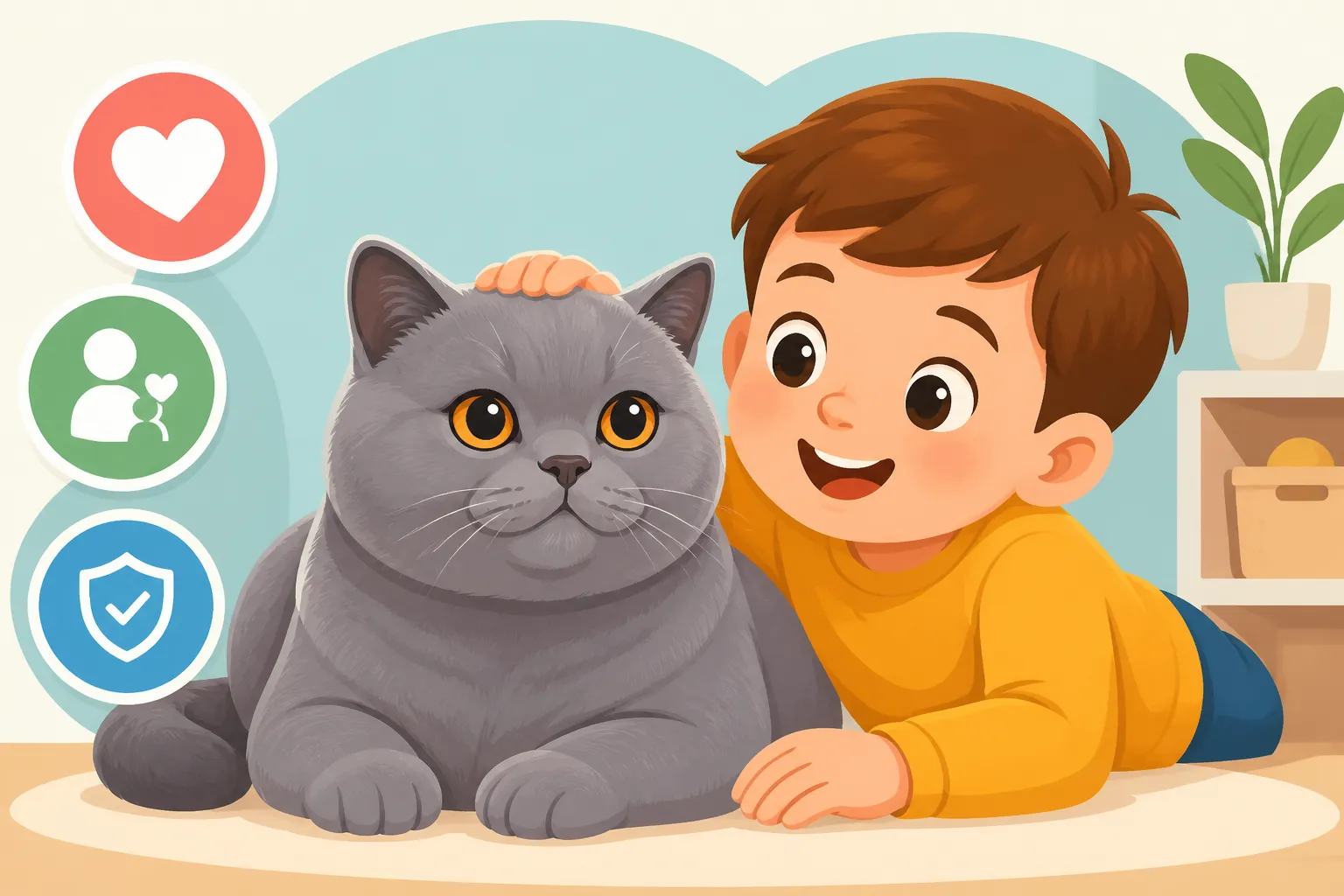
How a British Shorthair Behaves With Children
Bringing a British Shorthair into a home with children can bring a unique set of questions and sometimes, anxieties. Will this calm, placid cat cope with the boundless energy of kids? Many prospective owners worry about ensuring a harmonious household where both the feline and human family members feel safe and happy. This guide is here to walk you through the British Shorthair's typical temperament with children, how to foster positive interactions, and what you can do to make your home a haven for everyone.
The British Shorthair's Gentle Nature Around Children
One of the most appealing traits of the British Shorthair is its calm and steady demeanor. These cats are known for being incredibly patient and generally unflappable, which often makes them a good fit for families. They're not usually prone to sudden bursts of aggression or frantic activity, preferring a more sedate pace of life. This inherent tranquility often extends to their interactions with children, making them far more tolerant than some other breeds might be.
Calm Demeanor and Patience
Imagine a British Shorthair, perhaps lounging on a sunbeam, slowly blinking. That's their usual speed! Their placid nature means they're often quite patient with the various noises and movements that children bring into a home. They're unlikely to panic or lash out at an unexpected loud noise or a child's sudden sprint through the room. Instead, they typically observe, perhaps shifting a little to maintain their personal space, but rarely reacting with aggression. This can be a huge relief for parents who worry about accidental scratches or bites from a stressed cat. You'll often find them observing the chaos from a safe distance, a quiet sentinel in the family dynamic. They embody the phrase The Quietest Cat in the House for a reason, and this low vocalization often means less startling interactions for both cat and child.
Their patience isn't boundless, of course, but it's certainly a strong foundation. They can tolerate a certain amount of playful poking or gentle petting from a curious child, provided it's not overly forceful or prolonged. They generally prefer to be admired from a slight distance rather than constantly handled, but their tolerance levels are usually quite high for a feline. This characteristic makes them adaptable to family life, even if they aren't going to be the life of the party, chasing after toddlers with glee. They simply prefer to be present, a calming, watchful presence.
Tolerance Versus Active Interaction
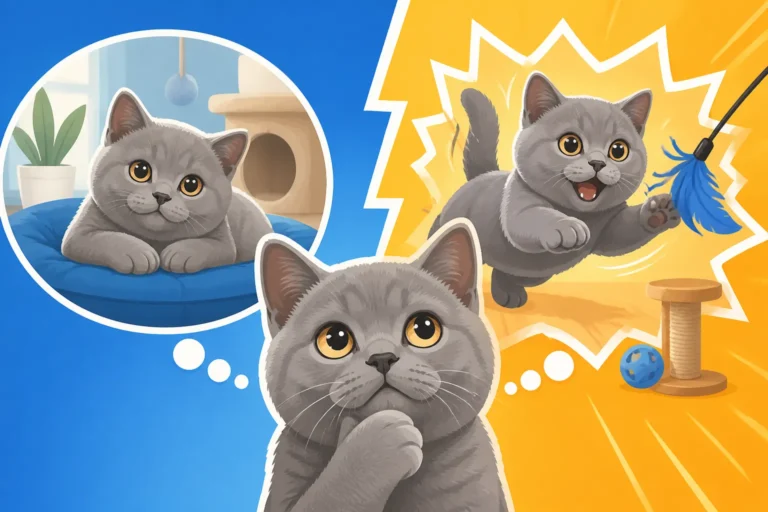
It's important to understand the distinction between tolerance and active participation. A British Shorthair will likely tolerate children, but they are rarely the kind of cat that will actively seek out boisterous play sessions with them. They're not typically chasing laser pointers with the same wild abandon as a Bengal, nor will they engage in wrestling matches with a giggling preschooler. Their idea of interaction is often a quiet presence. They might choose to nap on the sofa next to a child reading a book, or sit on a nearby chair while children play on the floor.
They thrive on routine and predictability, and while children can be anything but, the British Shorthair's calm nature helps them absorb the ebb and flow of a busy home. They aren't prone to the kind of anxiety that might lead to behavioral issues in a more high-strung breed when confronted with unpredictable child behavior. They simply prefer to be observers, enjoying the warmth and comfort of family life from their own chosen spot, often making them excellent companions for children who appreciate a quiet, undemanding presence. Remember, A British Shorthair Sits Near You, Not On You, and this often extends to their interactions with children, too.
Their Need for Peace and Quiet
Despite their tolerant nature, British Shorthairs still appreciate and require their own space and quiet time. Imagine trying to relax while someone constantly pokes you or shouts near your ear – it would get old fast, right? Cats, especially those with the British Shorthair's dignified reserve, are no different. They need a retreat, a place where they can go to escape the noise and activity, particularly when children are being particularly energetic. This could be a high shelf, a secluded cat tree, or even a specific room that's off-limits to young children.
Sudden, loud noises or aggressive, rough handling can still be startling and upsetting for them. While they may not lash out, repeated negative experiences can lead to them becoming withdrawn, fearful, or even developing behavioral problems like inappropriate urination. It's not about them being "mean" but rather about self-preservation and protecting their inner peace. Establishing clear boundaries for both the cat and the children is paramount to ensuring that this gentle giant feels secure and loved in your home.
Setting Up for Success: Preparation is Key
Bringing any pet into a home with children requires thoughtful planning, and a British Shorthair is no exception. It’s not enough to simply hope for the best; active steps need to be taken to ensure a positive introduction and ongoing harmonious relationship. This means preparing both your cat and your children for life together.
Introducing a British Shorthair to Kids
The key to a successful introduction is gradual exposure and constant supervision. Don't just plop the new cat down in front of excited children and expect them to figure it out. Start by allowing the British Shorthair to explore their new environment while the children are calm or even out of the house. Once they've settled a bit, introduce the children one at a time, if possible, in a quiet, controlled setting. Keep these initial interactions very short – just a few minutes – and always end on a positive note, like a treat for the cat and praise for the child.
Teach your children to approach the cat gently, slowly, and to let the cat come to them. Never force the cat into an interaction. Encourage soft voices and slow movements. It's often helpful to have treats on hand to reward the British Shorthair for calm behavior around children, creating a positive association. Patience is truly a virtue here, as building trust takes time. Over time, the cat will learn that children are part of their safe environment, and children will learn the valuable lesson of respect for another living creature's boundaries.
Creating a Safe Retreat for Your Cat
This is perhaps one of the most critical aspects of coexisting peacefully with children and a British Shorthair. Your cat absolutely must have a safe, quiet space that children cannot access. This isn't just a suggestion; it's a necessity for their well-being. Imagine your British Shorthair being chased or constantly pestered and having no escape – that's a recipe for stress and potential behavioral issues. A dedicated "cat room" with a cat flap or a tall cat tree in a quiet corner of a room that children are taught not to disturb can serve this purpose. Many great options for cat trees, like sturdy, multi-level ones, can be found on Amazon.
This retreat allows your British Shorthair to feel secure, knowing they can always remove themselves from an overwhelming situation. It's their sanctuary, a place where they can nap undisturbed, groom themselves in peace, or simply observe the household from a safe vantage point. When a cat feels safe and has control over its environment, it's far less likely to exhibit fear-based aggression or anxiety. This space communicates to your cat that their needs are respected, fostering a sense of trust and security.
Teaching Children How to Interact
Education is power, and teaching children how to interact respectfully with a British Shorthair is paramount. Start by explaining that their new cat isn't a toy, but a living, feeling creature with emotions and preferences. Show them how to stroke gently, perhaps only on the head and back, avoiding sensitive areas like the belly or tail. Emphasize slow, quiet movements and soft voices. Make it a rule: no picking up the cat unless supervised and only if the cat seems willing, and even then, only briefly. This is crucial because A British Shorthair Will Not Be Picked Up willingly most of the time.
Teach children to recognize basic cat body language. Explain that a twitching tail, flattened ears, wide eyes, or a low growl means "I need space." Reward children for calm and gentle interactions, praising them when they respect the cat's boundaries. You can use visual aids or even role-play to demonstrate appropriate behavior. Establishing these rules early and consistently will help prevent misunderstandings and ensure both child and cat have a positive relationship.
Understanding British Shorthair Reactions
Even with the best intentions and preparations, understanding your British Shorthair's subtle cues is vital for a peaceful household with children. These cats are not always overtly expressive, but they will certainly communicate their feelings if you know what to look for.
Signs of Stress or Discomfort
British Shorthairs are generally stoic, but even they have their limits. When they're feeling stressed or uncomfortable, their body language will give you clues. Look for a tail tucked close to the body or twitching rapidly, which indicates irritation. Their ears might flatten against their head, or swivel backward. Their eyes might become wide, or they might stare intently. You might notice a stiff posture, hair bristling on their back, or even a low growl or hiss. These are all clear signals that your cat needs space and the current interaction needs to stop.
If your British Shorthair repeatedly hides under furniture, spends an unusual amount of time secluded, or shows a reluctance to come out when children are present, these are also strong indicators of stress. It's crucial to teach children to recognize these signals and to retreat immediately when they see them. Ignoring these warnings can escalate the situation, potentially leading to a swat or bite, which no one wants. Remember, a cat that feels cornered is more likely to defend itself.
Avoiding Overstimulation
Just like people, cats can get overwhelmed. A British Shorthair's gentle nature means they might tolerate a lot, but continuous, high-energy attention from children can be exhausting for them. Imagine a child constantly trying to engage a cat that just wants to nap, or following them from room to room. This constant presence, even if well-intentioned, can be overstimulating and lead to withdrawal or even behavioral problems. They need quiet periods to recharge.
Ensure that children understand that after a short interaction, they need to let the cat be. Redirect their energy to other activities, and give your British Shorthair ample opportunity for undisturbed rest. This is particularly important for this breed, as they are not generally known for their boundless energy or intense play drive. A tired or overstimulated British Shorthair is a stressed British Shorthair, and that's when things can go downhill. While How Much Play a British Shorthair Needs isn't a lot, it should always be initiated by the cat or be a short, positive session.
When They Might Engage in Play
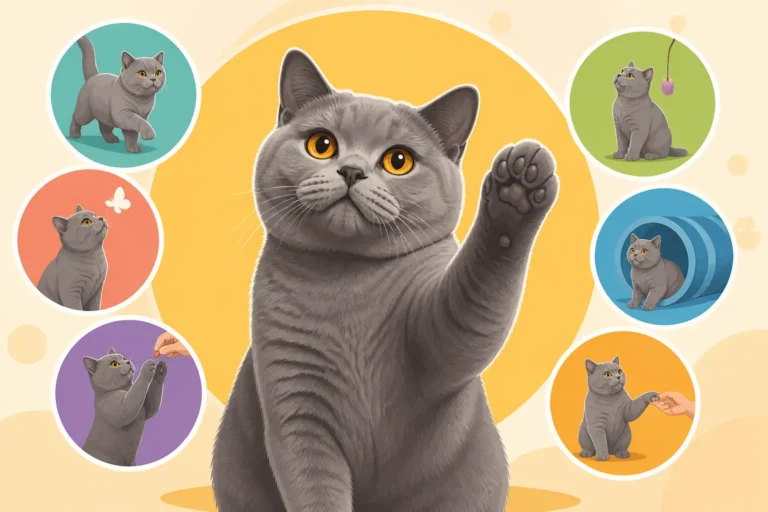
While British Shorthairs aren't usually known for being super playful, especially as they mature, they do enjoy certain types of interaction. These are generally calmer, more predictable forms of play that don't involve a lot of physical contact. Think wand toys with feathers or soft toys on strings that allow the cat to stalk and pounce from a distance. These types of toys engage their hunting instincts without requiring them to be in close quarters with a child. Which Toys a British Shorthair Will Actually Chase often involve movement and sound, but always at a comfortable distance.
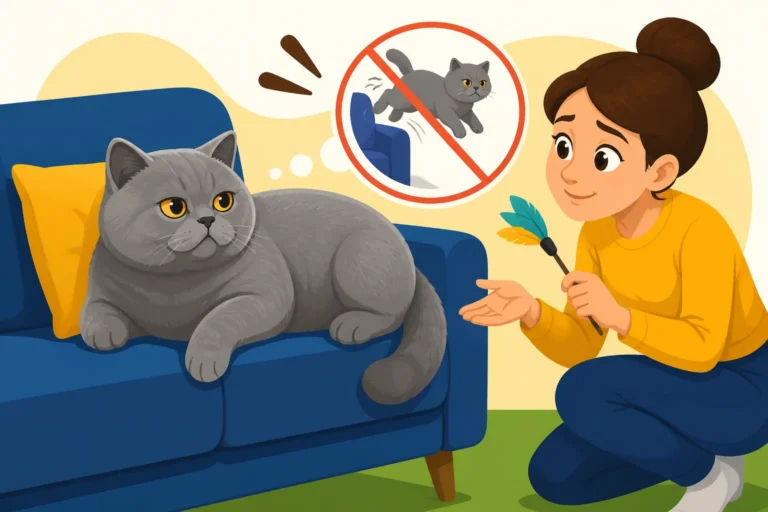
Children can be taught to use these toys effectively, guiding the wand toy across the floor or dangling it from a chair so the cat can chase and bat at it. This allows for interaction without direct physical touch, which many British Shorthairs prefer. Even a quiet game of hide-and-seek with a favorite toy can be engaging. The key is to keep play sessions short, positive, and on the cat's terms, ensuring they remain an enjoyable bonding experience rather than a source of stress.
Age-Specific Considerations
The interaction between a British Shorthair and children isn't a one-size-fits-all scenario. The age and developmental stage of the child play a significant role in how well the relationship will flourish. What works for a teenager will certainly not work for a toddler, and adjusting your approach accordingly is essential.
British Shorthairs and Babies/Toddlers
This is often the most challenging dynamic. Babies and toddlers are, by their very nature, unpredictable. They move suddenly, make loud noises, grab without thinking, and have not yet developed an understanding of boundaries or gentle touch. Their motor skills are still developing, meaning their movements can be clumsy and their grip surprisingly strong. For a calm, reserved British Shorthair, this can be a source of constant stress. You must assume that a baby or toddler will not understand how to interact safely with a cat.
Constant, vigilant supervision is non-negotiable when a British Shorthair is in the same room as a baby or toddler. It's far better to prevent any potential negative interaction than to react after one has occurred. This might mean using baby gates to create physical barriers, especially during playtime or when the cat is eating. Ensuring the cat has multiple escape routes and high perches to retreat to is also crucial. Remember that a British Shorthair, while gentle, is still an animal with claws and teeth, and even a defensive swat, if aimed at a child's face, can cause serious injury. Understanding How Far a British Shorthair Is Safe With a Baby comes down to diligent supervision and proactive management.
British Shorthairs and Older Children
As children grow older, generally from around five or six years old and up, the dynamic with a British Shorthair tends to become much smoother. Older children are capable of understanding and respecting rules, learning about gentle interaction, and recognizing a cat's body language. They can be taught to approach the cat calmly, to stroke gently, and to know when to leave the cat alone. This makes establishing a positive relationship far easier.
With older children, you can engage them more directly in the cat's care, such as helping with feeding (under supervision, of course, to maintain portion control for this breed), or using appropriate toys for playtime. This fosters a sense of responsibility and connection. These interactions can become mutually enriching, with the child learning empathy and respect for animals, and the cat enjoying the calm companionship. The British Shorthair might even seek out the quiet presence of an older child reading or watching TV, finding comfort in their predictable movements and soft voices.
Managing Expectations and Daily Life
Living with a British Shorthair and children means ongoing management and understanding that the relationship will evolve. It's not a one-time setup, but a continuous process of nurturing, educating, and adapting.
Establishing Boundaries for Both Cat and Child
Clear, consistent boundaries are the bedrock of a successful multi-species household. For children, this means firm rules: no chasing the cat, no pulling its tail, no interrupting it while it's eating or sleeping, and always approaching gently. These rules should be non-negotiable and reinforced by all adults in the household. Use positive reinforcement when children follow the rules, praising their gentle behavior.
For the cat, boundaries mean having access to safe spaces where they can retreat. It might also mean establishing certain "cat-free" zones for the children, perhaps a play area where toys won't accidentally be carried off by a curious feline, or a dedicated bedroom where the child can have privacy from a playful (or nosy!) cat. Consider a cat flap that only your British Shorthair can use for their designated safe room, ensuring children cannot follow. Consistency in enforcing these boundaries creates a predictable and secure environment for everyone.
Enriching Their Environment for a Multi-Species Home
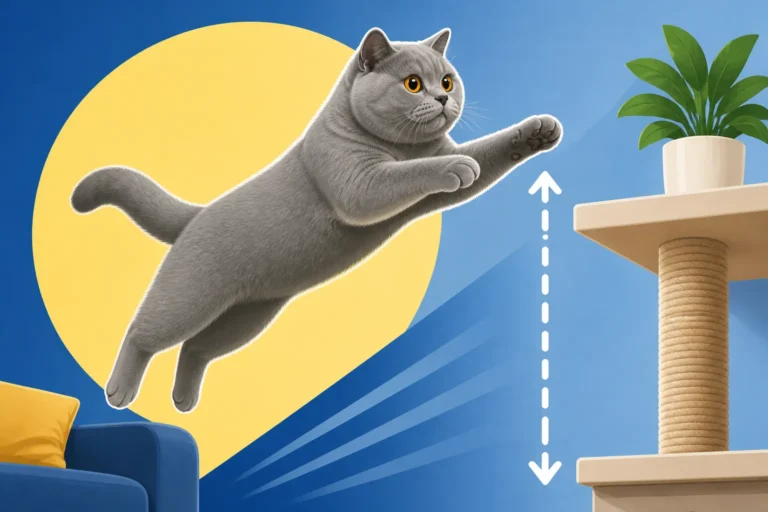
A British Shorthair, especially one sharing its home with energetic children, benefits immensely from environmental enrichment. This means providing outlets for their natural behaviors that don't directly involve the children. Vertical space is your best friend here. Consider cat trees, wall-mounted shelves, or even tall furniture that your British Shorthair can access to observe the activity from above, safely out of reach. There are many robust cat tree options available on Amazon that can accommodate a British Shorthair's sturdy build. Which Cat Tree a British Shorthair Uses should be stable and have wide perches.
Puzzle feeders are another fantastic way to engage their minds and satisfy their foraging instincts, and can be a quiet activity for them while children are loud. Scattering treats for them to "hunt" can also be stimulating. These types of enrichment reduce boredom and stress, making your British Shorthair a happier, more well-adjusted family member, less likely to feel overwhelmed by the children.
Long-Term Compatibility and Bonding
It's important to set realistic expectations for the bond between a British Shorthair and children. They may not be the type to cuddle intensely or constantly seek out physical affection from children, but they can still form deep, lasting bonds built on trust and mutual respect. Their affection might be subtle – a gentle head-butt as they walk past, choosing to nap in the same room as a child, or a soft purr when petted appropriately. How a British Shorthair Shows Affection is often through quiet presence.
Over time, as children mature and learn to respect their cat's boundaries, the British Shorthair will often reciprocate with quiet companionship. The bond might be one of peaceful coexistence, a comfortable presence rather than an overtly demonstrative one. And for many families, that's exactly what they need: a calm, loving pet that adds a gentle warmth to the household without demanding constant attention, truly becoming a cherished part of the family tapestry.
Common Misconceptions About British Shorthairs and Children
There are often preconceived notions about how cats and kids interact, and British Shorthairs, with their unique temperament, can often defy some of these common ideas. Understanding these misconceptions can help manage expectations and avoid frustration.
They Aren't Lap Cats, Even for Kids
One of the biggest misconceptions is that a cat, any cat, will naturally gravitate towards children for cuddles and lap time. This is especially untrue for British Shorthairs. While they are affectionate in their own way, they are generally not "lap cats" in the traditional sense, preferring to sit near you rather than on you. This preference typically extends to children as well. A child might desperately want their furry friend to curl up on their lap, especially while watching TV or reading a book, but the British Shorthair is far more likely to choose the adjacent cushion or a spot at the foot of the bed. How Much of a Lap Cat a British Shorthair Is is usually minimal.
Explaining this to children in an age-appropriate way is crucial. Help them understand that the cat showing affection by simply being in the same room, or allowing a few gentle strokes, is still a sign of love and trust. Forcing a British Shorthair onto a child's lap will only make the cat uncomfortable and potentially lead to a negative association with the child, making future interactions more strained. Celebrate the small moments of proximity and quiet companionship, rather than pushing for intense physical closeness.
Don't Force Interaction
This point cannot be stressed enough. Never, ever force a British Shorthair to interact with a child, or any human for that matter. Forcing interaction is a surefire way to break trust, create anxiety, and potentially lead to defensive behavior. If your British Shorthair is hiding, attempting to move away, or displaying any of the stress signals mentioned earlier, the interaction needs to end immediately. Dragging them out from under a bed or restraining them for forced petting will only teach them to fear hands and human interaction.
Instead, encourage children to invite interaction by offering a hand for sniffing, or by sitting quietly and allowing the cat to approach. If the cat chooses to rub against a child's leg or allow a head scratch, that's a genuine moment of connection. These voluntary interactions are far more meaningful and strengthen the bond in a positive way. Respecting a British Shorthair's independence and autonomy, especially around children, is the foundation for a happy and well-adjusted cat.
Dos and Don'ts for British Shorthairs and Children
To help solidify the best practices, here's a quick reference table summarizing how to foster a positive environment for your British Shorthair and the children in your home.
| Action | Do | Don't |
|---|---|---|
| Supervision | Always supervise interactions, especially with young children. | Leave young children unsupervised with the cat, even for a moment. |
| Teaching Children | Teach gentle petting, soft voices, and respecting cat's space. | Allow rough play, tail pulling, or chasing the cat. |
| Cat's Retreat | Provide multiple safe, high, and quiet spaces for the cat to escape. | Block escape routes or allow children into the cat's designated safe zones. |
| Body Language | Teach children to recognize and respect stress signals (flat ears, tail twitch). | Ignore signs of discomfort; force interaction when the cat is stressed. |
| Playtime | Encourage quiet, supervised play with wand toys or puzzle feeders. | Engage in roughhousing, picking up against the cat's will, or teasing. |
| Boundaries | Establish and consistently enforce clear rules for both cat and child. | Allow inconsistent rules or let children violate the cat's personal space. |
| Enrichment | Offer environmental enrichment like cat trees, scratchers, and puzzle toys. | Expect the cat to entertain itself or solely rely on human interaction. |
Ultimately, the British Shorthair can be a wonderful addition to a family with children, provided that their unique needs and calm temperament are understood and respected. With patience, education, and consistent boundaries, both your children and your British Shorthair can thrive in a harmonious home environment.
Disclaimer
This article is for general informational purposes only and does not constitute professional advice. Laws, prices and regulations vary by location and change over time. Consult a qualified professional for guidance on your specific situation.