Which Tricks a British Shorthair Can Learn
It's easy to look at a British Shorthair, with their famously calm demeanor and often unhurried approach to life, and assume that "tricks" are simply not in their vocabulary. Many owners feel a bit of a pang, watching videos of other breeds fetching or high-fiving, wondering if their own beloved teddy bear cat is just too dignified for such antics. The truth is, while a British Shorthair might not be the first cat to volunteer for a circus act, they are intelligent, food-motivated, and surprisingly capable of learning a variety of tricks, provided you approach it with patience, understanding, and a healthy dose of their favorite treats. This guide is here to show you exactly how to tap into that hidden potential and teach your British Shorthair some fun, engaging, and even useful skills.
Understanding the British Shorthair's Learning Style
Before you even think about teaching your British Shorthair to "sit" or "stay," it's crucial to understand the unique characteristics that shape their willingness and ability to learn. These aren't your typical high-energy, constantly-seeking-attention breeds. They have their own pace, their own motivations, and their own subtle ways of communicating.
Their Calm and Observant Nature
British Shorthairs are renowned for their serene and observant nature. They aren't prone to frantic bursts of energy or impulsive behavior. Instead, they prefer to take in their surroundings, analyze situations, and then decide how to act. This isn't laziness; it's a calm self-possession that makes them wonderful companions, but it also means they won't typically jump into training with wild abandon. They watch you, they listen, and they process. This can make initial training sessions feel a bit slow, as you might perceive them as indifferent or unengaged, but often, they are simply absorbing information.
Their quiet contemplation is actually an asset. Because they aren't easily distracted by external stimuli, once they decide to engage, they can be incredibly focused. You just need to crack the code of what makes them decide to engage. Think of it like a wise old professor – they won't rush to answer, but when they do, it's often thoughtful and precise. This also means consistency on your part is key. They're watching for patterns, and if your cues are clear and consistent, they're more likely to pick up on what you're asking. If you're curious about their general personality, you might want to read What a British Shorthair's Temperament Is Really Like.
What Motivates a British Shorthair to Learn
Let's be real: for many British Shorthairs, the primary motivator for doing pretty much anything is food. They are generally a very food-motivated breed, which is both a blessing and a curse. It's a blessing because it gives you a powerful tool for positive reinforcement during training. High-value, small, soft treats are your best friends here. Think tiny pieces of cooked chicken, salmon, or commercial cat treats that they absolutely adore. If the treat isn't enticing enough, your British Shorthair will likely offer you a look that clearly says, "Is that all? I think I'll just nap instead."
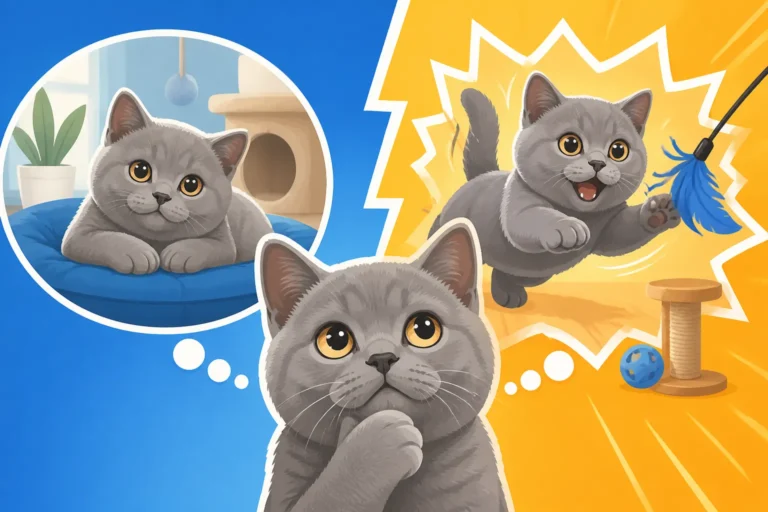
Beyond treats, positive verbal affirmation, gentle head scratches, or a favorite short play session can also serve as rewards. The trick is finding what your individual British Shorthair values most. Some might respond well to a quick chase with a wand toy after a successful trick, while others might prefer a quiet cuddle. It's about tailoring the reward to the cat. What definitely doesn't work is force or negativity. A British Shorthair will simply shut down or walk away if they feel pressured or unhappy, and you'll lose any chance of future cooperation. Understanding their natural inclination, or lack thereof, to move is important, as covered in Getting a Low Energy British Shorthair to Move.
Getting Started with Trick Training
Once you've wrapped your head around your British Shorthair's unique learning style, it's time to set up for success. This isn't about grand gestures or long, drawn-out sessions. It's about creating a positive, consistent, and rewarding environment that encourages their participation on their terms.
The Importance of Short, Positive Sessions
The golden rule for training any cat, especially a British Shorthair, is to keep sessions short and sweet. We're talking 3-5 minutes, maybe 10 at the absolute maximum, especially when you're first starting out. Their attention spans are not designed for marathon training sessions, and pushing them beyond their comfort zone will only lead to frustration for both of you. You want to end each session on a high note, even if it's just one successful repetition. This leaves them feeling accomplished and eager for the next session.
Consistency is also paramount. Try to schedule short training bursts at roughly the same time each day, perhaps before a meal when they're a little hungry and therefore more motivated by treats. A few short sessions throughout the day are far more effective than one long, tedious one. It builds routine and helps them understand what's expected. Remember, a British Shorthair might not be enthusiastic from the get-go, but with consistent, positive reinforcement, they can surprise you. Don't forget, even for play, a British Shorthair has a limit on engagement, so understanding How Much a British Shorthair Plays Before Stopping can be helpful here too.
Essential Tools for Training Success
You don't need a huge arsenal of fancy equipment to train your British Shorthair, but a few key items will make the process much smoother and more effective.
- High-Value Treats: As discussed, these are non-negotiable. Small, soft, and utterly irresistible treats are your primary currency. Cut larger treats into tiny pieces to avoid overfeeding and keep their motivation high.
- Clicker: A clicker is an incredibly powerful tool for animal training. It provides a precise "marker" for the exact moment your cat performs the desired behavior. The sound is consistent, unlike your voice, and it immediately tells your cat "that's what I wanted, and a treat is coming!" You can find various clickers on Amazon, often bundled with wrist coils or lanyards to keep them handy.
- Wand Toys/Feather Teasers: While primarily for play, a favorite wand toy can be a great way to initiate movement for tricks like "come" or "fetch." It can also serve as a non-food reward for cats who appreciate a good hunt. Varying their toys can also keep them engaged, so check out Amazon for a selection of different types.
- Quiet Training Space: Choose a quiet area free from distractions. This means no loud TVs, no other pets running around, and no sudden noises. Your British Shorthair needs to focus on you and the task at hand.
- Patience and a Positive Attitude: This might sound cliché, but it's the most important tool you possess. There will be days when your British Shorthair just isn't in the mood, or when they seem to regress. Don't get discouraged. Keep it light, keep it fun, and always end on a positive note.
Basic Tricks a British Shorthair Can Master
Now that you're geared up and ready, let's dive into some achievable tricks that your British Shorthair can definitely learn. These are great starting points, building confidence and reinforcing the positive association with training.
Sit and Stay: The Building Blocks
Teaching your British Shorthair to "sit" is often the easiest trick to start with, as it utilizes their natural inclination to lower themselves. "Stay" then builds on that foundation, teaching them a bit of impulse control.
For "sit," hold a high-value treat just above their head, slowly moving it backward towards their tail. Their nose will naturally follow the treat, and as their head goes up, their rear end will usually drop into a sitting position. The instant their bottom touches the ground, click your clicker (if using one) and offer the treat. Simultaneously, say "Sit." Repeat this many times over short sessions. Soon, you'll find that just the hand motion or the verbal cue "Sit" will prompt the action.
"Stay" is a bit more challenging for a British Shorthair, as their patience isn't infinite. Once they are sitting reliably, give the "Stay" cue while holding up an open palm towards them. Take a tiny step back. If they remain seated for even a second, click and reward. Gradually increase the distance and duration, always rewarding the stillness. If they break the "stay," gently guide them back to the original spot and try again, shortening the duration or distance. This is a trick that requires immense patience and very gradual progression.
Come When Called: A Lifesaving Skill
This isn't just a fun parlor trick; "come when called" can genuinely be a lifesaving skill, especially if your cat ever accidentally slips outside or needs to be found quickly in an emergency. Thankfully, British Shorthairs, being quite attuned to their people, can often learn this quickly, especially when food is involved.
Start in a quiet room. When your British Shorthair is nearby but not right next to you, say their name clearly, followed by "Come!" (or whatever cue you choose). As soon as they take even one step towards you, click and offer a treat enthusiastically. Slowly increase the distance, moving to different rooms. You want to make "come when called" the most rewarding thing they can do. If they ignore you, don't repeat the command endlessly. Instead, go to them, offer a treat, and try again when they're more receptive. Avoid calling them only for unpleasant things like vet visits or baths, as this will create a negative association. For more insights on their attachment, you might find How Closely a British Shorthair Follows You interesting.
High Five and Paw Shake: Simple and Sweet
These tricks are adorable and relatively easy for a British Shorthair to learn because they involve a natural paw movement.
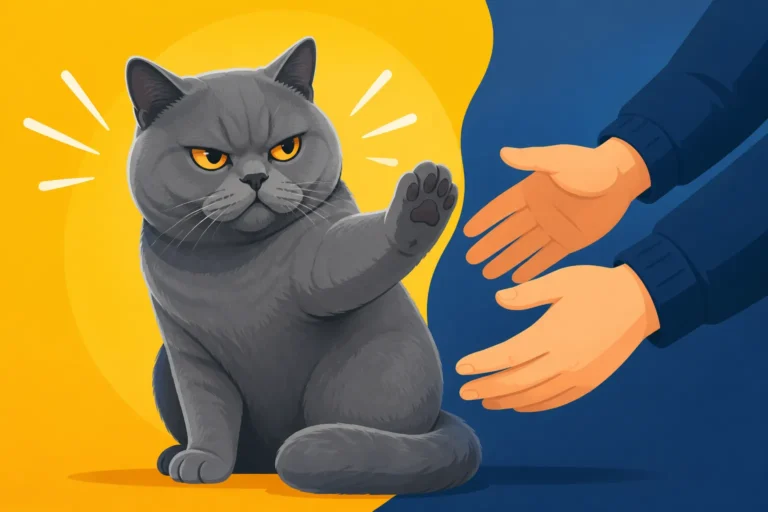
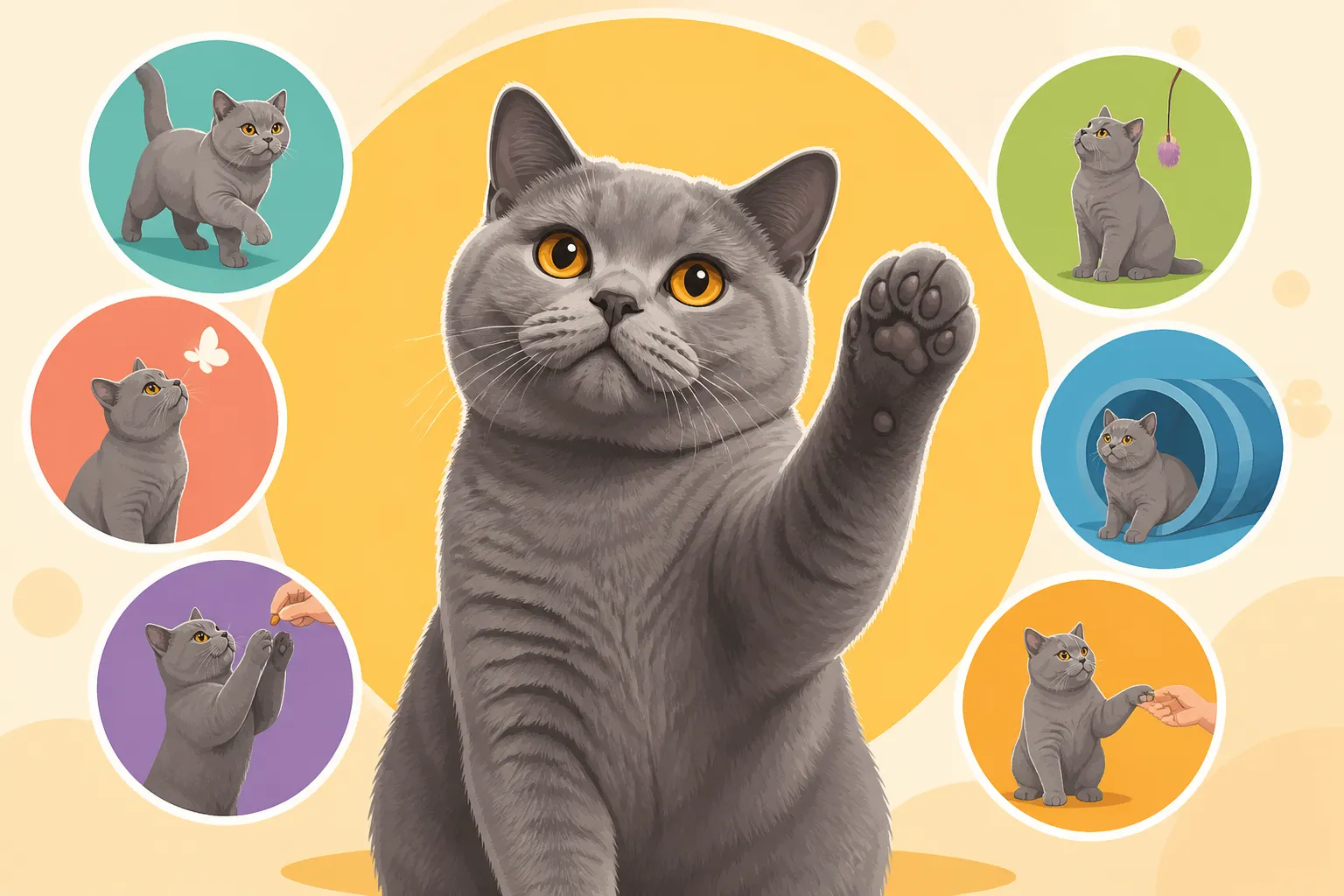
To teach "high five" or "paw shake," have your British Shorthair in a sitting position. Hold a treat in your closed fist. Present your fist to them. Most cats will instinctively try to bat or paw at your hand to get the treat. The moment their paw touches your hand, click and open your hand to give them the treat. Repeat this, adding the verbal cue "Paw" or "Shake" as their paw makes contact. Once they reliably paw at your fist, you can start presenting an open palm. If they hesitate, gently tap their paw and guide it to your hand, then immediately click and reward. Gradually, they'll learn to lift their paw to your outstretched hand on cue.
These simple tricks are fantastic for building confidence in your cat and showing visitors just how smart your British Shorthair really is!
Advanced Tricks for the Ambitious British Shorthair (and Owner!)
Once you and your British Shorthair have mastered the basics, you might feel ready to tackle something a little more challenging. These tricks require a bit more coordination and focus but are absolutely within reach for a motivated British Shorthair.
Fetch: Yes, Some British Shorthairs Actually Do It!
While often associated with dogs, many cats, including some British Shorthairs, can be taught to fetch! It usually starts with a cat who already enjoys batting and chasing small objects.
Begin by finding a small, lightweight toy that your British Shorthair absolutely loves – think crinkle balls, small plush mice, or even a crumpled piece of paper. Toss the toy a very short distance. If your cat chases it, that's a great start! When they reach the toy, encourage them to pick it up. If they do, click and immediately offer a high-value treat when they have it in their mouth. If they drop it and bring it back even a tiny bit closer to you, click and reward. The key is to reward any step in the right direction. If they bring it back all the way, jackpot! Give them several treats and lots of praise.
Many British Shorthairs will retrieve the toy, but might drop it a few feet away. To encourage them to bring it closer, try backing up slowly, enticing them with another treat. You can also try teaching them to drop the toy into a small basket or onto a specific mat. This trick requires immense patience and is often better suited to cats who already show some interest in retrieving during play. If you're struggling to get them to play at all, you might benefit from tips in How to Get a British Shorthair to Play Daily.
Spin and Roll Over: More Complex Sequences
These tricks involve a sequence of movements and require your British Shorthair to understand body awareness.
To teach "spin," hold a treat near your British Shorthair's nose and slowly move it in a circular motion, encouraging them to follow their nose with their body. As they complete a full 360-degree turn, click and reward. Start with small circles and gradually make them wider. Once they reliably follow the treat in a circle, begin to add your verbal cue "Spin" or "Turn" as they start the motion. Eventually, you'll be able to fade the treat lure, using only your hand signal and verbal cue.
"Roll over" is often taught by starting with a "down" or "lie on side" command. Once your British Shorthair is lying down, use a treat to lure their head to one side, encouraging them to roll onto their back and then over to the other side. Just like "spin," click and reward each successful step in the roll. This can be a bit more challenging as it requires them to be comfortable on their back, which isn't every cat's favorite position. Break it down into tiny steps: reward for turning their head, then for shifting their weight, then for fully rolling.
Target Training and Obstacle Courses
Target training is incredibly versatile and can be used to teach a multitude of behaviors. It simply means teaching your cat to touch a specific object (the target) with their nose or paw.
You can use a target stick (available on Amazon) or even just your finger. Present the target to your British Shorthair. The moment their nose or paw touches it, click and reward. Repeat this, moving the target slightly further away each time. Once they reliably touch the target, you can use it to lead them through various actions. For example, hold the target on a low stool, and they'll jump on it. Hold it on the floor a few feet away, and they'll walk to it.
With target training, you can create simple obstacle courses! Lay out a few low objects – a cushion, a cardboard box, a tunnel. Use your target stick to guide your British Shorthair over the cushion, through the tunnel, or around the box. Click and reward after each successful "obstacle." This is a fantastic way to engage their minds and bodies, and it often feels like a game rather than "training." It’s a great form of enrichment, especially considering What a British Shorthair Does All Day.
Troubleshooting and Common Challenges
Even with the best intentions and the tastiest treats, you're bound to hit a few bumps in the road when training a British Shorthair. It's perfectly normal! The key is to understand why your cat might be resisting and how to adjust your approach.
When Your British Shorthair Says "No Thanks"
There will be days – and perhaps many of them – when your British Shorthair simply looks at you, blinks slowly, and decides that your grand training plans are not worth their precious effort. This can be frustrating, especially if they were doing so well the day before! When your British Shorthair gives you the "no thanks" signal, it's crucial not to push them. Forcing them to participate will only create a negative association with training and might even damage your bond.
Here are a few reasons why they might be declining to participate and what you can do:
- Not in the Mood: Cats are not always "on demand." They have their own schedules and preferences. If they're sleepy, just woke up, or simply don't feel like it, respect that. Try again later, or even the next day.
- Treats Aren't High Value Enough: Re-evaluate your treats. Are they truly irresistible? Sometimes, changing up the treat can reignite interest. Maybe they're tired of the chicken and want a bit of tuna instead. As we know, Whether Food Is the Only Thing That Moves a British Shorthair is often a yes.
- Distractions: Even if you think the room is quiet, a faint noise outside, a shadow, or even a new smell could be distracting your sensitive cat. Ensure the environment is as calm and consistent as possible.
- Too Long/Too Hard: Are your sessions too long? Are you asking for too much too soon? Break the trick down into smaller, simpler steps. Go back to basics if necessary. End the session if they're disengaged.
- Feeling Unwell: If your British Shorthair suddenly loses interest in training and seems generally lethargic, it's always worth a quick check-in with your vet to rule out any underlying health issues.
- Your Frustration: Cats are incredibly perceptive to our emotions. If you're getting visibly frustrated, your cat will pick up on that and may become anxious or shut down. Keep your tone light and your body language relaxed.
Keeping Training Fun and Engaging
The moment training stops being fun for your British Shorthair, it stops being effective. It's your job to keep it fresh and engaging.
- Vary the Tricks: Don't just drill the same trick over and over. Once they've got "sit," move on to "paw," and then come back to "sit" later. Variety keeps their minds active and prevents boredom.
- Incorporate Play: Weave training into their regular playtime. For instance, after a successful "sit," immediately follow with a quick game of chase the wand toy. This mixes mental stimulation with physical activity, which is particularly important for this breed given their tendency towards inactivity. You can find many different kinds of stimulating toys on Amazon to keep things interesting. Which Toys a British Shorthair Will Actually Chase can give you some good ideas.
- Puzzle Feeders: While not "tricks" in the traditional sense, puzzle feeders are an excellent way to provide mental enrichment and harness their food motivation. They teach your cat problem-solving skills and make them "work" for their food, which can be very satisfying for them. Many British Shorthairs respond well to these. Whether a Puzzle Feeder Motivates a British Shorthair is often answered with a resounding yes!
- Praise and Affection: Don't rely solely on treats. Genuine praise, soft voices, and gentle pets are powerful motivators. Let them know you're happy with their effort, even if it's not perfect. A happy trill or chirp from you can be just as rewarding as a tasty bite. Remember, positive feedback helps them understand How a British Shorthair Shows It Is Pleased.
- Know When to Stop: Always end on a positive note, even if it means finishing after just one successful rep. This ensures they associate training with good feelings and makes them more eager for the next session.
The Unexpected Benefits of Trick Training
Beyond the sheer delight of showing off your British Shorthair's newfound talents to friends and family, teaching your cat tricks comes with a host of other incredible benefits that enrich their lives and strengthen your bond.
Strengthening Your Bond
One of the most profound advantages of trick training is the incredible strengthening of the bond between you and your British Shorthair. When you engage in positive, interactive training, you're not just teaching commands; you're building trust, communication, and mutual respect. Your cat learns that you are a source of positive experiences, delicious treats, and fun interactions. This shared activity creates a unique language between you, where they understand your cues and you learn to read their responses.
This deeper connection can manifest in many ways. You might notice your British Shorthair seeking you out more often, rubbing against your legs, or even following you from room to room. They might become more confident and comfortable interacting with you, knowing that you're a source of predictable, joyful engagement. For a breed that sometimes gets a reputation for being aloof, this focused interaction can really bring out their affectionate side and deepen their companionship. It moves beyond simply coexisting to actively participating in each other's lives in a meaningful way.
Mental Enrichment and Physical Activity
British Shorthairs are generally calm and not overtly energetic, which means they can sometimes be prone to a sedentary lifestyle if not actively encouraged to move. This can lead to issues like obesity, which is a real concern for the breed. Trick training provides a fantastic opportunity for both mental enrichment and a gentle form of physical activity, which is crucial for their overall well-being.
Mentally, learning tricks challenges their brains, encouraging problem-solving and focus. This kind of mental stimulation is just as important as physical exercise for preventing boredom, reducing stress, and keeping their minds sharp, especially as they age. It gives them a "job" to do, even if that job is just sitting on cue for a treat. This can be particularly beneficial for indoor-only cats who might otherwise lack diverse stimuli.
Physically, even simple tricks like "sit," "spin," or "come" involve movement. If you expand into target training or mini obstacle courses, you're encouraging them to stretch, jump (gently, of course, given their sturdy build), and move their bodies in ways they might not during their usual naps. This low-impact activity helps maintain muscle tone, supports healthy joint function, and burns a few extra calories, which can be invaluable in managing their weight. This is important as a generally quiet and still breed, as detailed in How Active a British Shorthair Is.
Ultimately, teaching your British Shorthair tricks isn't about molding them into something they're not. It's about tapping into their inherent intelligence and finding creative, positive ways to enrich their lives, strengthen your bond, and ensure they live a happy, healthy, and engaged existence. So grab those treats, your clicker, and get ready to be amazed by what your dignified furball can achieve!
| Trick / Skill | Typical British Shorthair Difficulty | Primary Motivation | Notes |
|---|---|---|---|
| Sit | Easy | Food, Praise | Often a natural resting position, easy to capture. |
| Paw/Shake | Easy to Medium | Food, Curiosity | Taps into natural pawing motions for attention or objects. |
| Come When Called | Easy to Medium | Food, Attention | Highly rewarding, builds a strong name association. |
| Target Touch | Easy | Food, Novelty | Versatile foundation for many other tricks. |
| Spin | Medium | Food, Play | Requires following a lure, good for body awareness. |
| Fetch | Medium to Hard | Play, Food | Best for cats already showing interest in retrieving toys. |
| Stay | Medium to Hard | Food, Patience | Challenges impulse control; requires very gradual progression. |
| Roll Over | Medium to Hard | Food, Comfort | Can be tricky if cat dislikes lying on their back. |
| Obstacle Course | Medium to Hard | Food, Exploration | Uses target training to guide through a series of actions. |
Disclaimer
This article is for general informational purposes only and does not constitute professional advice. Laws, prices and regulations vary by location and change over time. Consult a qualified professional for guidance on your specific situation.