Whether the British Shorthair Standard Has Changed
A British Shorthair can look unmistakably familiar from one generation to the next, yet breeders and show judges may talk about its shape, coat, and accepted colors differently. That can make it hard to tell whether the breed standard has genuinely changed or whether people are simply interpreting it differently. This guide explains what standards cover, how they evolve, and what those changes mean for pet owners.
Has the British Shorthair standard changed
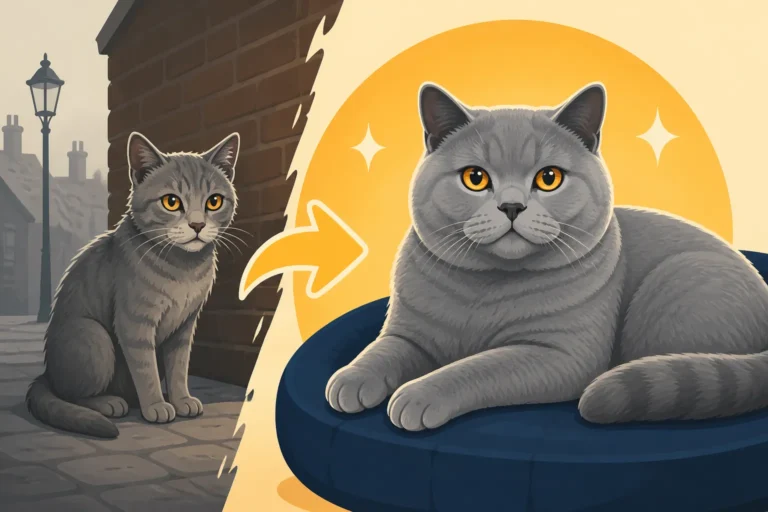
Yes, standards can change over time, but that does not mean the breed has been reinvented. The British Shorthair is still judged by its characteristic overall type: a sturdy, balanced cat with a rounded head, dense coat, and solid build. Changes tend to clarify or adjust how a registry describes and judges particular features.
There is no single worldwide standard
A breed standard is a written description used by a cat registry to guide judging and breeding. It sets out the features considered desirable, such as the head shape, body, coat texture, eye color, and general condition. It is not a single rulebook shared by every organization in every country.
Different registries publish their own standards. They may agree on the broad picture of a British Shorthair while differing in wording, show classes, accepted colors, or the emphasis placed on particular details. If you are following a show result or evaluating a breeder’s claims, first find out which registry’s standard is relevant. Which Registry Standard a British Shorthair Is Judged Against explains why the registry matters.
This also helps explain why two people may say the standard has changed when they are referring to different documents or judging traditions. One may be comparing revisions from the same registry; another may be comparing two registries that describe the breed in slightly different ways. Those are related questions, but they are not quite the same.
The central breed type remains recognizable
A standard can be revised without changing the basic identity of the breed. For the British Shorthair, the familiar combination of a rounded head, substantial body, short dense coat, and balanced proportions remains central. A revision may refine how a feature is described or clarify how judges should assess it, rather than asking breeders to produce a fundamentally different cat.
The distinction between a core trait and a detailed preference matters. A round face and sturdy body are part of the breed’s overall look; exact wording about the outline of the head or the relationship between a feature and the rest of the body may be more specific. Readers who want to understand how those visible traits fit together can explore The Round Head and Copper Eye a British Shorthair Is Judged On.
A revision can also respond to practical questions that emerge in judging. If a written description is too vague, judges and breeders may interpret it inconsistently. Clarifying language can create more consistent decisions without making the breed look dramatically different to someone meeting a British Shorthair at home.
What parts of the standard can change
A breed standard describes several characteristics at once, so a change may affect one area while leaving the rest largely untouched. It is useful to separate a change in physical description from a change in accepted colors or from a shift in how judges apply the existing language.
Appearance, proportions, and condition
Standards commonly describe the cat’s head, ears, eyes, body, legs, tail, coat, and overall condition. For a British Shorthair, the standard’s picture is not just “large and round.” Proportion and balance matter: a cat should look substantial without appearing poorly conditioned or out of harmony with its own frame.
Wording about body shape can be especially easy to misunderstand. A breed standard is not a recommendation to make every cat as heavy as possible. A healthy pet’s body condition should be assessed separately from its breed type. A thick coat can make it difficult to see the waist, and a naturally broad build can make a cat look heavier than it is. For the difference between a breed’s characteristic build and excess weight, see What a British Shorthair Weighs and How Big It Gets.
A standard may also describe coat texture and density. The British Shorthair coat is known for standing away from the body rather than lying flat and silky. If wording is updated or interpreted more precisely, that does not necessarily mean a change in the coat itself; it may mean judges are being given a clearer description of the desired texture.
Colors and patterns
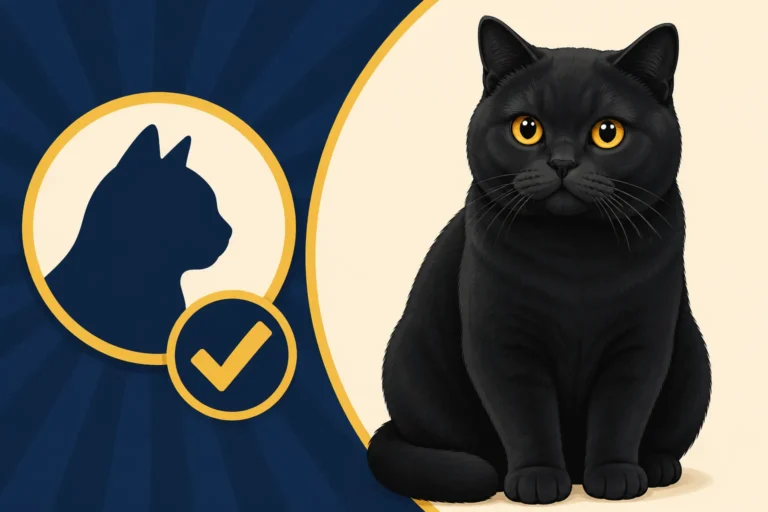
Color is one area where changes can be more visible to buyers. The blue British Shorthair is famously recognizable, but the breed comes in a wider range of colors and patterns. Which varieties are accepted, and how they are categorized for showing, can depend on the registry. A British Shorthair Comes in More Colors Than You Think gives a broader look at that variety.
A change to color recognition does not automatically change the breed’s fundamental shape or temperament. It may affect whether a particular coat color or pattern can be entered in a show class under a given organization. That is a meaningful change for breeders and exhibitors, but it does not mean that a cat with a newly accepted color has become a different breed.
Descriptions on pet retailers’ websites, including Chewy, can be useful for everyday browsing, but they are not substitutes for a registry’s published standard. Retail product and breed descriptions are not show rules. If you see a claim that a color is “standard,” check which registry the claim refers to and whether it means recognized for registration, accepted in a show class, or simply commonly seen.
| Standard area | What it describes | What a change may mean |
|---|---|---|
| Head and face | Shape, profile, ears, and overall expression | A refined description or more consistent judging |
| Body and proportions | Build, balance, legs, and tail | Clarification of the desired outline, not necessarily a larger cat |
| Coat | Length, density, and texture | More precise guidance on the expected coat feel or appearance |
| Color and pattern | Accepted varieties and show classifications | New or revised classes, depending on the registry |
| Condition | Overall health and presentation | Greater emphasis on a fit, well-cared-for cat |
Why standards evolve
Breed standards are maintained by organizations, not frozen forever at the moment a breed first became popular. They need to describe the breed in a way that can be applied consistently while reflecting how the breed has developed and how registries classify it.
Breeding history affects the modern description
The British Shorthair has a long breeding history, including periods when its numbers fell and breeders used other breeds to help rebuild it. The Persian played a part in that history, influencing aspects of the British Shorthair’s development. The Persians That Rebuilt the British Shorthair After the War explores that background.
Historical influences can help explain why standards pay close attention to particular features. But a breed’s history does not mean every modern British Shorthair should resemble an outcross breed. Standards exist partly to preserve a recognizable breed type as breeding continues across generations.
Over time, standards may be clarified to help distinguish the British Shorthair from cats that share some superficial traits. A round face, dense coat, or blue-gray color alone does not establish that a cat is a British Shorthair. Breed identity involves more than a single photograph or one attractive feature.
Judges and registries may interpret wording differently
Even when the written standard has not changed, judging can shift in practice. Judges bring experience to the ring, and breeders may respond to what is consistently rewarded. If a particular feature becomes more emphasized in show results, an observer may feel that “the standard” has changed even if the written wording has not.
That does not mean a judge’s preference replaces the published standard. The written description remains the reference point, while judging applies it to individual cats. A disagreement about a show result might be about interpretation, presentation, or a judge’s assessment of that specific cat rather than a formal revision.
The difference is worth keeping in mind when reading online discussions. One breeder may be describing a formal change published by a registry; another may be describing a trend in the show ring. Those claims need different kinds of evidence. For a comparison of two major approaches, see Whether GCCF and CFA British Shorthair Standards Differ.
What standard changes mean for owners and kitten buyers
For most people choosing a companion, a standard is useful background rather than a checklist for deciding whether a cat is worthy of a home. A pet British Shorthair does not need to be a show winner to be a wonderful companion, and show standards do not replace health, temperament, and responsible care.
A pet cat does not need to match every show detail
A breed standard describes the ideal type for judging. Individual cats vary, and a pet may have features that are less emphasized in the show ring while still being recognizably British Shorthair. That variation is normal; it does not automatically indicate poor care or a health problem.
It is also important not to confuse show preferences with health advice. A heavier-looking cat is not necessarily a better example of the breed, and deliberately pursuing excessive size can be a poor way to assess quality. A breeder should be able to discuss health, temperament, socialization, and the parents’ background, not only a kitten’s appearance.
When comparing breeder descriptions or online listings, including those on Chewy, treat dramatic claims about a cat being “perfectly standard” as a prompt to ask questions rather than as proof. Ask which registry the breeder follows, what documentation is available, and how the kitten’s health and care have been managed. A registry’s written standard can clarify show terminology, but it cannot by itself confirm a kitten’s health or the breeder’s practices.
Ask which standard a breeder means
If you are considering a kitten for showing, ask the breeder which registry the cat is registered with and which standard they use when discussing its potential. A careful breeder should be able to explain the difference between a kitten that has promising features and one whose adult show prospects are still uncertain. Kittens grow, and their final appearance cannot be guaranteed from a few early photographs.
For a companion cat, the most useful questions are broader. Ask about the parents’ health, the kitten’s early socialization, veterinary care, and the breeder’s policies if a health or behavior concern appears later. The standard can help you understand the breed’s traditional appearance, but it should not distract from these everyday welfare questions.
Retail descriptions can blur the line between breed characteristics and official show rules. A Chewy listing or another retailer’s description may help you recognize familiar traits, but check a registry’s own material before treating a statement about accepted colors or show eligibility as definitive. The blue coat is the best-known example of how one variety can become closely associated with the whole breed; Why the Blue Became the British Shorthair Everyone Pictures puts that popularity in context.
Do not mistake a different-looking cat for a changed standard
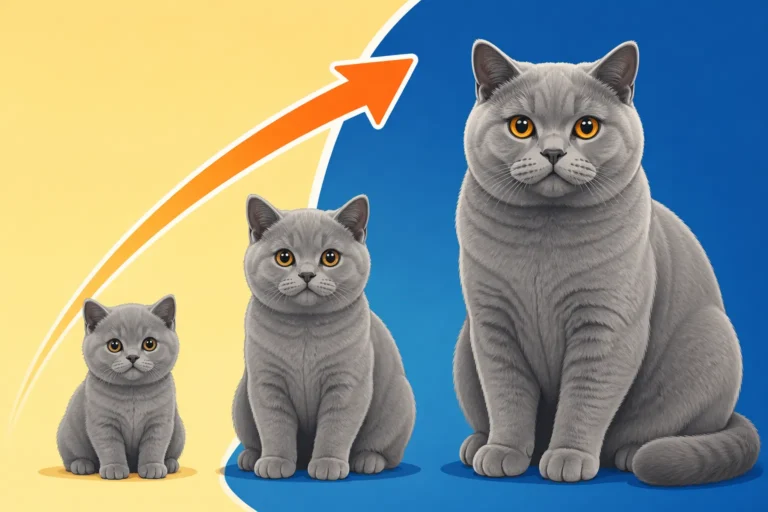
Photos can be misleading. Lighting changes coat color, camera angles alter head shape, and a thick coat can make the body appear rounder. Grooming and age also affect a cat’s appearance. A kitten’s proportions are not the same as an adult’s, and British Shorthairs can take time to mature.
It is also easy to confuse related or similarly shaped cats. A folded ear, for instance, is not a defining feature of the British Shorthair and may point to a different breed or mix. If you are comparing cats based on appearance alone, How a British Shorthair Differs From a Scottish Fold can help explain why a few shared traits are not enough to establish breed identity.
The most reliable way to assess a claimed change is to compare the relevant registry’s published standard across revisions, paying attention to the date and the precise wording. If there is no formal revision, the difference you noticed may instead reflect a change in show interpretation, a newly recognized color, or ordinary variation among individual cats.
Disclaimer
This article is for general informational purposes only and does not constitute professional advice. Laws, prices and regulations vary by location and change over time. Consult a qualified professional for guidance on your specific situation.