Whether Puss in Boots Was Drawn From a British Shorthair
A familiar question comes up whenever Puss in Boots appears on screen: does his round face and sturdy little body mean he was designed as a British Shorthair? The resemblance is understandable, but a cartoon’s visual cues are not the same as a documented breed reference. This guide separates what the character looks like from what can reasonably be said about his inspiration.
Was Puss in Boots based on a British Shorthair
What is known about the character’s design
Puss in Boots is a fictional, anthropomorphic cat from the Shrek films and his own spin-off stories. He is portrayed as a swashbuckling character, with a hat, boots, sword, expressive face, and a personality that matters as much to his design as his feline features. His famous wide-eyed look is a storytelling device: it makes him seem endearing and persuasive, whether or not he is doing anything especially innocent.
There is no widely established confirmation that the character was specifically modeled on a British Shorthair. Without a clear statement from the people who designed him, it is more accurate to describe the resemblance as a visual comparison than to name a definite breed inspiration.
That distinction can feel a little unsatisfying if you are looking for a simple yes or no. But animated characters often combine features chosen for readability, expression, and personality. A rounded head or compact body can make a character memorable without identifying a real-world breed.
Why the British Shorthair comparison comes up
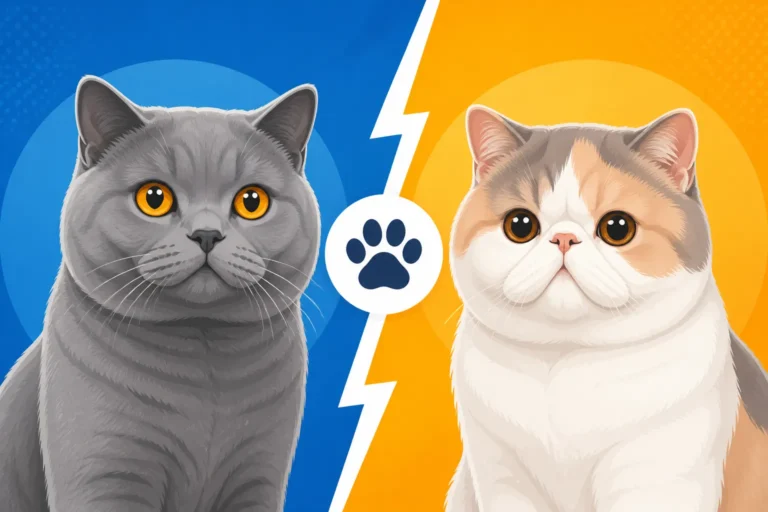
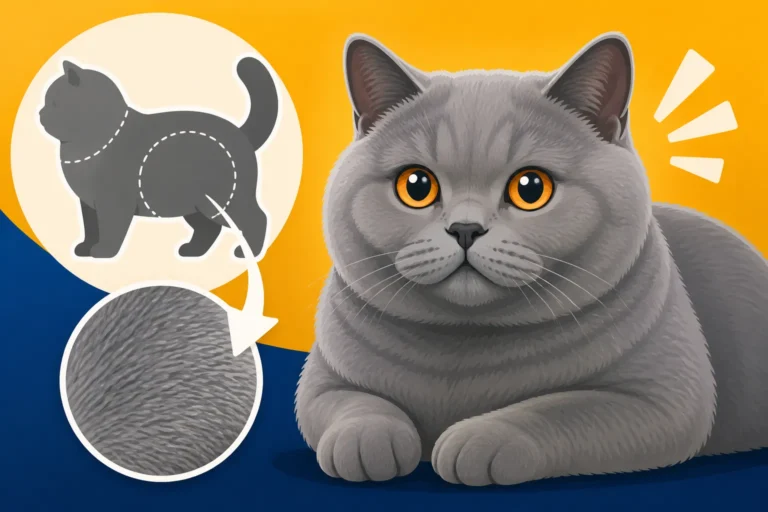
British Shorthairs are known for a broad, rounded head, full cheeks, sturdy build, and dense coat. Those features can remind viewers of Puss, especially in scenes where his face looks round and his body appears compact. The breed’s teddy-bear-like outline can also make the comparison feel natural. Why a British Shorthair Looks Like a Teddy Bear
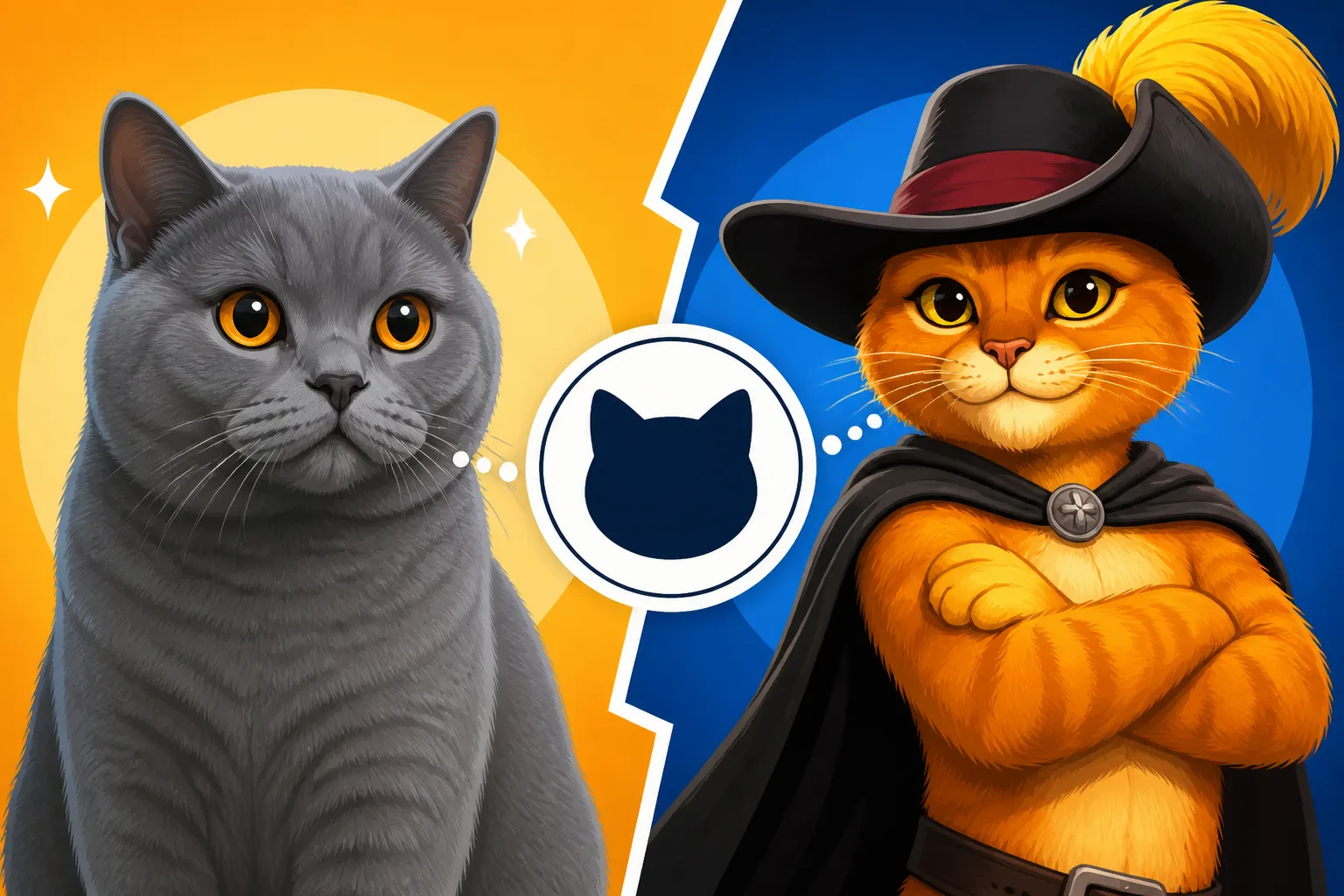
Puss’s design, however, is not a straightforward portrait of a real cat. His expressions are exaggerated, his posture and movements are human-like, and his clothing and performance are central to the character. A British Shorthair may share a few visible traits, but that alone does not establish that the breed was the model.
The same caution applies to other famous cartoon cats. Viewers often recognize a familiar head shape or coat pattern and connect it with a breed. That can be a fun observation, but it is different from having evidence that a particular cat breed inspired the character. Which Cartoon Cats Are British Shorthairs
How Puss compares with a real British Shorthair
Head shape and expression
A British Shorthair typically has a rounded head and noticeable cheeks. The overall impression is soft and solid rather than sharply angular. This is one reason people may see a resemblance when Puss is shown with a round face or an exaggerated, wide-eyed expression.
But animation changes proportions to communicate emotion. Puss’s eyes can appear exceptionally large, his face can shift dramatically from scene to scene, and his expressions are timed for comedy or drama. Real cats, including British Shorthairs, do not change their facial proportions in the same way. Their expressions are subtler and should be read alongside posture, ear position, tail movement, and other behavior.
A round face also does not belong to one breed alone. Domestic cats can have broad or rounded features, and illustrations often simplify anatomy even further. So the face can support a resemblance, but it cannot settle the question of breed. Why a British Shorthair Looks Like It Is Smiling
Build, coat, and color
British Shorthairs are generally described as cobby: sturdy and compact, with a broad chest and substantial-looking body. Puss is also often depicted as compact, which adds to the comparison. Still, cartoon proportions are designed to make action clear. A character who can fence, sprint, and pose dramatically may be drawn differently from one scene to the next.
Puss is usually recognized as an orange or ginger tabby cat. British Shorthairs can come in a range of colors and patterns, including tabby varieties, so an orange coat does not rule the breed out. But coat color is not proof of breed either. Orange tabby markings can appear in domestic cats with many different backgrounds. Which Colors a British Shorthair Comes In
| Feature | Puss in Boots | British Shorthair |
|---|---|---|
| Face | Exaggerated for expression and comedy | Usually rounded, with full cheeks |
| Body | Compact in many scenes, with animated proportions | Sturdy, broad, and compact in build |
| Coat | Commonly shown as orange tabby | Comes in many colors and patterns |
| Behavior | Human-like swordplay, speech, and performance | Real-cat behavior and movement |
| Breed identification | Fictional character; specific breed inspiration is not established | A recognized cat breed with characteristic traits |
The table highlights the central point: a few features may overlap, but Puss’s look is not a reliable breed checklist. For a closer look at the real cat’s proportions, it helps to compare him with information about What a British Shorthair Weighs and How Big It Gets.
Why a cartoon resemblance cannot identify a breed
Shared features are not unique markers
A rounded head, plush-looking coat, or sturdy body may remind someone of a British Shorthair, but none of those traits alone is unique to the breed. A mixed-breed cat can have a similar outline, and an illustrator can make almost any cat character look rounder or fluffier for effect.
Even in real life, appearance can be misleading. A shelter cat may strongly resemble a particular breed without having documented ancestry. Breed identification usually depends on more than a quick glance, and a visual resemblance is not the same as a pedigree. How to Tell a British Shorthair From a Moggy
This is especially true for fictional characters, whose designs can combine traits from many sources. The artist may emphasize a big head for charm, a compact body for comic contrast, or a bright coat color so the character is easy to recognize. Those choices serve the story first.
Real cats have variation within the breed
British Shorthairs do not all look exactly alike. Coat colors and patterns vary, and individual cats differ in size, facial shape, and the fullness of their coat. A single animated image cannot capture that variation, and a character’s appearance may shift across scenes or productions.
That variation is another reason not to treat a cartoon as a breed standard. A real British Shorthair should be understood through the breed’s recognized characteristics and its individual health and background—not by whether it resembles a movie character. Likewise, a cat that looks a little like Puss is not automatically a British Shorthair.
If the practical question is whether a particular pet is a British Shorthair, appearance can offer clues but cannot confirm ancestry by itself. A DNA result also has limits in what it can establish about breed identity, so it is worth understanding what such a test can and cannot tell you. Whether a DNA Test Confirms a British Shorthair
What to say when someone asks if Puss is a British Shorthair
A careful answer without overclaiming
A fair response is: “Puss has some features that remind people of a British Shorthair, but there is no widely established confirmation that he was based on that breed.” That answer recognizes the resemblance without presenting a guess as settled fact.
If you are comparing the character with a real cat, point to the specific similarities: perhaps the rounded face, full cheeks, or sturdy outline. Then separate those observations from the question of inspiration. “He looks a bit like one” is a visual opinion; “he was drawn from one” is a claim about the creators’ intent.
That small distinction makes the conversation more useful, especially when breed identity matters. The British Shorthair’s history and recognizable appearance are interesting on their own, without needing a cartoon character to prove the connection. The British Shorthair Started as a British Street Cat
Enjoy the resemblance while keeping the facts straight
It is perfectly reasonable to call Puss British-Shorthair-like in a casual conversation. People use familiar breed names as shorthand for a certain look, and Puss’s rounded, plush appearance can bring the breed to mind. The important thing is not to confuse a resemblance with an official identification.
For a real cat, look at the whole picture: documented background, overall conformation, coat, and the advice of knowledgeable breed professionals where appropriate. A single feature—orange tabby coloring, round cheeks, or a compact silhouette—cannot establish breed.
So, was Puss in Boots drawn from a British Shorthair? The most grounded answer is that the resemblance is easy to see, but a specific British Shorthair origin is not clearly established. He is best understood as a stylized fictional cat whose design works for his personality and story, while the breed comparison remains an understandable viewer interpretation.
Disclaimer
This article is for general informational purposes only and does not constitute professional advice. Laws, prices and regulations vary by location and change over time. Consult a qualified professional for guidance on your specific situation.