How to Tell a British Shorthair From a Moggy
It’s a common scenario, isn’t it? You see a picture of a magnificent British Shorthair online, all round and plush, and then you look at your own beloved domestic shorthair — your “moggy” — and think, "Wait, my cat has big cheeks too! Is he secretly a British Shorthair?" It's easy to get confused when some mixed-breed cats share a few surface-level traits with purebreds, but discerning a true British Shorthair from a moggy goes far beyond just a fluffy coat or a round face. This guide is here to help you understand the deep, defining characteristics that set these wonderful breeds apart.
The British Shorthair's Signature "Teddy Bear" Look
When you first lay eyes on a British Shorthair, there's an undeniable charm, a presence that screams "teddy bear." This isn't just a fluffy cat; it's a carefully cultivated appearance that has been refined over generations. A moggy, on the other hand, can be incredibly handsome and unique, but its features are a tapestry of diverse genetic contributions, not a specific blueprint.
The Distinctive Head and Face
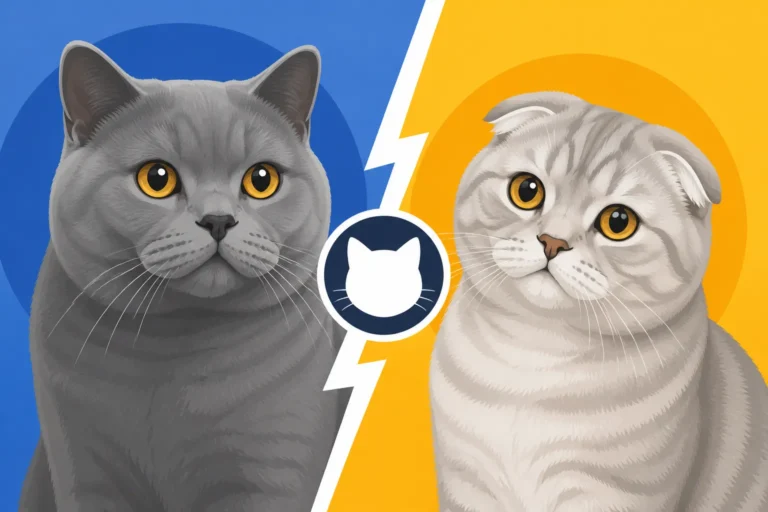
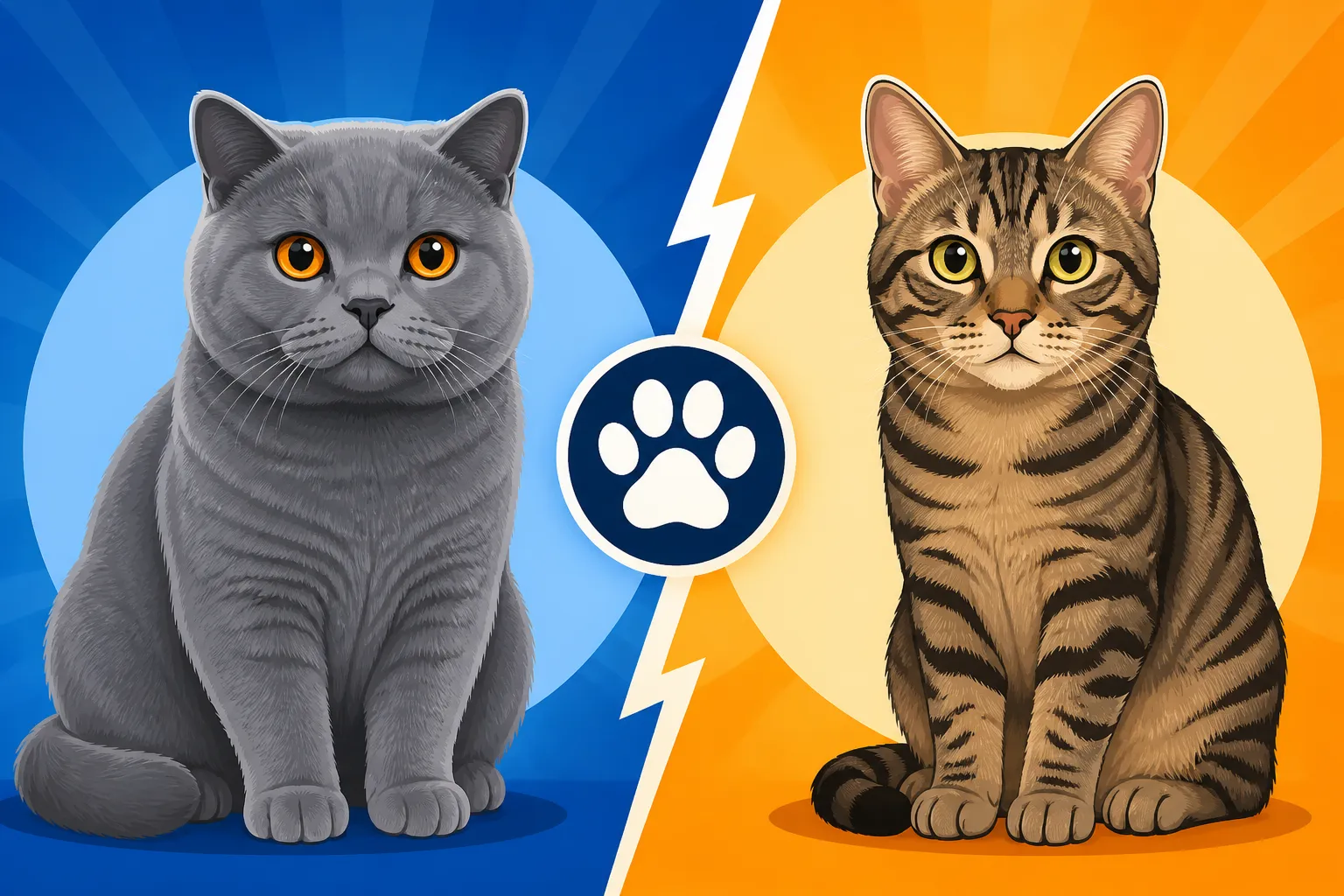
The head of a British Shorthair is perhaps its most recognizable feature. Imagine a perfect circle – that's the ideal shape. Their faces are broad and full, with wonderfully chubby cheeks that give them that perpetually amiable expression. These aren't just a bit of extra fat; these are structural, giving the breed its hallmark 'jowly' look, especially pronounced in males. Their eyes are large, round, and set wide apart, typically a deep, rich copper or gold, though other colors are seen in specific coat patterns. This combination creates an expression of calm wisdom and gentle curiosity. You can learn more about The Round Head and Copper Eye a British Shorthair Is Judged On if you're interested in the specifics.
Contrast this with a moggy, and you'll see a vast array of head shapes. Some might have a rounder face, particularly if they have some heavier-boned ancestors in their past, but it's rarely the perfectly spherical, broad-cheeked presentation of a British Shorthair. Moggies often have more angular or elongated faces, eyes that can be any shape from almond to round, and an incredible spectrum of eye colors. Their features are charming and unique, but they don't conform to the precise "cobby" and round standard of the British Shorthair. It's like comparing a carefully sculpted garden hedge to a beautiful wild forest – both are gorgeous, but one adheres to a specific design.
The "Cobby" Body and Sturdy Build
Beyond the head, the British Shorthair boasts a robust and powerful body. The term often used is "cobby," meaning short, compact, and very solid. They have a broad chest, strong shoulders, and short, sturdy legs that end in round paws. When you pick one up, you're immediately struck by their surprising weight and density. This isn't a lithe, athletic jumper; this is a cat built for comfort and presence. Their tail is medium in length, thick at the base, and tapers to a rounded tip. Everything about their physical structure speaks to solidity and power, not delicate grace.
A moggy, by nature, is a genetic melting pot. Their body types can vary wildly. You'll find slender, agile cats, long and lanky ones, or even some with a more compact build. While some moggies might have a slightly heavier frame, they typically lack the uniform "cobby" structure and the impressive bone density that defines a British Shorthair. Their legs might be longer or more slender, their tails thinner, and their overall silhouette more varied. It’s rare to find a domestic shorthair that consistently exhibits the exact proportional balance and structural robustness of a true British Shorthair.
Coat, Color, and Texture: Beyond the Blue
When most people picture a British Shorthair, they immediately think of that gorgeous, solid blue coat. And while the blue is indeed iconic, the breed offers so much more in terms of coat characteristics and colors. These are not just random variations; they are part of the breed's standard and history.
The Iconic Plush Coat
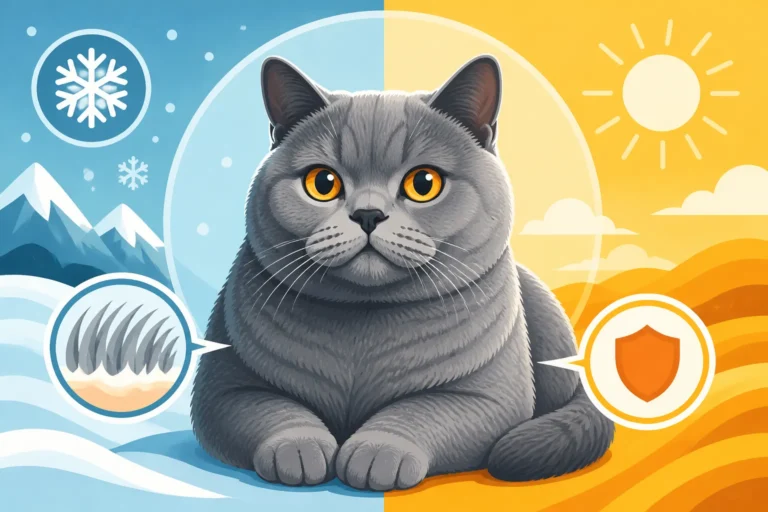
One of the most delightful aspects of a British Shorthair is its coat. It's incredibly dense and short, but it's not a flat, sleek coat. Instead, it has a unique "crisp" texture that causes it to stand away from the body, almost like a plush carpet. This dense double coat acts as fantastic insulation and contributes to their overall rounded appearance, further enhancing the teddy bear likeness. Running your hand through a British Shorthair's coat is a distinct tactile experience – it's firm yet soft, a truly luxurious feel. This crispness is a defining trait, and it sets them apart from many other shorthaired breeds. For more detail on this unique feature, check out Why a British Shorthair's Coat Feels Crisp.
Moggies, of course, come in every imaginable coat type. Many domestic shorthairs have lovely, soft fur, but it usually lies flat against their body. Even a dense-coated moggy typically won't have that distinct 'standing away' quality that is a hallmark of the British Shorthair. The texture can range from silky to coarse, but it rarely possesses the uniform, plush density and crispness that breeders specifically aim for in British Shorthairs. The British Shorthair's coat is almost a structural element in itself, contributing to the breed's rounded silhouette, whereas a moggy's coat is generally just… fur.
The Spectrum of British Shorthair Colors
While the British Blue is undeniably the most famous and widely recognized color, it's a common misconception that all British Shorthairs are blue. In reality, British Shorthairs come in a vast array of colors and patterns! You can find them in classic solids like black, white, cream, and red, as well as more exotic shades like lilac and chocolate. Beyond solids, they also come in various tabby patterns (classic, mackerel, spotted), tortie, bi-color, and even colorpoint variations, which have striking blue eyes instead of the typical copper. This incredible diversity often surprises people who are only familiar with the blue version. It truly is amazing how many beautiful variations exist; you can explore A British Shorthair Comes in More Colors Than You Think.
When it comes to moggies, the color and pattern possibilities are literally endless. From solid blacks and whites to calicos, torties, tabbies of every stripe, and even cats with unique markings that defy easy categorization, domestic shorthairs are a riot of genetic expression. While a moggy might happen to be a solid blue, or a tabby that superficially resembles a British Shorthair pattern, it’s the combination of the specific coat texture and body type with the color that matters for breed identification. A blue cat isn't automatically a British Shorthair, just as a friendly dog isn't automatically a Golden Retriever.
Temperament and Behavior: Calm and Collected
Beyond their striking physical appearance, British Shorthairs are renowned for their distinct temperament. If you're looking for a cat that's always in your lap, demanding attention, you might be surprised by a British Shorthair. Their personality is just as specific and cultivated as their looks.
The British Shorthair's Calm Demeanor
One of the defining characteristics of a British Shorthair is their calm, placid, and generally unflappable nature. They are often described as quiet observers, preferring to be near their human companions rather than on them. They typically aren't keen on being picked up or carried for long periods, preferring to keep all four paws firmly on the ground. When they do express affection, it's often through a gentle head rub, a slow blink, or simply choosing to lounge contentedly in the same room. They have a dignified presence and are not prone to frantic bursts of energy or excessive vocalization. Their quiet, easy-going disposition makes them wonderful companions for many households. To really get a feel for their typical personality, it's worth reading What a British Shorthair's Temperament Is Really Like.
Moggies, being a mixed bag of genetics, exhibit an enormous range of personalities. Some are incredibly boisterous and playful, others are shy and reserved, some are extreme lap cats, and others are fiercely independent. You might encounter a moggy that is as calm as a British Shorthair, or one that is a chatterbox and a constant source of playful mischief. The point is that there's no consistent "moggy temperament." Each domestic shorthair is an individual, and their personality is a unique blend of their genetic background and life experiences, making them unpredictable in the best possible way.
Activity Levels and Social Interaction
British Shorthairs are generally low-energy cats. While kittens are playful, adult British Shorthairs often prefer lounging in a sunny spot or quietly supervising household activities from a comfortable perch. They appreciate gentle play sessions with wand toys or puzzle feeders, but they aren't typically inclined to scale curtains or engage in acrobatic displays. This lower activity level contributes to their laid-back nature and can make them prone to weight gain if their diet isn't carefully managed. They usually get along well with respectful children and other pets, provided they have their own quiet spaces to retreat to. Encouraging play in a British Shorthair often requires a bit more effort from the owner, as they won't always initiate it themselves. If you're wondering how to get one of these calm cats moving, Getting a Low Energy British Shorthair to Move offers some great tips.
A moggy's activity level and social preferences are, again, highly variable. Some moggies are incredibly athletic and demand constant interactive play, while others are content to be professional nappers. Their sociability can range from being aloof with strangers to greeting everyone at the door like a long-lost friend. Some moggies thrive on constant interaction with their human families and other animals, while others prefer a more solitary existence. You simply can't predict a moggy's activity level or social needs without getting to know the individual cat. This variability is part of their charm, but it's a stark contrast to the more predictable, consistent behavioral traits of a British Shorthair.
Size, Weight, and Growth: A Slow Burn
The British Shorthair isn't just a big cat; it's a cat that takes its sweet time to grow into its impressive stature. Understanding their growth curve is another key to distinguishing them from many domestic shorthairs.
Understanding British Shorthair Size and Weight
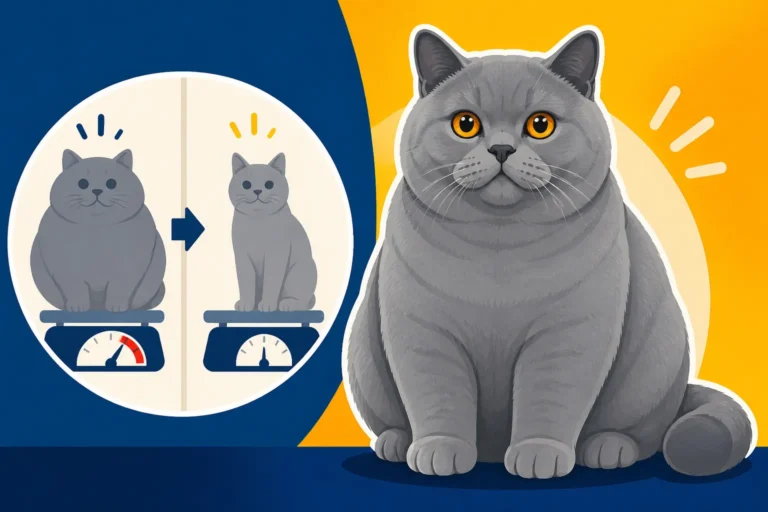
British Shorthairs are considered a medium to large-sized breed, with males often significantly larger and heavier than females. An adult male British Shorthair can comfortably weigh anywhere from 12 to 18 pounds, and some even more, while females typically range from 9 to 14 pounds. But it's not just the number on the scale; it's the sheer density and muscularity beneath that plush coat. They are powerfully built cats, and their weight is distributed in a way that contributes to their solid, rounded appearance. This is a cat that fills out its frame rather impressively. To get a clearer idea of what a healthy British Shorthair weighs, you might find How Much a British Shorthair Weighs useful.
Moggies, as we've discussed, vary immensely in size and weight. While there are certainly large domestic shorthairs, they often achieve their size through length or height rather than the compact, cobby density of a British Shorthair. A large moggy might be 12 pounds, but it could be a lean, athletic cat, or a more slender, lanky type. It's less common to find a domestic shorthair with the consistent bone structure and body conformation that contributes to the British Shorthair's specific weight and sturdy build.
The Journey of Development
Perhaps one of the most surprising aspects of British Shorthairs, especially for first-time owners, is their slow maturation. Unlike many cat breeds that reach their adult size and appearance by one year old, British Shorthairs take their time. They often don't fully "fill out" or develop those impressive jowls and the full roundness of their head until they are three to five years old. A young British Shorthair kitten or adolescent might not display all the iconic features of the breed, which can lead to confusion. It's a true transformation as they mature, gaining that characteristic density and those endearing cheekpads. It’s definitely a patience game when waiting for them to fully develop, and How Long a British Shorthair Takes to Fill Out elaborates on this fascinating process.
Moggies, on the other hand, typically reach their full adult size and physical maturity much faster, often by 12 to 18 months of age. While all cats have a kittenish phase, moggies usually don't have the prolonged development period where their distinct features gradually emerge over several years. This faster growth rate means that if you're looking at a young cat that already seems to have its adult proportions and features, it's less likely to be a British Shorthair, whose full glory unfolds over a much longer timeline.
Genetic Markers and Health Considerations
When we talk about purebred cats versus moggies, we also delve into the realm of genetics and predictable health concerns. A British Shorthair comes with a known genetic blueprint, while a moggy's genetic heritage is a delightful mystery.
The Importance of Pedigree and Genetic Testing
This is where the rubber truly meets the road in distinguishing a British Shorthair from a moggy. A genuine British Shorthair comes from a reputable breeder and will always have a pedigree. This document is a family tree, tracing their lineage back through generations, proving their purebred status. Along with a pedigree, responsible breeders will provide health screening results for genetic conditions prevalent in the breed, such as Hypertrophic Cardiomyopathy (HCM) and Polycystic Kidney Disease (PKD). These are crucial tests that safeguard the health of the breed and give owners peace of mind. Without a pedigree and verifiable health testing, you simply cannot confirm a cat is a British Shorthair, regardless of how much they look like one. It's an investment in health and heritage. Understanding What a British Shorthair Breeder Should Have Tested is vital for any prospective owner.
For moggies, a pedigree doesn't exist. Their lineage is unknown, and they haven't been selectively bred for specific traits or health clearances. This isn't necessarily a bad thing; moggies are often wonderfully robust and healthy due to their diverse gene pool. However, it means you don't have the same predictability regarding potential inherited health issues. Unless a specific health problem arises, genetic testing for breed-specific diseases isn't usually performed on a moggy. Their health is often a roll of the dice, and while often favorable, it lacks the informed predictability that comes with a well-bred purebred.
Recognizing "British Shorthair Type" in Moggies
It's entirely possible, even common, to encounter a domestic shorthair that possesses one or two "British Shorthair-like" traits. Perhaps a moggy has a rather round face, or a dense blue coat, or even a somewhat cobby build. This is usually due to the vast and varied genetic tapestry of the domestic cat population. Somewhere in their ancestry, there might have been a cat that carried genes for a slightly rounder head or a denser coat. These cats are often affectionately referred to as having "British Shorthair type."
However, having some traits does not make them a British Shorthair. A true British Shorthair must exhibit all the breed's characteristics consistently, from head to tail, in conformation, coat, color (as per standard), and temperament, as outlined by breed standards. A moggy with a round face is still a moggy; a moggy with a dense blue coat is still a moggy. They are wonderful, unique individuals, but they do not meet the strict criteria of a recognized purebred. The beauty of a moggy lies in its unique combination of traits, often inherited from generations of mixed ancestry. You might find a plush bed or a sturdy scratching post for a moggy on Chewy, just as you would for a British Shorthair, but their genetic stories are completely different.
The Paper Trail: Pedigree vs. Unknown History
The definitive line between a British Shorthair and a moggy isn't just in their physical traits or temperament; it's solidified by their documentation. This is the non-negotiable factor.
The Value of a Pedigree
A pedigree is more than just a piece of paper; it's a historical record, a guarantee of lineage, and a testament to generations of selective breeding. For a British Shorthair, a pedigree from a recognized cat association (like CFA, TICA, or GCCF) confirms that both parents, grandparents, and so on, were also registered British Shorthairs. This history ensures that the cat conforms to the breed standard, physically and temperamentally, and provides insight into potential hereditary health issues. It's this documented history that gives a British Shorthair its "purebred" status and differentiates it unequivocally from any other cat, no matter how similar they might appear. Without it, you cannot verify the cat's breed. This document is the ultimate proof. You can even find specialized food formulated for British Shorthairs on Chewy, which is often tailored to their specific needs, a benefit of knowing the breed.
A moggy, by definition, does not have a pedigree. Their ancestry is either unknown or a mix of various domestic cat types. This doesn't make them any less deserving of love, care, or a good home – far from it! But it means that their genetic background is simply not documented in the same way a purebred's is. When you adopt a moggy, you are embracing a wonderfully unique individual with a rich, if unwritten, history. Their charm lies in their unpredictable heritage and the delightful surprise of their individual traits.
Why a Moggy is Unique and Wonderful
While this article focuses on how to tell a British Shorthair apart from a moggy, it's crucial to end with an appreciation for domestic shorthairs. Moggies are incredible companions. They are often incredibly resilient, adaptable, and full of personality. Their diverse gene pool can sometimes make them healthier and more robust than some purebreds, and they certainly offer an element of delightful surprise with their unique looks and temperaments. Every moggy is a one-of-a-kind original, a living piece of feline art created by generations of natural selection and chance encounters. Choosing a moggy is choosing a cat with an unknown, but undoubtedly fascinating, heritage, and they bring just as much joy and companionship to a home as any purebred. Whether you're buying premium food for your purebred British Shorthair or a special treat for your beloved moggy, places like Chewy cater to all feline friends.
In summary, while a few shared traits might make you pause, the consistent "teddy bear" look, the specific crisp coat texture, the calm temperament, the slow growth pattern, and most importantly, the verifiable pedigree and health screenings are what truly define a British Shorthair.
| Feature | British Shorthair (Purebred) | Moggy (Domestic Shorthair) |
|---|---|---|
| Head Shape | Broad, round, full cheeks/jowls (especially males), wide-set eyes | Highly varied: angular, elongated, somewhat round; diverse eye shapes |
| Body Type | Cobby, compact, very sturdy, dense, heavy boned, short thick legs | Highly varied: slender, lanky, athletic, occasionally heavier-set |
| Coat Texture | Dense, short, "crisp" texture that stands away from the body | Varied: soft, silky, coarse, usually lies flat against the body |
| Colors/Patterns | Wide range (blue, lilac, cream, black, tabby, colorpoint, etc.), but within breed standards | Virtually endless combinations, no specific standards |
| Temperament | Generally calm, placid, dignified, quiet, affectionate but not usually a lap cat | Highly varied: energetic, shy, vocal, cuddly, independent, etc. |
| Maturity | Slow to mature, full size/jowls often by 3-5 years old | Typically reaches full adult size by 12-18 months |
| Health Screening | Reputable breeders provide health clearances (HCM, PKD) | Generally not screened for breed-specific genetic conditions |
| Proof of Origin | Always comes with a verifiable pedigree from a recognized association | No pedigree, ancestry is unknown or mixed |
Disclaimer
This article is for general informational purposes only and does not constitute professional advice. Laws, prices and regulations vary by location and change over time. Consult a qualified professional for guidance on your specific situation.