The Persians That Rebuilt the British Shorthair After the War
For those of us who adore the British Shorthair, it’s impossible to imagine this plush, round-faced companion as anything but the sturdy, teddy-bear cat we know today. Yet, the breed faced near extinction after two devastating World Wars, leaving its devoted fanciers with a monumental task: to rebuild it from almost nothing. This guide will delve into the critical, and sometimes controversial, role the Persian cat played in shaping the modern British Shorthair, bringing back its numbers, and influencing the very characteristics we cherish.
The British Shorthair Before the Great Wars
Before the tumultuous twentieth century, the British Shorthair was already a beloved fixture, recognized as one of the earliest pedigreed cats. Its roots were firmly planted in the working cats of Great Britain, renowned for their robust health, calm demeanor, and excellent hunting prowess. These cats were the original "gentle giants," embodying a stoic charm.
The Original British Street Cat Stock
The breed's foundation stock was essentially the common domestic shorthair of Britain – hardy, adaptable cats that had roamed the streets and farms for centuries. They were solid, muscular cats, built for survival and efficiency. The early breeders, such as the famous Harrison Weir, sought to elevate these common cats to a pedigreed status, focusing on their natural traits of strength and good temperament. Weir, the "Father of the Cat Fancy," was instrumental in showcasing these cats at the first cat show in Crystal Palace in 1871, highlighting their unique British qualities. These cats possessed a sturdy build, a dense coat that offered protection from the elements, and often striking amber eyes. They were not yet the "cobby", extreme-headed cats we see today; rather, they were well-proportioned, strong, and active.
Early Breed Standards and Desired Traits
The initial breed standards, laid down by early fanciers like Weir, emphasized a strong, medium-to-large cat with a short, dense coat, a round face, and substantial boning. The ideal British Shorthair was a powerful animal, reflecting its working-class heritage. They were prized for their calm and affectionate nature, their intelligence, and their distinct British appearance. While the famous "blue" color was popular, the breed came in a wide array of patterns and hues, just as the common domestic cats did. The goal was to refine these natural qualities, making them consistent within the breed, rather than to radically alter their fundamental type. Their quiet dignity and unruffled disposition were as valued then as they are now, a testament to their deep roots in British households.
The Devastating Impact of the World Wars
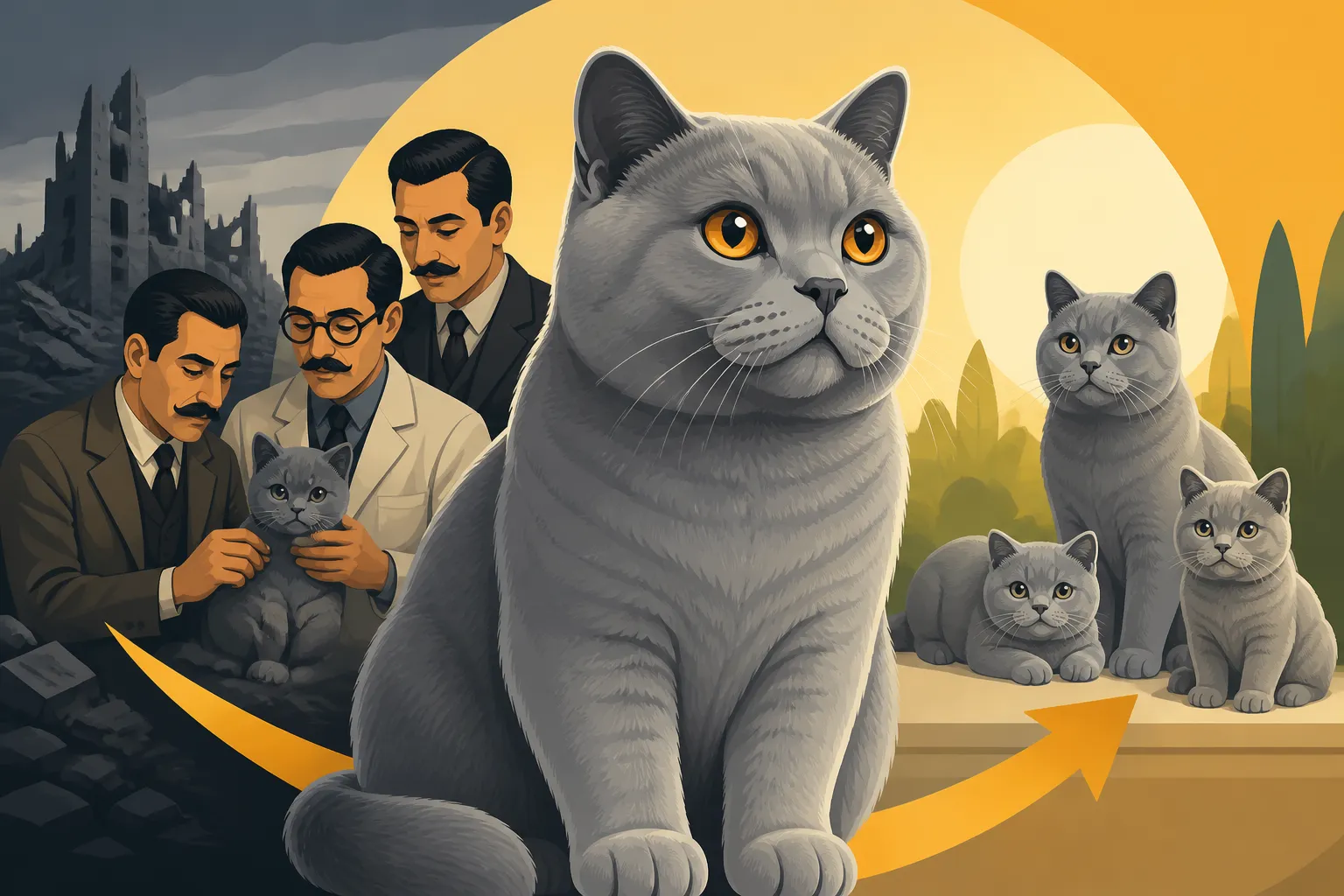
The early 20th century brought unimaginable hardship, and for the nascent world of pedigree cat breeding, it proved catastrophic. The two World Wars, particularly the second, decimated many breeds, including the British Shorthair, pushing it to the brink of extinction.
The Near Loss of the Breed
During the wars, resources were scarce, and priorities shifted dramatically. Feeding and caring for pedigree cats became an unimaginable luxury for most. Breeders were often called to service, their catteries disbanded, and their carefully planned breeding programs halted. Many lines were lost entirely as cats either perished due to lack of care, were released to fend for themselves, or were simply not bred. Travel restrictions, food rationing, and the sheer chaos of wartime life made organized breeding and showing impossible. The British Shorthair, which had just begun to establish itself, saw its numbers dwindle to dangerously low levels. It was a heart-wrenching time for those who had poured their lives into developing these magnificent animals, watching their life's work vanish before their eyes. How Far British Shorthair Numbers Fell by 1945 illustrates just how dire the situation became, painting a bleak picture for the future of the breed.
Breeding Constraints and Lost Lines
The gene pool shrunk dramatically with each passing year of conflict. The few remaining British Shorthairs were often related, leading to concerns about inbreeding and genetic health. With no new bloodlines coming in and few kittens being raised, the genetic diversity that is so crucial for a healthy breed was severely compromised. Records were lost, pedigrees became fragmented, and the knowledge passed down through generations of breeders was interrupted. The very specific traits that had been carefully cultivated, such as coat texture, eye color, and head shape, were at risk of being diluted or lost forever. Breeders who returned home after the wars found a barren landscape where their vibrant cat fancy once thrived, facing the daunting task of piecing together fragments of what remained.
The Desperate Need for Outcrossing
Facing the genuine threat of extinction, British Shorthair breeders knew they had to take drastic measures. The remaining cats simply didn't provide enough genetic diversity or numbers to sustain the breed. Outcrossing, the practice of breeding to a cat of a different breed, became not just an option, but a necessity.
Reviving Numbers Through Strategic Breeding
The immediate goal was sheer survival. Breeders needed to increase the population of British Shorthairs, and fast. This meant looking beyond the dwindling purebred lines. It was a controversial decision for some purists, but pragmatism had to win. The choices for outcrossing partners were limited, and had to be made carefully to minimize altering the fundamental character of the British Shorthair while injecting much-needed genetic vigor. The selection criteria focused on breeds that shared some physical characteristics or temperamental qualities, ensuring that the essence of the British Shorthair would not be completely lost. This period was a testament to the dedication of breeders who prioritized the breed's future over rigid adherence to past practices.
The Search for Suitable Outcross Breeds
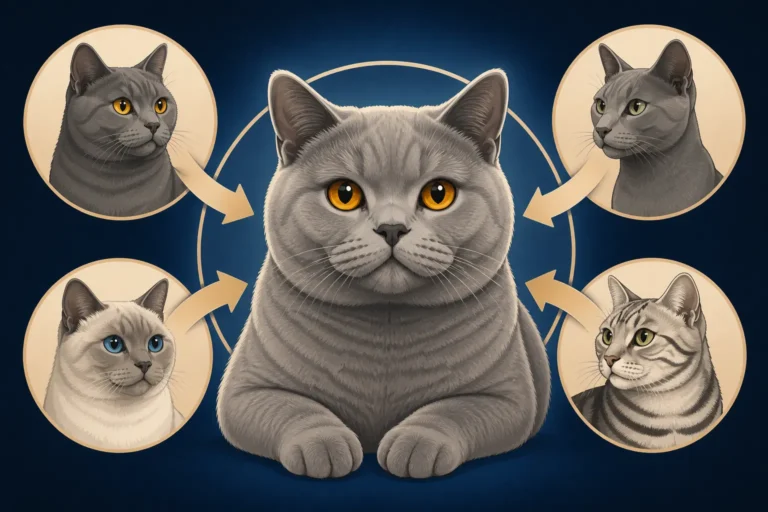
The ideal outcross breed needed to bring certain qualities. It needed a cobby, stocky build, a relatively calm temperament, and perhaps a dense coat, to complement and enhance the British Shorthair's existing characteristics. Breeds such as the Russian Blue, Chartreux, and notably, the Persian, were considered. Each brought different potential benefits and risks. The Russian Blue offered a similar short, dense coat and a calm nature, but was much more svelte in body type. The Chartreux also had a blue, dense coat and a sturdy build, but was less common.
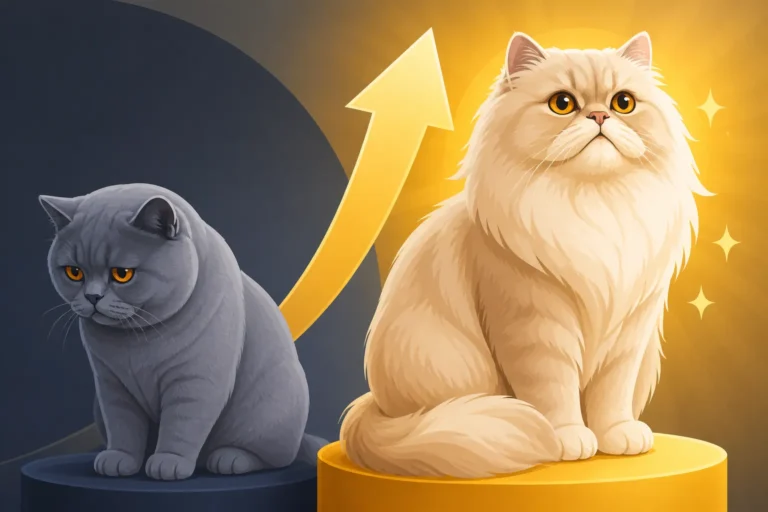
The Persian, however, presented a unique combination of traits that breeders hoped would infuse the struggling British Shorthair lines with renewed vitality and type. Persians were readily available, well-established, and possessed the cobby body, round head, and dense coat that breeders wished to solidify in the British Shorthair, albeit in a more extreme form. This made them a compelling, though not entirely seamless, choice for rebuilding efforts. Which Outcrosses Saved the British Shorthair goes into more detail about these choices.
The Persian's Contribution to British Shorthair Type
The decision to incorporate Persians into the British Shorthair breeding program was a pivotal moment. While controversial, it undeniably shaped the breed's modern appearance, contributing many of the beloved traits we associate with them today.
Enhancing the Cobby Body and Round Head
One of the most immediate and lasting impacts of the Persian outcross was on the British Shorthair's physical type. Persians are known for their extremely cobby, substantial bodies, broad chests, and short, thick legs. These traits were selectively bred into the British Shorthair to enhance its existing sturdiness, making it even more robust and powerful-looking. The goal was to create a cat that felt solid and heavy in hand, a true "brick wrapped in silk."
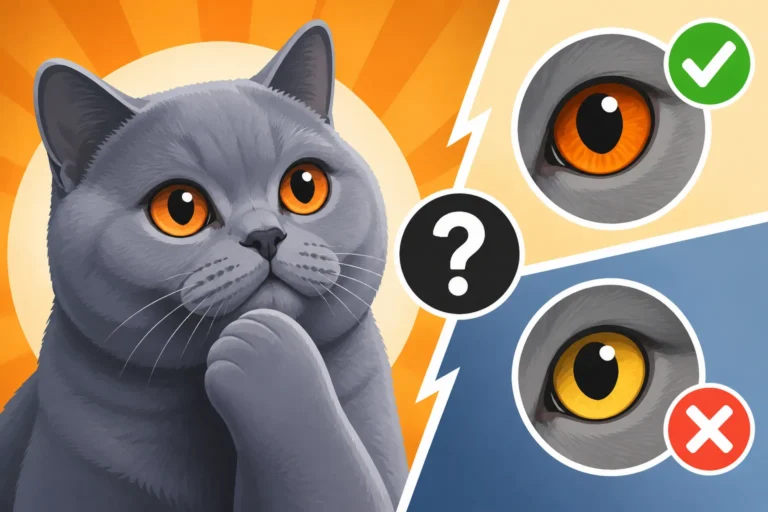
Perhaps even more dramatically, the Persian contributed to the British Shorthair's iconic round head. Persians have very broad, round heads with full cheeks and short, broad noses. By carefully breeding, these features were introduced and refined in the British Shorthair, moving away from the slightly more angular faces of some pre-war lines towards the undeniably "teddy bear" appearance. This gave the British Shorthair its characteristic sweet, open expression, with large, round eyes set wide apart. You can see this roundness especially clearly in The Round Head and Copper Eye a British Shorthair Is Judged On. Breeders chose Persian lines that offered the desired enhancements without bringing in too much of the extreme brachycephalic (short-nosed) features that define the Persian breed.
Influencing Coat Density and Texture
The British Shorthair's coat is one of its most distinctive features: a dense, plush, crisp, and surprisingly short coat that stands away from the body. This unique texture was significantly influenced by the Persian outcross. The original British Shorthair already had a dense coat, but the Persian, with its incredibly thick, long, and luxurious fur, injected an unparalleled level of density into the British Shorthair's undercoat.
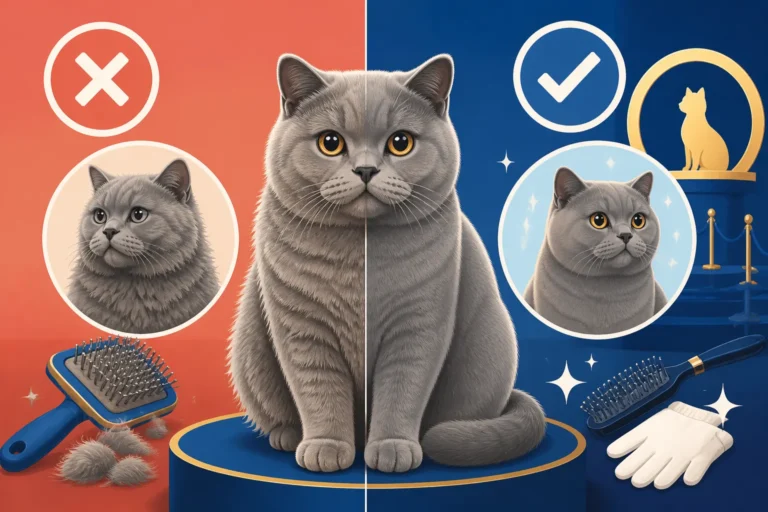
This infusion of Persian genetics resulted in a coat that not only felt incredibly soft and thick but also had that characteristic "crisp" feel. It's almost like a short, thick carpet that springs back when touched. This density provides excellent insulation and contributes to the breed's robust, well-rounded appearance. It means that while the British Shorthair is "shorthair" by name, its fur is far from thin or sparse. It's a coat that demands regular, though not excessive, grooming to keep it in prime condition. Many owners find effective combs and brushes on sites like Chewy that are specifically designed for thick-coated breeds.
Eye Shape and Color Development
The Persian outcross also played a role in standardizing and enhancing the British Shorthair's eye shape and color. Persians are known for their large, round, expressive eyes, which align well with the British Shorthair's desired teddy bear look. The genetic input from Persians helped to solidify the large, round eye shape set wide apart that is now a hallmark of the British Shorthair.
In terms of color, while the traditional British Shorthair often had orange or gold eyes, the Persian influence helped reinforce the deep copper or gold eye color in blue and other solid-colored British Shorthairs. For shaded and colorpoint varieties, the Persian also brought genetics for green and blue eyes, respectively, further broadening the visual appeal of the breed. This careful selection contributed to the captivating gaze that is so characteristic of the British Shorthair, whether it’s a deep copper or a vibrant green.
Genetic Legacy: What the Persian Outcross Brought
While the Persian outcross was essential for the survival and development of the British Shorthair, it also introduced certain genetic considerations that breeders and owners must be aware of.
Polycystic Kidney Disease PKD
One of the most significant genetic conditions linked to the Persian outcross is Polycystic Kidney Disease (PKD). PKD is an inherited disease where cysts form in the kidneys, gradually enlarging over time and eventually leading to kidney failure. Unfortunately, as the Persian breed was used to rebuild the British Shorthair, the gene for PKD was unknowingly introduced into the British Shorthair gene pool. Polycystic Kidney Disease Came Into the British Shorthair With the Persians is a vital read for anyone interested in this specific history.
Initially, diagnosing PKD was challenging, relying on ultrasounds to detect cysts, often after they had become quite large. However, the development of a DNA test for PKD1, the specific gene mutation responsible for the most common form of PKD in cats, has been a game-changer. This test allows breeders to definitively identify affected cats and carriers, enabling them to make informed breeding decisions and work towards eradicating the disease from their lines. Reputable British Shorthair breeders now routinely test their cats for PKD1, ensuring that kittens are born free of this inherited condition. It's a stark reminder of the long-term impact of outcrossing, both positive and negative. How PKD Reached the British Shorthair provides a detailed look into the historical context of its introduction.
Introduction of the Longhair Gene
The Persian is, of course, a longhaired breed. When Persians were crossed with British Shorthairs, the longhair gene was naturally introduced into the British Shorthair gene pool. Since the longhair gene is recessive, cats can carry it without exhibiting long hair themselves. This means that even a British Shorthair that appears perfectly "shorthaired" can carry the gene.
If two British Shorthairs, both carrying the longhair gene, are bred together, there's a chance they will produce longhaired kittens within a litter of otherwise shorthaired kittens. These longhaired offspring are often referred to as "British Longhairs" and are now recognized as a separate, distinct breed by some cat registries. This genetic legacy highlights the deep intertwining of these two breeds in the British Shorthair's recent history. Whether the Longhair Gene Is Still in the British Shorthair delves into the continued presence and implications of this gene.
Modern British Shorthair: A Legacy of Resilience
The British Shorthair we adore today is a testament to the dedication of breeders who, against all odds, saved and rebuilt the breed. It's a cat whose history is deeply intertwined with its past struggles and the crucial role the Persian played in its revival.
The Iconic Appearance Today
The modern British Shorthair embodies the very best of its foundational stock and its Persian benefactors. It is a substantial, powerful cat, with a broad chest, short, strong legs, and a famously dense, plush coat that stands away from its body. The head is large and round, with full cheeks, giving it that endearing teddy-bear expression. Its eyes are large, round, and widely set, typically in shades of copper, gold, or green, depending on coat color. What a British Shorthair Weighs and How Big It Gets gives you an idea of their impressive size.
This iconic appearance, particularly the blue variant, has captured hearts worldwide. It's the face of many advertisements and popular culture references, often mistakenly referred to simply as the "British Blue." The overall impression is one of solid, understated elegance and gentle strength. This distinctive look is a direct result of the careful selection and breeding choices made in the post-war era, ensuring the breed's survival while solidifying its unique aesthetic.
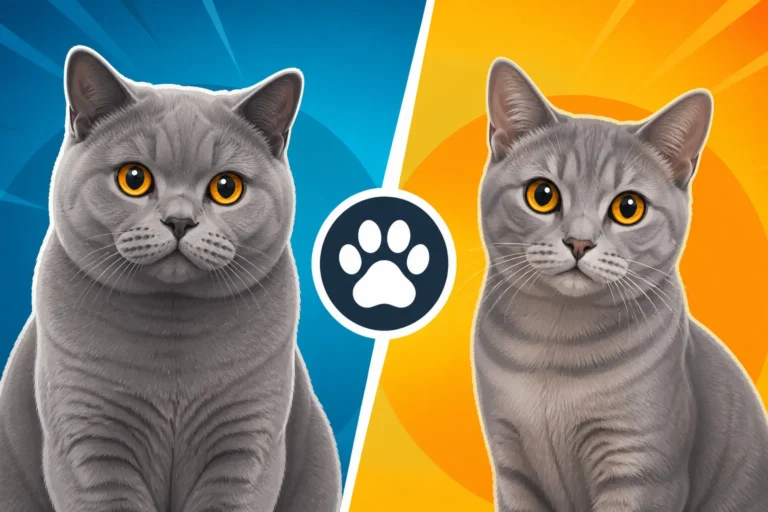
| Feature | Pre-War British Shorthair (General) | Post-War British Shorthair (Persian Influence) |
|---|---|---|
| Body Build | Sturdy, muscular, medium-to-large | More cobby, substantial, broader chest |
| Head Shape | Round, but less extreme, can be slightly longer | Very broad, distinctly round, full cheeks |
| Coat Density | Dense, short, weather-resistant | Even denser, plush, "crisp" texture, stands off body |
| Nose Length | Medium | Shorter, broader, more pronounced stop |
| Eye Shape | Round, often amber/gold | Large, very round, wide set, deep copper/gold/green |
| Overall Impression | Robust, working cat, understated elegance | Teddy bear-like, cuddly, refined substantiality |
Health Considerations and Responsible Breeding
While the outcross was vital, responsible breeding today means carefully managing the genetic legacy. Health screening is paramount for British Shorthairs. Beyond the well-known PKD, reputable breeders also screen for conditions like Hypertrophic Cardiomyopathy (HCM), a common heart disease in many breeds. What a British Shorthair Breeder Should Have Tested provides a comprehensive list of recommended screenings.
Breeders today strive to maintain the wonderful temperament and robust health of the British Shorthair while carefully monitoring for inherited conditions. They utilize genetic testing for PKD and regular cardiac ultrasounds for HCM to ensure the health of their breeding stock. These health initiatives are critical for ensuring that the British Shorthair remains a healthy and long-lived companion, benefiting from its diverse genetic history without succumbing to potential pitfalls. When sourcing supplies for your British Shorthair, always consider quality and nutrition, readily available from trusted retailers like Chewy, to support their overall health.
The British Shorthair's Enduring Popularity
The British Shorthair's journey from near extinction to global popularity is truly remarkable. Its calm, affectionate, and low-maintenance temperament makes it an ideal companion for a wide range of households, from busy professionals to families with children. They are typically quiet cats, known for their "sitting near you, not on you" affection style, which suits many who appreciate their independent yet loving nature. How Well a British Shorthair Suits a First Time Cat Owner highlights their ease of care.
Their striking appearance, combined with their gentle personalities, has solidified their place as one of the most beloved cat breeds in the world. Their resilience and the dedication of the breeders who rebuilt them are a powerful testament to the enduring appeal of this magnificent feline. The British Shorthair is not just a cat; it's a living piece of history, a testament to preservation, and a cherished family member. For all your British Shorthair's needs, from premium food to stimulating toys, online stores like Chewy offer convenience and variety.
Disclaimer
This article is for general informational purposes only and does not constitute professional advice. Laws, prices and regulations vary by location and change over time. Consult a qualified professional for guidance on your specific situation.