Whether an Aging British Shorthair Needs Softer Food
It's heartbreaking to see our beloved British Shorthairs start to show the signs of aging, and one of the most common worries we face as their guardians is how to ensure they're still getting the best nutrition when eating becomes a little harder. Many of us wonder if that crunchy kibble they've loved for years is suddenly doing more harm than good. This guide is here to walk you through the nuances of feeding an older British Shorthair, addressing whether softer food is truly necessary and how to make the transition if it is.
The Subtle Changes in an Aging British Shorthair's Mouth
As our British Shorthairs gracefully age, their mouths aren't quite the robust eating machines they once were. It's not always obvious, given their stoic nature, but subtle changes can make chewing their favorite dry kibble an uncomfortable, if not painful, experience. Understanding these shifts is the first step in deciding if a softer diet is right for your senior furball.
Dental Health and Tooth Resorption
One of the most insidious issues affecting senior cats, including our charming British Shorthairs, is dental disease. It’s far more common than many owners realize, with plaque and tartar building up over the years, leading to gingivitis and periodontitis. This inflammation of the gums and structures supporting the teeth can make every bite of hard food a challenge. Imagine trying to chew a tough steak with a raging toothache – that’s often what our cats are enduring in silence. Regular dental check-ups are crucial, but even with the best care, some issues are unavoidable.
Beyond the more visible plaque and tartar, tooth resorption is a silent killer of feline oral comfort. This condition, where the tooth structure itself begins to break down from the inside out, is incredibly painful. The lesions can form at or below the gum line, making them hard to spot without a thorough veterinary examination, often requiring dental X-rays. If your British Shorthair suddenly becomes finicky about food, drops pieces of kibble, or shows a preference for smaller bites, it could be a sign of painful tooth resorption. Hard, dry food exacerbates this pain, grinding against exposed nerves or fragile tooth remnants.
Gum Sensitivity and Recession
Even if the teeth themselves are relatively sound, the gums of an older British Shorthair can become much more sensitive. Just like in humans, gum recession can occur with age, exposing the more sensitive roots of the teeth. These exposed areas are far more vulnerable to cold, heat, and pressure, making the act of crunching dry food quite jarring. A senior cat might tolerate it for a while, but eventually, the discomfort can become too much, leading to reduced food intake. This is especially problematic for a breed like the British Shorthair, who might already be prone to Obesity Is the British Shorthair's Real Disease, and a sudden decrease in food intake might lead to other health complications if not addressed.
Inflammation from gingivitis further compounds this issue. Red, swollen gums are painful, and pressure from hard kibble can be agonizing. You might notice your British Shorthair approaching their food bowl tentatively, taking a few bites, then backing away, or perhaps only eating the softer bits if mixed feed is offered. This isn't necessarily picky eating; it could be a direct response to oral pain. Switching to a soft food eliminates the need for intense chewing, allowing them to eat comfortably and get the nutrients they need without agonizing over every mouthful.
Jaw Strength and Muscle Mass
It’s not just about the teeth and gums; the very mechanics of chewing can change with age. Older British Shorthairs, like all senior animals, can experience a natural decline in muscle mass, including the muscles in their jaws. This loss of strength means that what was once an effortless crunch becomes a strenuous task. Even if they don't have active dental pain, the sheer effort required to break down hard kibble can be tiring and off-putting.
Imagine trying to open a stubborn jar with weaker hands – eventually, you just give up. The same can happen with your senior British Shorthair and their food. If you notice them taking longer to eat, appearing fatigued after a meal, or leaving behind perfectly good kibble, it might be that their jaw muscles simply aren't up to the job anymore. Softer food requires minimal chewing, making mealtime less of a workout and more of a pleasant experience, ensuring they continue to consume adequate calories and maintain their robust physique, which is so characteristic of the breed, even if they are The Age a British Shorthair Is Considered Senior.
Beyond the Mouth: Other Factors Affecting Food Choice
While oral health is a major player, it's certainly not the only reason an aging British Shorthair might benefit from softer food. The aging process affects many systems in their body, all of which can influence their appetite, digestion, and overall nutritional needs. Looking at the bigger picture can help us make the best choices for their comfort and longevity.
Decreased Sense of Smell and Taste
As our British Shorthairs mature into their golden years, their senses, much like our own, can become a little duller. This often includes a noticeable decline in their sense of smell and taste. For a creature whose appetite is heavily driven by aroma, this can be a real problem. A dry kibble, especially one that's been sitting in a bowl for a while, simply doesn't offer the same potent olfactory appeal as it once did. What was once a tempting aroma can become barely detectable.
Wet food, on the other hand, typically boasts a much stronger and more enticing scent profile. The moisture helps release aromatic compounds, making it far more appealing to a cat with diminished senses. If your senior British Shorthair has started turning up their nose at their usual food, even when they're otherwise healthy, it could be that it just doesn't smell appetizing enough anymore. Offering a variety of wet foods, perhaps with different protein sources like chicken, tuna, or salmon, can reignite their interest in eating and ensure they continue to get the necessary nutrients. You might find a wider selection of wet food options on platforms like Chewy or Amazon.
Hydration Needs in Older Cats
Hydration is critically important for all cats, but it becomes especially vital for aging British Shorthairs. Senior cats are more prone to kidney issues, and maintaining adequate hydration can significantly support kidney function. Unfortunately, many cats don't drink enough water on their own, often preferring running water sources over stagnant bowls. Dry kibble contains very little moisture, typically around 10%, meaning a cat relying solely on dry food has to drink a substantial amount of water to stay properly hydrated.
Wet food, by its very nature, is a powerhouse of hydration, containing upwards of 70-80% moisture. Incorporating wet food into your senior British Shorthair's diet is one of the easiest and most effective ways to boost their daily water intake. This extra hydration is a huge benefit for their urinary tract health and can help dilute urine, potentially reducing the risk of urinary crystals and other problems. Ensuring your cat is well-hydrated is a proactive step in managing their health as they age, especially considering that Urinary Problems in a British Shorthair can become more common.
Digestive Changes and Nutrient Absorption
The digestive system of an older British Shorthair might also not be as efficient as it once was. The production of digestive enzymes can decrease, and the overall transit time of food through the gut might change. This can make it harder for them to break down and absorb nutrients from certain types of food, particularly dense dry kibble which often contains more complex carbohydrates and fillers. Even if they're eating, they might not be getting all the goodness out of their meals.
Softer foods are generally easier to digest. The ingredients are often more processed and the high moisture content aids in breakdown, allowing the body to extract nutrients more readily. This means that an older cat on a wet food diet might absorb more vitamins, minerals, and protein, even if they're eating a similar caloric amount to their dry food counterpart. If your British Shorthair is losing weight despite eating, or seems to have a sensitive stomach, a switch to a highly digestible wet food could make a significant difference. Fresh, gently cooked foods can be particularly appealing for their digestibility and nutrient density.
Transitioning Your British Shorthair to Softer Food
Deciding that softer food is the right choice for your aging British Shorthair is only the first step. The next, and often most challenging, is actually making the switch! Cats are creatures of habit, and British Shorthairs, with their generally calm but sometimes stubborn dispositions, can be particularly resistant to change. Patience, observation, and a gradual approach are your best allies.
Gradual Introduction is Key
Never, and I mean never, try to switch your British Shorthair's food cold turkey. This is a recipe for refusal, stress, and potentially digestive upset. Their systems need time to adjust to new ingredients and textures. The golden rule is gradual introduction. Start by mixing a tiny amount of the new wet food into their existing dry kibble. We're talking about maybe a teaspoon or less for the first few days. The goal is to introduce the new scent and taste without overwhelming them.
Over the next week or two, very slowly increase the proportion of wet food while decreasing the dry food. Watch your cat closely during this period. Are they eating it? Are there any signs of digestive upset like vomiting or diarrhea? If they seem to be doing well, you can continue to increase the wet food. If they're hesitant, slow down the process even more. For some British Shorthairs, this transition might take several weeks, and that's perfectly okay. The slower you go, the higher your chances of success and the less stress for your beloved companion. You might even find that warming the wet food slightly to body temperature enhances its aroma and palatability, which can be helpful for a cat with a decreased sense of smell and taste.
Exploring Different Textures and Flavors
Cats can be notoriously particular about food, and older British Shorthairs are no exception. One cat might adore a smooth pate, while another turns their nose up at anything but chunky morsels in gravy. Don't be discouraged if the first wet food you try isn't a hit. There's a vast world of textures and flavors out there, and finding your cat's preference can be a bit of a culinary adventure. Some common wet food textures include:
- Pate: A smooth, homogeneous consistency, often very appealing to cats who struggle with chewing.
- Shredded/Flaked: Thin strips or flakes of meat in gravy or broth, offering a different mouthfeel.
- Chunky/Stew: Larger pieces of meat and vegetables in a thicker gravy, for those who still enjoy a bit of texture.
Experiment with different protein sources too – chicken, turkey, salmon, tuna, beef, and lamb are all common. Some cats have preferences not just for texture, but for specific proteins. When shopping, whether at your local pet store or online via a retailer like Chewy or Amazon, try to pick up a few different single-serving cans or pouches to test the waters. Keep notes on what your British Shorthair seems to enjoy most. What an Aging British Shorthair's Coat Looks Like might also offer clues to their overall health during this period; a dull coat could indicate they're still not absorbing nutrients optimally.
Monitoring Weight and Overall Health
Throughout the transition to softer food, and indeed as part of ongoing senior care, diligent monitoring of your British Shorthair's weight and overall health is crucial. It’s easy to assume they're eating just because food is disappearing, but you need to ensure they're consuming enough and that the new diet is agreeing with them. Many senior British Shorthairs tend to be less active, so maintaining a healthy weight is paramount to prevent Arthritis in an Older British Shorthair from worsening.
Regular weigh-ins are a must. If your British Shorthair is losing weight, it could indicate they're not accepting the new food, or perhaps the calorie content isn't sufficient. Conversely, some wet foods can be quite calorically dense, so you'll want to ensure they aren't gaining too much weight. Keep an eye on their energy levels, coat condition, litter box habits, and general demeanor. Any significant changes should prompt a call to your veterinarian. They can help adjust feeding plans, recommend specific therapeutic diets if necessary, and rule out any underlying health issues. Remember, What a British Shorthair's Yearly Bloodwork Should Cover should be part of their senior check-ups, helping you stay ahead of potential health challenges.
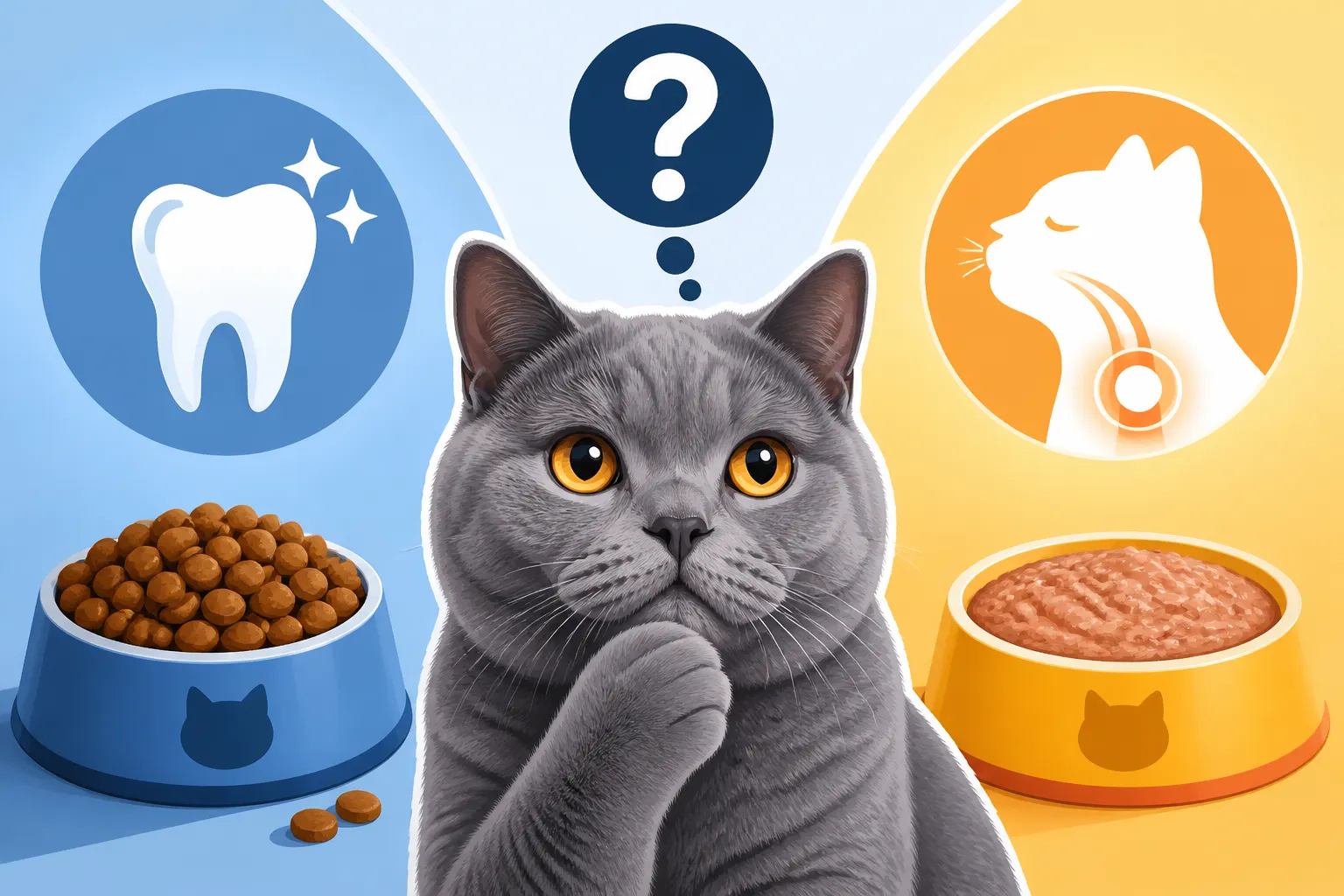
Here's a quick comparison of key considerations for senior British Shorthair diets:
| Feature | Dry Food (Kibble) | Wet Food (Canned/Pouch) |
|---|---|---|
| Oral Comfort | Can be painful with dental disease, resorption, or weak jaws | Soft, easy to chew, bypasses dental pain |
| Hydration | Low moisture content (approx. 10%), relies on drinking | High moisture content (approx. 70-80%), boosts intake |
| Palatability | Less aromatic, may be unappealing to dull senses | Stronger aroma, often more enticing to older cats |
| Digestibility | Can be harder to break down and absorb for older guts | Generally easier to digest and absorb nutrients |
| Weight Control | Can be high in calories, easier to overfeed if free-fed | Often lower in calories per serving, but careful monitoring still needed |
| Cost | Generally lower per serving | Often higher per serving |
| Convenience | Can be left out, lasts longer | Needs to be served fresh, refrigerate leftovers |
Ultimately, the best approach for an aging British Shorthair often involves a conversation with your vet. They can assess your cat's specific health status, dental condition, and overall needs to provide tailored recommendations. Don't hesitate to seek their guidance as you navigate this new stage of your British Shorthair's life.
Disclaimer
This article is for general informational purposes only and does not constitute professional advice. Laws, prices and regulations vary by location and change over time. Consult a qualified professional for guidance on your specific situation.