Whether Neutering Removes a British Shorthair’s Jowls
One common question that pops up among British Shorthair owners, especially those with adorable male cats, is about those distinctive, chubby cheeks we all adore. You see them on almost every picture-perfect British Shorthair, giving them that classic teddy bear look. But when it comes to neutering, many folks wonder if those lovely jowls will simply disappear. It's a valid concern, as these features are a huge part of the breed's charm, and the truth about how neutering impacts them is often misunderstood. This guide aims to clear up that confusion, explaining what causes those prominent jowls and what you can realistically expect after your beloved British Shorthair is neutered.
Understanding British Shorthair Jowls
Let's start by getting a real handle on what those jowls actually are and why our British Shorthairs possess them in the first place. It’s not just extra fluff, believe it or not! These are distinct anatomical features that contribute significantly to the breed's iconic appearance.
What Exactly Are British Shorthair Jowls?
When we talk about "jowls" on a British Shorthair, we're referring to the pronounced, rounded pads of muscle and fat that develop on either side of their face, giving them that wonderfully full, broad-cheeked look. They’re what make their head appear so gloriously round and contribute to that sweet, sometimes slightly grumpy, expression that British Shorthair enthusiasts simply can’t get enough of. These aren't just cosmetic; they're a key part of the breed standard, something judges look for in the show ring. Think of them as the equivalent of a stately lion's mane, but for a cat – a sign of mature masculinity and robustness. They frame the face beautifully, making their eyes seem even larger and more captivating. You'll often hear them described as giving the cat a "chubby" or "bear-like" appearance, but it’s crucial to distinguish this healthy, breed-specific characteristic from actual excess weight, which we'll discuss later. They really complete the classic British Shorthair profile, contributing to their overall cobby and powerful build. For more on this, you might be interested in What Jowls Are on a Male British Shorthair.
The Role of Hormones in Jowl Development
Ah, hormones! The silent architects behind so many of our pets' physical traits. In male British Shorthairs, the development of these magnificent jowls is heavily influenced by testosterone. Intact (unneutered) male cats, also known as toms, produce a higher level of this hormone, which plays a significant role in promoting the growth of these facial fat pads and muscle. It's a secondary sexual characteristic, a way for males to signal their maturity and strength to potential mates and rivals in the wild. This is why you typically see the most prominent, impressive jowls on breeding males. They develop gradually as the male cat matures, often becoming truly noticeable around two to three years of age, sometimes even later. It’s a natural process, a sign of a healthy, mature male cat at the peak of his hormonal development. Without those elevated testosterone levels, the body simply doesn't get the same signal to build up that distinctive facial structure.
Genetic Predisposition and Breed Standard
While hormones are a major player, they aren't the only factor. Genetics lay the groundwork. British Shorthairs are genetically predisposed to developing these robust facial features. It's a trait that has been selectively bred for over generations, making it a hallmark of the breed. The breed standard, set by feline registries, specifically calls for a "round head with full cheeks" and a "firm, broad muzzle." This means that even if a male British Shorthair is neutered, his underlying genetics still program him to have a round, broad head, albeit potentially without the extreme fullness that hormones would otherwise create. Think of it like a predisposition to height in humans – you might have the genes to be tall, but nutrition and other factors also play a part in how tall you actually become. So, while neutering can lessen the extent of the jowls, it won't fundamentally alter the genetic blueprint for a round, full face. This genetic programming is why you don't typically see tiny, narrow faces on British Shorthairs, regardless of their hormonal status. For a broader understanding of breed traits, check out The Round Head and Copper Eye a British Shorthair Is Judged On.
The Impact of Neutering on Jowls
Now, let's get to the heart of the matter: what actually happens to those glorious jowls when your British Shorthair is neutered? It's not always a straightforward answer, as many factors come into play.
Hormonal Changes Post-Neutering
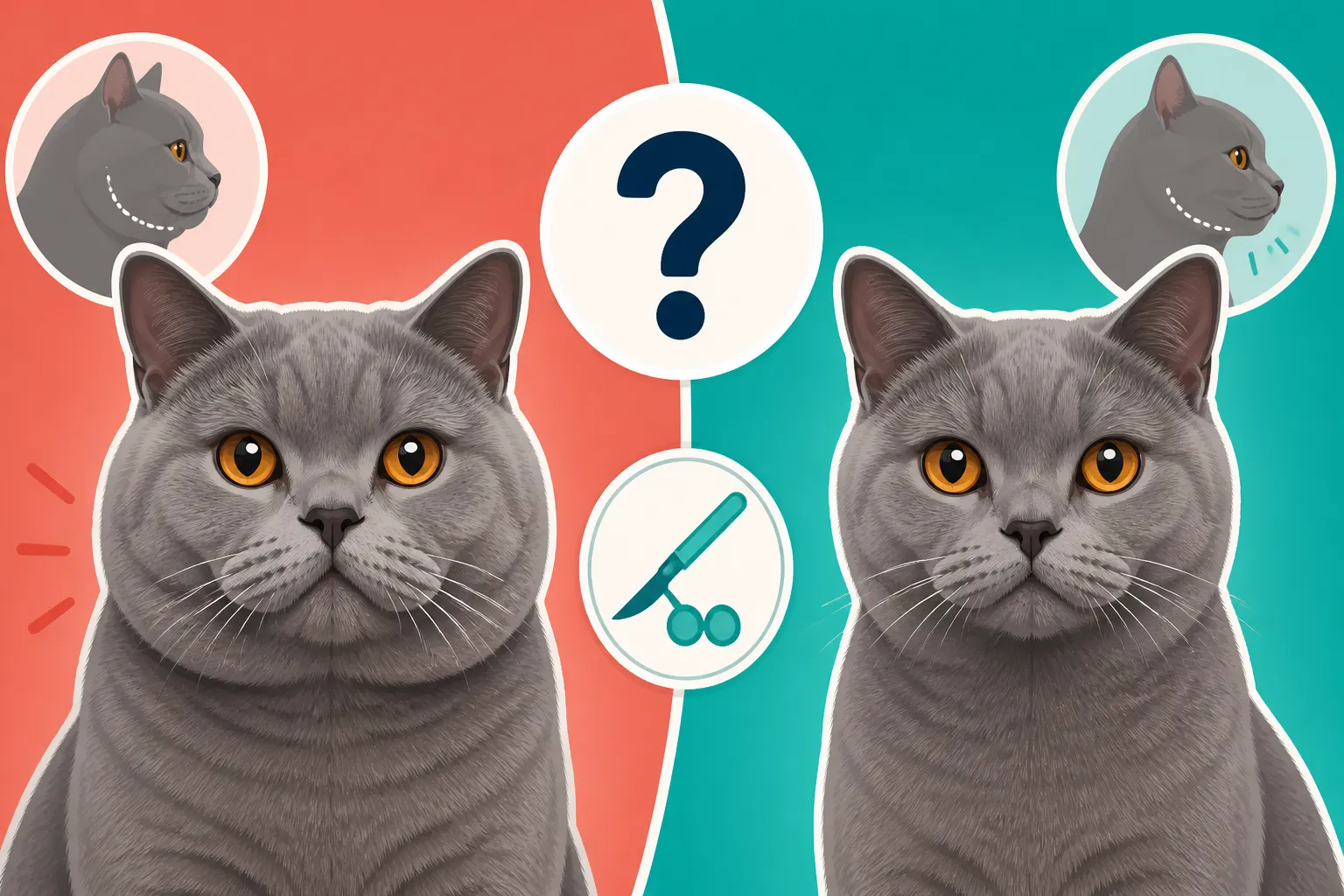
The moment a male cat is neutered, his body undergoes a significant shift in hormone production, specifically a drastic reduction in testosterone. Since testosterone is a primary driver for the development and maintenance of prominent jowls, this drop in hormone levels will inevitably have an effect. You won't see an overnight disappearance, but rather a gradual softening or reduction of the cheek pads over time. For cats neutered very young, before their jowls have fully developed, they might never grow to the same impressive size as those of an intact male. For older cats who already have well-established jowls, the reduction might be more subtle, perhaps making them less pronounced but rarely causing them to vanish entirely. The body stops receiving the signal to maintain that intense facial musculature and fat, leading to a more relaxed facial structure. It’s a natural consequence of removing the source of those high hormone levels.
When Neutering Occurs Matters
The timing of neutering is perhaps the most significant factor in determining the extent to which jowls will diminish or develop.
If a male British Shorthair is neutered before he reaches sexual maturity, typically around six to nine months of age, his testosterone levels will never fully peak. In this scenario, the jowls might not develop to their full potential at all. You'll still see a lovely round British Shorthair head, because of their genetics, but the extreme fullness often associated with intact males will likely be absent. The cheeks will be present, but perhaps a bit "softer" or less pronounced.
On the other hand, if a male is neutered later in life, say at two or three years old after his jowls have already fully developed under the influence of high testosterone, the changes will be less dramatic. The existing jowls may soften and reduce slightly, but they are unlikely to disappear completely. The facial structure has already been built, and while the hormonal stimulus is gone, the underlying tissue and bone structure remain. It’s a bit like trying to reverse years of muscle building once you stop working out – you’ll lose some bulk, but you won't go back to your pre-training physique instantly, if ever. Many owners find that while there's a definite change, their cat still retains that characteristic broad-faced charm. This explains why some neutered males still have quite noticeable jowls, leading to the common question: Whether a Neutered British Shorthair Keeps His Jowls.
What to Expect: Realistic Outcomes
So, what’s the realistic outcome for your British Shorthair's jowls after neutering? For most, especially if neutered young, you can expect a beautifully round head that adheres to the breed standard, but perhaps without the exaggerated "squishiness" of an intact tom. For those neutered later, the jowls will likely soften and become less defined, but a significant portion of that broad-faced look will remain. It’s rare for jowls to completely disappear, as the underlying bone structure and genetic predisposition for a round head are still there.
Here's a little table to help visualize the general expectations:
| Factor | Early Neutering (Under 1 year) | Late Neutering (Over 1 year, already developed) |
|---|---|---|
| Testosterone Levels | Never fully peak | Drop significantly from high levels |
| Jowl Development | Will be less pronounced, softer, may not fully develop | Will soften and may reduce in size; unlikely to disappear completely |
| Overall Head Shape | Retains inherent breed roundness, less extreme "puffiness" | Retains underlying bone structure, still appears broad, but less "chubby" |
| Timeframe for Change | Jowls may not develop as much from the outset | Gradual softening over several months post-surgery |
Ultimately, your British Shorthair will still have that adorable, characteristic face. The focus will shift more towards their genetic makeup and body condition rather than purely hormonal influence. They won't suddenly look like a different breed. The essence of their British Shorthair charm will certainly endure.
Beyond Neutering: Other Factors Influencing Cheek Size
While neutering plays a role, it's not the sole determinant of your British Shorthair's facial fullness. Several other factors can influence how prominent those cheeks appear. Understanding these can help you appreciate your cat's unique look and ensure they remain healthy.
Age and Maturity
British Shorthairs are a slow-maturing breed, and their physical development, including the filling out of their faces, can take time. Many don't reach their full physical maturity until they are three to five years old. This means that even a neutered male might see his cheeks become fuller simply due to age, as he continues to mature and develop his adult musculature and bone structure. It's not jowl growth in the hormonal sense, but rather the natural process of a young cat growing into his full adult proportions. A one-year-old British Shorthair, even if neutered, will typically have a less developed face than a three-year-old, fully mature cat. It’s part of the charming transformation they undergo, from a somewhat lanky kitten to the solid, cobby adult we all adore. For example, you might notice significant changes between What a British Shorthair Should Weigh at Six Months and What a British Shorthair Should Weigh at Two Years.
Weight and Body Condition
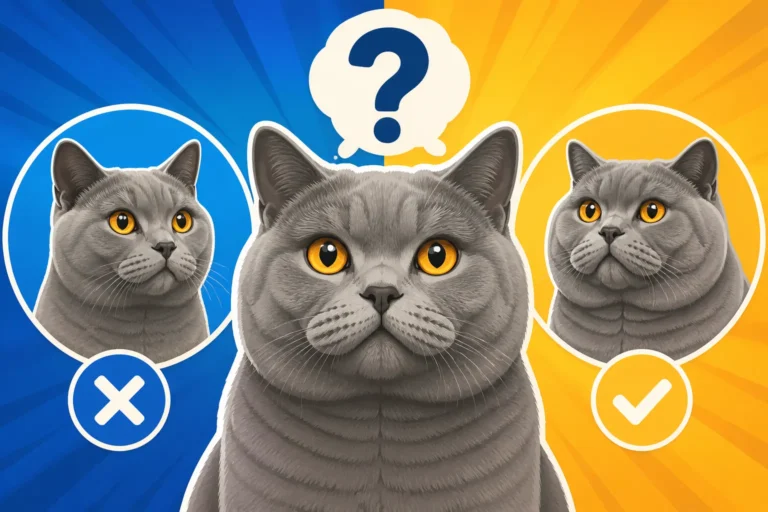
This is a really important distinction: true jowls are a breed characteristic, but excess weight can definitely make a cat’s face look chubbier. A British Shorthair, even without prominent hormonal jowls, can have a very full face if they are overweight. Their dense coat can also create the illusion of extra bulk. It’s easy to confuse healthy jowls with fat cheeks, especially since British Shorthairs are inherently prone to weight gain due to their calm, less active nature. An overweight cat will have fat deposits across their entire body, including their face, making their cheeks appear rounder and their neck thicker. This is a health concern, not a desirable breed trait. It's crucial for owners to learn to feel their cat's ribs and spine to assess their body condition properly, rather than relying solely on visual cues, especially with such a plush-coated breed. Overweight cats often have other health issues, and their "chubby" face can be a red flag. Learn more about how to assess your cat's weight in How to Feel a British Shorthair's Ribs Through the Plush.
Individual Variation
Just like people, every British Shorthair is an individual! Even within the same litter, you might see slight differences in facial structure and how prominently jowls develop, even among intact males. Some cats are simply born with a genetic predisposition for more pronounced facial features than others. This individual variation means that while general rules apply, your cat's specific appearance might fall anywhere along a spectrum. You could have two neutered male British Shorthairs of the same age and weight, and one might still have slightly more noticeable cheeks than the other. It’s part of what makes each cat unique and wonderful. Don't compare your beloved companion too strictly to photos you see online, as there's always a range within any breed.
Managing Your British Shorthair's Appearance and Health
Ensuring your British Shorthair looks their best and, more importantly, stays healthy, involves a bit more than just understanding their jowls. It's about comprehensive care tailored to their unique needs.
Maintaining a Healthy Weight
Given their propensity for weight gain and their generally relaxed demeanor, maintaining a healthy weight is paramount for British Shorthairs. Obesity can lead to a host of health problems, including diabetes, arthritis, and heart issues, and it can also obscure their true facial structure by adding excess fat to their cheeks. Portion control is absolutely critical for this breed. These cats will often happily eat whatever you put in front of them, so free-feeding is rarely a good idea. Instead, measure out their food precisely and divide it into two meals a day. High-quality wet food can be beneficial as it's typically lower in calories and higher in moisture, which helps with satiety and hydration. Many reputable weight management formulas and tailored nutritional plans are available. Remember, a British Shorthair's body is built to be sturdy and cobby, not obese. If you're concerned about your cat's weight, your vet can help you establish a safe and effective weight loss plan. This often involves reducing calorie intake and encouraging more activity. The principle is clear: Portion Control Is the Whole Job With a British Shorthair.
Regular Grooming
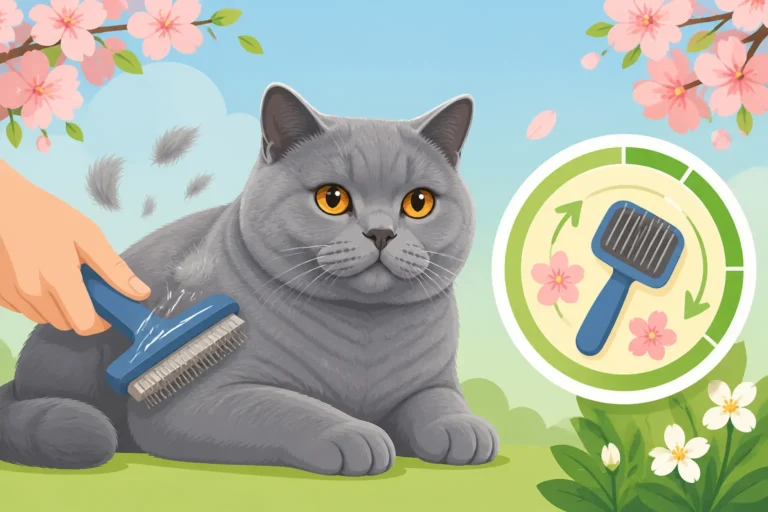
While their coat doesn't typically mat easily, regular grooming is still important for a British Shorthair's overall appearance and health, including around their face. Their dense, plush coat can collect debris, and in some cases, excess fur around the face can make their cheeks appear even fuller. A good steel comb can help remove loose undercoat and keep the fur tidy. Pay particular attention to the areas around their mouth and under their chin. This not only keeps them looking neat but also helps reduce the risk of skin irritations or trapped moisture, especially if they are particularly jowly. Gentle daily combing, especially during shedding seasons, can make a big difference. It's a bonding experience, too! Find good grooming tools on Amazon, or check your local pet store. For more details on their coat, see What a British Shorthair's Coat Is Like.
When to Consult Your Vet
While changes in jowl size post-neutering are normal, and general fullness is a breed characteristic, there are times when you should definitely consult your veterinarian. If you notice a sudden, rapid increase in facial swelling, especially if it's asymmetrical (one side is much bigger than the other), or if your cat seems to be in pain, has difficulty eating, or shows any signs of illness, it's time for a vet visit. These could be signs of dental issues, an abscess, an allergic reaction, or even something more serious. Your vet can accurately distinguish between a healthy, breed-appropriate facial structure and a problematic swelling. They can also help you assess your cat's body condition score to determine if their "chubby" cheeks are due to excess fat rather than true jowls, and advise on diet or exercise. Regular wellness exams are always a good idea to catch any potential issues early. How Often a British Shorthair Needs a Wellness Exam can offer more guidance on this.
Disclaimer
This article is for general informational purposes only and does not constitute professional advice. Laws, prices and regulations vary by location and change over time. Consult a qualified professional for guidance on your specific situation.