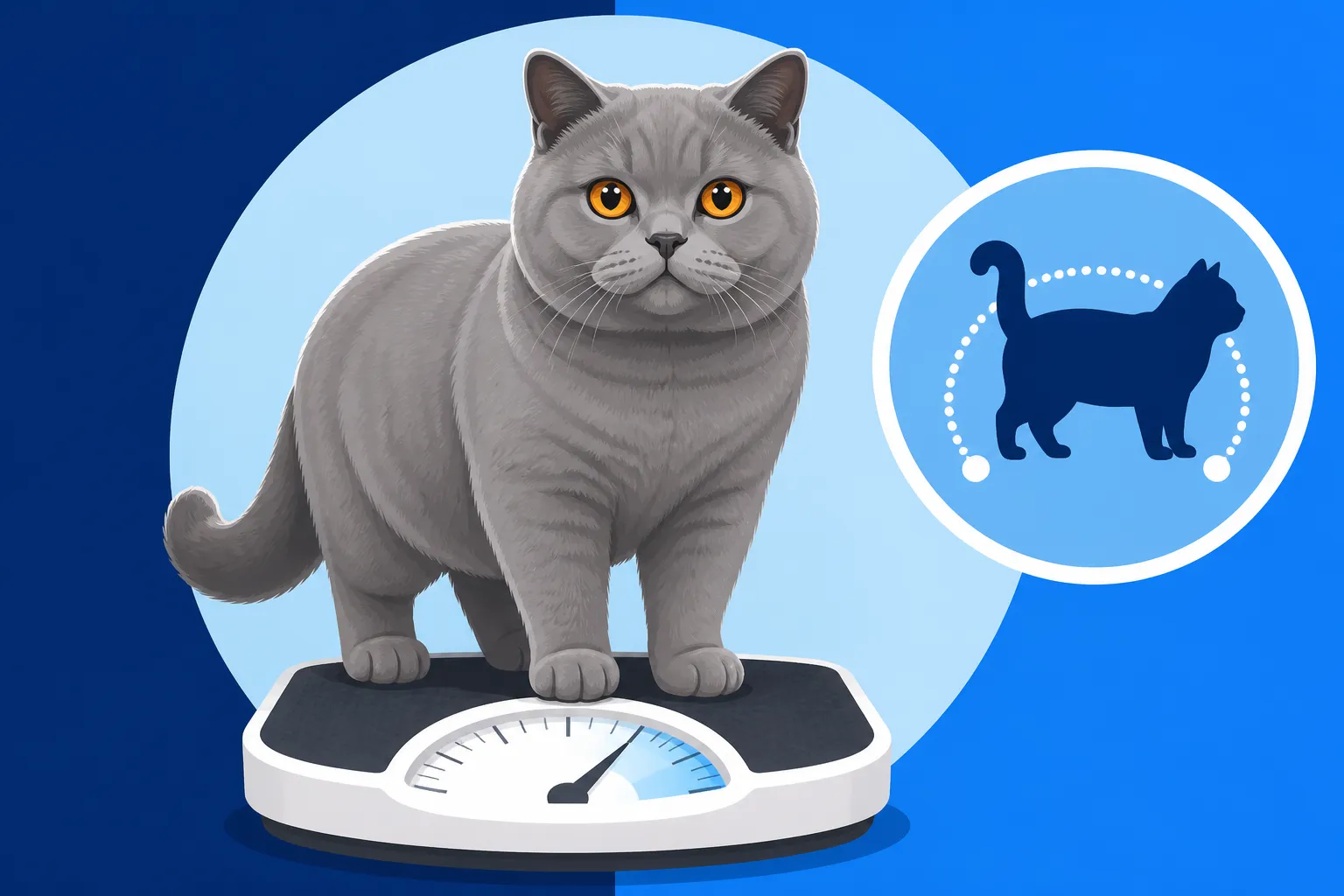
How Much a Male British Shorthair Should Weigh
One of the most common worries British Shorthair owners have is whether their beloved furball is truly healthy, or if that adorable chunkiness is veering into unhealthy territory. It's so easy to look at that substantial frame and plush coat and wonder, "Is this the right weight, or are we heading towards a problem?" This guide is here to help you understand what a healthy male British Shorthair should weigh, and more importantly, how to assess their condition beyond just the number on the scale, helping you keep your handsome companion in peak condition.
The British Shorthair's Natural Build and Typical Weight Range
When you first welcome a British Shorthair into your home, especially a male, you're immediately struck by their impressive presence. They aren't dainty, slender cats; they're built like little brick houses, sturdy and substantial. This breed standard calls for a "cobby" body, which means short, thick legs, a broad chest, and a compact, powerful physique. Their incredibly dense, plush coat only adds to this illusion of magnificent heft, often making them appear even larger than they are. It’s easy to look at that impressive physique and assume a bit of extra weight is just part of the package, but there's a fine line between sturdy and overweight.
A healthy, adult male British Shorthair typically weighs more than his female counterparts, simply due to natural sexual dimorphism. Males tend to be larger overall, with more pronounced jowls and a broader head, which contributes to their overall weight. You'll often hear weight ranges tossed around, and it can be confusing because there's quite a spectrum even within healthy animals. Generally speaking, an adult male British Shorthair can comfortably weigh anywhere from 12 to 18 pounds (approximately 5.4 to 8.2 kg). Some exceptionally large or long-boned males might even fall slightly outside this range while still being perfectly healthy, though this is less common.
It's important to remember that this isn't a hard and fast rule set in stone. Just like people, cats have individual variations in their build and muscle mass. A very lean, athletic male British Shorthair might be on the lower end of that spectrum, while a truly magnificent, well-boned male could be at the higher end. The key is to understand that the weight itself is only one piece of the puzzle. For instance, a young male British Shorthair might not reach his full adult weight until he's three to five years old, gradually filling out that impressive frame. You might see him around 10-12 pounds at one year, then slowly gaining muscle and density until he hits his peak. You can find more details on this journey in What a British Shorthair Should Weigh at One Year and What a British Shorthair Should Weigh at Three.
Why Male British Shorthairs Are Naturally Heavier
Their genetic blueprint and breed standards dictate a substantial build. They're bred to be robust, strong, and round, from their cheeks to their tail. This isn't just about fat; it's about bone density, muscle mass, and that characteristic 'roundness' that defines the breed. When breeders talk about a "heavy" cat, they're often referring to this underlying structure, not just excess adipose tissue.
Think of it this way: a professional weightlifter and a marathon runner might both be perfectly healthy, but their body weights and compositions will be vastly different. A British Shorthair is built more like the weightlifter – dense and powerful. Their broad chests, thick necks, and substantial bone structure all contribute to a higher baseline weight compared to more svelte breeds like a Siamese or Abyssinian. It’s the very essence of their charm, that solid, comforting presence. This natural build is a big reason why Why a British Shorthair Is Built to Look Heavy is such a common topic among owners.
The Growth Trajectory of a Male British Shorthair
Unlike some breeds that reach their full size quickly, British Shorthairs are slow to mature. While they might hit sexual maturity around one year, their physical development, particularly that impressive body mass and jowl development, continues for several years beyond that. A male British Shorthair kitten will grow steadily, but won't typically exhibit his full, "teddy bear" physique until he's closer to three to five years old. This means that if you have a younger male, you shouldn't expect him to be at the upper end of the adult weight range just yet. His weight will gradually increase as he fills out, develops muscle, and those iconic jowls become more prominent. Monitoring his growth and ensuring it's steady, rather than sudden, is key.
Beyond the Number: How to Assess Body Condition
Relying solely on the number on a scale can be incredibly misleading for a British Shorthair, especially a male. Their dense bone structure and luxurious, thick coat can easily mask both a healthy weight and a developing problem. You might have a cat that weighs 15 pounds and is perfectly healthy, or another at 15 pounds who is significantly overweight because his build is smaller. This is where the concept of Body Condition Scoring (BCS) becomes your absolute best friend. It's a hands-on, visual assessment that allows you to gauge your cat's health much more accurately than just stepping on the scale.
The BCS system typically uses a scale of 1 to 9, where 1 is emaciated, 5 is ideal, and 9 is severely obese. What we're aiming for is that sweet spot around 4-5. This method helps you feel past the fluff and truly understand what's going on underneath. It takes a little practice, but once you get the hang of it, you'll be able to tell if your boy is too thin, just right, or carrying a bit too much around the middle. Many vets use this system, and you can easily learn to do it at home. In fact, understanding How to Score a British Shorthair's Body Condition is crucial for all BSH owners.
Feeling for Ribs, Spine, and Waist
This is where you get tactile! Gently run your hands along your British Shorthair's sides.
- Ribs: For an ideal weight, you should be able to feel their ribs easily under a slight layer of fat, but not see them. If you can't feel the ribs at all without really pressing, or if it feels like a soft, padded cushion, your cat is likely overweight. If the ribs are very prominent and feel sharp with no padding, your cat might be too thin. How to Feel a British Shorthair's Ribs Through the Plush goes into this in detail.
- Spine: Similarly, run your hands along their back. You should be able to feel the bony prominences of the spine with a minimal amount of fat covering them. If the spine feels like a series of sharp bumps, it's too thin. If you can barely feel the spine because of a thick layer of fat, it's likely overweight.
- Waist: Look at your British Shorthair from above. While they are a cobby breed and won't have a dramatically tucked waist like a Greyhound, you should still observe a slight indentation behind the ribs, where the waist narrows before flaring out again over the hips. If your cat looks like a furry cylinder from head to tail, with no discernible waist, that's a red flag.
Visual Cues to Watch For
Beyond feeling, there are visual cues that can hint at your male British Shorthair's condition:
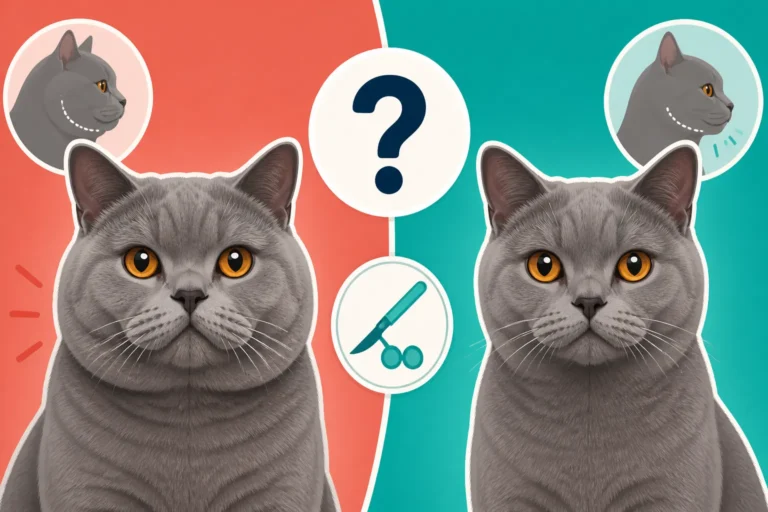
- Abdominal Pouch: Many cats, especially males, develop a primordial pouch along their belly, often referred to as a "belly flap." This is natural and doesn't necessarily indicate obesity. It's loose skin and a small amount of fat designed to protect their internal organs during fights or provide flexibility. However, if this pouch is distended, firm, and swings excessively when they walk, it might be due to excess fat rather than just a healthy pouch.
- Difficulty Grooming: Overweight cats often struggle to reach certain areas of their body, particularly their backs and around the base of their tail. You might notice matting, greasy fur, or dander in these hard-to-reach spots. This is a clear sign that they are too large to comfortably groom themselves.
- Lethargy and Reduced Activity: While British Shorthairs are generally calm and not overly active, a significant decrease in their already modest playfulness, or a reluctance to jump onto furniture they once easily scaled, can be a sign of discomfort from excess weight. They might prefer to lie in one spot for even longer periods. Check out How to Get a British Shorthair to Move for tips on encouraging activity.
Common Factors Affecting Your Male British Shorthair's Weight
Understanding the ideal weight and how to assess it is great, but what actually causes a male British Shorthair to drift from that healthy range? It's often a combination of factors, some within our control, and some less so. The good news is that most common weight issues stem from diet and lifestyle, which we, as dedicated cat parents, can actively manage.
Genetics and Individual Build
Just like humans, some British Shorthairs are simply built larger than others. They might have a naturally heavier bone structure, longer body, or broader chest, all contributing to a higher healthy weight. This is largely determined by their genetics and the specific lineage they come from. You might notice that if you meet their parents, they too are substantial cats. This isn't about being fat; it's about being robust. It's crucial not to try to fit a naturally large-boned cat into the weight range of a smaller-boned cat, as this could lead to them being underweight.
However, genetics are rarely an excuse for outright obesity. While some cats are predisposed to gaining weight, especially if their parents struggled with it, this predisposition doesn't mean it's inevitable. It simply means you need to be more diligent with diet and exercise from a young age.
Diet and Portion Control: The Biggest Influencer
This is, without a doubt, the number one factor in a British Shorthair's weight. These cats are notorious for their love of food and their ability to convince you they are perpetually starving. Couple that with their naturally low activity levels, and you have a recipe for weight gain if you're not careful. Many owners, out of love, tend to free-feed their cats, leaving dry kibble out all day. While this works for some high-metabolism, active breeds, it is often a disaster for a British Shorthair.
Free-feeding allows them to graze throughout the day, often consuming far more calories than they burn. Portion control is paramount. Knowing How Many Calories a British Shorthair Needs a Day is the first step, and then strictly measuring their food for each meal. It's also important to consider the type of food. High-quality wet food can be very beneficial, as its higher moisture content and often lower caloric density per serving can help keep them feeling fuller without overeating. Treats, while a joy to give, must also be factored into their daily calorie count. A few extra treats here and there can quickly add up, especially for a cat that doesn't burn many calories. This is why Why Free Feeding Fails a British Shorthair is a topic so many owners struggle with.
Activity Level and Lifestyle
British Shorthairs are generally very calm, placid cats. They love a good nap in a sunny spot and aren't typically known for frantic bursts of energy or scaling curtains. While this makes them wonderful, low-maintenance companions, it also means they don't burn a lot of calories through spontaneous play or exercise. If your male British Shorthair's lifestyle is largely sedentary (which is common for many indoor cats), his caloric intake needs to be adjusted accordingly.
It's a common frustration: you want your cat to be active, but they just… don't want to be. They might bat at a toy half-heartedly for a minute or two and then decide it's too much effort. This low energy level means that even a moderate amount of food can lead to weight gain over time. Encouraging regular, albeit gentle, play sessions is important, but ultimately, diet usually needs to compensate for their relaxed disposition.
The Impact of Neutering
Neutering a male British Shorthair is a crucial step for their health and temperament, but it does come with a significant metabolic shift. Once neutered, a male cat's metabolism slows down, and their hormonal changes often lead to an increased appetite. This combination makes them highly prone to weight gain, sometimes quite rapidly. Many owners report their male British Shorthair starting to "fill out" more, and often gain excess weight, within months of being neutered.
This isn't to say neutering is a bad idea—far from it! It simply means you need to be extra vigilant with their diet and activity after the procedure. Pre-emptive adjustments to their food portions, even before you see the weight creep up, can make a huge difference. If you're wondering about this, Why a Neutered British Shorthair Gains Faster offers more insights into managing this common challenge.
Health Conditions
While less common than diet or inactivity, certain health conditions can also influence a British Shorthair's weight. For example, hypothyroidism (an underactive thyroid) can lead to weight gain, though it's much rarer in cats than hyperthyroidism (an overactive thyroid, which causes weight loss). More often, obesity itself is the gateway to other health problems like Obesity Is the British Shorthair's Real Disease, including diabetes, arthritis, and liver issues. If your British Shorthair is gaining weight despite a controlled diet and some activity, or if the weight gain is sudden or accompanied by other symptoms, a veterinary check-up is always a good idea to rule out any underlying medical causes.
Practical Steps to Maintain a Healthy Weight
Keeping your handsome male British Shorthair at a healthy weight is truly a lifelong commitment, but it doesn't have to be a battle. It's about consistency, observation, and making smart choices tailored to their unique needs. Remember, these cats are masters of the "feed me now" stare, but their health depends on our ability to set boundaries with food.
The Critical Role of Portion Control
This cannot be stressed enough: portion control is the single most important tool in managing a British Shorthair's weight. Forget free-feeding, especially for adult males. You need to know exactly how much food your cat is getting.
- Calculate Daily Calories: Consult your veterinarian to determine an appropriate daily caloric intake for your cat based on his current weight, ideal target weight, age, and activity level. Many quality cat food brands also provide feeding guidelines, but these are often for more active cats, so take them as a starting point, not gospel.
- Measure Accurately: Use a kitchen scale to measure dry kibble or wet food portions by weight, not just a measuring cup. Dry kibble density can vary greatly, making cup measurements imprecise.
- Scheduled Meals: Feed 2-3 distinct meals per day rather than leaving food out continuously. This helps regulate their metabolism and gives you control over their intake. A timed feeder can be a godsend here, ensuring consistent meal times even when you're busy. You can find excellent options on Amazon or Chewy.
- Account for Treats: Every treat counts! Integrate treats into their daily caloric allowance or choose very low-calorie options. Break larger treats into smaller pieces to make them last longer and seem more plentiful.
Choosing the Right Food
The type of food also plays a significant role.
- High-Quality Protein: Look for foods with high-quality animal protein as the primary ingredient. This helps maintain muscle mass, which is crucial for a cobby, muscular breed like the British Shorthair.
- Wet Food Advantage: Many veterinarians and breeders advocate for a significant portion of a British Shorthair's diet to be wet food. It's higher in moisture, which is great for urinary tract health (a common concern in male cats), and often has a lower caloric density per serving than dry kibble, helping your cat feel fuller.
- Weight Management Formulas: If your male British Shorthair is already overweight or prone to gaining, consider a specific “weight management” or “light” formula. These are typically lower in calories and fat, often with increased fiber to promote satiety. Your vet might even recommend a prescription diet if your cat needs significant weight loss. How to Put a British Shorthair on a Diet provides more in-depth advice on this.
Encouraging Activity and Play
Even though they're not natural athletes, encouraging regular, gentle activity is important for both physical health and mental stimulation.
- Interactive Play: Dedicate 10-15 minutes, once or twice a day, to interactive play. Wand toys, laser pointers (use sparingly and always end with a tangible toy they can "catch"), or feather teasers can pique their interest. The key is to find what they enjoy, even if it's just a slow stalk and pounce.
- Puzzle Feeders: Turn mealtime into a game! Puzzle feeders make your cat "work" for their food, slowing down their eating and engaging their brains. This also burns a few extra calories.
- Vertical Space: While they aren't massive climbers, some British Shorthairs enjoy observing from a moderate height. A sturdy cat tree or window perch can provide enrichment. Just ensure it's robust enough for their weight and easy for them to access without over-straining joints.
- Scheduled Play: Integrate play into their daily routine. Consistency is more effective than sporadic, intense sessions. This is especially true for a breed known for its calm demeanor.
Regular Vet Check-ups and Monitoring
Your veterinarian is your most valuable partner in maintaining your British Shorthair's health.
- Annual Wellness Exams: Schedule yearly check-ups, or more frequently if your cat is older or has health concerns. Your vet will weigh your cat, assess his Body Condition Score, and discuss any changes in weight or appetite. They can also rule out underlying medical conditions.
- Open Communication: Don't hesitate to discuss any concerns you have about your cat's weight with your vet. They can provide tailored advice and support.
- Home Weigh-ins: If you have a cat-friendly scale, regular weigh-ins at home (perhaps once a month) can help you track trends. But always remember to pair this with BCS to get the full picture.
By understanding the unique build of your male British Shorthair, diligently managing his diet, encouraging gentle activity, and partnering with your vet, you can ensure he enjoys a long, healthy life at his ideal, handsome weight.
| Body Condition Score (BCS) | Visual Assessment | Palpation (Feeling) Assessment | What It Means for Your British Shorthair |
|---|---|---|---|
| 1-3 (Underweight) | Ribs, spine, and pelvic bones very visible; severe waist tuck. | Ribs, spine, and pelvic bones easily felt, often with no fat cover. | Too thin, muscle loss. Consult vet. |
| 4-5 (Ideal Weight) | Well-proportioned; visible waist tuck behind ribs (slight for BSH). | Ribs easily felt with minimal fat cover; palpable spine. | Healthy, aim for this range. |
| 6-7 (Overweight) | Broadened waist, no visible tuck; abdomen rounds out. | Ribs felt with moderate fat cover, requires slight pressure; spine palpable but less distinct. | Carrying excess weight, needs diet adjustments. |
| 8-9 (Obese) | No waist, pronounced abdominal fat; heavy, rounded appearance. | Difficult to feel ribs or spine due to heavy fat cover. | Significant health risk, vet intervention needed. |
Disclaimer
This article is for general informational purposes only and does not constitute professional advice. Laws, prices and regulations vary by location and change over time. Consult a qualified professional for guidance on your specific situation.