Whether a British Shorthair Has Guard Hairs
It’s a common point of confusion for many British Shorthair owners, or those considering bringing one of these magnificent felines into their home: what exactly is going on with their coat? You might stroke that plush, dense fur and wonder about its structure, particularly whether it contains those coarser, protective "guard hairs" you hear about in other breeds. This guide is here to clarify the unique qualities of the British Shorthair's coat, diving deep into the presence and characteristics of its guard hairs, and what that means for both its appearance and how you care for it.
Understanding the British Shorthair's Unique Coat Structure
When you run your hand over a British Shorthair, the immediate sensation is one of incredible density and a distinctive "crispness." It feels much like a thick, luxurious velvet or even a very plush carpet. This isn't just fluffy fur; it's a meticulously crafted coat that has evolved over centuries, giving the breed its iconic look and feel.
The 'Crisp' Feel and Dense Undercoat
The defining characteristic of a British Shorthair's coat is its incredible density and that unique "crisp" texture. It literally stands away from the body, almost like a miniature plush rug. This isn't accidental; it’s a result of having an extremely thick and fine undercoat. Imagine a whole field of tiny, soft, crimped hairs all growing very close together, creating a springy cushion. This dense undercoat is what gives the British Shorthair its substantial feel and contributes heavily to its rounded, teddy-bear like appearance.
Unlike some other breeds where the fur lies flat against the body, the British Shorthair's undercoat is so prolific and springy that it props up the entire coat. It’s a remarkable natural insulation system, harkening back to their origins as hardy cats accustomed to the British climate. When you feel it, it feels substantial, never wispy or thin, and that’s a direct result of this abundant undercoat. Many new owners wonder, Why a British Shorthair's Coat Feels Crisp? It's precisely this combination of density and resilience.
The Role of Guard Hairs in the British Shorthair's Coat
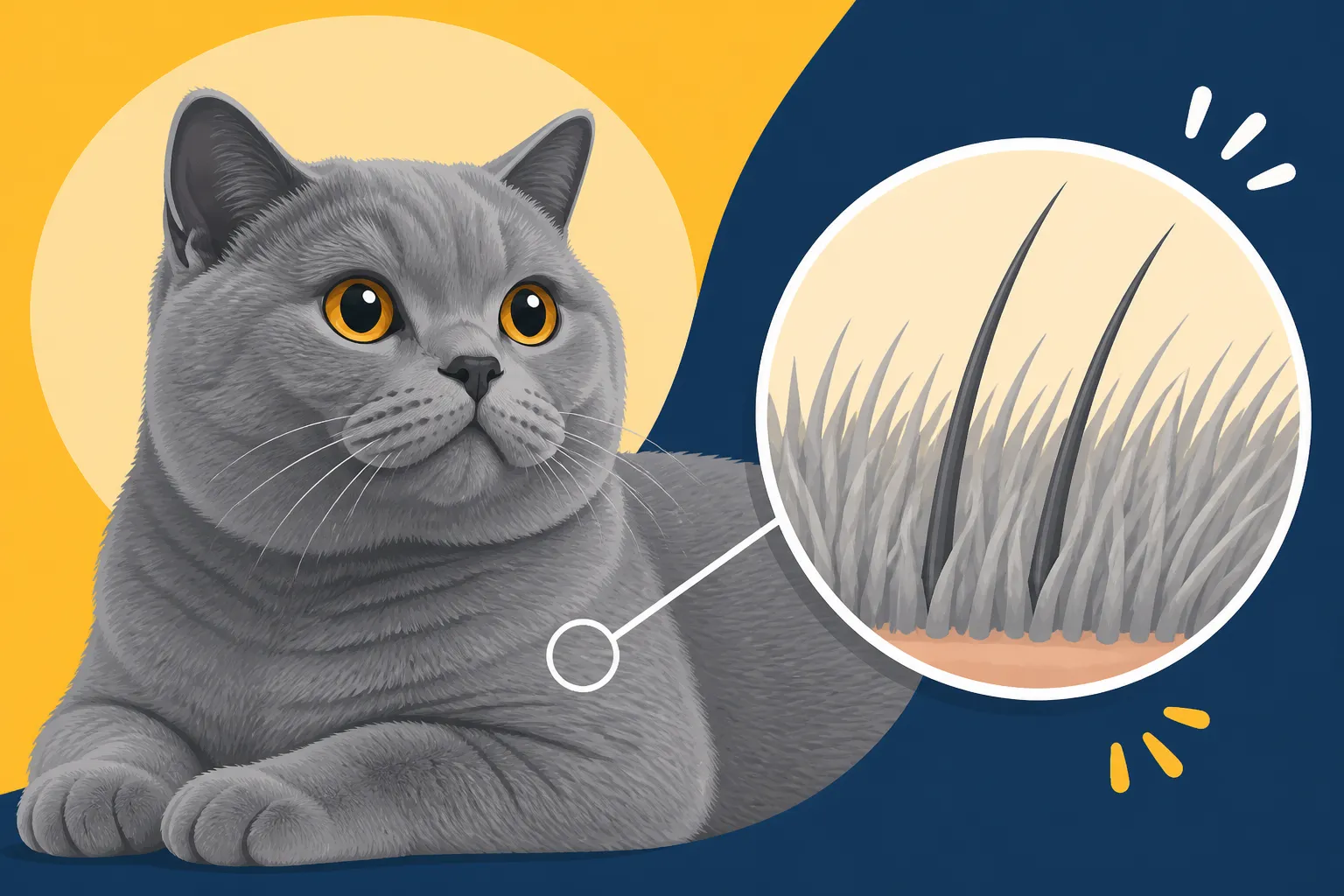
Now, to answer the burning question directly: yes, a British Shorthair does have guard hairs. All cats, in fact, have guard hairs as part of their natural coat structure. However, the way these guard hairs present in a British Shorthair is quite distinct and plays a crucial role in why their coat feels so unique.
In many breeds, guard hairs are noticeably longer, coarser, and often more varied in color than the underlying fur, giving the coat a visible texture or pattern. Think of a sleek short-haired cat where you can clearly see the individual guard hairs providing a protective outer layer, or a long-haired cat with long, flowing outer hairs. For the British Shorthair, their guard hairs are relatively short and dense, much like their undercoat, and they are not dramatically longer or coarser. Instead, they lie closely with the incredibly dense undercoat, blending in almost seamlessly rather than standing out as a distinct layer. This uniformity in length and texture between the guard hairs and the undercoat is what creates that plush, velvety smoothness. They are there, providing protection, but they don't visually or tactilely dominate the coat as they might in a breed like a Maine Coon or even some domestic shorthairs. It's a subtle but vital component of What a British Shorthair's Coat Is Like.
How Guard Hairs Contribute to the British Shorthair's Appearance and Function
While not as visibly prominent as in some other breeds, the guard hairs of a British Shorthair are far from decorative. They are an essential part of the coat's overall function and contribute significantly to the breed's iconic "teddy bear" look.
Protection and Weather Resistance
The primary, evolutionary purpose of guard hairs in any animal's coat is protection. They are the first line of defense against the elements, minor scrapes, and even insects. For the British Shorthair, whose ancestors were hardy working cats often found outdoors – The British Shorthair Started as a British Street Cat after all – this protective layer was incredibly important. Even if your British Shorthair is a pampered indoor pet today, their guard hairs still serve this function.
These outer hairs, though shorter than in many breeds, help to repel water and dirt, keeping the delicate undercoat drier and cleaner. They provide a barrier that prevents moisture from soaking straight through to the skin, which is crucial for maintaining body temperature and preventing skin irritation. While a modern British Shorthair probably isn't spending its days hunting mice in a damp barn, this ancient protection remains a built-in feature of their robust coat.
The Visual Impact on the 'Teddy Bear' Look
The combination of the incredibly dense, springy undercoat and the relatively short, uniform guard hairs is precisely what gives the British Shorthair its characteristic rounded, solid, and utterly adorable "teddy bear" appearance. Without this specific hair structure, they wouldn't have that plush, robust silhouette that makes them so recognizable.
Consider breeds with very long or coarse guard hairs; their profiles tend to be more angular or shaggy. The British Shorthair, on the other hand, boasts a smooth, unbroken line, thanks to its guard hairs laying neatly within the overall density. This contributes to their full, chubby-cheeked look and makes them appear very substantial and cuddly. It's truly a marvel of natural selection and selective breeding that resulted in Why a British Shorthair Looks Like a Teddy Bear. The guard hairs are there, doing their job of protection and forming the outer layer, but they do it in a way that accentuates the breed's unique plushness rather than detracting from it.
Grooming Considerations for a British Shorthair's Coat
Understanding the structure of your British Shorthair's coat, especially the interplay between its dense undercoat and its less prominent guard hairs, is key to proper grooming. You might think such a plush coat needs aggressive brushing, but quite the opposite is often true.
Combing for the Undercoat, Not Aggressive Brushing
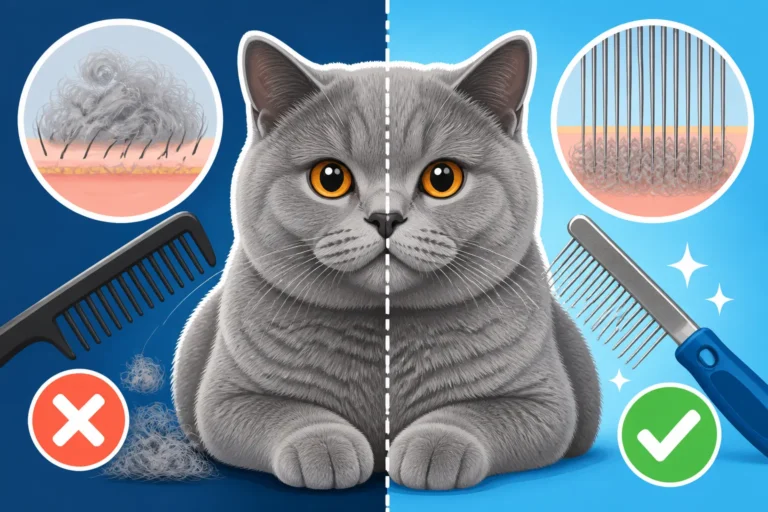
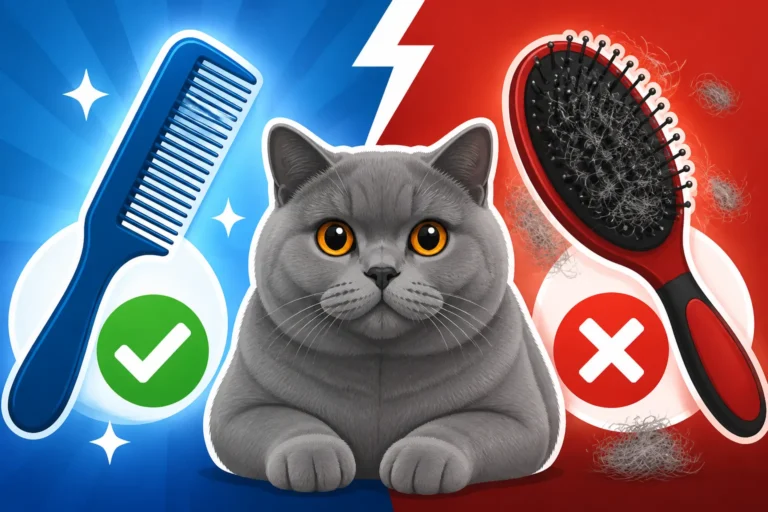
Because the British Shorthair's guard hairs are not significantly longer or coarser than their undercoat, and the entire coat is designed for density rather than sleekness, your grooming approach needs to be gentle and focused on reaching the undercoat. Aggressive brushing with tools like slicker brushes, which are great for some breeds, can actually damage the fine guard hairs and pull out the soft undercoat prematurely. You want to detangle and remove loose fur without stripping the coat.
Instead, a good quality steel comb with both wide and narrow teeth is your best friend. You can often find excellent options on platforms like Chewy or Amazon. Start with the wider teeth to gently work through the top layer, then move to the narrower teeth to get into that dense undercoat. The goal is to remove loose, dead hair without tearing or tugging. Focus on short strokes, working in sections, to prevent mats and ensure the coat stays healthy and stands away from the body as it should. For more detailed insights, you might want to read Why a Slicker Damages a British Shorthair's Coat and Which Comb a British Shorthair Needs. Regular, gentle combing is far more effective and less damaging than harsh brushing.
Managing Shedding and Hairballs
Despite their relatively short hair, British Shorthairs are champions of shedding, especially during seasonal changes. That incredibly dense undercoat, combined with their guard hairs, means there's a lot of fur to go around! You'll notice periods, often in spring and autumn, when they "blow their coat," and the amount of fur they shed can be quite surprising. This is particularly true during The Two Weeks a British Shorthair Drops Its Undercoat.
During these peak shedding times, daily combing becomes even more important. By regularly removing loose fur, you not only keep your home cleaner but also significantly reduce the risk of hairballs. British Shorthairs, being meticulously clean, will ingest a lot of their shed fur during self-grooming, which can lead to uncomfortable hairballs. If you're finding your cat is producing a lot of hairballs, increasing the frequency of combing can make a big difference. For more insights on this topic, check out How Much a British Shorthair Sheds and How Often a British Shorthair Needs Combing. Providing hairball-specific diets or supplements, available from reputable pet stores or online retailers like Chewy, can also be beneficial, especially for those who are prone to them.
Maintaining Coat Health Through Nutrition
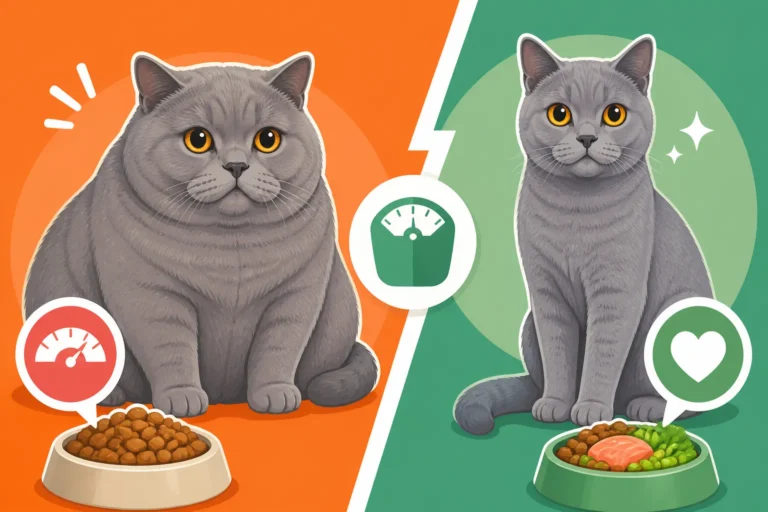
Beyond regular combing, a healthy diet plays an indispensable role in maintaining the integrity and luster of your British Shorthair's coat, including the condition of its guard hairs and undercoat. A cat fed a high-quality, balanced diet will naturally have a healthier, shinier coat with less breakage and excessive shedding.
Look for cat foods that list real meat as the first ingredient and contain essential fatty acids like Omega-3 and Omega-6. These nutrients are vital for skin health, which directly impacts coat quality. Foods with quality ingredients, whether premium dry or wet, can support coat health. A dull, brittle, or excessively shedding coat can sometimes be a sign of nutritional deficiencies, so always ensure your British Shorthair is getting the best fuel possible. Good nutrition supports strong hair follicles, leading to robust guard hairs and a healthy, dense undercoat that truly embodies the breed's standards.
Common Misconceptions About British Shorthair Coats
It's easy to look at that wonderfully dense coat and jump to conclusions, but there are a couple of common misunderstandings about the British Shorthair's fur that are worth clarifying.
Not a "Plush Only" Coat
One of the biggest misconceptions is that a British Shorthair's coat is only made up of that super soft, dense undercoat, almost like a rabbit's fur, and somehow lacks the standard protective outer layer. While it’s true that the undercoat is exceptionally prominent and contributes significantly to the "plush" feel, it's not the only component. As we've discussed, they absolutely have guard hairs.
The key is that the British Shorthair's guard hairs are adapted to blend seamlessly with the undercoat, rather than standing out as a distinct, coarser layer. This unique adaptation creates the characteristic uniform texture and appearance. So, when you feel that plushness, you're feeling the combined effect of a remarkably dense undercoat and outer guard hairs that are designed to complement it, offering both protection and that signature soft yet firm feel. It's a testament to the sophistication of feline coat genetics, not a simplification to just one type of hair.
Distinguishing from Other Shorthair Breeds
Because "shorthair" is in their name, people sometimes mistakenly assume all shorthaired cat breeds have similar coats. However, the British Shorthair's coat is quite distinct from other popular shorthair breeds, even those with plush coats. Take the American Shorthair, for example; while also having a dense coat, it often feels a bit coarser, and the guard hairs are typically more noticeable, contributing to a slightly different texture and pattern appearance.
Then there's the Exotic Shorthair, which is essentially a Persian in a short coat. While also dense, the Exotic's coat can feel incredibly soft and plush, sometimes even silkier, and their guard hairs might be even less distinct than the British Shorthair's, contributing to a very rounded, almost 'powder puff' look. The British Shorthair's "crisp" feel is a hallmark that sets it apart. These subtle but significant differences in coat structure, including the nature of their guard hairs, are why each breed has its own unique tactile and visual signature. Understanding these distinctions helps appreciate the British Shorthair for its truly special and recognizable coat. You can explore this further by reading How a British Shorthair Differs From an Exotic Shorthair.
| Coat Layer | Characteristics in British Shorthair | Primary Function |
|---|---|---|
| Guard Hairs | Relatively short, dense, uniform, blend with undercoat. Less coarse than in many breeds. | Protection from elements, minor scrapes, water repellence. |
| Undercoat | Extremely dense, fine, soft, crimped. Stands away from the body. | Insulation, body shape, "plush" feel. |
| Overall Texture | "Crisp" to the touch, firm, dense, velvety, stands away from body. | Iconic "teddy bear" look, robust insulation. |
Disclaimer
This article is for general informational purposes only and does not constitute professional advice. Laws, prices and regulations vary by location and change over time. Consult a qualified professional for guidance on your specific situation.