Whether a Neutered British Shorthair Keeps His Jowls
It's a question many British Shorthair owners ponder, especially those with adorable male cats: will my neutered boy keep those magnificent, chubby cheeks? You see that iconic, round face, often called jowls, and it’s a huge part of the breed's charm, giving them that irresistible teddy bear look. But the truth is, while neutering profoundly impacts hormone levels, the exact outcome for those cherished jowls isn't always a straightforward "yes" or "no." This guide will unpack everything you need to know about British Shorthair jowls, the science behind them, and what to realistically expect after your beloved boy is neutered.
Understanding British Shorthair Jowls: More Than Just Chubby Cheeks
When we talk about a British Shorthair's jowls, we're not just referring to a bit of extra puppy fat around the face. These are distinct anatomical features that contribute significantly to the breed's much-loved aesthetic. It’s part of what makes them so unique and instantly recognizable.
What Gives the British Shorthair Its Signature Look
The British Shorthair is renowned for its robust, cobby body and a strikingly round head that rests on a short, thick neck. This overall roundness is a defining characteristic, from their large, round eyes to their full, rounded whisker pads, and of course, those prominent cheeks. The breed standard emphasizes this "roundness" in almost every aspect of their physical description. Their dense, plush coat, which stands away from the body, further enhances this soft, rounded silhouette, making them look even more like a cuddly plush toy. It's a look that has captivated cat lovers for generations, and the jowls are truly the crowning glory of that adorable, broad face. Without them, a British Shorthair just wouldn't quite be… well, a British Shorthair. You might have heard the term "what jowls are on a male British Shorthair," and it really speaks to how integral they are to the breed's identity.
The Hormonal Basis of Male Jowl Development
Those impressive jowls are actually secondary sexual characteristics, much like a lion's mane or a male deer's antlers. They are primarily driven by the presence of testosterone in intact (unneutered) male cats. As a male British Shorthair matures and reaches sexual maturity, his body begins producing higher levels of this hormone. Testosterone doesn't just influence reproductive organs; it also plays a significant role in developing specific physical traits that signal masculinity and maturity. For British Shorthairs, this includes the thickening of the skin and underlying tissues around the cheeks and jawline, creating that distinctive jowly appearance. It's a natural process, a sign of a healthy, intact male cat entering his prime. These jowls aren't merely fat; they are a combination of muscle, connective tissue, and thickened skin that adds to the impressive breadth and roundness of their head.
The Timeline of Jowl Formation in Intact Males
The development of jowls isn't an overnight phenomenon. It’s a gradual process that unfolds as your male British Shorthair transitions from a playful kitten to a majestic adult. Understanding this timeline can help you appreciate the role of hormones and genetics in shaping your cat's unique facial features.
Puberty and the Emergence of Jowls
Most male cats begin to show signs of puberty between six months and a year of age. This is when the surge of testosterone really kicks in. While they might still look quite kittenish at this stage, you might start to notice subtle changes around their face. The cheeks might appear a little fuller, the jawline a bit more pronounced. It's a slow, steady transformation, not an instant growth spurt. Think of it like a teenager's growth spurt; it takes time to fill out. These early jowls are often softer, less defined, and still developing. They're a preview of the magnificent jowls to come, gradually asserting themselves as the cat's hormonal landscape matures.
The Mature Male: Full Jowls and Stout Appearance
For an intact male British Shorthair, the full glory of his jowls typically becomes evident between one and three years of age, sometimes even later. This is when his head truly achieves that broad, round shape characteristic of the breed. The jowls contribute significantly to this overall "stout" and powerful appearance, making the head look impressively large in proportion to their already sturdy body. This isn't just about superficial looks; these jowls are an indicator of a fully mature, hormonally active male. They are robust, firm, and beautifully frame the face, giving him that wise, content, and somewhat grumpy expression British Shorthair owners adore. This mature look is very much a part of The Round Head and Copper Eye a British Shorthair Is Judged On according to breed standards, emphasizing the importance of those full cheeks.
Neutering and the Shifting Landscape of Jowls
Neutering is a common and responsible practice for pet cats, bringing numerous health and behavioral benefits. However, it also has a direct and undeniable impact on the hormonal drivers that create those signature jowls.
The Direct Impact of Hormone Removal
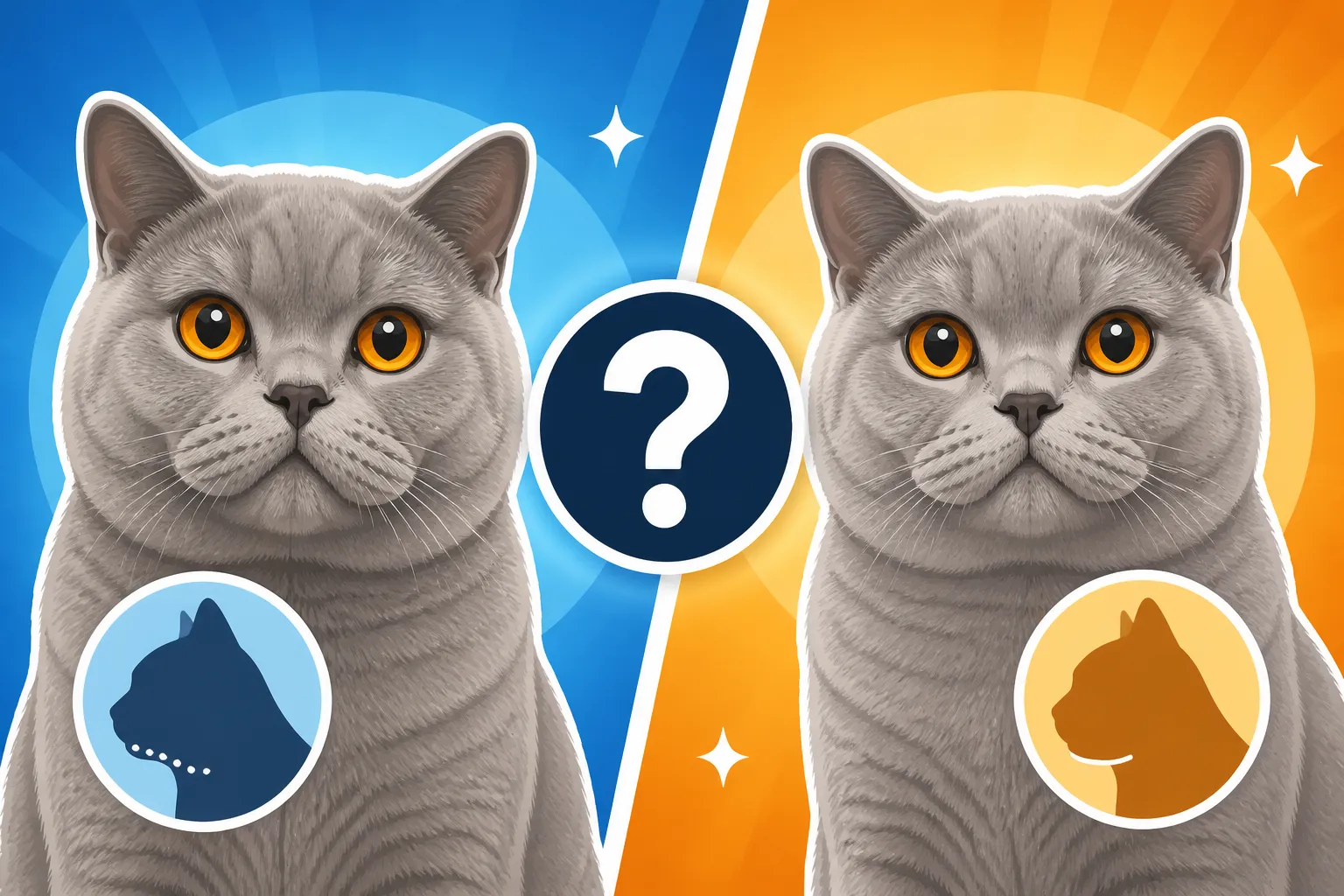
When a male cat is neutered, his testes are removed. Since the testes are the primary source of testosterone, this procedure drastically reduces the amount of this hormone circulating in his body. With the removal of this key hormonal influence, the biological signal for jowl development diminishes significantly. For jowls that have already formed, the tissues and musculature that were maintained by testosterone will typically begin to recede. This isn't an instantaneous change, of course. It's a gradual process, often taking several months to a year or more, depending on the cat's age at neutering and how developed his jowls were beforehand. You might notice his face looking a bit less broad, a touch more streamlined, and the once-firm jowls softening and shrinking.
Age at Neutering: A Critical Factor for Jowl Size
The age at which a male British Shorthair is neutered is perhaps the most crucial factor in determining the ultimate size and prominence of his jowls.
- Neutering Before Puberty (Early Neutering): If a male British Shorthair is neutered before he reaches sexual maturity and before his jowls have had a chance to fully develop (typically before one year of age), he is much less likely to develop significant jowls at all. His face will likely remain round and full as per the breed's general characteristics, but without the pronounced, broad jowls seen in intact males. He might retain a more "kitten-like" facial structure throughout his life, which many owners find incredibly endearing.
- Neutering After Jowl Development (Mature Neutering): If a male British Shorthair is neutered after his jowls have already fully developed (say, at two or three years old), the outcome is different. While the jowls will almost certainly shrink and become less prominent due to the hormone withdrawal, they are unlikely to disappear entirely. The underlying bone structure and some residual tissue memory may mean he retains a degree of facial fullness, even if not the impressive breadth of an intact male. It’s like deflating a balloon – it shrinks, but it doesn't vanish.
This variability is why you’ll see some neutered males with quite full faces, and others with sleeker, less jowly profiles.
Genetic Predisposition and Individual Variation
Beyond the timing of neutering, genetics play a significant role in how much jowl a British Shorthair might develop, and subsequently, how much of that fullness he retains after neutering. Just like humans, cats have individual variations in their genetic makeup that influence physical traits. Some British Shorthair lines might naturally produce cats with larger, more pronounced jowls, even with similar hormone levels. In such cases, even after neutering, these cats might retain more residual facial fullness than a cat from a line genetically predisposed to smaller jowls.
It's not uncommon to see two neutered British Shorthair brothers, raised in the same environment and neutered at the same age, display slightly different facial structures. One might have a noticeably rounder, fuller face, while the other's might be a bit more slender. This simply highlights the incredible genetic diversity within the breed and the individual nature of each cat. So, while hormones are the main driver, don't underestimate the subtle yet powerful influence of your cat's unique genetic blueprint. What Jowls Are on a Male British Shorthair talks more about this.
What Happens to the Jowls After Neutering?
Once the decision to neuter has been made, owners often wonder what the journey to a less jowly face will look like. It's important to set realistic expectations and understand that changes are gradual and individual.
Gradual Reduction, Not Instant Disappearance
If your British Shorthair male was neutered after his jowls had already started to develop, you won't wake up one morning to find them completely gone. The reduction is a slow, gradual process that unfolds over several months. Think of it as a subtle reshaping rather than a dramatic transformation. Over weeks and months, as his body adjusts to the reduced testosterone levels, you might observe a softening of the firm jowl tissue. The broadness of his face might slightly diminish, and the overall impression might be one of a slightly less "heavy-set" head. This process can take anywhere from three months to over a year to reach its full effect. It’s a waiting game, and patience is definitely a virtue when watching these changes. During this time, it's a good idea to monitor his overall health and ensure he's maintaining a healthy weight, which can sometimes be a challenge for British Shorthairs.
Distinguishing Jowls from Weight Gain and Facial Fat
This is a really important distinction for British Shorthair owners. Sometimes, what looks like retained jowls on a neutered male is actually just general facial fat due to being overweight. British Shorthairs are particularly prone to weight gain because of their calm nature and love for food. Their dense, plush coat and naturally cobby build can also make it incredibly difficult to tell How to Tell a Chunky British Shorthair From a Fat One. If your neutered British Shorthair starts to gain weight, that extra fat will accumulate not only on his body but also on his face, giving the illusion of prominent jowls, even if the true, hormonally-driven jowls have receded.
It's crucial to differentiate between these two. True jowls are a specific type of tissue development, while facial fat is simply part of overall adiposity. Maintaining a healthy weight is paramount for your British Shorthair's longevity and health, especially since Obesity Is the British Shorthair's Real Disease. Consider a high-quality, portion-controlled diet. Many owners find success with measured meals, rather than free-feeding. Reputable brands available on Chewy, for example, offer excellent weight management formulas specifically designed for cats prone to obesity.
The "Forever Kitten" Face Versus the "Still Chunky" Look
The outcome for your neutered British Shorthair's face often falls into one of two general categories, largely dependent on the age of neutering:
- The "Forever Kitten" Face: This typically occurs when a male British Shorthair is neutered at a young age, before or early in puberty. Because the jowls haven't had a chance to fully develop under the influence of testosterone, their face tends to remain round and full in a softer, more youthful way. They will still have the characteristic British Shorthair round head, but without the pronounced, firm jowls of an intact adult male. This look is often cherished by owners who appreciate the perpetual kitten charm.
- The "Still Chunky" Look: If a male British Shorthair is neutered later in life, after his jowls have already fully developed, he is more likely to retain some degree of facial fullness. The jowls will likely soften and shrink, but the underlying bone structure and tissue memory mean that he won't necessarily revert to a "kitten face." His head might still appear quite broad and substantial, even if less profoundly jowly than he was before neutering. This "still chunky" appearance is perfectly normal and simply reflects his mature development prior to the procedure.
Either way, your British Shorthair will still have that endearing, round face, just perhaps with varying degrees of jowl prominence.
| Factor | Intact Male (Adult) | Neutered Male (Young, before jowls) | Neutered Male (Adult, after jowls developed) |
|---|---|---|---|
| Testosterone Levels | High | Low to negligible | Low to negligible |
| Jowl Development | Fully developed, firm, broad | Minimal to no distinct jowls | Jowls shrink, soften, may retain some fullness |
| Facial Appearance | Very broad, round, "teddy bear" look | Round, full, "kitten-like" | Broad, but less pronounced than intact; can vary |
| Timeline of Change | Gradual development (1-3 years) | Jowls never fully develop | Gradual reduction over months/year post-neutering |
| Primary Influence | Hormones (testosterone), genetics | Lack of hormones, genetics | Lack of hormones, genetics, prior development |
Managing Expectations and Supporting Your Neutered British Shorthair
It’s completely normal to have expectations about your cat's appearance, especially when it comes to their defining breed traits. However, it's just as important to manage those expectations with realism and focus on overall health and happiness.
Understanding Normal Facial Changes
Remember that even a neutered British Shorthair will naturally have a round, full face; it's a hallmark of the breed's beauty, as you can see in The Round Head and Copper Eye a British Shorthair Is Judged On. The "jowls" we often associate with intact males are an additional layer of fullness driven by hormones. So, even if those specific hormonally-induced jowls recede, your cat's face will still be wonderfully round and plush. Don't anticipate a dramatic shift to a sleek, slender face like a Siamese. It simply won't happen. Their robust bone structure and dense facial musculature mean a British Shorthair will always have that charming, broad head. Embrace the gentle roundness that remains; it's part of what makes them so undeniably British Shorthair.
The Role of Diet and Exercise in Overall Appearance
Beyond hormonal influences, diet and exercise are critical for your British Shorthair's overall health and can certainly impact how "chubby" or "lean" their face appears. As mentioned, these cats are naturally quite sedentary, making Obesity Is the British Shorthair's Real Disease a genuine concern. A healthy weight can make a significant difference in their facial profile.
- Portion Control: This is perhaps the single most important thing you can do for your British Shorthair's health. They will often eat whatever is put in front of them, leading to easy weight gain. Portion Control Is the Whole Job With a British Shorthair is not just a catchy phrase, it's a vital truth for this breed. Measure out their food precisely. Many owners find success with timed feeders or simply feeding multiple small, measured meals throughout the day.
- Quality Food: Invest in high-quality cat food appropriate for their age and activity level. If your cat is overweight, your vet might recommend a weight management formula. Brands like Chewy and Amazon offer a vast selection, including specialized diets. Look for foods with good protein content and fewer fillers.
- Encouraging Movement: While British Shorthairs aren't known for being acrobatic, regular, gentle play is essential. Use wand toys, laser pointers (with a treat at the end to "catch" the dot), or puzzle feeders to make them move. Even ten to fifteen minutes of active play daily can make a big difference, helping them burn calories and build lean muscle. Getting a Low Energy British Shorthair to Move offers more tips on this. Interactive toys can be found easily on Amazon, and even a simple feather wand can spark their interest.
Maintaining a healthy weight will not only help prevent health issues but also ensure that any remaining facial fullness is due to their natural breed structure, rather than excess fat.
Consulting Your Vet About Concerns
If you have any concerns about changes in your cat's facial structure, or if you're worried about excessive weight gain, always consult your veterinarian. They can help you determine if facial fullness is normal for your cat's breed and age, or if it's indicative of weight issues or other health concerns. Your vet can also provide guidance on appropriate diet and exercise plans tailored to your individual cat's needs, helping you achieve What a British Shorthair Should Weigh at One Year or even How Much a Male British Shorthair Should Weigh as an adult. They can distinguish between actual jowls, fat deposits, or even rare medical conditions that might affect facial swelling. Regular wellness checks are key, especially for a breed prone to weight gain.
The Breed Standard and Jowl Appearance
It’s worth noting that the "jowly" look, in its essence, is not just a happy accident but an integral part of what makes the British Shorthair so appealing, and something specifically sought after in the show ring.
What the Standards Say About Head and Cheeks
Major cat registries like the Cat Fanciers' Association (CFA), The International Cat Association (TICA), and the Governing Council of the Cat Fancy (GCCF) all have detailed breed standards for the British Shorthair. While the exact wording may vary, they consistently emphasize a broad, round head with full cheeks. For instance, the CFA standard calls for a "round head, broad across the cheeks." This isn't just about a cute face; it's a structural requirement that defines the breed. Even if the jowls driven by testosterone recede slightly after neutering, the underlying bone structure and musculature are still expected to contribute to a substantial and round facial appearance. Breeders strive to produce cats that embody this standard, ensuring that the distinctive "teddy bear" look is preserved across generations.
Why Jowls Contribute to the "Teddy Bear" Aesthetic
The endearing "teddy bear" aesthetic of the British Shorthair is largely a combination of its cobby body, dense coat, and especially its broad, round head and full cheeks. Whether they are the hormonally-enhanced jowls of an intact male or the naturally full cheeks of a neutered one, this facial roundness is central to their appeal. It evokes feelings of comfort, warmth, and a gentle nature, perfectly matching their calm and placid temperament. This look makes them incredibly photogenic and a favorite among cat lovers worldwide. So, while neutering might alter the degree of jowl prominence, it won't erase the fundamental roundness that makes a British Shorthair's face so utterly charming. It’s part of the reason What a British Shorthair Does All Day often involves looking serenely adorable on a sofa.
Disclaimer
This article is for general informational purposes only and does not constitute professional advice. Laws, prices and regulations vary by location and change over time. Consult a qualified professional for guidance on your specific situation.