Why Type B Is So Common in British Shorthairs
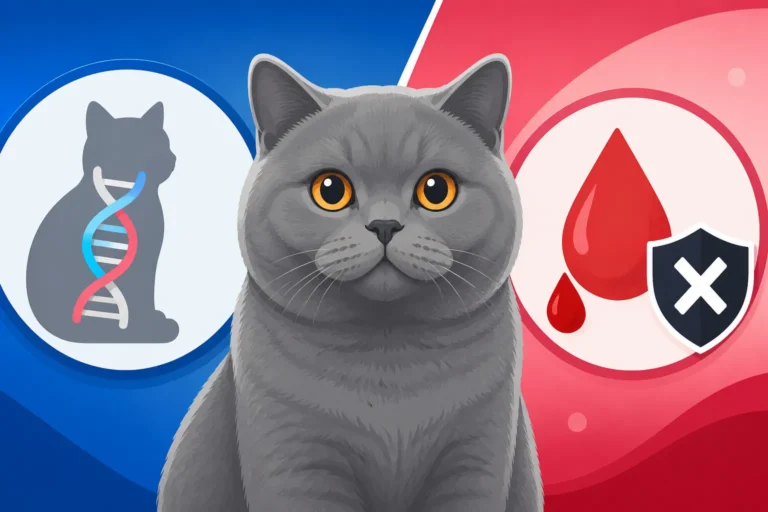
It’s a truly heartbreaking scenario that far too many British Shorthair breeders and, sometimes, even unsuspecting new owners encounter: a litter of seemingly healthy, thriving kittens suddenly begins to fade, growing weak and dying within a day or two of birth. This devastating phenomenon, known as neonatal isoerythrolysis, is directly linked to the unique prevalence of Type B blood in the British Shorthair breed. It's a silent killer that can catch even experienced cat lovers off guard, leaving them with immense grief and confusion. This comprehensive guide will delve deep into why Type B blood is so common in British Shorthairs, unraveling the historical and genetic factors at play, and equipping you with the vital knowledge to understand, prevent, and manage this critical health concern for these beloved felines.
Understanding Feline Blood Types and Their Importance
Before we dive into the specifics of British Shorthair blood types, it’s really important to grasp the fundamentals of feline blood groups in general. Just like humans, cats have different blood types, and these aren't just arbitrary distinctions; they play a critical role in their health, especially when it comes to breeding and emergency medical care. Ignoring this basic biology can have truly tragic consequences, which is something no loving cat owner or responsible breeder wants to face.
The Basics of Feline Blood Groups
Most cats fall into one of three main blood groups: Type A, Type B, or Type AB. The vast majority of cats worldwide are Type A. Think of Type A as the "default" blood type. What makes these types different boils down to specific antigens (proteins) present on the surface of their red blood cells and the corresponding antibodies circulating in their plasma.
A cat with Type A blood has A antigens on its red blood cells and naturally occurring anti-B antibodies in its plasma. These anti-B antibodies are generally weak. This means a Type A cat can usually receive Type A blood without a major issue, but giving it Type B blood could cause a mild reaction because its body would react to the foreign B antigens.
A cat with Type B blood, however, has B antigens on its red blood cells and very strong naturally occurring anti-A antibodies in its plasma. This is the crucial distinction and where the danger for British Shorthairs often lies. These strong anti-A antibodies are highly reactive. If a Type B cat receives Type A blood, its body will mount a severe and potentially fatal immune response, rapidly destroying the transfused red blood cells.
Type AB blood is quite rare and often misunderstood. Cats with Type AB blood have both A and B antigens on their red blood cells, but critically, they do not have anti-A or anti-B antibodies in their plasma. This makes them universal recipients, meaning they can generally receive blood from either Type A or Type B donors. However, finding an AB donor can be challenging due to its rarity.
Understanding these differences isn't just academic; it's lifesaving. Knowing your cat's blood type is fundamental for any potential blood transfusion, preventing a catastrophic immune reaction that could turn a simple medical procedure into a deadly one. It also highlights why simply assuming all cats are "Type A" is a dangerous gamble.
The Genetic Mechanism Behind Blood Type Inheritance
The inheritance of feline blood types is actually pretty straightforward, following basic Mendelian genetics. It's determined by a single gene with three alleles (versions of the gene): A, b, and ab. The A allele is dominant over both b and ab. The b allele is recessive to A but dominant over ab. The ab allele is recessive to both A and b. This sounds a bit like a tongue-twister, but in practical terms for British Shorthairs, we mostly focus on A and b.
Here’s the simplified breakdown:
- Type A: A cat will have Type A blood if it inherits at least one A allele (e.g., AA, Ab, Aab). The A allele is dominant, so even if it carries the b allele, it will express as Type A. However, this cat could be a carrier for Type B.
- Type B: A cat will have Type B blood only if it inherits two b alleles (bb). Since b is recessive to A, a Type B cat cannot carry the A allele. This is why when you have a Type B queen, she is genetically "pure" for Type B.
- Type AB: A cat will have Type AB blood if it inherits the rare ab allele in combination with either A or b (e.g., Aab, bab). For simplicity, most breeding discussions focus on A and b.
To visualize this, imagine a simple Punnett square. If you breed a Type A cat (carrying the b allele, let's call it A/b) with another Type A cat (also A/b), you might get kittens that are AA (Type A), A/b (Type A, carrier of b), or bb (Type B). This demonstrates how two Type A parents can produce Type B kittens.
The real challenge, especially for British Shorthairs, arises when a Type B queen (female) is bred to a Type A tom (male). All kittens from this pairing will inherit at least one A allele from the Type A tom. Since A is dominant, all these kittens will have Type A blood. However, because the Type B queen has those very strong anti-A antibodies, her colostrum (the first milk) will be packed with them. When the Type A kittens nurse, they absorb these anti-A antibodies, which then attack and destroy their own red blood cells. This leads to the deadly condition known as neonatal isoerythrolysis (NI), where the kittens literally fade away, often within the first 24-72 hours of life. This is why understanding the specific genetic inheritance and potential pairings is not just important, it's absolutely critical for anyone involved in British Shorthair breeding. Without this knowledge, you're essentially playing a dangerous game of genetic roulette with innocent lives.
The Historical Roots of Type B Prevalence in British Shorthairs
It's natural to wonder why a particular trait, like Type B blood, would be so much more common in one breed than in others. For British Shorthairs, this isn't a random occurrence; it's a story deeply woven into the breed's history, development, and the intentional choices made by early breeders to shape the cat we know and love today.
Breed Development and Founder Effects
The British Shorthair, a truly iconic feline, has roots stretching back to the domestic cats of Great Britain, affectionately known as British street cats. These hardy, working cats were valued for their rodent-catching prowess and robust nature. When serious cat fancy began to emerge in the 19th century, figures like Harrison Weir championed the idea of establishing a distinct "British Shorthair" breed, elevating these common cats to show status.
In the early days of breed development, the gene pool was often quite limited. Breeders would select specific individuals with desirable traits – the round head, the dense coat, the sturdy body – to be the "founders" of the breed. This practice, known as a "founder effect," means that if a significant number of these foundational cats happened to carry or express certain genes, those genes would become disproportionately common in the subsequent generations.
It’s highly probable that among these early British street cats chosen for the foundation stock, there was already a higher incidence of the b allele for blood type compared to other cat populations. As these cats were selectively bred together to consolidate the desired physical traits, the genes for Type B blood were inadvertently concentrated within the emerging British Shorthair lines. Without genetic testing, which was, of course, unavailable in the 19th century, there was no way for breeders to know they were inadvertently amplifying this specific blood type. The focus was entirely on conformation and temperament, creating a genetic bottleneck where certain traits, including blood type, became characteristic of the breed.
The Impact of Outcrossing on Blood Type Distribution
The British Shorthair breed faced significant challenges during the two World Wars. Breeding programs were disrupted, cat populations dwindled, and the very existence of many established breeds was threatened. To save the British Shorthair from extinction and rebuild its numbers and type, breeders had to make tough decisions, which included carefully considered outcrossings with other breeds.
One of the most impactful outcrosses, particularly after World War II, involved the Persian. The Persian was chosen strategically to help re-establish the British Shorthair's cobby body, round head, and dense, plush coat – traits that had suffered during the wartime decline. While the Persian cross undoubtedly contributed to the distinctive "teddy bear" look we cherish in British Shorthairs today, it also had genetic ramifications beyond coat and conformation.
Interestingly, the Persian breed itself has a very high prevalence of Type B blood. In some Persian lines, Type B can be found in a significant percentage of individuals. By introducing Persian genetics into the British Shorthair gene pool to bolster desired physical traits, breeders unknowingly (or perhaps without the full understanding of blood type implications at the time) further amplified the presence of the b allele. This was not a flaw in their breeding strategy; it was a necessary measure to save the breed, and the full extent of blood type incompatibility wasn't as widely understood or routinely tested for as it is now. Other breeds, such as the Russian Blue and Chartreux, were also used in reconstruction, and these breeds can also carry Type B blood, though typically not to the same extent as Persians.
This historical context is crucial because it explains why Type B is so common in British Shorthairs today. It’s a combination of a founder effect from their ancestral population and the later strategic outcrossing with breeds like the Persian, which also carried a high incidence of the Type B gene. This makes blood typing not just a good idea, but an absolute necessity for anyone breeding British Shorthairs, ensuring that the health risks associated with this genetic legacy are carefully managed.
The Consequences of High Type B Prevalence for British Shorthair Breeding
For British Shorthair breeders, the high prevalence of Type B blood isn't just an interesting genetic quirk; it's a critical factor that can lead to devastating losses if not managed meticulously. The primary concern is a condition that, once seen, is never forgotten: neonatal isoerythrolysis (NI).
The Risk of Neonatal Isoerythrolysis (NI)
Neonatal isoerythrolysis, or NI, is a truly heartbreaking condition that underscores the importance of understanding feline blood types. It occurs when a Type B queen (female cat) is bred to a Type A or Type AB tom (male cat). The Type B queen, as we discussed, naturally has very strong anti-A antibodies circulating in her blood. When she carries kittens sired by a Type A or Type AB tom, those kittens will inherit the dominant A allele and therefore have Type A or Type AB blood.
The danger arises immediately after birth. When these Type A or Type AB kittens nurse from their Type B mother, they ingest her colostrum, which is rich in those potent anti-A antibodies. Because a newborn kitten's gut is highly permeable for the first 16-24 hours of life, these antibodies are absorbed directly into the kitten's bloodstream. Once inside, these maternal anti-A antibodies recognize the kitten's Type A red blood cells as foreign invaders and aggressively attack and destroy them. This is precisely why a Type B British Shorthair queen kills Type A kittens.
The symptoms of NI can vary, but they are always devastating. Kittens may initially appear healthy and vigorous, nursing normally. However, within a few hours to a few days (typically 24-72 hours), they start to decline rapidly. Signs include weakness, lethargy, reluctance to nurse, pale mucous membranes (gums), jaundice (yellowing of the skin or eyes), and red-brown urine due to the breakdown of red blood cells. Some kittens might even show signs of abdominal pain or swelling. The condition progresses quickly, and without intervention, most affected kittens will die. This illustrates how fast isoerythrolysis kills a British Shorthair kitten. It's a cruel twist of fate, as the very act of nursing, essential for survival, becomes the mechanism of death. This critical window, why the first day of colostrum matters to a British Shorthair, is because that's when the antibodies are absorbed.
Responsible Breeding Practices and Testing
Given the lethal potential of neonatal isoerythrolysis, responsible British Shorthair breeding absolutely demands meticulous attention to blood typing. This isn't an optional extra; it's a fundamental part of ethical breeding. Every single breeding cat, male and female, must be blood typed before any mating takes place. This simple, inexpensive test is the cornerstone of preventing NI. You can find detailed information on how many British Shorthairs are Blood Type B and the general prevalence in the breed through breed club data.
If you have a Type B British Shorthair queen, the golden rule is clear: she must only be bred to a Type B tom. This ensures that all kittens produced will be Type B, meaning they will not carry the A antigen and thus will not be targeted by the mother's anti-A antibodies in her colostrum. This is how a Type B British Shorthair queen can be bred safely. Finding the right tom is crucial, and understanding which tom a Type B British Shorthair should be bred to is a non-negotiable part of a breeder's responsibility.
What if an accidental incompatible mating occurs, or a breeder discovers an incompatible pairing after the fact? There are emergency measures, though success is not guaranteed. The primary intervention is to prevent the Type A/AB kittens from ingesting the mother's colostrum. This means immediately separating them from the queen at birth and hand-rearing British Shorthair kittens to survive using a suitable kitten milk replacer or, ideally, colostrum from a Type A queen. The kittens would need to be kept off the Type B queen for at least 24 to 48 hours, or until their gut permeability decreases enough that they can no longer absorb the large antibodies. This crucial period highlights how long British Shorthair kittens stay off a Type B queen. After this window, they can typically return to their mother for regular milk, as the harmful antibodies are primarily found in the colostrum. It's a stressful, intensive process, but it can save lives.
Blood typing itself is relatively simple. A small blood sample is taken, and laboratories or even in-clinic card tests can determine the blood type. What a British Shorthair blood type test costs is a small investment when considering the potential heartbreak and financial cost of losing a litter. The test often involves a card agglutination test or more advanced DNA testing, confirming whether a British Shorthair blood type test uses DNA or a card depends on the method chosen. Reputable breeders should be transparent about their cats' blood types, and should show a British Shorthair's blood type certificate to potential buyers as part of their health testing regimen, much like they would for genetic diseases. This due diligence by breeders is vital, and for unexpected veterinary emergencies down the line, pet insurance providers like Healthy Paws can offer peace of mind, potentially covering costs related to emergency care for kittens, though specific policies and waiting periods always apply.
Managing Blood Type Considerations for Pet Owners
While neonatal isoerythrolysis is primarily a breeder's concern, understanding feline blood types remains incredibly important for pet owners too. It's not just about preventing tragic losses in kittens; it's about ensuring the long-term safety and well-being of your individual British Shorthair, particularly in the face of unexpected medical emergencies.
Why Pet British Shorthairs Still Need Blood Typing
You might be thinking, "My British Shorthair is neutered; why do I need to worry about blood types?" It's a fair question, but the answer is critically important: emergency blood transfusions. While we all hope our beloved pets never face a life-threatening situation requiring a blood transfusion, accidents and sudden illnesses do happen. A British Shorthair, like any cat, could suffer from severe anemia due to trauma, an autoimmune disease, or even certain toxins. In such cases, a blood transfusion could be the only thing standing between life and death.
If your British Shorthair suddenly needs a transfusion, knowing their blood type beforehand can save precious time – time that could make all the difference in a critical situation. Imagine the stress of an emergency vet visit, and then having to wait for your cat to be blood typed before a compatible donor can be found. Every minute counts when an animal is losing blood or critically anemic. If a Type B British Shorthair, for example, is mistakenly given Type A blood, the consequences would be catastrophic. Its strong anti-A antibodies would immediately launch a severe immune response, destroying the transfused red blood cells, potentially leading to kidney failure, shock, and death. This scenario clearly illustrates why blood type matters for a British Shorthair transfusion. Even for a neutered British Shorthair, typing is a sensible precaution.
Many veterinary clinics offer in-house blood typing tests, and while there's a cost involved – what a British Shorthair blood type test costs is generally quite affordable – it's a small price to pay for such vital information. Some owners opt to have their cat's blood typed during a routine vet visit, perhaps at the time of neutering or their annual check-up, to be proactive. If you have a British Shorthair, even a cherished pet, it's wise to consider this test. If an emergency arises, having that information readily available can streamline care and prevent dangerous complications, giving your vet the best possible chance to help your furry friend.
Advocating for Health Testing and Informed Choices
As a pet owner, you are your cat's primary advocate. When acquiring a British Shorthair kitten, whether from a breeder or a rescue, it's perfectly reasonable – and frankly, essential – to ask thorough questions about the parents' health testing, including blood types. A reputable breeder should be happy to provide this information. Ask for documentation: Whether a British Shorthair breeder shows echo results or, in this case, blood type certificates, is a sign of their commitment to the breed's health. If they're vague or dismissive, it's a red flag. A breeder who proudly shows a British Shorthair's blood type demonstrates transparency and a deep understanding of breed-specific health issues.
Making informed choices extends beyond initial acquisition. Regular veterinary check-ups are crucial for monitoring your British Shorthair’s overall health. Your vet can advise on the need for blood typing or other diagnostic tests specific to the breed. Diseases like Hypertrophic Cardiomyopathy (HCM), a common heart condition in British Shorthairs, also require regular screening, such as a yearly echo that replaces a British Shorthair gene test, as there's no DNA test for it in this breed. This comprehensive approach to health, encompassing everything from genetic predispositions to emergency preparedness, is what truly sets a responsible owner apart.
Lastly, let's talk about those unexpected moments. Despite our best efforts, emergencies can happen, and veterinary care can be expensive. This is where pet insurance can be a real game-changer. Companies like Healthy Paws offer plans that can help cushion the financial blow of unexpected accidents and illnesses, including potentially covering the costs of emergency transfusions or intensive care that might arise from a critical condition. While insurance won't negate the need for proactive health management, it provides a crucial safety net, allowing you to focus on your cat's recovery rather than worrying about mounting bills. Investing in a healthy, well-tested British Shorthair from a transparent breeder, combined with comprehensive vet care and a good insurance plan, creates the best possible environment for your feline companion to thrive.
Feline Blood Type Comparison and Breeding Risks
Understanding the nuances of feline blood types is paramount for British Shorthair owners and especially breeders. This table summarizes the key characteristics and breeding considerations.
| Blood Type | Antigens on Red Blood Cells | Antibodies in Plasma | General Prevalence (All Cats) | Prevalence in British Shorthairs | Breeding Risk (for Kittens) |
|---|---|---|---|---|---|
| Type A | A antigens | Weak anti-B antibodies | ~75-90% | Moderately Common | Low, unless given Type B blood (rare risk) |
| Type B | B antigens | Strong anti-A antibodies | ~10-25% | High (up to 40-50% in some lines) | High risk of Neonatal Isoerythrolysis (NI) if bred to Type A/AB tom |
| Type AB | A & B antigens | No anti-A or anti-B antibodies | <1% | Very Rare | Low, universal recipient (rare type) |
Note: Percentages for prevalence are estimates and can vary significantly by geographical region and specific breeding lines.
Disclaimer
The information provided in this article is intended for general informational and educational purposes only, and should not be considered as professional veterinary advice. Always consult with a qualified veterinarian or feline specialist for any health concerns or before making any decisions related to your pet's health, breeding practices, or medical treatment. The author and publisher are not responsible for any adverse effects or consequences resulting from the use of any information presented herein. Specific breed prevalences for blood types can vary, and individual testing is always recommended.