Whether a British Shorthair’s Color Changes With Age
A British Shorthair can look noticeably different as a kitten grows up, which makes it easy to wonder whether its color is changing. Usually, the coat’s basic genetic color stays the same, while age, lighting, shedding, and coat development alter how it appears. This guide explains what changes are normal, what may need a vet’s attention, and how to tell the difference.
What changes as a British Shorthair grows
Kitten coats can look different from adult coats
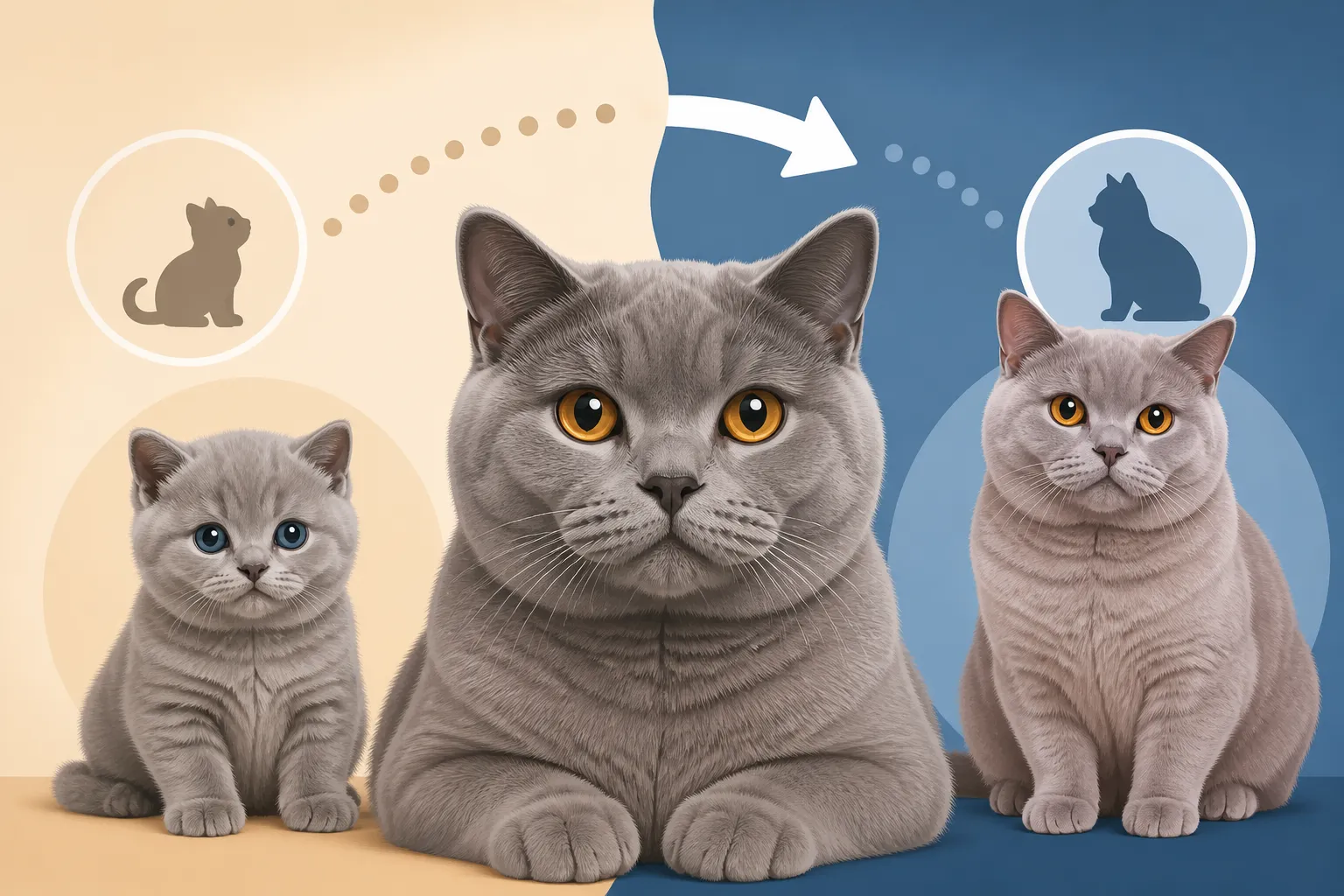
British Shorthair kittens do not always arrive with the dense, even-looking coat people picture on an adult. Their fur is developing, and its texture and fullness can change as they mature. A kitten’s coat may look softer, flatter, or less saturated than it will later. As the adult coat fills in, the same color can seem richer or more uniform.
That shift is usually a change in appearance, not a new color. A blue kitten, for example, may look pale or slightly uneven in certain light, then develop a denser-looking blue-gray coat. Tabby markings can also appear more or less prominent as the coat thickens. The breed develops gradually, so a young cat’s overall look may keep changing well after its kitten stage. For more on that slow development, see How Long a British Shorthair Takes to Reach Full Weight.
Photos can make the difference seem more dramatic than it is. Indoor bulbs, daylight, phone cameras, and background colors all affect how a coat is captured. A blue coat photographed beside a white wall may look lighter than the same cat photographed in a dim room. Before deciding that a cat’s color has changed, compare pictures taken in similar natural light.
Eye color can change as a kitten matures
A kitten’s eye color may change as the eyes develop. Young kittens often begin with blue-looking eyes, and their lasting color becomes clearer as they grow. In British Shorthairs, the adult eye color depends partly on the cat’s coat color and pattern. Copper, gold, green, and blue eyes can all occur in the breed, depending on the individual and the color variety.
Eye color does not necessarily settle at the same time for every kitten, and a photograph can make it hard to judge. Light reflection, pupil size, and camera processing can make eyes look brighter, duller, or like a different shade. If you are following a kitten’s development, look at the eyes in indirect daylight rather than relying on a flash photo.
A gradual shift during kittenhood is different from a sudden change in an adult cat. A new cloudiness, redness, unusual discharge, squinting, or one eye looking different from the other is not simply a coat-color change. Contact a veterinarian if you notice those signs. For a wider overview of breed appearance, Which Eye Colors a British Shorthair Has explains how eye color relates to the breed’s different coat varieties.
Why the same coat color can look different over time
Seasonal shedding changes the coat’s appearance
British Shorthairs have a dense coat, and shedding can change how that coat looks and feels. During a heavier shed, loose undercoat may come away, leaving the fur looking less plush or slightly less even. When the coat fills back in, it may again appear thicker and more saturated. That does not usually mean the cat’s underlying color has changed.
The shift can be subtle: your blue cat may look lighter when its coat is thin, while a patterned cat’s markings may seem sharper once the fur lies differently. Indoor cats can shed throughout the year, and the amount can vary with the individual cat and its environment. Regular gentle combing helps lift loose fur without harshly stripping the coat. The seasonal pattern is covered in When a British Shorthair Blows Its Coat.
Lighting and the angle of the fur matter, too. A coat can look one shade when the hair lies smoothly and another when it is ruffled or catching direct sun. If your cat has just had a good comb, its coat may look brighter simply because loose hairs and dust are no longer dulling the surface.
Sun, temperature, and coat pattern can affect visible shade
Sun exposure can make some coats appear lighter or warmer, especially on areas that receive more light. The effect is generally a change in the visible shade, not a transformation into a different registered color. If your cat spends time in a sunny window, compare the back or shoulders with areas that are usually covered or shaded. The difference may be more noticeable in photographs than in person.
Colorpoint cats have a special pattern in which cooler parts of the body tend to develop darker pigment than warmer areas. Their visible coloring can therefore be affected by body temperature and surroundings, although the pattern itself is inherited. This is not the same as a blue, black, or cream cat changing into another color. What a Colorpoint British Shorthair Is offers more detail about this particular coat pattern.
| What you notice | Common explanation | What to do |
|---|---|---|
| A kitten’s coat looks fuller or more vivid as it matures | Adult coat developing | Compare photos in similar light and keep track over time |
| Coat seems thinner or less plush during shedding | Loose undercoat and seasonal coat change | Comb gently and monitor for bald areas or irritated skin |
| Fur looks lighter on sun-exposed areas | Light exposure or photographic differences | Note whether the change is gradual and limited to exposed areas |
| A colorpoint’s darker areas seem more noticeable | Pattern and temperature-related pigment expression | Look for a stable pattern rather than a sudden whole-body change |
| A sudden patch changes color or loses fur | Possible skin, coat, or health issue | Arrange veterinary advice, especially if there is itching or redness |
Aging may affect coat condition more than its basic color
An older British Shorthair’s coat can look different because of changes in grooming, skin condition, or coat density. Some cats develop a few scattered white or gray hairs as they age, but this is not a reliable way to estimate a cat’s age, and it does not happen in a predictable pattern. A few pale hairs on an otherwise healthy cat are not necessarily concerning.
A coat that becomes dull, greasy, matted, unusually thin, or patchy deserves more attention than a slow, even shift in shade. Older cats may groom less comfortably if they have stiffness or pain. Weight changes can also make it harder to reach parts of the body. If you notice a lasting change in coat condition, mention it at a checkup rather than assuming it is simply normal aging. See What Changes in an Aging British Shorthair's Coat for signs to watch for as your cat gets older.
How to tell normal color development from a health concern
Look at the pattern, speed, and location of the change
A gradual, fairly even change as a kitten matures is often ordinary coat development. The same is true of a coat that looks a little different during shedding or in a different room’s lighting. Changes that happen suddenly, affect only one area, or come with skin symptoms are different and should not be brushed off as a breed feature.
Check whether the fur itself has changed color or whether it is simply lying differently. Parting the coat gently can help you see whether the skin underneath looks healthy and whether the color difference is limited to the tips of the hairs. Avoid repeatedly rubbing, bathing, or applying products to a patch in an attempt to “restore” its color; that can irritate the skin and obscure what is going on.
Make a simple record if you are unsure. Take a photo in natural light, note where the change is, and check again later under similar conditions. If the area is spreading, becoming bald, or looks irritated, call your veterinary clinic instead of waiting for another photo comparison. A record can help the vet understand how quickly the change developed.
Watch for changes beyond color
Color changes accompanied by itching, excessive licking, scabs, redness, odor, or hair loss may point to a skin or coat problem. A cat that seems unwell, eats less, loses weight, or has a sudden change in grooming habits also needs attention. Coat appearance alone cannot identify the cause, so a veterinarian may need to examine the skin and consider the cat’s overall health.
Pigment changes in the skin, nose, lips, or eyelids are not the same as the fur looking lighter in sunlight. If you see a new mark, swelling, sore, or persistent color change on those areas, ask a veterinary professional what to do. Do not use human hair dye, bleaching products, or color-enhancing treatments on a cat. These can be unsafe if swallowed during grooming or absorbed through the skin.
It can be frustrating when a coat looks different and there is no obvious explanation. Start with the easy checks—lighting, recent shedding, and whether the change is gradual—then seek veterinary advice if the skin is affected or the difference is sudden and persistent. Signs a British Shorthair Is Unwell can also help you notice broader changes in behavior and condition.
Caring for a British Shorthair’s coat through every stage
Use gentle grooming and avoid trying to change the color
A comb is generally more useful than aggressive brushing for managing a British Shorthair’s dense coat. Work gently, especially around the chest, behind the legs, and anywhere your cat dislikes being touched. The aim is to remove loose fur and check the skin, not to force the coat into a particular texture or shade. For practical grooming guidance, see Which Comb a British Shorthair Needs.
If you are shopping for basic grooming supplies, Chewy is one retailer where owners may compare combs and other cat-care items. Focus on a tool that suits your cat’s coat and that you can use comfortably; a product marketed as a color-restoring solution is not a substitute for investigating a real change. Chewy’s product listings can also be a place to check the manufacturer’s directions before buying a grooming item.
A short, calm combing session is often easier than waiting until loose fur has built up. If your cat becomes tense, stop and try again later rather than turning grooming into a struggle. You can reward a cooperative moment with a small treat, while keeping treats within your cat’s normal daily allowance. For routine coat care, How Often a British Shorthair Needs Combing provides a useful starting point.
Keep observations consistent
When you want to track a coat change, take pictures in the same spot at roughly the same time of day. Use indirect daylight, avoid flash, and photograph the same body area. Jot down whether the cat is shedding, whether the area gets sun, and whether there are any skin or behavior changes. This makes it easier to separate a true pattern from variations in camera settings or household lighting.
Do not judge a cat’s health by color alone. A British Shorthair can look lighter after shedding, darker in a different season, or more vibrant when the coat is clean and full. The important clues are often the skin beneath the coat and the cat’s comfort, appetite, grooming, and energy.
For everyday brushing supplies, Chewy may offer a way to compare comb styles, but your cat’s response matters more than the product description. If a comb pulls, scratches, or makes your cat avoid grooming, stop using it and ask a veterinary professional or experienced groomer about gentler options. If you are already concerned about a sudden coat or skin change, seek advice rather than relying on a retail product to solve it.
Disclaimer
This article is for general informational purposes only and does not constitute professional advice. Laws, prices and regulations vary by location and change over time. Consult a qualified professional for guidance on your specific situation.