Whether a Tortoiseshell British Shorthair Exists
A tortoiseshell British Shorthair does exist, although the pattern can be easy to mistake for a different color or type of cat. The important distinction is that “tortoiseshell” describes a coat pattern, not a breed. This guide explains what the pattern looks like, how it develops, how it differs from calico and tabby coats, and what to check when identifying or choosing a British Shorthair.
What a tortoiseshell British Shorthair looks like
Tortoiseshell is a coat pattern, not a separate breed
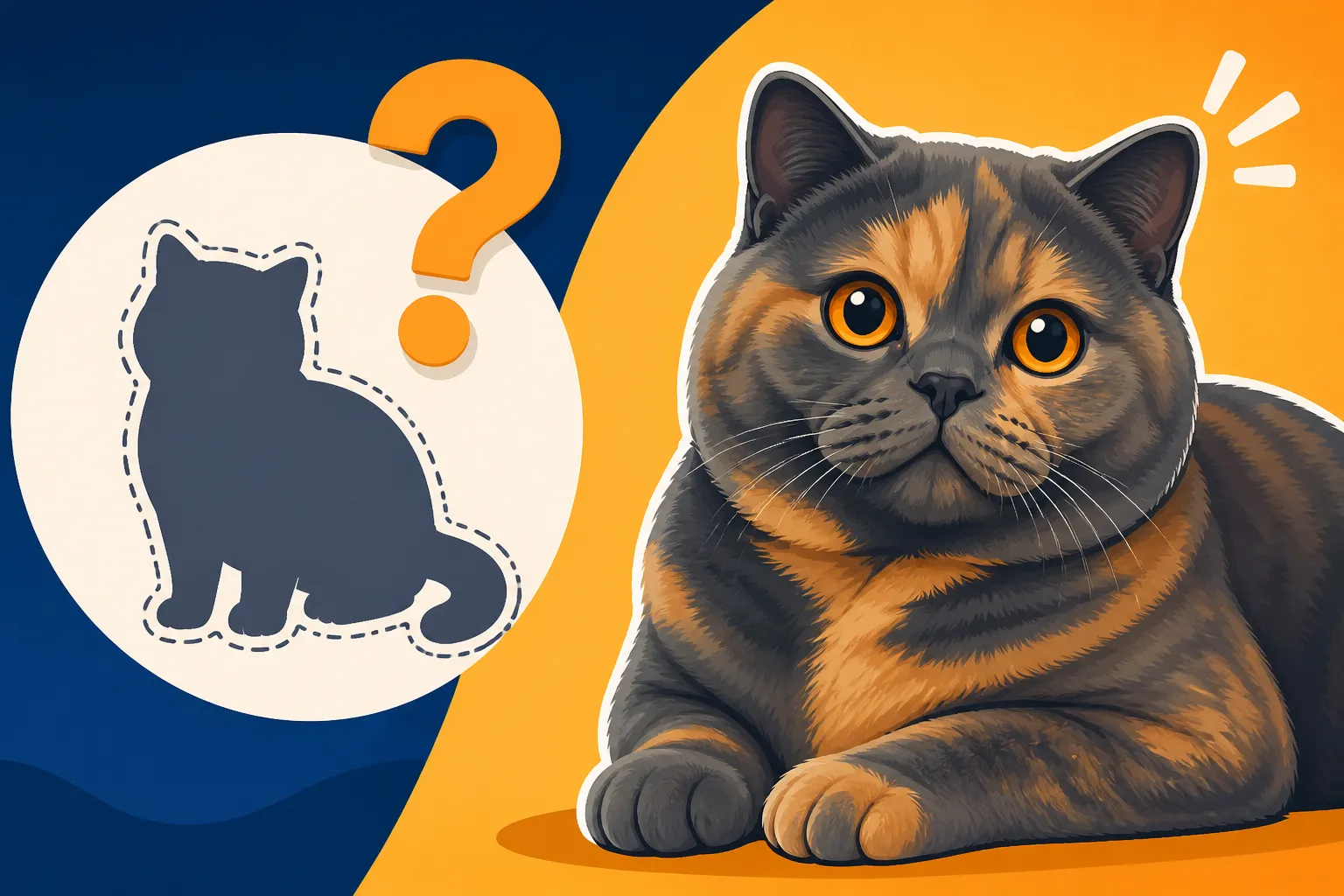
A tortoiseshell British Shorthair is a British Shorthair whose coat shows a mixture of two colors, usually red or cream mixed with a darker color such as black, blue, chocolate, or lilac. The colors may appear as small flecks, broad patches, or a fairly even mottling across the body. No two tortoiseshell coats look quite alike, so one cat may have a finely blended appearance while another has clear, contrasting patches.
The breed’s familiar rounded head, sturdy body, dense coat, and substantial build don’t disappear because the cat is tortoiseshell. Those are breed characteristics; the color pattern is a separate feature. A tortie can still have the plush, stand-away coat and cobby shape people associate with British Shorthairs. For a broader look at the range of shades and patterns, see A British Shorthair Comes in More Colors Than You Think and Which Colors a British Shorthair Comes In.
It’s also worth remembering that a coat alone cannot confirm a cat’s breed. A shorthaired mixed-breed cat may have a similar pattern and even a round-looking face, but pedigree and breeder records are what establish a registered British Shorthair’s ancestry. If you’re looking at a kitten advertised as a tortoiseshell British Shorthair, ask for its registration and pedigree information rather than relying only on appearance.
The color combination changes the name people use
“Black tortie” commonly describes a mixture of black and red. If the dark pigment is diluted, the cat may be called a blue tortie, with blue-gray and cream coloring rather than black and red. Other combinations can involve chocolate or lilac, depending on the cat’s inherited color genes and the terminology used by the relevant registry.
You may also hear a tortoiseshell called a “tortie.” That’s an informal shorthand, not a different breed or a different underlying pattern. A tortie’s colors can be blended together or appear in distinct patches, and the balance between the two colors can vary widely. It’s normal for one color to be much more noticeable than the other.
The shade name can be confusing because words such as “blue” refer to a diluted coat color, not a separate breed. A blue tortie is still a British Shorthair if its pedigree and registration establish that breed. More on the distinction is covered in Whether the British Blue Is a Separate Breed From the British Shorthair.
Tortie, calico, and torbie are not quite the same
A classic tortoiseshell coat mixes two colors and generally has little or no white. When a cat has tortoiseshell coloring along with significant white patches, people often call the pattern calico or tortoiseshell-and-white. The exact labels can vary among breeders and registries, so it’s sensible to ask what color designation appears in the cat’s paperwork.
A torbie has tortoiseshell coloring combined with a tabby pattern. You might see stripes, spots, or other tabby markings within the areas of color. The distinction can be subtle, especially in a kitten whose coat is still changing. If you’re comparing patterns, Whether a Calico British Shorthair Exists and Whether a Tabby British Shorthair Is Standard offer useful related context.
| Coat description | What you may see | How it differs from a tortoiseshell |
|---|---|---|
| Tortoiseshell | Two colors, often red or cream mixed with a darker shade | Usually has little or no white |
| Tortoiseshell-and-white or calico | Tortie colors plus noticeable white patches | White is a prominent part of the coat |
| Torbie | Tortoiseshell colors with tabby markings | Stripes or other tabby patterning are visible |
| Solid color | One main color across the coat | Does not have the characteristic mixture of tortie colors |
These everyday labels are helpful for describing a cat, but official color names can depend on the registry and the way the pattern is recorded. When precision matters, the breeder’s paperwork or a registry’s own color terminology is more reliable than a casual label.
Why most tortoiseshell cats are female
The pattern is linked to the X chromosome
The familiar red-and-dark tortoiseshell pattern is connected to the gene for orange coloring, which is carried on the X chromosome. Female cats usually have two X chromosomes. When they inherit different versions of the orange-color gene on those chromosomes, patches of cells can express different colors as the coat develops. This is why a female cat can show both red or cream and a darker color in a tortoiseshell pattern.
The pattern’s patchwork effect is associated with a natural process called X-chromosome inactivation. In different groups of cells, one X chromosome is switched off, so the coat develops areas that express one color and areas that express another. The result is an individual pattern rather than a neat, identical design shared by every tortoiseshell cat.
This explains why tortoiseshell cats are usually female, but it does not mean that every female British Shorthair will be tortoiseshell. A cat must inherit the relevant combination of color genes, and other genes influence whether the darker color appears black, blue, chocolate, or another shade. Coat color is inherited through several interacting factors, not a single simple “tortie” switch.
Male tortoiseshell cats are rare
A male tortoiseshell cat is unusual because a typical male cat has one X chromosome and one Y chromosome, so he generally does not have the two different X-linked color versions that create the classic tortoiseshell pattern. Rare male torties can occur, including cats with an XXY chromosome pattern or chimerism, where cells with different genetic makeups are present.
A male tortie’s unusual coat does not, by itself, prove how he was bred or whether he is fertile. Some genetic situations can affect fertility, but the details depend on the individual cat. If a breeder claims to have a male tortoiseshell kitten, it’s reasonable to ask for veterinary guidance and clear documentation rather than treating the color as proof of a particular genetic explanation.
For a buyer, the practical point is simple: a tortoiseshell British Shorthair is entirely plausible, and most will be female. A male is rare enough that the breeder should be prepared to discuss the cat’s background and records. A striking coat can prompt questions, but it cannot replace appropriate documentation.
How to identify a tortoiseshell British Shorthair
Look at the whole cat, not just the coat
British Shorthairs are known for a broad, rounded appearance, but individuals vary, and kittens may not yet have the mature proportions of adults. Consider the head shape, body, coat texture, and overall build together rather than deciding from one feature. A tortoiseshell pattern does not make a cat more or less likely to be a British Shorthair on its own.
Coat color can also make a cat look different in photographs. Lighting may exaggerate red, cream, or blue-gray areas, and a close-up may hide the cat’s proportions. If you’re assessing a kitten remotely, ask for clear images of the face and body, and look for consistent information about its parents and registration. The general visual comparison in How to Tell a British Shorthair From a Moggy can help explain why appearance alone is not conclusive.
A kitten’s color can also become clearer as it grows. The basic pattern may be visible early, while the balance, contrast, or intensity of the colors becomes easier to judge later. Don’t assume a kitten has been misdescribed just because its coat looks slightly different in one photo or at a different age. For more on coat development, see Whether a British Shorthair's Color Changes With Age.
Ask the breeder for records and clear color details
When speaking with a breeder, ask how the kitten’s color is recorded and whether its registration documents use a specific color designation. You can also ask to see information about the parents and the litter. Responsible answers should be clear and consistent; a breeder should not need to rely on a dramatic color label while avoiding basic questions about pedigree or registration.
If the pattern seems to include white or visible stripes, ask whether the breeder describes the kitten as tortoiseshell-and-white, calico, or torbie. Those terms are not always used identically in everyday conversation, and registry naming conventions can differ. The goal is not to argue over a nickname. It’s to understand what the breeder is actually representing and what the kitten’s official records say.
You may find other useful questions to bring to a breeder in Which Questions to Ask a British Shorthair Breeder. The same habits that help with any kitten purchase apply here: check the paperwork, ask about the parents, and take time to understand what is included in the breeder’s description.
Living with a tortoiseshell British Shorthair
Color does not determine personality
People sometimes attach personality claims to coat colors, describing tortoiseshell cats as more spirited or more independent. These are popular impressions, not a dependable way to predict an individual cat’s temperament. A tortoiseshell British Shorthair is not guaranteed to behave differently from a blue, black, or silver British Shorthair.
A cat’s temperament is shaped by its individual personality, early experiences, socialization, health, and home environment. One tortie may be outgoing and curious; another may prefer quiet observation and a little space. When choosing a kitten, pay attention to how it responds to people and its surroundings, and ask the breeder how its behavior has developed. See Whether Coat Color Changes a British Shorthair's Nature for more on the difference between color folklore and personality.
The same applies once the cat comes home. Give a new kitten time to settle, offer predictable routines, and let it approach interactions at its own pace. A beautiful coat may be the first thing you notice, but a good match depends much more on whether the cat’s needs and temperament suit your household.
Keep the dense coat in good condition
Tortoiseshell coloring does not require a special grooming routine. British Shorthairs have dense coats, so regular gentle combing can help lift loose hair and let you check the skin. Start with brief sessions and stop if your cat becomes uncomfortable; grooming is easier when it feels like a familiar, low-pressure routine rather than a wrestling match.
Some owners find it helpful to keep a suitable comb and a soft grooming cloth with their cat-care supplies. If you already shop at Chewy, you can compare ordinary grooming tools there, but choose for the coat and the cat’s tolerance rather than buying a product because it is labeled for a particular color. A tortie does not need color-specific grooming products.
A second practical use for a grooming routine is noticing changes. As you comb, check for mats, irritation, or an area your cat suddenly dislikes being touched. Chewy may be one convenient place to look for basic grooming supplies, while a veterinarian is the right person to consult about skin or coat concerns. If you want a wider overview of breed color possibilities, How Many Colors the British Shorthair Standard Allows is another useful read.
The short answer is yes: tortoiseshell British Shorthairs exist. They are British Shorthairs with a distinctive mixture of coat colors, most often female, and they may be described as torties, tortoiseshell-and-white, or torbies depending on their markings. The coat can help you describe a cat, but pedigree records—not color alone—are what establish its breed.
Disclaimer
This article is for general informational purposes only and does not constitute professional advice. Laws, prices and regulations vary by location and change over time. Consult a qualified professional for guidance on your specific situation.