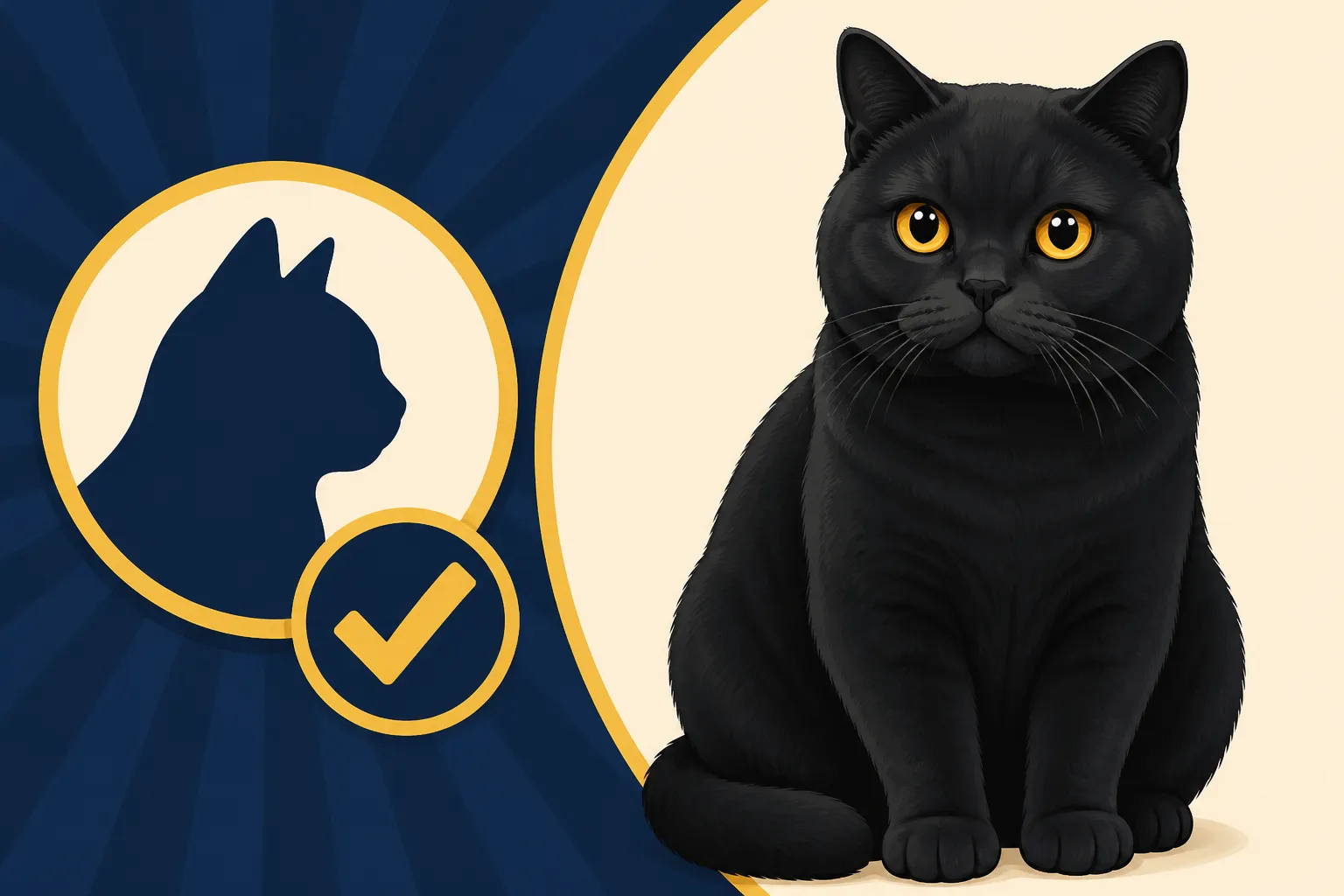
Whether a Black British Shorthair Is Standard
A black British Shorthair can look almost blue-black in one room and rusty brown in another, which makes it easy to wonder whether the color is truly recognized. It is: solid black is an accepted British Shorthair color. The important distinction is that an accepted color does not automatically make every black cat a show-quality example of the breed.
Is black an accepted British Shorthair color
Solid black is a recognized color
Yes. A solid black coat is an accepted color for a British Shorthair. The word solid matters: the coat should read as black throughout, rather than showing a visible pattern such as tabby stripes or white patches. Breed standards describe an ideal, though, and real cats can have small variations in shade, coat texture, or markings.
Black is less familiar to some people than blue, the soft gray color often associated with the breed. That can lead to the mistaken impression that black is unusual or not permitted. In fact, British Shorthairs come in many colors and patterns. You can explore the range in Which Colors a British Shorthair Comes In and How Many Colors the British Shorthair Standard Allows.
Coat color is only one part of the standard
A British Shorthair is judged on more than its coat. The standard also considers the cat’s overall shape, head, eyes, coat quality, and other breed characteristics. A black cat can have an accepted color and still differ from the ideal in one or more of those areas. Conversely, a cat with an especially handsome black coat is not automatically a purebred British Shorthair.
This is why “standard color” and “show quality” are not interchangeable descriptions. A breeder or registry can explain how a particular cat compares with its standard, while a color description alone only tells you about the coat. For context on the breed’s broader appearance, see The Round Head and Copper Eye a British Shorthair Is Judged On.
Registry details can vary
Cat registries publish their own breed standards, and wording or show classifications can differ by organization and country. If you are considering a cat for showing, ask which registry the breeder uses and check that organization’s current standard for the exact color and pattern. The practical answer for a pet owner is straightforward: black is a recognized British Shorthair color, but the relevant registry’s rules matter when show eligibility is the question.
A registry standard is also not the same as a casual online description. A listing may use “British Shorthair” or “black British Shorthair” as a convenient label, but that wording by itself does not establish pedigree or show eligibility. Which Registry Standard a British Shorthair Is Judged Against and Whether GCCF and CFA British Shorthair Standards Differ are useful starting points when comparing registry terminology.
What a black British Shorthair should look like
The coat should appear evenly black
The ideal solid-black coat looks dense and consistently dark, with no obvious white areas or strong tabby pattern. British Shorthair coats are known for their plush, dense feel, and that texture can make the color look especially rich. A dark coat may also appear different under daylight, warm indoor bulbs, or a camera flash, so judge its appearance in more than one kind of light.
Some black cats develop a brownish or rusty cast, particularly where sunlight reaches the coat. A slight change in appearance does not by itself mean the cat is not a British Shorthair or that its color is unaccepted. If the coat changes suddenly, becomes patchy, or looks unhealthy, it is sensible to ask a veterinarian rather than assuming the cause is purely cosmetic.
Eye, nose, and paw-pad color contribute to the look
A black British Shorthair is often expected to have copper, gold, or orange-toned eyes, depending on the applicable standard. The nose leather and paw pads are generally expected to be dark. Those features help create the familiar contrast of a dark coat and bright eyes, but the exact requirements should be checked against the registry standard relevant to the cat.
Kittens can be confusing because their eye color and coat appearance may change as they mature. A young kitten’s eyes may not yet show the adult color clearly, and its coat can have faint markings or a less settled shade. A breeder should be able to explain what is typical for the kitten’s age and provide information about its parents and registration.
Black is not the same as blue
A blue British Shorthair is not simply a black cat photographed in dim light. “Blue” describes a diluted gray coat, while black is a separate color. Lighting and photography can blur that difference in online pictures, so look for well-lit photos and ask the breeder to describe the color recorded for the kitten.
The distinction can matter in a litter, too. Cats can inherit coat-color traits from their parents, and kittens may not all look alike. A black cat may be mistaken for blue in a shadow, while a blue cat may look darker in a photograph than it does in person. For more on the familiar gray coat, see Whether a British Blue Registers as a British Shorthair.
How to tell whether a black cat is a British Shorthair
Check records rather than relying on color
A black coat cannot prove a cat’s breed. Many domestic cats can be black, and a round face or plush coat alone does not establish British Shorthair ancestry. If breed identity matters to you, ask for the cat’s registration and pedigree information and confirm that the documents come from the relevant registry.
A responsible breeder should be comfortable discussing the parents, the kitten’s registration status, and the records they provide. Be cautious if someone treats color as proof of breed or avoids straightforward questions about documentation. The same care applies to online advertisements: attractive photographs can show a cat’s appearance, but they cannot replace pedigree records. Whether a DNA Test Confirms a British Shorthair explains why appearance and breed identification are not quite the same thing.
| What you are checking | What it can tell you | What it cannot prove |
|---|---|---|
| A solid black coat | The cat’s visible color and pattern | That the cat is a purebred British Shorthair |
| Round features and a dense coat | Whether the cat resembles the breed type | Its pedigree or registry status |
| Registration and pedigree documents | Recorded ancestry and registration details | That the cat meets every show ideal |
| A breeder’s color description | The color the breeder believes the kitten to be | That the color alone guarantees show eligibility |
Separate color from type and health
A cat can be black, have a round face, and still not meet a registry’s full standard for British Shorthair type. Show evaluation considers the whole animal rather than awarding a title for color alone. If you are buying a pet, the color may be a preference; temperament, health, breeder practices, and the fit with your household deserve just as much attention.
It is also easy to assume that a black British Shorthair must have a particular personality. Coat color does not reliably tell you whether an individual cat will be outgoing, quiet, playful, or fond of being handled. Spend time learning about the kitten’s behavior and its home environment instead of treating color as a personality shortcut. Whether Coat Color Changes a British Shorthair's Nature covers that misconception in more detail.
Ask useful questions before choosing a kitten
If you are speaking with a breeder, ask how the kitten’s color is recorded, which registry the breeder uses, and what documentation will come with the kitten. Ask to see the parents or clear photographs where possible, and ask how the breeder describes any faint markings or changes in shade. A thoughtful answer is more reassuring than a promise that every kitten will meet a show ideal.
You can also ask whether the breeder is selling the kitten as a pet or as a show prospect. Those are different expectations. A pet kitten may be a wonderful companion without being intended for the show ring, and that does not make the cat less lovable or less suitable for a home. For a broader look at common misunderstandings, read What People Get Wrong About the British Shorthair.
Caring for a black British Shorthair’s coat
Keep grooming simple and gentle
A black British Shorthair does not need a special coat-care routine just because it is black. Regular, gentle combing can help remove loose hair and keep an eye on the skin, especially when the cat is shedding more. Choose a tool suited to a dense short coat, use a light touch, and stop if your cat becomes distressed.
Black fur can be especially noticeable on pale clothing, sofas, or bedding. A lint roller or washable furniture cover can make day-to-day cleanup less frustrating. If you are shopping for basic grooming or household cleanup supplies, a local pet shop or a retailer such as Chewy may be one option; the key is choosing ordinary, cat-safe items rather than products marketed as necessary for a particular coat color.
Avoid trying to change the coat shade
A rusty tint or uneven-looking coat can tempt an owner to try color-enhancing shampoos, supplements, or other fixes. Avoid making changes to your cat’s diet or using products meant to alter its color without veterinary guidance. Coat appearance can be influenced by several things, and a cosmetic product may not address the underlying reason for a change.
If the fur becomes dull, patchy, greasy, or unusually thin, note when the change began and whether anything else has shifted, such as grooming habits or appetite. A veterinarian can assess whether it is a routine coat issue or something that needs attention. Don’t assume a cat is less healthy or less “standard” because its coat looks a little different from a photograph.
Think beyond color when buying supplies
A black coat does not require black-specific food, brushes, or baths. A comfortable comb, a suitable resting place, fresh water, and routine health care matter more than trying to preserve a particular shade. If you compare products through Chewy or another retailer, read the intended use and follow veterinary advice for anything applied to the coat or added to the diet.
For shedding around the home, practical fixes usually beat a complicated grooming routine. Keep a comb where you will actually use it, give your cat short grooming sessions that end before it gets impatient, and use a washable blanket on favorite furniture. Chewy can be one place to look for general pet-care supplies, but no retailer’s product description determines whether a cat’s color is recognized by a breed registry.
Disclaimer
This article is for general informational purposes only and does not constitute professional advice. Laws, prices and regulations vary by location and change over time. Consult a qualified professional for guidance on your specific situation.