Whether Any Registry Refused the British Shorthair
A search for whether any registry refused the British Shorthair can make the breed’s history sound more contentious than it was. The short answer is that major cat registries recognize the breed; there is no well-established story of the British Shorthair being broadly rejected. What does vary is when a registry recognized it, which cats qualify for registration, and which colors or crosses its rules accept.
Was the British Shorthair rejected by a cat registry
Recognition is different from universal acceptance
There is no single international authority that decides which cat breeds exist. Organizations such as the Governing Council of the Cat Fancy, the Cat Fanciers’ Association, The International Cat Association and Fédération Internationale Féline each maintain their own registration rules and breed standards. A cat’s eligibility can therefore depend on which organization is handling the application.
That difference can be easy to mistake for rejection. A registry might recognize the British Shorthair but decline to register a particular cat because its pedigree is incomplete, its parentage does not meet the organization’s rules, or its color is not accepted in the relevant category. That is a decision about an individual application or variety, not necessarily a refusal to recognize the breed itself.
The British Shorthair’s history also predates many modern registry systems. It developed over time from cats in Britain rather than appearing as a formally established breed with one universally agreed pedigree from the beginning. For background on that development, see Where the British Shorthair Comes From and Whether the British Shorthair Was Once the English Shorthair.
Major registries recognize the breed
The British Shorthair is an established breed in major cat registry systems. Those organizations publish standards describing its type and maintain procedures for registering eligible cats. Their recognition means that the breed is not generally excluded from organized cat registration.
Recognition does not mean every registry adopted the breed at the same moment or wrote identical rules. Each organization has its own history, terminology and requirements. A registry can also revise its standards over time, so an older account of registration rules may not explain how a current application is handled.
For example, the CFA and TICA have their own breed histories and recognition processes. Those histories are covered in When the CFA Recognized the British Shorthair and When TICA Recognized the British Shorthair. The practical point is that differing timelines or requirements should not be described as a blanket refusal of the British Shorthair.
Why the word refused can be misleading
People may use “refused” to describe several different situations: a breed not being recognized by a particular organization, a cat being denied registration, a color not being accepted, or a breeder being unable to register a cross. These outcomes are not interchangeable. The first concerns the organization’s breed list; the others concern specific rules or applications.
A buyer might, for instance, see a kitten advertised as a British Shorthair but find that its paperwork does not qualify it for registration with a particular association. That could reflect missing records, ancestry, an unaccepted variety or a seller using the breed name loosely. It does not automatically show that the registry refused to recognize British Shorthairs.
If the question comes up while choosing a kitten, ask which organization issued the registration, what the certificate says, and whether the kitten’s parents are registered under that same system. It is also sensible to ask what documentation the breeder will provide. The guidance in Which Registry Standard a British Shorthair Is Judged Against can help explain why the name of the registry matters.
Why British Shorthair registration rules can differ
Registries maintain separate standards
Each registry sets its own breed standard: a written description of the appearance and characteristics expected of a British Shorthair. Standards may differ in wording or emphasis, and registry rules determine which colors, patterns and pedigrees are eligible. A cat can still be a British Shorthair in ordinary conversation even if a particular organization’s paperwork does not place it in the category an owner expected.
That distinction matters most when comparing show eligibility with pet registration. A cat may have a pedigree and be registered as a British Shorthair, yet not meet every requirement for competition in a particular class. Conversely, a cat’s appearance alone cannot prove that it has a registered pedigree. Registration is a record-based decision, while judging is an assessment against a standard.
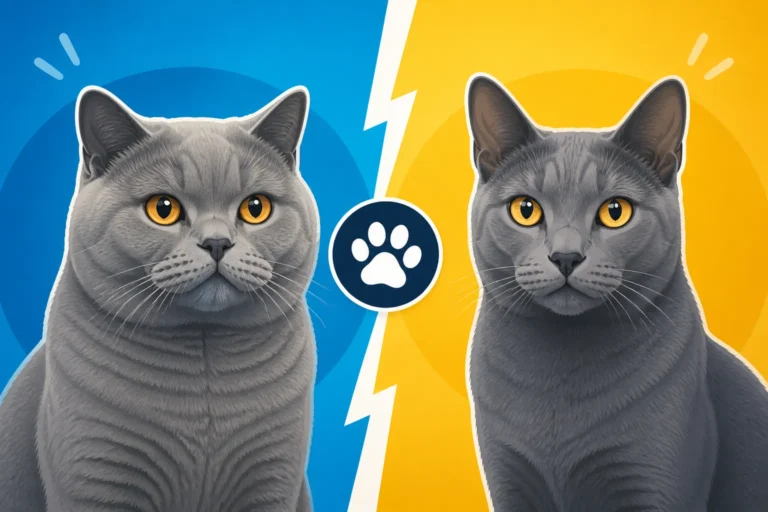
The rules are especially worth checking when a cat has an uncommon color or a less familiar background. For a closer look at different standards, read Whether GCCF and CFA British Shorthair Standards Differ. If you are comparing the breed with another round-faced cat, How a British Shorthair Differs From a Scottish Fold also helps clarify why appearance by itself is not proof of breed registration.
Color and variety can affect eligibility
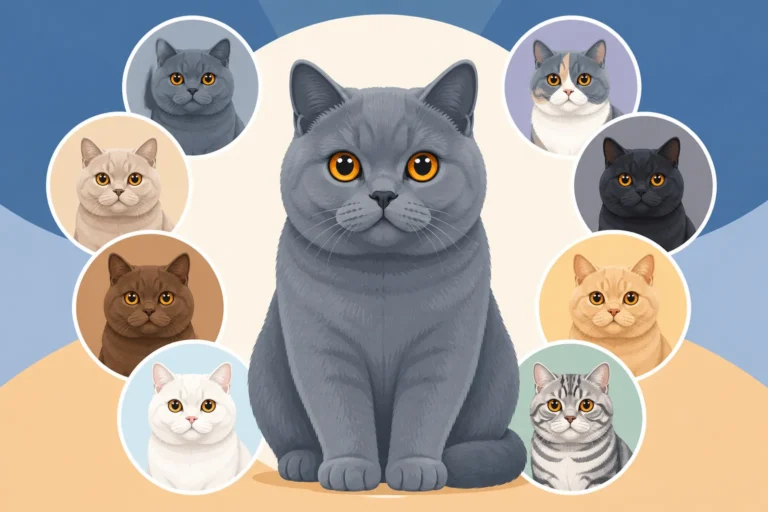
A registry’s rules may treat colors and patterns differently. Some varieties may be accepted for registration but handled differently in showing, while others may not fit the standard used by a particular organization. This is one reason a breeder should be able to explain not just the kitten’s color, but also how that color is recorded by the registry named on its paperwork.
Colorpoint cats are a useful example of why a simple yes-or-no answer can be inadequate. The status of a color or pattern can depend on the organization and the purpose of the registration. A reader considering one should check the relevant registry’s own rules rather than assume that recognition in one association guarantees identical treatment everywhere. See Whether a Colorpoint British Shorthair Is Standard for more detail.
The same care applies to British Longhairs. A long-haired kitten from British Shorthair lines is not automatically registered as a British Shorthair in every system. The classification depends on the organization’s rules and the cat’s pedigree. Whether a British Longhair Registers as a British Shorthair explains why a related appearance does not settle the registration question.
| Question | What it concerns | What to check |
|---|---|---|
| Does the organization recognize British Shorthairs? | Whether the breed is included in its system | The registry’s official breed list |
| Can this cat be registered? | The individual cat’s records and eligibility | Pedigree, parent registrations and application rules |
| Is this color accepted? | A variety-specific rule | The registry’s color and pattern policy |
| Can the cat compete in a show class? | Show eligibility and judging requirements | The current show rules and breed standard |
How to check a British Shorthair’s registration properly
Start with the paperwork, not the appearance
The British Shorthair’s round head, dense coat and sturdy build can make the breed recognizable, but appearance alone cannot establish registration. Ask the breeder for the name of the registry and the kitten’s registration documents or the documents that will be supplied after transfer. Then confirm that the parent information and breed designation are consistent across the records.
If a seller says a kitten is “registrable,” ask what that means in practical terms. Is an application already submitted, or is the buyer expected to apply? Are both parents registered? Does the registry permit the kitten’s particular color and pedigree? Clear answers help separate a genuine registry rule from vague sales language.
A responsible breeder should be willing to explain the paperwork without treating basic questions as an insult. If documents are delayed, incomplete or described in confusing terms, ask for clarification before paying a deposit or making a final decision. Registration is only one part of evaluating a breeder, but it can help you understand what the kitten’s recorded ancestry is—and what it is not.
Ask the registry about a disputed application
If an application has been denied, the most useful next step is to identify the specific reason. Ask whether the issue is breed recognition, missing or inconsistent pedigree records, a color designation, a cross in the ancestry, or an administrative error. A precise explanation is far more informative than hearing that “the registry refused the breed.”
It can also help to compare the registry’s written rules with the documents supplied by the breeder. If a record has a spelling error or missing information, the problem may be correctable. If the cat does not meet a rule for registration in that organization, another registry’s policy may not be relevant: each organization makes its own decision under its own system.
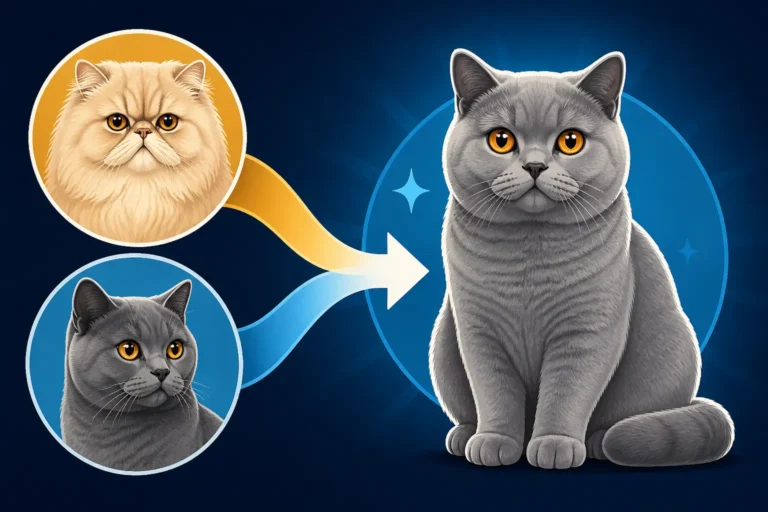
For a question involving ancestry, breed development may provide helpful context. British Shorthairs were rebuilt through breeding after their numbers declined, and the history includes contributions from other breeds. Which Breeds Rebuilt the British Shorthair explores that background. Historical outcrosses do not mean that any modern cross automatically qualifies for registration; current eligibility still depends on the registry’s rules and the cat’s records.
What to take away from the registry question
There was no broad rejection of the breed
The best-supported answer is that the British Shorthair is recognized by major cat registries, rather than being a breed broadly refused by them. Differences in recognition history, standards and application requirements are real, but they should not be collapsed into one claim that registries rejected the breed.
The more useful question is often, “Will this particular cat qualify under this particular organization’s rules?” The answer depends on the pedigree, paperwork, variety and purpose of registration. A cat’s appearance or a seller’s description cannot answer all of those questions.
If you encounter a story about a registry “refusing” the British Shorthair, look for the exact organization, time period and decision involved. Was it refusing the breed itself, declining an individual application, or applying a rule to one color or cross? That distinction usually clears up the confusion.
A careful buyer can verify the claim
Before relying on a registration claim, get the registry’s name in writing and ask to see the relevant documentation. Check whether the kitten’s parents are registered, whether the registration can be transferred, and whether the kitten’s variety is treated as expected by that organization. When anything is unclear, contact the registry directly rather than assuming the breeder’s wording settles it.
This is not a reason to dismiss a cat that lacks formal papers. Many wonderful companions are not registered, and registration is not a guarantee of health, temperament or responsible care. It is simply a record of ancestry and eligibility within a particular system. Understanding that limited role helps you ask better questions without confusing paperwork status with a cat’s value as a companion.
Disclaimer
This article is for general informational purposes only and does not constitute professional advice. Laws, prices and regulations vary by location and change over time. Consult a qualified professional for guidance on your specific situation.