Whether a Chartreux Rebuilt the British Shorthair
A Chartreux may have contributed to the British Shorthair’s postwar recovery, but it was not the single breed that rebuilt it. The two cats can look strikingly alike, especially in blue, which makes their shared history easy to oversimplify. This guide explains what is known about the Chartreux’s role, why the breeds were confused, and how they remain distinct.
Why the British Shorthair needed rebuilding
War left the breed with fewer breeding cats
The British Shorthair developed from cats kept in Britain for practical reasons: they were sturdy, adaptable animals, not just carefully planned show cats. Over time, breeders began shaping a recognizable type, including a rounded head, a dense coat and a solid, compact body. But war disrupted breeding programs and reduced the number of cats available to continue established lines.
When breeding stock becomes scarce, preserving a breed’s health and appearance is difficult. A small group of remaining cats cannot necessarily provide enough genetic diversity for a sustainable program. Breeders may need to consider carefully chosen outcrosses, then select offspring that retain the features they want to preserve. That kind of recovery takes time; it is not simply a matter of mating two cats that look similar.
The British Shorthair’s postwar rebuilding is often associated with Persian cats, which helped restore numbers and influenced the breed’s coat and head shape. Other breeds and cats may also have played roles in particular programs. For a fuller look at this wider history, see The Persians That Rebuilt the British Shorthair After the War and Which Breeds Rebuilt the British Shorthair.
A recovery program is not the same as a single origin story
It is tempting to ask which one breed “rebuilt” the British Shorthair, as if there were a single answer. In practice, breeding histories tend to be more complicated. Different breeders may have worked with different cats, and the available options could vary between countries, registries and individual bloodlines.
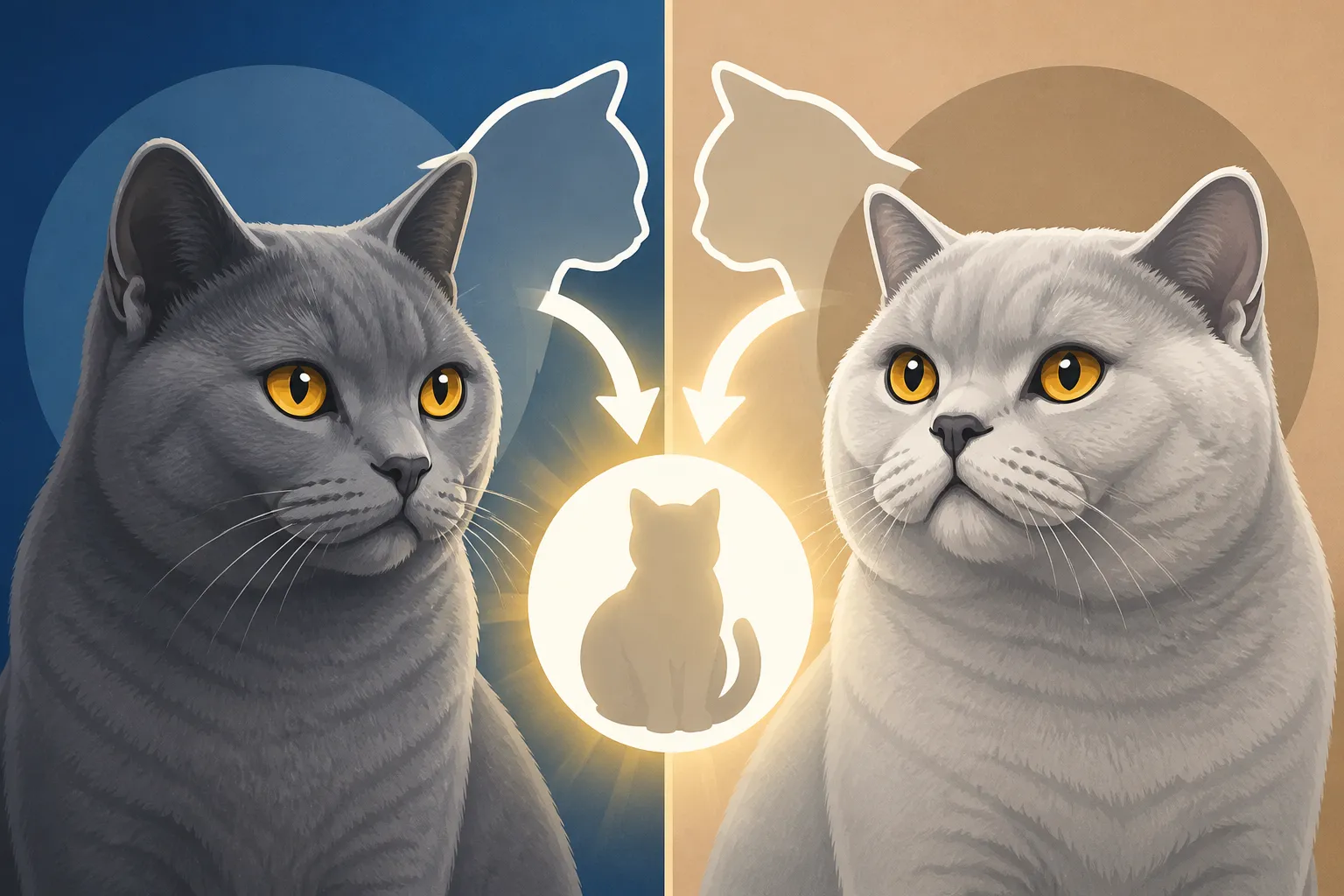
There is also a difference between an outcross being used in a breeding program and a whole breed being founded by that outcross. A Chartreux may have contributed to some British Shorthair lines without being the sole source of their recovery. The same distinction applies to other breeds mentioned in historical accounts: a contribution does not mean that today’s British Shorthair is simply a renamed version of another breed.
That distinction matters because popular summaries can turn a complicated history into a neat but misleading claim. The British Shorthair was shaped over generations, with breeders selecting cats for health, type and consistency. Its history is best understood as a series of breeding decisions, rather than a one-time rescue by one neighboring breed.
Did the Chartreux help rebuild the British Shorthair?
The Chartreux was a plausible and related-looking outcross
The Chartreux is a French breed known especially for its blue coat and sturdy build. Since a blue Chartreux and a blue British Shorthair can appear similar at a glance, it is understandable that the Chartreux’s name appears in discussions of British Shorthair breeding history. Both breeds have a robust look, and both can have dense coats. Those shared visual qualities could make a Chartreux seem like an obvious choice when breeders were working to restore a blue British Shorthair type.
That resemblance, however, does not establish exactly how much the Chartreux contributed to the British Shorthair as a whole. Accounts of historical outcrossing can differ in their detail, and records from individual breeding programs are not always summarized consistently. The responsible answer is therefore measured: Chartreux cats are associated with the broader history of some blue British-type breeding, but they should not be described as the sole foundation of the British Shorthair’s recovery.
For context on why the two breeds are so often compared, How a British Shorthair Differs From a Chartreux looks at their differences beyond color. Their resemblance is real, but it is only one part of the story.
Breed standards and registries helped keep identities distinct
A breed is not defined by color alone. Breed standards describe a collection of traits, such as body shape, head, coat texture, eye color and overall balance. Registries also matter: they maintain rules about which cats can be registered under a breed name and which matings are permitted. Those rules help establish and preserve separate breed identities, even when two breeds share a particular color or general appearance.
The Chartreux and British Shorthair have their own histories and standards. Their blue coats can lead to confusion, but a blue cat is not automatically a Chartreux, and a broad, plush-looking cat is not automatically a British Shorthair. A responsible identification considers pedigree and registration records as well as physical traits. Appearance alone cannot reliably prove a cat’s ancestry.
This is one reason breed histories can sound contradictory in casual retellings. One account may discuss a historical crossing or a shared breeding context, while another focuses on the registry rules that later separated the breeds. Those statements are not necessarily describing the same thing. A cross in a particular historical program does not mean the two breeds are interchangeable today.
| Question | What it tells you |
|---|---|
| Did the Chartreux contribute to some British Shorthair breeding? | It may have been part of the wider history of selected breeding programs, particularly around blue cats. |
| Did the Chartreux rebuild the British Shorthair on its own? | No. The breed’s recovery involved a broader history and is commonly associated with more than one influence. |
| Are a blue Chartreux and a blue British Shorthair the same breed? | No. Similar coat color does not erase differences in breed history, standards and registration. |
| Can appearance confirm a cat’s breed? | Not reliably. Pedigree and registration documentation are more useful for confirming breed identity. |
How to tell a Chartreux from a British Shorthair
Look beyond the blue coat
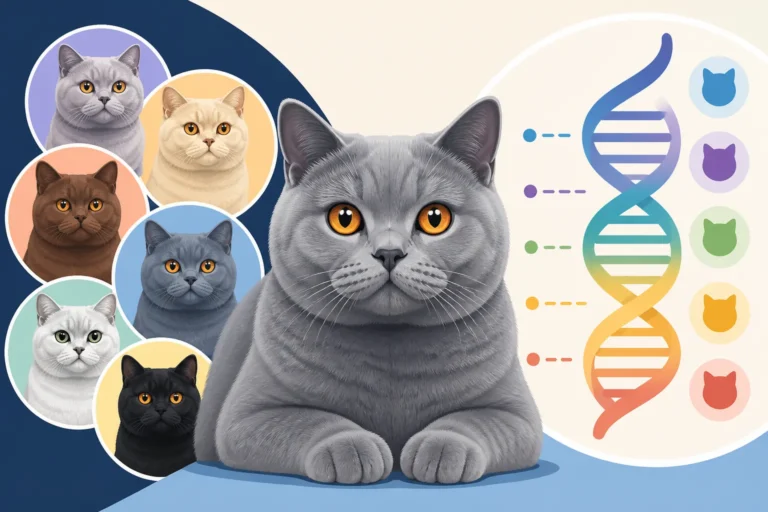
The most obvious overlap is the blue-gray coat, but coat color is a weak shortcut for identifying a breed. British Shorthairs come in many colors and patterns, and their defining look is a combination of traits rather than a single shade. The breed’s traditional blue variety is especially well known, which is why people may assume that every solid-blue, round-faced cat belongs to the same breed.
A Chartreux is also associated with blue, but the overall impression may differ when you look at the cat’s head, coat and expression together. The texture and appearance of the coat, the shape of the face and the cat’s proportions all contribute to breed type. These differences can be subtle, especially in kittens or cats that do not closely match show descriptions.
For a broader look at how color fits into British Shorthair identity, see A British Shorthair Comes in More Colors Than You Think and Why the Blue Became the British Shorthair Everyone Pictures. The blue variety is iconic, but it is not the whole breed.
Pedigree matters more than a quick visual guess
A cat from a registered breeder should have documentation that identifies its breed and lineage. If you are adopting a cat or trying to understand a pet’s background, ask what records are available rather than relying on color, head shape or a social media caption. A cat can resemble a Chartreux or British Shorthair without having a documented pedigree for either breed.
Mixed ancestry can also produce cats that share features with both breeds. That does not make the cat any less lovable, and it does not mean there is anything wrong with its appearance. It simply means that visual resemblance is not the same as confirmed breed status. When someone is making a decision based on a breed label, clear records are more meaningful than a confident guess.
If you are comparing a blue cat with the familiar British look, What a Blue British Shorthair Looks Like offers a closer description of that variety. For the larger question of breed identification, How to Tell a British Shorthair From a Moggy explains why appearance alone can be misleading.
What the Chartreux connection means for today’s owners
It adds context, not a reason to treat the breeds as interchangeable
The Chartreux connection is useful as a piece of breed history. It helps explain why the breeds can look alike and why discussions of postwar breeding sometimes mention more than one influence. It does not mean that a Chartreux is simply a British Shorthair with a different name, or that every blue British Shorthair has Chartreux ancestry.
For prospective owners, this is a practical distinction. If you are choosing a cat because you want a particular breed, ask about the breeder’s registration, pedigree and health practices. If a seller relies only on a blue coat or round face to establish breed identity, ask for documentation. A careful breeder should be able to explain what records they provide and what those records do and do not prove.
It also helps to separate historical influence from present-day care. A cat’s daily needs are shaped by its individual health, age, body condition and temperament, not just a story about its distant ancestors. Breed history can be fascinating, but it cannot replace veterinary guidance or thoughtful observation of the cat in front of you.
The British Shorthair’s story is bigger than one outcross
The British Shorthair was not restored through one simple act of crossing with a Chartreux. Its development reflects the work of breeders preserving a recognizable type while rebuilding populations and managing ancestry. Persian cats are prominently associated with that effort, while other influences are discussed in the broader history of the breed. The Chartreux may have had a place in some parts of this story, but it should be described as a possible or limited contribution rather than the single answer.
That is the most useful way to read the claim in the title: a Chartreux may have helped, but it did not rebuild the British Shorthair alone. The two breeds share an appealing blue-coated, sturdy appearance, yet they remain distinct breeds with separate standards and histories. For more on how the British Shorthair took shape, see Where the British Shorthair Comes From and Why British Shorthair Breeders Reached for the Persian.
Disclaimer
This article is for general informational purposes only and does not constitute professional advice. Laws, prices and regulations vary by location and change over time. Consult a qualified professional for guidance on your specific situation.