What a British Shorthair Did on a Farm
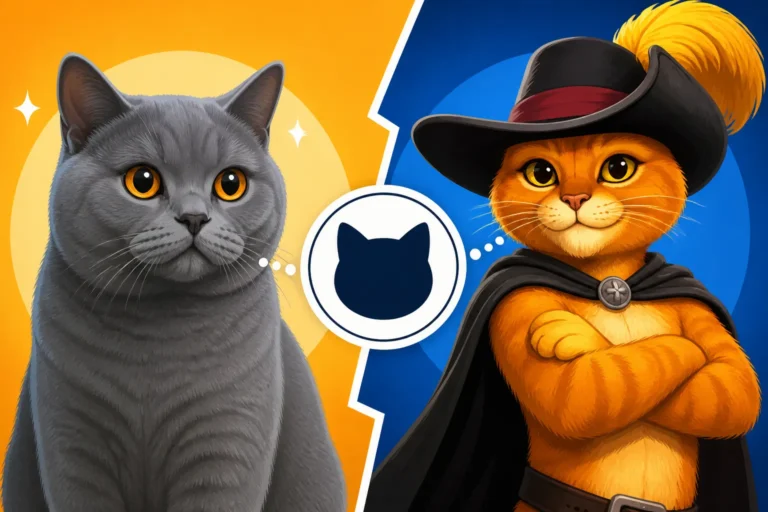
Many of us picture the British Shorthair as a dignified, somewhat portly companion, perhaps curled up on a velvet cushion or surveying their domain from a sunny window perch. It's easy to assume their lineage is one of quiet domesticity and gentle purrs. However, beneath that plush, teddy-bear exterior lies a rich, often overlooked history rooted in hard work and self-sufficiency. This guide will delve into the fascinating past of the British Shorthair, revealing what these capable felines truly did on a farm before they became the beloved household pets we know today.
The Unsung Rodent Hunter: Early British Shorthairs on the Farm
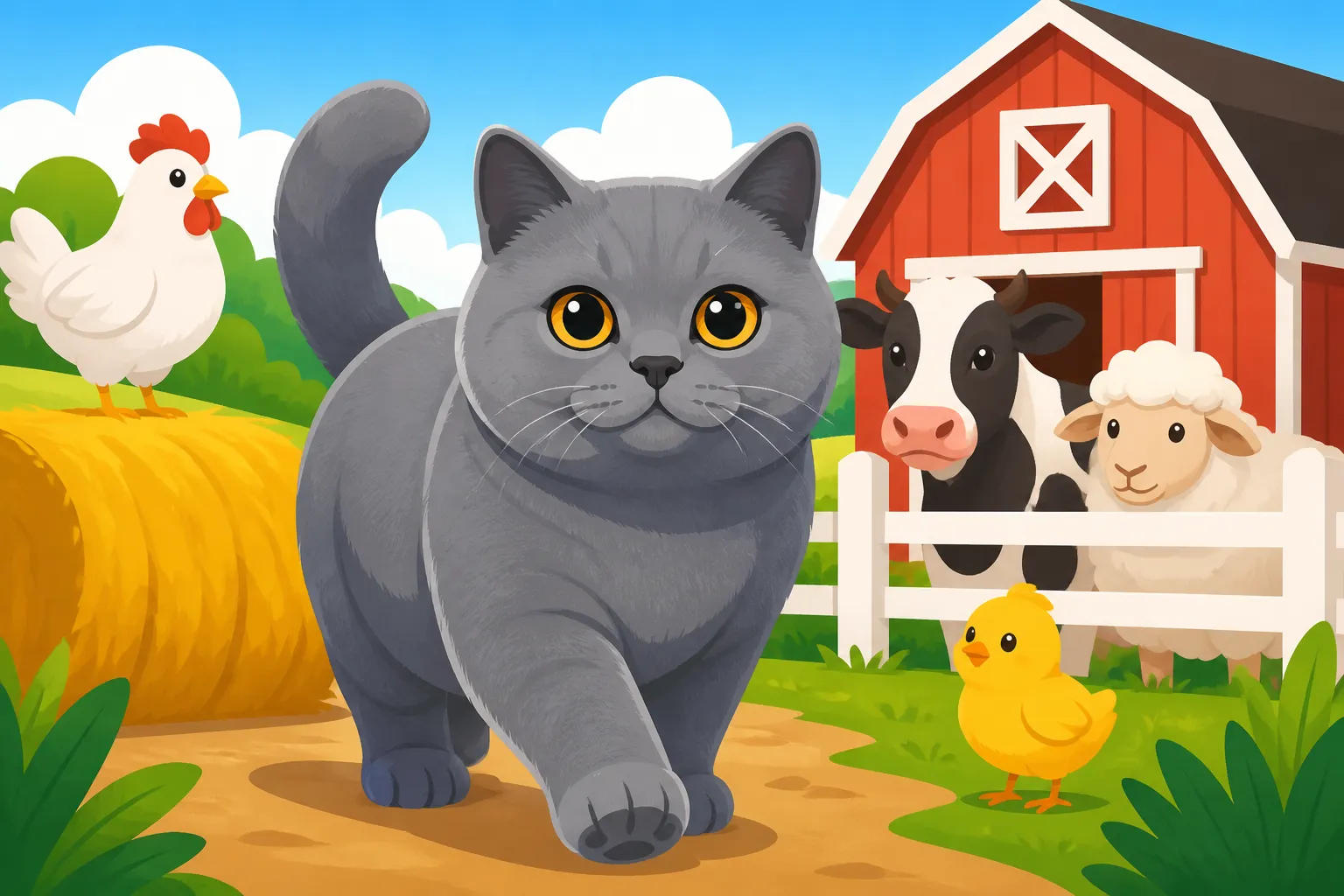
Before they graced cat show benches and became symbols of feline charm, the ancestors of the British Shorthair were practical, no-nonsense working cats. They weren't bred for their looks alone; their very existence was tied to their ability to keep barns and granaries free from pests, a task they excelled at for centuries.
Roman Roots and British Barns
The story of the British Shorthair's farm life likely begins much further back than you might imagine, possibly with the arrival of the Romans in Britain. These early cats, brought over to protect grain stores from rodents, quickly adapted to the cooler, often damp British climate. They weren't a distinct "breed" in the modern sense but rather a robust population of domestic cats, evolving through natural selection to thrive in their environment. Imagine ancient Roman settlements, surrounded by bustling farms; these cats were indispensable. They were the silent guardians of food supplies, ensuring that harvests weren't decimated by mice and rats. This historical connection is a testament to their enduring adaptability and resilience. If you're curious about their ancient origins, you might want to read Whether Roman Cats Founded the British Shorthair.
These were not cats that expected a heated bed or gourmet meals served twice a day. They were lean, resourceful survivors, whose daily bread was earned through their hunting prowess. Life on a Roman-era or medieval British farm was tough, and only the fittest animals survived and passed on their traits. This rugged existence shaped their physical and mental attributes, forging the strong, healthy constitution that still underpins the breed today, even if modern British Shorthairs lead a much softer life. They carried the weight of responsibility for the farm's livelihood on their broad, capable shoulders, or rather, paws.
A Mutual Benefit: Cats and Farmers
The relationship between these early British Shorthair ancestors and the farmers was one of mutual benefit. Farmers provided shelter, perhaps a warm spot in the barn or a lean-to, and in return, the cats protected their precious crops and stored food from vermin. This wasn't a casual arrangement; it was an economic necessity. A severe rodent infestation could spell disaster for a farm, potentially leading to widespread hunger or financial ruin. Therefore, a good working cat was a highly valued asset.
This dynamic meant that the cats were generally left to their own devices, encouraging their natural independence and problem-solving skills. They learned to navigate the complex social structures of a farm, from avoiding larger animals to coexisting with other working creatures like dogs and horses. They were part of the farm's ecosystem, an integral part of its functioning. This hands-off approach from humans also allowed their natural hunting instincts to flourish without constant interference, perfecting the skills that would keep the farm operational.
More Than Just Mice: Other Farm Duties
While rodent control was undoubtedly their primary job, farm cats contributed in other, less obvious ways. Their presence alone could deter pests. Birds nesting in eaves, insects, and even small reptiles might have found themselves prey for an opportunistic farm cat. They were generalist predators, taking advantage of whatever small game was available, contributing to a broader ecological balance on the farm. A cat's keen senses and stealth made them ideal for patrolling outbuildings and fields, silently monitoring for any signs of trouble.
Beyond direct pest control, these cats also offered a certain quiet companionship, albeit a distant one, to solitary farmers. After a long day of strenuous labor, the sight of a diligent cat purring softly by the hearth, or merely a familiar shape crossing the yard, could be a comforting presence. While not lap cats in the modern sense, they were woven into the fabric of farm life, their subtle presence a quiet reassurance that all was well. This independent, yet connected, nature is still very much a part of What a British Shorthair's Temperament Is Really Like.
Built for the Barn: Physical Traits of the Working British Shorthair
The physical characteristics that make the British Shorthair so distinctive today—their sturdy build, dense coat, and powerful jaws—were not accidental. They were honed by centuries of life on a British farm, where resilience and efficiency were paramount for survival and success.
The Cobby Build for Sturdiness
The British Shorthair's characteristic "cobby" build – meaning broad, compact, and muscular – wasn't just for show. It was a functional design for a working animal. A stocky, well-muscled body provided strength and agility, essential for navigating uneven terrain, jumping onto hay bales, or squeezing into tight spaces to pursue prey. This robust physique also offered a degree of protection against the elements and potential scuffles with other animals, from foxes to barn rats.
Their strong bones and short, powerful legs meant they could withstand the rigors of a physically demanding life. They weren't delicate creatures; they were built like miniature tanks, capable of enduring harsh conditions and performing strenuous tasks. This foundational sturdiness is one of the enduring legacies of their farm heritage and contributes to their generally good health, as you can read about in Whether the British Shorthair Is a Healthy Breed. This natural strength helped them leap, climb, and pounce with surprising force, crucial for successful hunting.
A Coat Designed for All Weather
Perhaps one of the most defining features of the British Shorthair is its incredibly dense, plush coat, which stands away from the body. This unique double coat, often described as "crisp," wasn't developed for cuddles, but for survival in the often-unforgiving British weather. It provided excellent insulation against cold, damp, and wind, allowing them to remain active outdoors even in inclement conditions.
Imagine a chilly, drizzly British morning; this coat would have kept the cat warm and relatively dry, shedding moisture rather than absorbing it. It also offered a layer of protection against minor scrapes and bites from prey or other farm animals. This practical coat meant less time spent shivering and more time focused on their duties. Understanding Why a British Shorthair's Dense Coat Suited the Climate helps us appreciate this important evolutionary adaptation, making them perfectly suited to their working environment.
Keen Senses for the Hunt
A farm cat's success hinged on its sharp senses. Their broad, round heads house large, expressive eyes that, in many colors, are a brilliant copper or gold – perfect for detecting movement in dim light. The rounded head also implies a strong jaw structure, capable of delivering a powerful bite to secure their catch. Their ears, though small and set wide apart, were acutely tuned to the rustling of mice in straw or the scurrying of rats behind sacks of grain.
These keen senses weren't just for hunting; they were vital for survival. The ability to detect danger quickly, whether it was a predator, an approaching farm vehicle, or a territorial dog, was paramount. Every twitch of an ear, every flicker of an eye, was a finely tuned instrument for gathering information about their surroundings, allowing them to react instantly and effectively in a dynamic farm environment.
Independent Spirit: The Temperament of a Farm Cat
The charmingly calm and self-possessed demeanor of the modern British Shorthair is a direct inheritance from their farm-dwelling ancestors. These were cats that learned to be resourceful, observant, and capable of entertaining themselves, yet still understood the value of a quiet connection with their human companions.
Self-Reliance and Solitude
Farm life fostered a profound sense of self-reliance in these early British Shorthairs. They learned to find their own food, secure their own shelter, and navigate the world largely without human intervention. This created a cat that was independent, not needy, perfectly comfortable in its own company. They didn't demand constant attention or entertainment; they were busy patrolling, hunting, and exploring.
This deep-seated independence is why, even today, British Shorthairs are often described as being "fine on their own." They aren't prone to separation anxiety in the way some other breeds might be, making them an excellent choice for individuals or families with busy schedules. They enjoy being near their people, but rarely on them, a trait that directly echoes their historical need for personal space and autonomy on the farm. Their calm nature means they are often A British Shorthair Is Genuinely Fine on Its Own.
Quiet Observation and Patience
A successful farm cat was a master of observation and patience. They spent hours watching, waiting, and learning the routines of their prey. This required an innate stillness and an ability to blend into their surroundings, becoming almost invisible until the opportune moment arose. They weren't frantic or boisterous; their energy was conserved and deployed strategically.
This quiet, contemplative nature persists in the modern British Shorthair. They are often described as calm and observant, preferring to take in their surroundings rather than rushing headlong into activity. This trait makes them wonderful companions for quiet households, content to simply share a space with their humans. They are the epitome of "still hunters," even if their modern prey is only a toy mouse from Chewy.
Social, But on Their Own Terms
While independent, farm cats weren't entirely feral. They lived in proximity to humans and often formed bonds, albeit ones based on respect and utility rather than effusive displays of affection. They learned to distinguish between trusted humans and strangers, and to understand the unspoken cues of the farm environment. They were social, but on their own terms, choosing when and how to interact.
Today's British Shorthairs exhibit this same nuanced approach to social interaction. They are generally friendly and gentle, but they aren't typically "lap cats." They prefer to sit beside you, perhaps on a nearby chair or at your feet, offering a warm presence without demanding constant physical contact. They appreciate affection but prefer to initiate it themselves, or to signal when they've had enough. This is truly A British Shorthair Sits Near You, Not On You.
From Field to Fancy: The Evolution into a Show Breed
The transition of the British Shorthair from a utilitarian farm cat to a celebrated show breed is a testament to the vision of early cat fanciers who saw beauty and potential in these humble working animals. This transformation began in the mid-19th century and involved dedicated selective breeding and the influence of other prestigious breeds.
Harrison Weir and the First Cat Shows
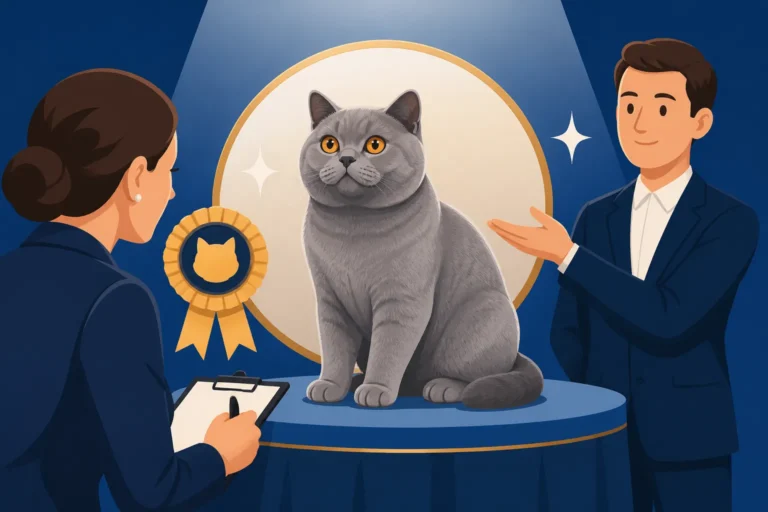
The father of the cat fancy, Harrison Weir, played a pivotal role in recognizing the inherent qualities of the British Shorthair. Weir, a renowned artist and animal lover, was captivated by the sturdy, good-natured street and farm cats of Britain. He believed these native cats deserved the same recognition and careful breeding as more exotic breeds. He organized the first formal cat show at the Crystal Palace in London in 1871, and it was here that the British Shorthair, then known simply as the British Tabby or Shorthair, made its official debut.
Weir's vision was to elevate these working cats, giving them a standard of perfection to breed towards. He championed their robust health, gentle temperament, and distinctive appearance. This marked a monumental shift: cats were no longer just pest controllers but animals of beauty and pedigree. You can explore Who Harrison Weir Was to the British Shorthair to understand the depth of his contribution to the breed. His tireless efforts laid the groundwork for what would become one of the world's most beloved cat breeds.
Refining the Farm Cat: Selective Breeding
Once recognized, selective breeding began in earnest. Breeders aimed to enhance the "teddy bear" qualities that make the British Shorthair so appealing today – the round head, full cheeks, and plush coat. This meant carefully selecting cats that exhibited these traits most strongly, gradually refining the breed's appearance over generations. The focus shifted from pure utility to aesthetic appeal, though their foundational health and temperament remained crucial.
This process involved culling individuals who did not meet the desired standards, and carefully planning matings to concentrate desirable genes. The goal was to create a consistent, recognizable type that would stand out on the show bench while retaining the best aspects of their farm cat heritage. It was a painstaking process that required keen observation and a deep understanding of feline genetics, even if scientific tools were limited at the time.
Post-War Rebuilding and the Persian Influence
The two World Wars proved devastating for many cat breeds, including the British Shorthair. Breeding programs were disrupted, and numbers dwindled dangerously. To prevent the breed from disappearing entirely, dedicated fanciers undertook a massive rebuilding effort. This often involved outcrossing to other breeds, notably the Persian. The Persian brought an infusion of new genetics, helping to restore health and diversity, but it also contributed significantly to the British Shorthair's modern look.
The Persian influence is most noticeable in the British Shorthair's coat density, rounding of the head, and enlargement of the eyes. While the British Shorthair never developed the extreme brachycephalic (flattened) face of some Persian lines, the cross undoubtedly enhanced the "cobby" and "plush" characteristics that are now hallmarks of the breed. This period of rebuilding was critical, and it cemented some of the aesthetic features we adore today. You can learn more about this crucial period in Which Breeds Rebuilt the British Shorthair.
Echoes of the Farm: How Their History Shapes Today's British Shorthair
Even though most British Shorthairs today live a life of pampered luxury, the centuries spent working on farms have left an indelible mark on their behavior, physical characteristics, and even their health predispositions. Understanding this heritage can help modern owners better appreciate and care for their beloved companions.
The Instincts That Remain
Despite generations of indoor living, the hunting instincts of their farm ancestors are still very much alive in the British Shorthair. While they might not be catching real mice, many enjoy "hunting" toys, chasing laser pointers, or batting at feathered wands. These playful behaviors are not just for fun; they are deeply ingrained expressions of their predatory past. A good owner understands this need and provides appropriate outlets for these natural urges.
Providing puzzle feeders, for example, can tap into their ancestral need to work for food, preventing boredom and encouraging mental stimulation. Even seemingly lazy British Shorthairs often have a sudden burst of energy when a toy mouse or string appears. You might notice them "stalking" a dust bunny or staring intently at a bird outside the window, a clear nod to their past as vigilant hunters. A durable toy from Chewy, designed for interactive play, can be a great way to engage these latent instincts.
Low Energy, High Comfort
The British Shorthair's calm, somewhat sedate nature is another direct link to their farm past. On a farm, frantic, wasted energy was counterproductive. Cats needed to conserve energy for hunting and survival, moving deliberately and purposefully. This translates today into a generally low-energy cat that prefers short bursts of play followed by long, luxurious naps. They are not typically destructive or hyperactive, making them ideal indoor companions.
This preference for comfort and calm also means they are less prone to climbing curtains or scaling bookshelves than some more agile breeds. They appreciate a soft bed, a warm sunbeam, and a quiet corner to observe the world. Their ideal exercise often involves a short, engaging play session, rather than an intense, prolonged workout. It's a key reason why Why a British Shorthair Is So Still is a common observation among owners.
Health Considerations from a Working Past
While their farm heritage has contributed to their robust health, the shift to domestic life and selective breeding has introduced new considerations. For example, their tendency to be calm and love food means they are prone to Obesity Is the British Shorthair's Real Disease. On a farm, finding enough food was the challenge; now, it's regulating intake. Their strong constitution means they generally tolerate anesthesia well, but careful monitoring is still crucial for any procedure, as covered in Whether a British Shorthair Tolerates Anesthesia.
It's important for modern owners to be mindful of diet and exercise to prevent conditions like diabetes and arthritis, which can arise from inactivity and excess weight. Providing appropriate food, ideally portion-controlled, and encouraging daily play, even if it's gentle, is vital. Their history has given them a sturdy frame, but it's up to us to ensure they maintain a healthy weight for that frame. A vet-recommended diet from a reputable brand sold on Chewy could be a practical solution for weight management.
Here's a comparison of traits, reflecting their journey:
| Trait | British Shorthair on a Farm (Historical) | British Shorthair Today (Modern Pet) |
|---|---|---|
| Primary Role | Rodent control, vermin eradication, barn protector | Companion, family pet, show cat |
| Diet | Wild prey (mice, rats, birds), occasional scraps | Commercial cat food (dry, wet), treats |
| Activity Level | Active hunter, patrols territory, self-sufficient | Calm, sedate, prefers short play bursts, naps |
| Social Behavior | Independent, observant, bonds on own terms, wary of strangers | Affectionate but not clingy, enjoys presence, can be shy |
| Physical Build | Leaner, strong, sturdy, designed for utility | Cobby, muscular, plush, designed for breed standard |
| Coat Function | Insulation from cold/damp, protection from elements | Aesthetic appeal, soft to touch, still insulates |
| Health Focus | Survival of the fittest, natural immunity | Veterinary care, preventative screening, diet control |
| Living Environment | Barns, outbuildings, fields, open spaces | Indoor living, comfortable home, designated beds |
Understanding the "what" of their past on the farm helps us connect with the "who" of our British Shorthairs today. They may no longer be hunting in the fields, but their inherent qualities – their calm demeanor, sturdy build, and quiet independence – are all enduring echoes of a time when they were indispensable working animals.
Disclaimer
This article is for general informational purposes only and does not constitute professional advice. Laws, prices and regulations vary by location and change over time. Consult a qualified professional for guidance on your specific situation.