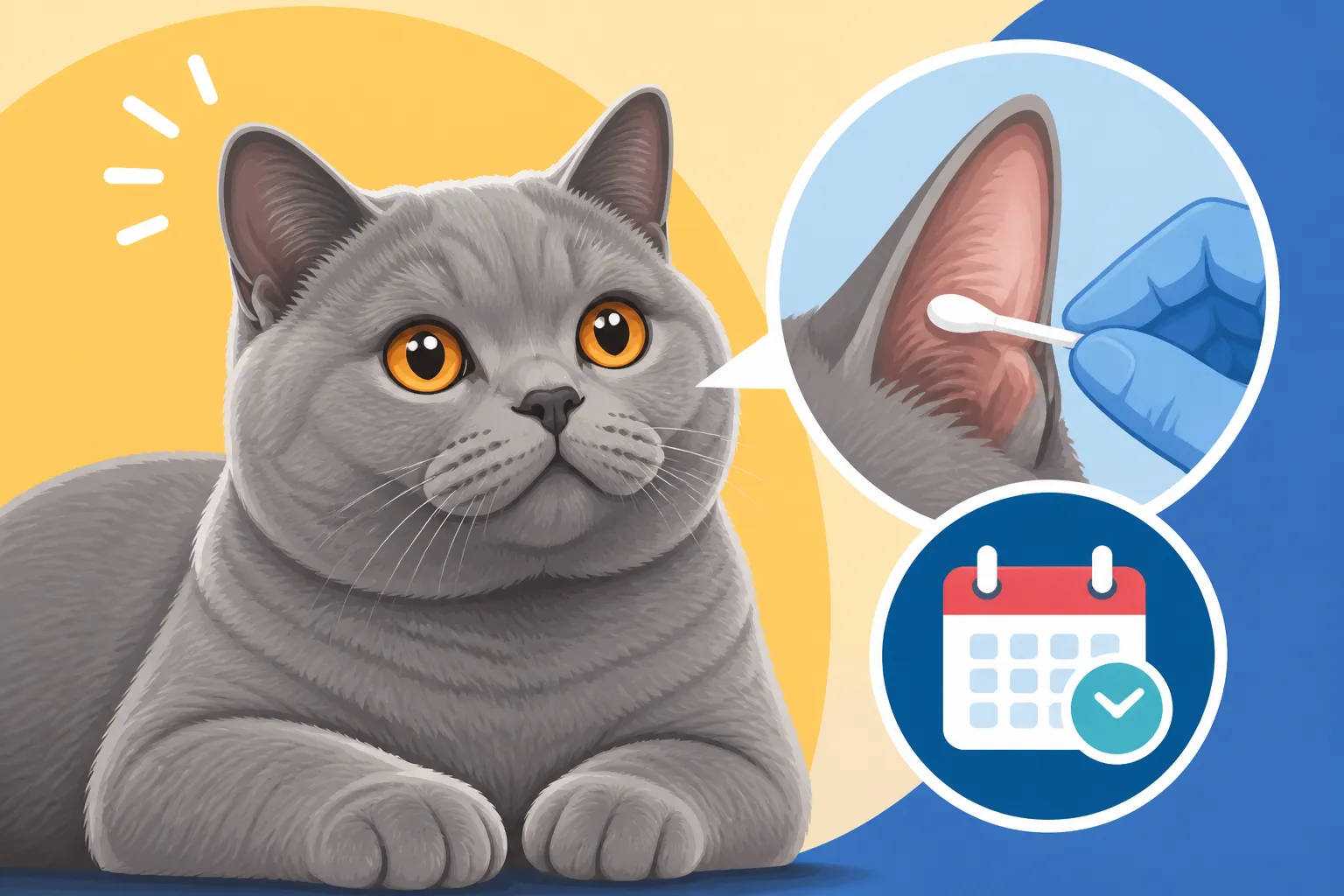
How Often a British Shorthair Needs Its Ears Cleaned
It’s a common misconception that all cats need their ears cleaned regularly, almost like a routine spa treatment. However, for a British Shorthair, this isn't usually the case, and actually, too much fussing can do more harm than good. Our beloved chunky companions generally have quite robust and self-maintaining ears. The real trick isn't knowing how often to clean them as a preventative measure, but rather understanding the subtle cues your British Shorthair gives when something is genuinely amiss and their ears do need your gentle intervention or, more importantly, a trip to the vet. This guide will help you distinguish between a healthy, self-sufficient ear and one that's sending out a silent plea for help.
The British Shorthair's Naturally Resilient Ears
Unlike some breeds with floppy ears or excessive fur in their canals, British Shorthairs are generally blessed with healthy, open ears that are remarkably good at taking care of themselves. Their short, dense coat extends only slightly into the ear canal opening, allowing for good airflow and minimizing the buildup of moisture that can lead to infections. This natural design means that, under normal circumstances, you really don't need to be rummaging around in their ears with cleansers and cotton balls. If you were to peer into a healthy British Shorthair's ear, you'd likely see a clean, pale pink canal with perhaps a minimal amount of light brown or yellowish wax – nothing alarming, just the body doing its job.
What a Healthy British Shorthair Ear Looks Like
When your British Shorthair is in peak health, their ears should reflect that. Take a moment to gently lift an ear flap and peek inside. What you should see is a clean, dry ear canal, perhaps a very light pink in color, consistent with the delicate skin there. There might be a tiny bit of waxy residue, but it should be pale, not dark, and definitely not abundant. It should also be odorless. You shouldn't see any redness, swelling, or discharge of any kind. The outer ear flap itself should be smooth and free from scabs, scratches, or hair loss. What a British Shorthair's Ear Wax Should Look Like can give you a better idea of what's normal.
This naturally clean state is largely due to their ear structure, which isn't overly narrow or hairy, allowing for good ventilation. A healthy British Shorthair’s ears are typically self-cleaning, with earwax migrating out of the canal on its own, usually expelled by the cat's normal head movements and self-grooming. It’s a beautifully efficient system when it's working as it should, which, for most British Shorthairs, is most of the time.
Why Over-Cleaning Can Be Harmful
It's tempting to think that a clean ear is always better, but with British Shorthairs, over-cleaning can actually backfire, leading to more problems than it solves. Think of your cat's ear canal as a delicate ecosystem. It has natural oils and a beneficial balance of microorganisms that protect against invaders. When you introduce harsh cleaners or disrupt this balance too frequently, you can strip away those protective oils, irritate the sensitive skin, and even push debris further into the ear canal.
This irritation can then become a breeding ground for bacteria or yeast, leading to infections that require veterinary intervention. You might unintentionally cause microscopic abrasions, making the ear more vulnerable. It’s a classic case of "if it ain't broke, don't fix it." If your British Shorthair's ears appear clean, dry, and healthy, leave them alone. Your hands-off approach is actually the most caring one in this scenario. You have enough grooming to do with their dense coats, so focus on areas like How Often a British Shorthair Needs Combing rather than overdoing it with their ears.
Signs Your British Shorthair's Ears Need Attention
While British Shorthairs are generally low-maintenance in the ear department, it's absolutely crucial to be vigilant for signs that something is wrong. Cats are notoriously good at hiding discomfort and pain, and ear issues can quickly escalate if left unaddressed. Your role as a British Shorthair parent isn't to routinely clean their ears, but to observe them regularly and recognize the subtle signals that indicate a problem. This might mean an infection, ear mites, allergies, or even a foreign object lodged inside.
Behavioral Cues to Watch For
Your British Shorthair might not tell you directly that their ears hurt, but their behavior will often speak volumes. One of the most common signs of ear discomfort is head shaking. If you notice your usually stoic cat shaking their head repeatedly or with more vigor than usual, it’s a strong indicator. They might also be scratching at their ears with a back paw, sometimes so intensely that they cause redness or scabbing on the outside of the ear flap or behind it.
Another clue is pawing at their ears with a front paw, or constantly rubbing their head against furniture, the carpet, or even against you, specifically focusing on the ear area. You might also notice a general change in their demeanor; perhaps they become more withdrawn, less tolerant of being touched around the head, or even a bit grumpy. Remember, Why a British Shorthair Hides Pain is a survival instinct, so any overt sign of discomfort is usually quite significant. If your British Shorthair flinches or hisses when you try to gently touch their ear, that's a definite red flag.
Visual and Olfactory Indicators
Beyond behavior, a direct visual and olfactory inspection can provide undeniable evidence of an ear problem. Gently lift the ear flap. Look for redness or swelling inside the ear canal or on the inner surface of the ear flap. Healthy ear skin should be pale pink. Any intense red color, puffiness, or warmth to the touch is concerning.
Pay close attention to excessive wax. While some light brown wax is normal, dark brown, black, or yellowish wax that is thick, crusty, or granular can indicate trouble. Black, crumbly debris often points to ear mites, a common issue, especially if your cat has recently been exposed to other animals. Yellow or green discharge, especially if it looks like pus, strongly suggests a bacterial infection. Lastly, don't forget your nose: a foul odor emanating from the ear, whether it's yeasty, sour, or truly unpleasant, is a significant sign of infection. Healthy ears simply don't smell.
Here’s a quick comparison to help you identify what’s normal and what's not:
| Feature | Healthy British Shorthair Ear | Troubled British Shorthair Ear |
|---|---|---|
| Color | Pale pink, natural skin tone | Red, inflamed, sometimes dark brown |
| Discharge | Minimal, light brown/yellowish wax | Dark brown, black, crumbly, yellow, green, bloody, pus-like discharge |
| Odor | None | Foul, yeasty, sour, strong, unpleasant |
| Behavior | Calm, no scratching or head shaking | Frequent head shaking, ear scratching, pawing, rubbing head |
| Sensitivity | Tolerates gentle touch | Painful to touch, flinching, hissing |
| Swelling | None | Swollen ear flap or canal |
| Hair Loss | None on or around the ear | Patchy hair loss or scabs from scratching |
If you observe any of the signs in the "Troubled" column, it's time to take action, which usually means a call to your veterinarian.
How to Safely Clean Your British Shorthair's Ears (If Necessary)
Okay, so you've done your due diligence, noticed some concerning signs, and perhaps even spoken with your vet who has advised a gentle cleaning or given you a specific ear wash. This is not a routine task but one performed only when indicated. When it is necessary, approach it with patience and a very gentle touch. Remember, your British Shorthair's ears are sensitive, and a bad experience can make future attempts much harder. They are already quite particular creatures, so a calm approach is essential.
Gathering Your Supplies
Before you even think about approaching your British Shorthair, have everything you need laid out and ready. This minimizes fumbling and stress for both of you.
- Vet-Approved Ear Cleaner: This is critical. Do NOT use water, hydrogen peroxide, alcohol, or any homemade concoction. These can be irritating or even damaging. Your vet can recommend a gentle, pH-balanced ear cleaner specifically formulated for cats. You can often find these at pet supply stores or online retailers like Chewy or Amazon.
- Cotton Balls or Gauze Pads: Choose soft, absorbent cotton balls or small gauze pads. Avoid cotton swabs (Q-tips) for inside the ear canal, as they can push debris deeper and potentially damage the eardrum.
- Treats: High-value treats are your best friend here. You'll want them for positive reinforcement before, during, and especially after the cleaning.
- Towels: Have a towel ready to wrap your cat in if they're particularly squirmy, or simply to protect your clothes and catch any drips.
- A Calm Space: Choose a quiet, well-lit area where you can comfortably work without distractions.
The goal is to make this experience as stress-free as possible. If your cat tends to be anxious about handling, you might consider warming the ear cleaner slightly by placing the bottle in a bowl of warm water for a few minutes. This can make the liquid less shocking when it enters their ear.
The Gentle Cleaning Process
With your supplies ready and your British Shorthair (hopefully) cooperative, you can begin.
- Secure Your Cat: If your cat is a bit restless, gently wrap them in a towel, leaving their head exposed. Having a second person to hold them can also be immensely helpful, allowing you to focus on the ear. Speak to them in a calm, reassuring voice throughout the process.
- Administer the Cleaner: Hold your British Shorthair's head gently but firmly. Gently pull the ear flap up and back to straighten the ear canal. Carefully insert the tip of the ear cleaner bottle into the ear canal. Don't push it too far! Squeeze a generous amount of the cleaning solution into the ear canal until it's fairly full. You'll hear a squishy sound.
- Massage the Base of the Ear: With the cleaner in the ear, gently massage the base of the ear (where it meets the head) for about 20-30 seconds. You should hear that satisfying squishy sound as the cleaner loosens wax and debris. This part is important, as it helps the solution penetrate and break up any gunk.
- Allow Them to Shake Their Head: Step back and let your British Shorthair shake their head. They will inevitably do this, and it’s actually helpful as it dislodges debris and brings it closer to the surface. Have a towel ready to catch any flung solution.
- Wipe the Visible Area: Once they've shaken their head, take a fresh cotton ball or gauze pad and gently wipe away any visible solution, wax, and debris from the inner ear flap and the entrance of the ear canal. Again, resist the urge to use cotton swabs or go deep into the canal. You're only cleaning what you can easily see and reach.
- Repeat (if necessary) and Reward: If the ear is particularly dirty, you might need to repeat steps 2-5 with fresh cotton balls until they come out cleaner. After you're done with one ear (or both, if needed), offer plenty of praise and those high-value treats. Make it a positive experience, even if it was a little challenging. Some British Shorthairs might be a bit miffed, but with consistency and positive reinforcement, they can learn to tolerate it. Remember, this is part of their overall Caring for an Old British Shorthair if they develop issues later in life, so starting good habits now can help.
When to Seek Veterinary Advice for Ear Concerns
It's absolutely vital to understand that ear cleaning, when necessary, is a supportive measure, not a diagnostic one. If you're seeing signs of ear problems, your very first step should always be a call to your veterinarian. Self-treating an ear infection or other serious issue without a proper diagnosis can lead to worsening conditions, prolonged discomfort for your cat, and even permanent damage.
Common Ear Problems in British Shorthairs
Even with their naturally healthy ears, British Shorthairs can fall victim to various ear ailments.
- Ear Mites (Otodectes cynotis): These tiny parasites are incredibly common, especially in multi-pet households or if your cat has ever been exposed to other animals. They cause intense itching and produce a characteristic dark, crumbly, coffee-ground-like discharge. They are highly contagious.
- Bacterial Infections: Often a secondary infection to mites or allergies, bacterial infections can cause redness, swelling, pain, and a yellow or green discharge, usually accompanied by a foul smell.
- Yeast Infections (Malassezia): These can also be secondary to other issues and often present with a brownish, waxy discharge and a distinct yeasty odor.
- Allergies: Just like humans, cats can suffer from environmental or food allergies, and one common manifestation is itchy ears. This can lead to your cat scratching excessively, causing inflammation and potentially opening the door for secondary infections.
- Foreign Bodies: While less common for indoor British Shorthairs, outdoor cats can get grass seeds or other small objects lodged in their ears, causing acute pain and irritation.
- Polyps or Tumors: In rare cases, growths can develop in the ear canal, leading to chronic issues.
Recognizing these issues requires a trained eye and often, specialized equipment. For instance, a vet can use an otoscope to look deep into the ear canal, something you can't do safely at home. Signs a British Shorthair Is Unwell will often manifest through ear issues, among other symptoms.
The Importance of Professional Diagnosis and Treatment
Your veterinarian is equipped to not only identify the specific cause of your British Shorthair's ear discomfort but also to prescribe the appropriate treatment. They can:
- Perform a Thorough Examination: Using an otoscope, they can visually inspect the entire ear canal, check the eardrum for damage, and look for foreign bodies or polyps.
- Take Samples: They might take a swab of the ear discharge for microscopic examination to identify mites, bacteria, or yeast. This is crucial because different types of infections require different medications.
- Prescribe Specific Medication: Whether it's medicated ear drops for mites, antibiotics for bacterial infections, or antifungal medications for yeast, targeted treatment is essential for effective resolution.
- Advise on Cleaning Techniques: If cleaning is part of the treatment plan, your vet can demonstrate the correct technique and recommend the best cleaner for your cat's specific condition.
- Address Underlying Issues: If allergies are suspected, they can help you explore diagnostic options and management strategies.
Attempting to treat an ear problem yourself with over-the-counter remedies or improper cleaning can delay effective treatment, prolong your cat's suffering, and potentially lead to more severe, chronic issues or even hearing loss. So, if you're ever in doubt, or if your British Shorthair is showing persistent signs of ear trouble, please don't hesitate to reach out to your vet. It's the best way to ensure your cherished companion gets the care they need to stay happy and healthy. Ensuring proper vet care is just one part of the broader considerations, such as a What a British Shorthair's Yearly Bloodwork Should Cover.
Disclaimer
This article is for general informational purposes only and does not constitute professional advice. Laws, prices and regulations vary by location and change over time. Consult a qualified professional for guidance on your specific situation.