Why a Slicker Breaks a British Shorthair’s Guard Hairs
It's incredibly frustrating when you're trying to do your best for your beloved British Shorthair, diligently grooming them, only to find their beautiful, plush coat isn't quite right. Maybe it looks a bit dull, or you notice little broken hairs floating around. Many well-meaning owners reach for a slicker brush, thinking it's the ultimate tool for a thick cat coat, but for our British Shorthairs, this common grooming implement can actually do more harm than good, particularly to their unique guard hairs. This guide will walk you through why slicker brushes are a no-go for this magnificent breed and what you should be using instead to keep their coat in pristine condition.
Understanding the British Shorthair's Unique Coat Structure
Before we dive into why a slicker brush isn't suitable, it's crucial to understand what makes a British Shorthair's coat so special. It’s not just "fur"; it's a marvel of nature, perfectly adapted to its original climate and a key part of the breed's iconic look.
The Crisp Outer Coat and Dense Undercoat
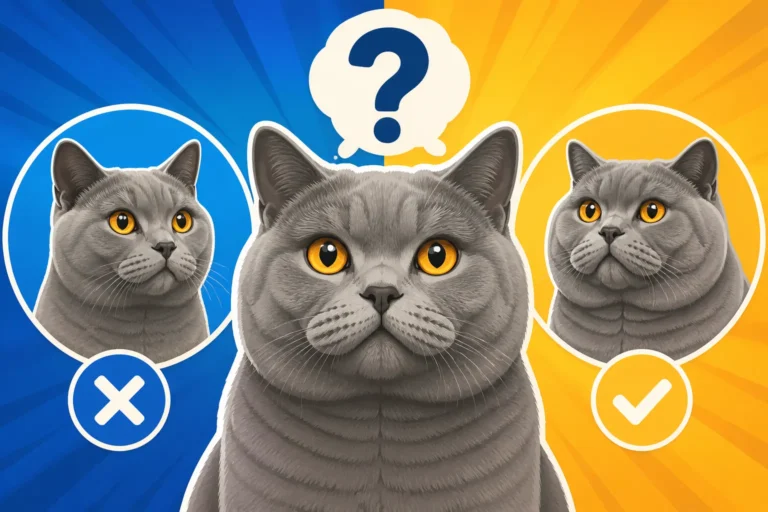
A British Shorthair's coat is often described as "crisp" or "plush." It's not soft and silky like a Persian's, nor is it rough and wiry. Instead, it possesses a unique texture that sets it apart. The coat is double-layered, consisting of a very dense, soft, woolly undercoat and a slightly coarser outer layer made up of guard hairs. When you run your hand against the grain, the coat should stand away from the body, almost like velvet, and then slowly settle back into place. This density is a protective barrier, and it's what gives them that wonderful, teddy bear-like appearance. You can learn more about What a British Shorthair's Coat Is Like and Why a British Shorthair's Coat Feels Crisp to truly appreciate its unique qualities.
The undercoat is designed for insulation, keeping your cat warm in cooler temperatures. It's incredibly thick, which is why British Shorthairs feel so substantial when you pick them up. The guard hairs, on the other hand, are the slightly longer, stiffer hairs that give the coat its "crisp" texture and define its overall appearance. They are the top layer, visible to the eye, and are responsible for the coat's smooth, even lay when groomed correctly. They provide the first line of defense against moisture and dirt, acting almost like a natural raincoat.
The Purpose of Guard Hairs
Those seemingly coarse outer hairs, the guard hairs, play a much more vital role than just looking good. They are essentially the protective armor of your British Shorthair's coat. Their slightly stiffer texture helps them shed water and debris, keeping the softer, insulating undercoat dry and clean. Imagine walking through a misty morning or brushing against a dusty curtain – the guard hairs take the brunt of it, preventing the finer undercoat from getting matted or soaked. This protective layer is a significant reason Why a British Shorthair's Coat Protects It.
Beyond protection, guard hairs are crucial for the breed's aesthetic. They contribute to the characteristic "stand-off" quality of the coat, making it look full and dense. Without healthy guard hairs, the coat can appear flat, dull, and less vibrant. They give the British Shorthair that distinctly rounded, substantial silhouette. Maintaining their integrity is paramount for both your cat's comfort and their iconic appearance.
Why Slicker Brushes Are the Wrong Tool for the Job
Now that we understand the intricate structure of a British Shorthair's coat, it becomes clearer why a tool designed for a different purpose can cause problems. Slicker brushes, while excellent for some breeds, are often a mismatch for the British Shorthair's unique grooming needs.
The Mechanics of a Slicker Brush
A slicker brush is characterized by its rectangular head covered with many fine, short wire pins, often angled slightly. These pins are rigid and packed very closely together. The primary design intention of a slicker brush is to penetrate deeply into a thick, long, or dense coat, like that of a Persian or a Maine Coon, to grab and pull out loose undercoat and small mats. They excel at detangling and deshedding for breeds with soft, fluffy coats or very long hair where the undercoat can easily clump and hide beneath the outer layer.
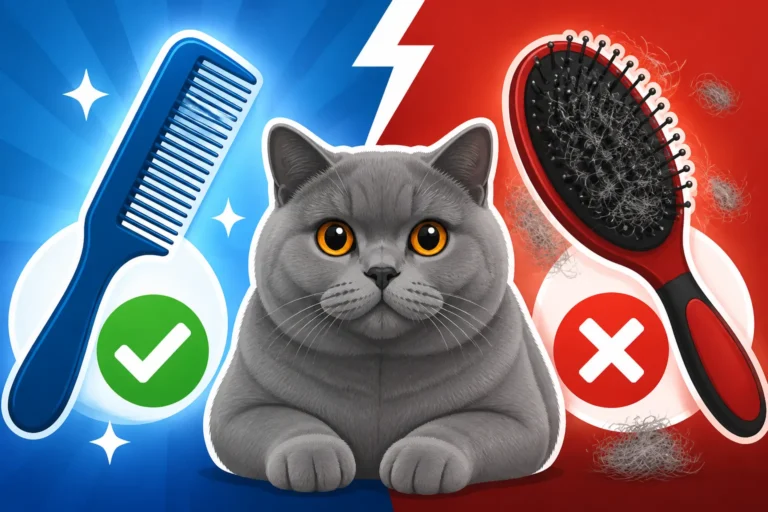
When used on breeds with less dense or softer outer coats, the pins can easily glide through to the undercoat. However, the British Shorthair's coat is different. The guard hairs are not meant to be easily pulled out; they are sturdy and protective. The densely packed, stiff wires of a slicker brush don't differentiate between loose undercoat and healthy guard hairs, and this is where the trouble begins.
The Damage to Guard Hairs
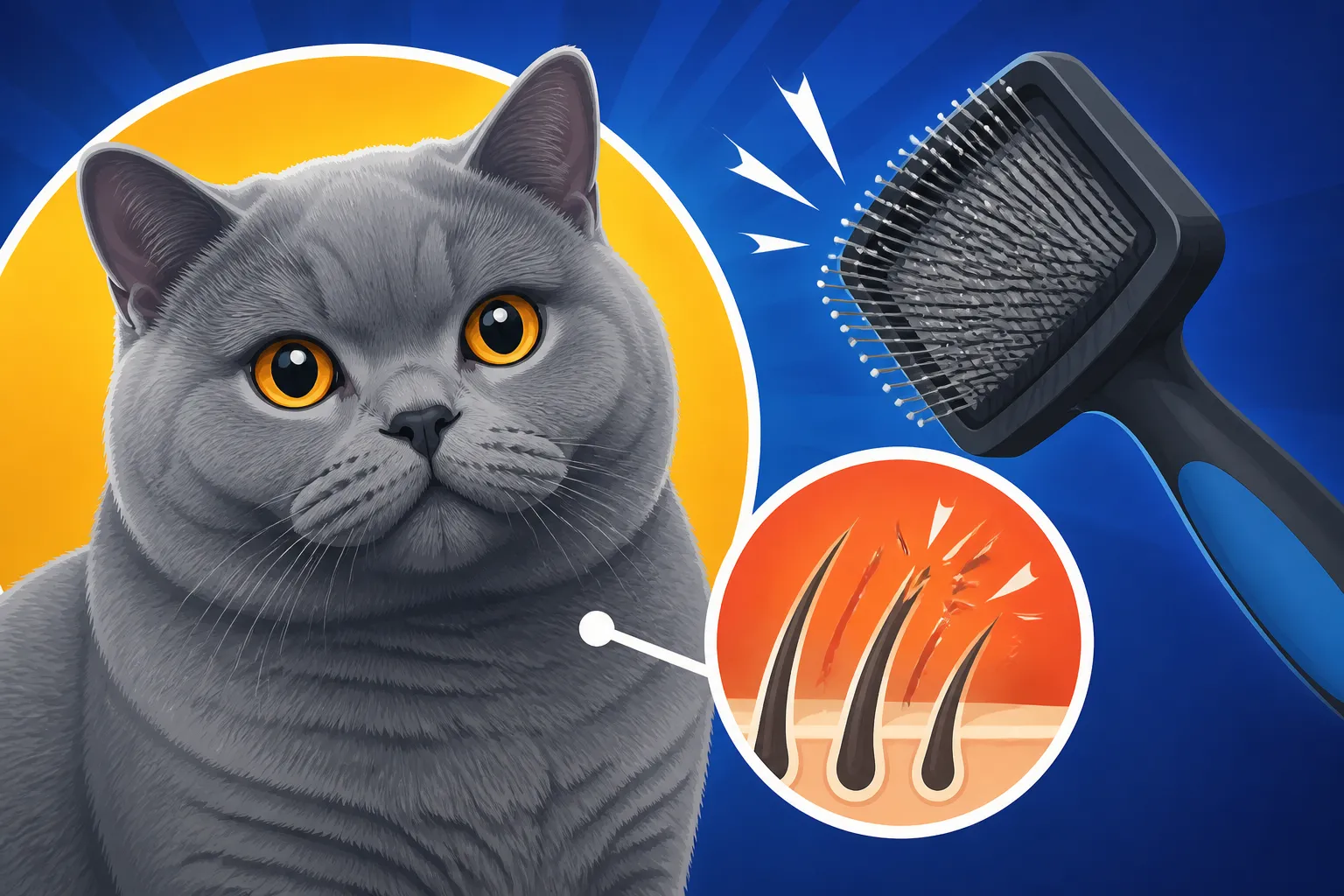
Imagine trying to comb through a tightly woven, dense blanket with a rake. That's a bit like what happens when a slicker brush meets a British Shorthair's coat. Instead of smoothly gliding through and gently removing only the dead undercoat, the fine, rigid pins of the slicker brush snag, pull, and ultimately break the stiffer guard hairs.
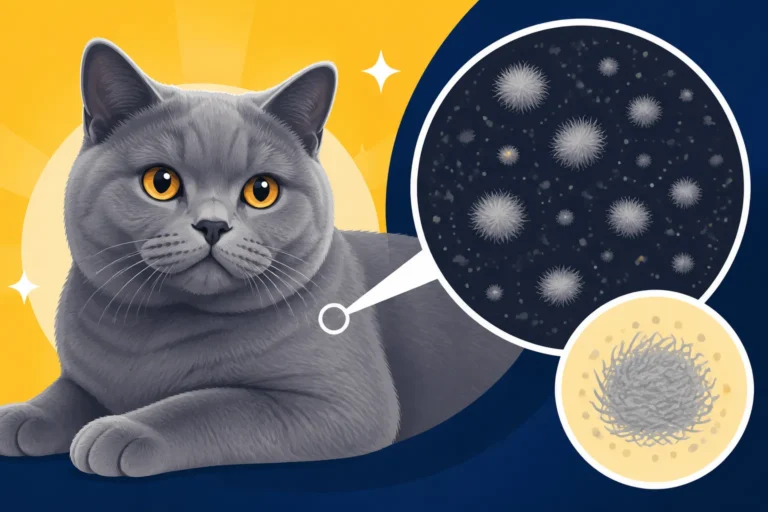
Because the British Shorthair's undercoat is so dense and the guard hairs are relatively short and resilient, the slicker brush often can't penetrate effectively enough to only reach the loose undercoat. Instead, it scrapes along the surface, tearing and snapping the protective outer hairs. You might not see large clumps of hair immediately, but over time, you'll notice a significant change in your cat's coat. It can start to look frizzy, dull, and even sparse in areas. The beautiful "crisp" texture will be compromised, replaced by a softer, almost damaged-looking fuzz. This breakage also impacts the coat's ability to protect your cat from the elements, as the uniform barrier of guard hairs is disrupted.
What you're left with is a coat that loses its characteristic luster and density, becoming prone to matting because the protective outer layer is no longer intact. This is why it's so important to use the correct tools to avoid this kind of irreversible damage.
The Right Tools and Techniques for British Shorthair Grooming
Grooming your British Shorthair shouldn't be a battle that leaves their coat looking worse for wear. With the right tools and a gentle approach, you can maintain their magnificent coat without any risk of damage. It’s all about working with their coat, not against it.
The Importance of a Wide-Toothed Metal Comb
Forget the slicker brush entirely for a British Shorthair. Your best friend in grooming will be a sturdy, good-quality wide-toothed metal comb. When choosing, look for one that has teeth of varying widths or a comb that is specifically designed for dense, double coats. The teeth should be smooth, with no sharp edges that could scratch your cat's skin. Brands like Andis or Chris Christensen offer excellent options, readily available on platforms like Chewy or Amazon.
Why this specific comb? Unlike the closely packed pins of a slicker brush, the wider, smoother teeth of a metal comb are designed to gently separate the hairs, allowing them to glide through both the guard hairs and the undercoat without snagging. They can effectively reach deep into the dense undercoat to pull out loose fur, all while leaving the healthy guard hairs completely undisturbed. This is the only tool that truly reaches Which Comb Reaches a British Shorthair's Undercoat effectively and safely.
Gentle, Layered Combing Techniques
Grooming a British Shorthair is less about brute force and more about patience and technique. Here’s a step-by-step approach to keep their coat perfect:
- Find a Calm Time: Choose a moment when your cat is relaxed, perhaps after a nap or a meal. Start with short sessions, especially if they aren't used to regular grooming.
- Section by Section: Don't try to comb their entire body at once. Start from the head or shoulders and work your way back, tackling small sections at a time. This is often called "line combing." Use one hand to gently hold the fur up, exposing the undercoat, and use the comb in your other hand to work through the section beneath.
- Comb With the Grain: Always comb in the direction of hair growth. This is crucial for avoiding discomfort and preventing hair breakage.
- Gentle Strokes: Use short, gentle strokes. If you encounter a tangle, don't yank. Instead, hold the hair close to the skin with your fingers to prevent pulling, and try to gently tease the knot apart with the very tips of the comb teeth. If it's a stubborn mat, it might be safer to seek professional help to avoid pain and skin damage.
- Focus on Dense Areas: Pay particular attention to areas where mats and loose undercoat tend to accumulate, such as behind the ears, under the chin, in the "armpits," and around the hindquarters.
- Consistency is Key: Regular, even daily, combing is far more effective than infrequent, intense sessions. A quick 5-10 minute session a few times a week can prevent most problems. For guidance on frequency, check out How Often a British Shorthair Needs Combing.
Dealing with Shedding Seasons
British Shorthairs are not considered heavy shedder year-round, but they do have periods, usually in spring and autumn, where they "blow" their undercoat. This means they shed significantly more during these times to adapt to seasonal temperature changes. You might notice this especially during The Two Weeks a British Shorthair Drops Its Undercoat. During these peak shedding times, you'll need to increase your grooming frequency. Daily combing might be necessary to help remove the大量loose undercoat before it can cause mats or be ingested, leading to hairballs.
Even during shedding season, stick to your wide-toothed metal comb. Resist the urge to use deshedding tools like a Furminator, which, while effective for some breeds, can also damage the delicate guard hairs of a British Shorthair by stripping out healthy coat along with the loose undercoat. The goal is to remove dead undercoat, not to thin out the entire coat. A regular comb, used consistently, is perfectly capable of managing this extra shedding. If you’re curious about shedding levels, How Much a British Shorthair Sheds offers more insight.
Long-Term Coat Health and Preventing Future Damage
Maintaining a healthy, beautiful coat for your British Shorthair is an ongoing commitment, but it's one that deeply contributes to their overall well-being and appearance. It's not just about brushing; it's about a holistic approach that ensures their coat remains robust and vibrant for years to come.
Recognizing and Remedying Damage
If you've previously used a slicker brush and suspect your British Shorthair's guard hairs might be damaged, there are a few signs to look for. The coat might appear less dense, feel softer and less "crisp," or have a fuzzy, dull, or even a slightly scorched look. You might also notice more fine, broken hairs when you groom.
The good news is that hair grows back. The first step to remedying the situation is to immediately stop using the damaging tool. Switch exclusively to a wide-toothed metal comb and adopt the gentle grooming techniques described above. Regular, gentle combing will help remove the damaged hairs and stimulate healthy new growth. Patience is key; it can take several weeks or even months for the coat to fully recover its former glory. Ensure you're not over-combing or being too aggressive, as this can impede recovery. If you're struggling, a professional groomer experienced with British Shorthairs can offer advice or help with a gentle cleanup. Whether a British Shorthair Needs Professional Grooming can help you decide if a professional is right for you.
Nutritional Support for a Healthy Coat
A healthy coat isn't just about what you do on the outside; it's also a reflection of what's happening on the inside. A balanced, high-quality diet plays a significant role in promoting strong, shiny fur and healthy skin. Look for cat foods that list real meat as the first ingredient and contain essential fatty acids like Omega-3 and Omega-6, often found in fish oils or flaxseed. These nutrients are vital for skin hydration and coat luster.
Many premium cat food brands focus on ingredients that support coat health. Sometimes, a veterinary-approved supplement containing these fatty acids can also be beneficial, especially if your cat's coat needs an extra boost. Always consult your vet before adding any supplements to your cat's diet to ensure they are appropriate for their individual needs. Remember, a cat that eats well often looks well. Consider your cat's diet, especially if they are a British Shorthair that Feeding a British Shorthair That Will Eat Whatever You Put Down.
| Grooming Tool | Suitability for British Shorthair | Pros | Cons |
|---|---|---|---|
| Slicker Brush | Unsuitable | Good for very long, fluffy undercoats | Breaks guard hairs, damages coat texture, causes dullness, can irritate skin |
| Wide-Toothed Metal Comb | Highly Recommended | Gently removes loose undercoat, preserves guard hairs, detangles safely, maintains crisp texture | Requires consistent use, might take longer than a slicker for initial heavy shedding |
Disclaimer
This article is for general informational purposes only and does not constitute professional advice. Laws, prices and regulations vary by location and change over time. Consult a qualified professional for guidance on your specific situation.