How to Pick Up a British Shorthair Without a Fight
It's a common and completely understandable frustration for many British Shorthair owners: you love your fluffy companion, you want to scoop them up for a quick cuddle, and they just… squirm. Or bolt. Or give you that famous "grumpy cat" look that clearly says, "Please, no." This guide is here to shed some light on why your British Shorthair might resist being picked up, and more importantly, to give you gentle, effective strategies to approach them in a way that respects their nature and builds a stronger, more trusting bond.
Understanding the British Shorthair's Nature
Before we even talk about how to pick them up, we need to understand why they might not be keen on it in the first place. It’s not personal, truly. It's just part of what makes our British Shorthairs so wonderfully unique. Their inherent characteristics often mean they perceive being lifted differently than, say, a more clingy or petite breed might.
The British Shorthair's Independent Streak
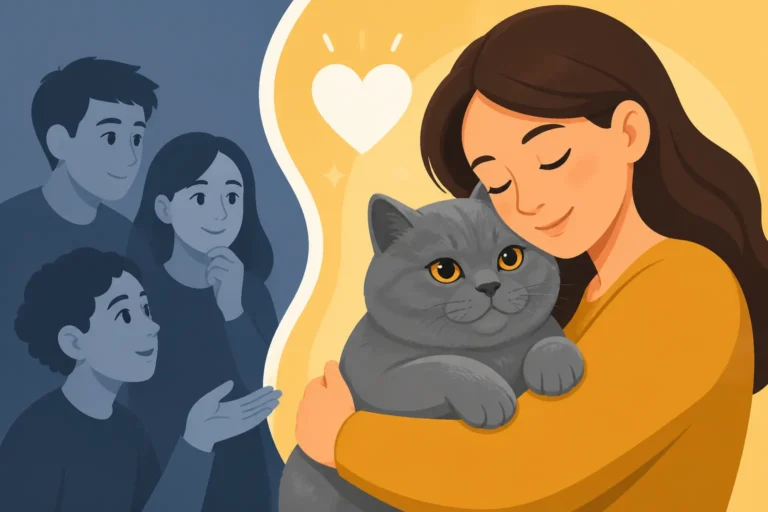
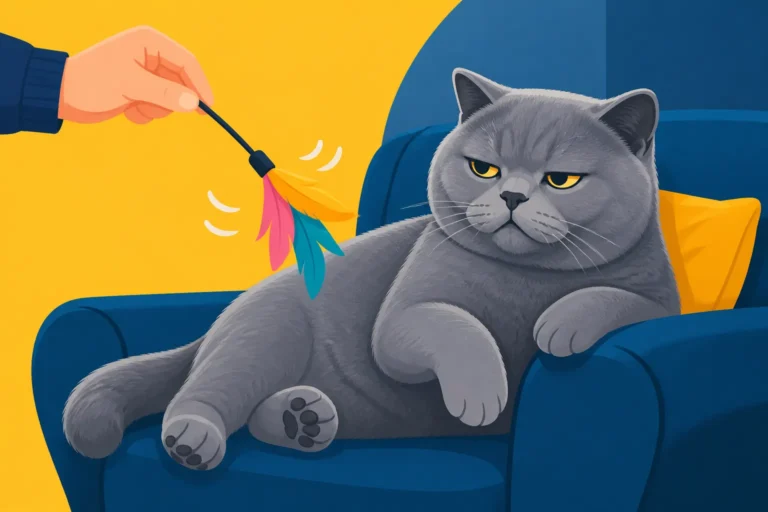
One of the most endearing qualities of the British Shorthair is their calm, dignified independence. They are often described as "velcro with boundaries." They love to be near you, to observe you, and to occupy the same room, but they aren't typically the kind of cat that will insist on sitting on your lap for hours on end. This inherent independence extends to their physical interactions. They prefer to be in control of their own movements and space. Being scooped up means temporarily losing that control, which can feel unsettling for a creature that values its autonomy. They appreciate affection on their terms, which usually means a gentle stroke while they're settled next to you on the sofa, or a slow blink from across the room. It’s not a rejection of you, but a strong preference for how they receive love. You can learn more about this in How Affectionate a British Shorthair Is.
They're not trying to be aloof or unfriendly; they simply have a different love language. Imagine someone constantly trying to hug you when you prefer a handshake or a nod. It's not that you dislike them, you just have a different way of interacting. For a British Shorthair, a solid presence, a shared space, and a respectful distance are often the pillars of their affection. This independent streak is a cornerstone of What a British Shorthair's Temperament Is Really Like. They’re not usually vocal about their displeasure, but their body language will tell you everything you need to know if you're paying attention.
Their Cobby Build and Feeling Vulnerable
Take a good look at your British Shorthair. They are stout, sturdy, and wonderfully cobby. This means they have a broad chest, strong legs, and a dense, muscular body. While this makes them incredibly handsome, it also means they are built for stability on all fours, not for being dangled or held in awkward positions. When you pick them up, their weight can feel substantial, and if not supported properly, they can feel off-balance and vulnerable. Imagine being lifted unexpectedly by someone who doesn't quite support your full weight; it's startling and uncomfortable. This physical reality contributes significantly to Why a British Shorthair Hates Being Picked Up.
Their instinct is to feel solid and grounded. When their feet leave the floor, especially if they are not supported correctly, they can feel insecure. This isn't about being clumsy; it's about their natural build dictating their comfort levels. A small, lithe cat might be more accustomed to being picked up and tucked into an arm, but a British Shorthair needs careful consideration of their substantial form to feel secure. It's truly an important aspect of A British Shorthair Will Not Be Picked Up.
Why a British Shorthair Dislikes Sudden Movements
British Shorthairs are generally calm and composed, and they thrive in predictable environments. Sudden, unexpected movements or loud noises can startle them. Being picked up unexpectedly, especially from behind or while they are deeply engrossed in something, can be quite alarming. They appreciate a heads-up, a gentle warning, and a slow approach. They need time to process what's happening and to feel safe in the interaction.
Their preference for a serene existence means that any disruption to their routine or personal space, especially if it's forceful or sudden, is likely to be met with resistance. It's not just about being held; it's about the manner in which they are approached for holding. If you rush in, grab them, or try to lift them without warning, you’re likely to activate their "flight" response. They're telling you, in their quiet way, that they need you to respect their pace.
Building Trust and Positive Associations
Okay, so we understand why they might be reluctant. Now, let's talk about turning that around. The key isn't to force them, but to gently persuade them that being handled can be a positive, even rewarding, experience. It’s a marathon, not a sprint, but the payoff is a deeper, more trusting relationship.
Gentle Approaches and Gradual Acclimation
The first rule of picking up a British Shorthair is to never sneak up on them. Always approach them from the front or side, where they can see you coming. Speak to them in a soft, reassuring voice. Let them sniff your hand if they wish. The goal is to signal your intentions clearly and calmly, giving them time to consent to the interaction. Start small. Instead of trying to scoop them up immediately, begin by just stroking them, especially areas they enjoy, like their cheeks or behind their ears.
Once they're comfortable with being petted, slowly slide your hand under their chest or belly, just enough to feel their weight, but without lifting them fully. Hold it there for a few seconds, then remove it. Repeat this over several sessions, gradually increasing the duration. The idea is to desensitize them to the feeling of your hands supporting their body, making it a familiar and non-threatening sensation. This is a crucial step in teaching them How to Carry a British Shorthair Safely. It's about showing them you won't surprise them or make them feel insecure.
The Power of Treats and Praise
Positive reinforcement is your secret weapon. Every time you approach them gently, every time they allow you to touch them in preparation for a lift, and especially if you manage a small, brief lift, immediately reward them. High-value treats, like a dollop of squeeze-up cat treat or a small piece of cooked chicken, work wonders. Pair the treat with soft, encouraging words like "Good kitty!" or "Brave boy/girl!" This creates a positive association: "When my human touches me, good things happen."
Consider keeping a special treat on hand, perhaps a particular type they absolutely adore, specifically for handling sessions. This makes the experience even more enticing. You can even find a wide variety of these special treats on Amazon, making it easy to stock up on their favorites. Start by giving a treat just for approaching, then for a light touch, then for a partial lift, and so on. The goal is to make them want to engage with you in this way.
Creating a Safe Space for Interaction
Your British Shorthair needs to feel secure during these interactions. Choose a quiet time when there are no distractions or loud noises. Sit on the floor with them, making yourself less imposing. This allows them to approach you on their terms and makes the interaction feel less like an ambush. If they feel trapped or cornered, they will naturally resist.
Consider doing these training sessions in a familiar room where they feel relaxed and comfortable. Avoid trying to pick them up when they are sleeping deeply, eating, or using the litter box, as these are vulnerable moments where they might be startled or feel violated. By respecting their boundaries and choosing the right moments, you're building a foundation of trust that goes far beyond just being picked up.
The Right Way to Pick Up a British Shorthair
Now that we’ve laid the groundwork of trust and understanding, let's talk about the actual technique. There's a proper way to support their cobby bodies that makes all the difference in their comfort level.
Proper Support and Body Mechanics
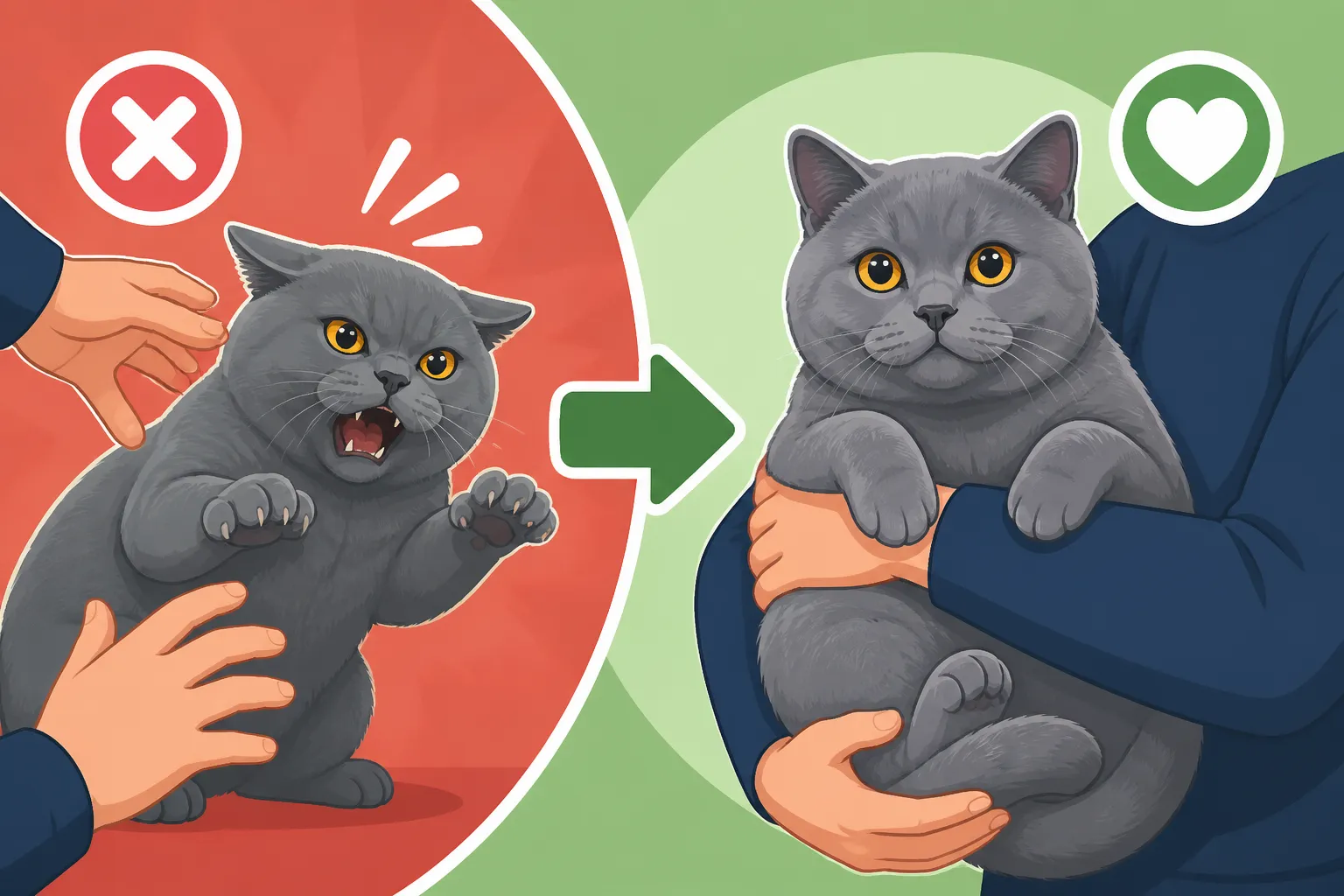
When you do pick up a British Shorthair, proper support is paramount. You need to support their entire body, not just their front end.
- Approach Calmly: As discussed, approach from where they can see you, speak softly.
- One Hand Under the Chest: Gently slide one hand under their chest, between their front legs. This supports their upper body.
- Other Hand Under the Rump: Bring your other hand under their hindquarters, supporting their bottom and hind legs. This is crucial for their sense of stability.
- Lift Evenly and Closely: Lift them smoothly and evenly, bringing them close to your body. Cradle them against your chest or hip, so they feel secure and don't feel like they're dangling. This minimizes the feeling of vulnerability. Their preference is often to feel like a well-supported baby, not a sack of potatoes.
- Keep it Brief (Initially): Especially in the beginning, only hold them for a few seconds. Put them down gently, and immediately reward them with praise and a treat. Gradually increase the duration as they become more comfortable. This step-by-step method is detailed in How to Carry a British Shorthair Safely.
Remember, their compact build means their spine needs good support. Never pick them up by their armpits, as this puts strain on their shoulders and leaves their hindquarters swinging uncomfortably. The goal is to make them feel like a natural extension of your body, not a heavy object being hoisted.
Reading Your Cat's Body Language
Your British Shorthair communicates volumes through subtle cues. Learning to read these signals is vital to preventing a "fight" and building trust.
- Relaxed and Accepting: Soft eyes, slow blinks, tail held in a gentle curve or relaxed swish, ears forward or slightly to the side. They might lean into your touch.
- Uncertain or Unhappy: Ears flattening back, pupils dilating, tail thumping or tucked, stiff body, looking away, subtle low growl or a tense posture. They might try to pull away. If you see these signs, back off immediately. Pushing them past this point will only reinforce their negative association with being handled.
- Warning Signs: Hissing, spitting, growling, swatting, or attempting to bite. If your cat reaches this stage, you've gone too far, too fast. Retreat and re-evaluate your approach.
Here’s a quick reference table for their comfort levels:
| Body Part | Relaxed/Accepting | Tense/Uncertain | Warning/Aggressive |
|---|---|---|---|
| Eyes | Soft, normal pupil size, slow blinks | Wide, dilated pupils, staring, darting eyes | Hard stare, pupils fully dilated (fear/aggression) |
| Ears | Forward, slightly to the side, relaxed | Swiveled back, flattened against head | Pinned flat against head |
| Tail | High, gentle curve; relaxed swish; still | Low, tucked, thumping vigorously | Lashing, puffed up, tucked tightly |
| Body | Relaxed posture, leaning into touch | Stiff, hunched, attempting to shrink or escape | Arched back, piloerection (fur standing up), low to ground |
| Mouth/Vocal | Closed, purring, soft trills or chirps | Tense, lip licking, low growl, hiss (subtle) | Open mouth, hissing, growling, spitting, biting |
Always respect their signals. If they’re sending "no" signals, listen. It shows them you understand and value their communication.
When to Avoid Picking Them Up
Sometimes, it's just not the right time, and that's okay. Knowing when to not pick up your British Shorthair is just as important as knowing how.
- When they are sleeping soundly: Startling them from a deep sleep can be disorienting and stressful.
- When they are eating or drinking: Interrupting mealtime can be seen as an invasion of their resources and personal space.
- When they are using the litter box: This is a very vulnerable moment; never disturb them here.
- When they are visibly stressed or hiding: If they're already feeling anxious (e.g., after a loud noise, during a storm, or if they're unwell), adding physical handling will only increase their distress.
- When they are playing intensely: Interrupting their hunt or play sequence can be frustrating for them.
- If you are feeling stressed or angry: Cats are incredibly attuned to our emotions. If you’re not calm, your cat will pick up on it, making them less likely to cooperate.
By being mindful of these situations, you demonstrate respect for their needs and enhance their overall sense of security in your home.
Common Scenarios Requiring Handling
Despite their preferences, there will be times when you absolutely must pick up your British Shorthair. These are the moments when a foundation of trust and a gentle technique become indispensable.
Vet Visits and Carriers
The most common reason to pick up a reluctant cat is to get them into a carrier for a vet visit. This can be a high-stress situation for both of you. If your cat associates the carrier only with stressful vet trips, it will become even harder.
- Carrier Acclimation: Leave the carrier out in a common area with the door open, perhaps with a soft blanket and some treats inside. Let them explore it on their own terms. Make it a normal piece of furniture, not a dreaded box. You can put their favorite toy or a bit of catnip inside to make it appealing. Some British Shorthairs even enjoy napping in carriers once they feel safe.
- Gentle Insertion: When it's time to go, don't chase them around the house. Lure them near the carrier with treats. If they won't walk in, the best method for many British Shorthairs is to gently guide them in rear-first. Support their hindquarters, lift them, and back them into the carrier. This often feels less confronting than head-first, where they might brace their paws. Secure the door quickly but calmly. For heavier British Shorthairs, a top-loading carrier can sometimes be easier, as you can gently lower them in. Many excellent and sturdy top-loading carriers are available on Amazon that can accommodate the weight and size of a mature British Shorthair.
- Calming Aids: For truly anxious cats, discuss pheromone sprays or calming supplements with your vet. Spraying a pheromone in the carrier 15-20 minutes before use can make a big difference. This ties into How to Get a British Shorthair Into a Carrier and How a British Shorthair Behaves at the Vet.
Grooming Needs
Even though British Shorthairs are relatively low-maintenance in terms of grooming, they do need regular combing to prevent mats and manage shedding, especially during seasonal coat blows. You might also need to handle them for nail trims or ear checks.
- Start Young and Make it Positive: If you have a kitten, start handling and touching their paws, ears, and mouth early, making it a positive experience with treats. This helps them grow accustomed to being touched in these sensitive areas.
- Short, Frequent Sessions: Instead of one long, arduous grooming session, aim for short, frequent ones. A few minutes of combing a day can be far less stressful than a weekly battle.
- Proper Tools: Use a wide-toothed metal comb that glides through their dense coat without pulling. A good quality comb, easily found on Amazon, is essential for a comfortable grooming experience. How Often a British Shorthair Needs Combing has more details.
- Nail Trims: If your British Shorthair resists nail trims, try doing one claw at a time, or even just two, spreading it out over the day or several days. Reward after each successful trim. You can gently cradle them in a towel for added security, or have a second person offer treats while you trim. How a British Shorthair Takes to Brushing also provides great tips for making grooming less of a hassle.
Emergency Situations
This is where all your patient training truly pays off. In an emergency, whether it’s a sudden injury, an unexpected evacuation, or if they've gotten into something dangerous, you need to be able to pick them up quickly and safely without them panicking or trying to escape.
- Practice Makes Perfect: The more comfortable your British Shorthair is with gentle, calm handling in non-stressful situations, the better they will tolerate it in a crisis.
- Towel Wrapping: For a cat that is injured or extremely distressed, a towel can be your best friend. Gently wrap them in a towel, securing their paws and body. This provides a sense of security and protects you from scratches, allowing you to move them more safely. This method is often employed by vets and can be a lifesaver.
- Prioritize Safety: In an emergency, your cat's safety (and yours) comes first. If you absolutely must pick them up and they are resisting, be firm but still as gentle as possible. The goal is a quick, safe transfer to where they need to be.
Alternative Ways to Show Affection and Interact
Remember, picking up your British Shorthair is just one way to interact. There are countless other ways to show affection that they might prefer, and which will strengthen your bond just as much, if not more.
Ground-Level Play and Cuddles
British Shorthairs are often content to be near you rather than on you. They thrive on ground-level interaction.
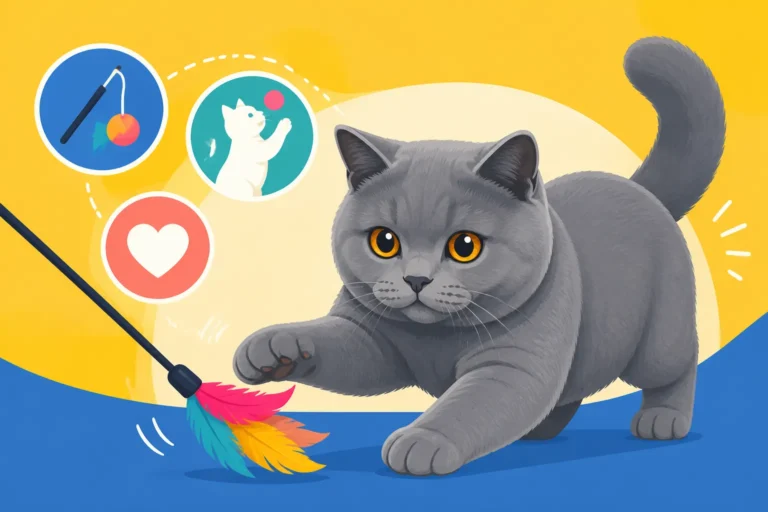
- Interactive Play: Engage them with wand toys, laser pointers (use sparingly and always end with a tangible toy they can "catch"), or puzzle feeders. This satisfies their natural hunting instincts and provides mental and physical enrichment without needing to be picked up. A good quality feather wand from Amazon can provide hours of engaging play.
- Couch Cuddles: Many British Shorthairs love to curl up next to you on the sofa, purring contentedly. This is their way of showing affection and closeness. Pet them gently while they're settled, respecting their boundaries. A British Shorthair Sits Near You, Not On You explains this preference beautifully. They appreciate a calm presence and the warmth of proximity without the expectation of being held aloft.
- Lap Naps (on their terms): Some British Shorthairs will eventually become lap cats, but it will almost always be on their terms. If they jump onto your lap, enjoy it! Don't try to reposition them or hold them tightly. Just let them be. This is a sign of immense trust and comfort.
Respecting Their Personal Space
The golden rule with a British Shorthair is respect. Respect their cues, respect their preferences, and respect their need for personal space.
- Avoid Force: Never try to force your British Shorthair to do something they clearly don't want to do. This includes being picked up, but also extends to being petted when they're not in the mood or being held against their will. Force only breeds fear and resentment, eroding the trust you've painstakingly built.
- Offer Choices: Give them options. Instead of picking them up, offer your hand for a head scratch. Instead of forcing them into a room, open the door and let them choose to enter. Cats, like people, appreciate having agency.
- Understand Their "No": A swishing tail, flattened ears, or a turn of the head are all "no" signals. Acknowledge them, and back off. They'll appreciate you for it, and it will actually make them more likely to engage with you positively in the future because they know their boundaries are respected.
Learning Their Love Language
Every cat is an individual, and British Shorthairs are no exception. While they share breed characteristics, your cat will have its own unique personality and ways of showing and receiving affection.
- Observe and Learn: Spend time simply observing your cat. When are they most affectionate? What kind of pets do they enjoy most? Where do they like to be touched? Some love chin scratches, others adore being stroked along their back, while some tolerate only short interactions.
- Slow Blinks: A slow blink from your British Shorthair is essentially a cat kiss. Respond with one back! It's a powerful way to communicate love and trust on their level.
- Head Bumps and Rubs: If your British Shorthair head-bumps you or rubs against your legs, they are marking you as part of their family and showing great affection. This is a far more natural and welcome interaction for them than being picked up. How a British Shorthair Shows Affection delves deeper into these subtle gestures.
By understanding their natural inclinations, being patient, and offering positive reinforcement, you can teach your British Shorthair to tolerate, and perhaps even enjoy, being picked up when necessary. More importantly, you'll foster a bond built on mutual respect and understanding, making your life together even more rewarding.
Disclaimer
This article is for general informational purposes only and does not constitute professional advice. Laws, prices and regulations vary by location and change over time. Consult a qualified professional for guidance on your specific situation.