Signs a British Shorthair Is Overweight
Visual and behavioral signs help owners identify if a British Shorthair cat carries excess weight and health risks.
Know what to watch for.
Breed-specific conditions, screening and DNA tests, what surgery actually costs, and the daily habits that stretch a healthy lifespan.
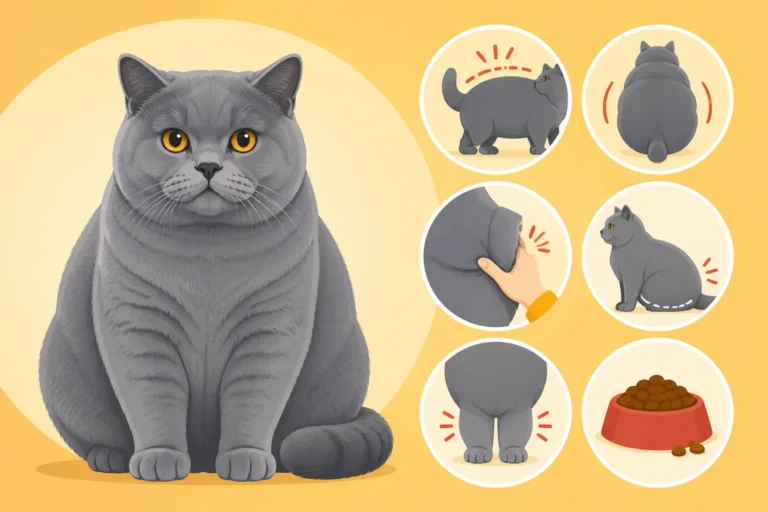
Visual and behavioral signs help owners identify if a British Shorthair cat carries excess weight and health risks.
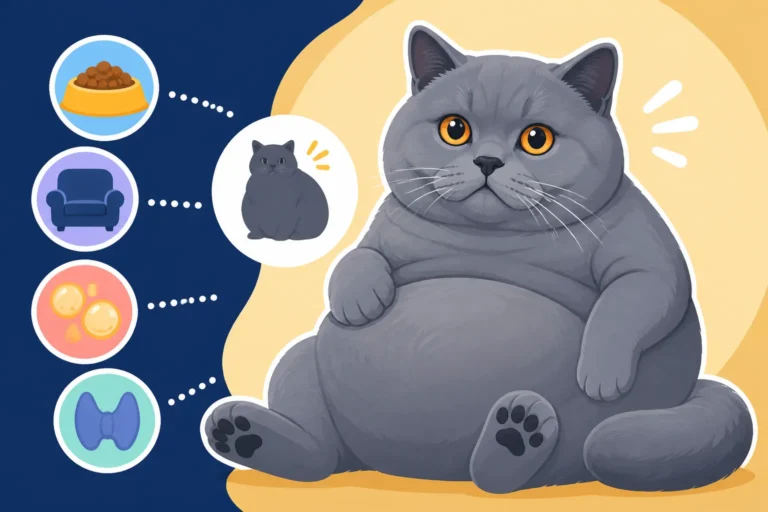
British Shorthair weight gain stems from cobby genetics, efficient metabolisms, and sedentary indoor lifestyles hiding excess fat.
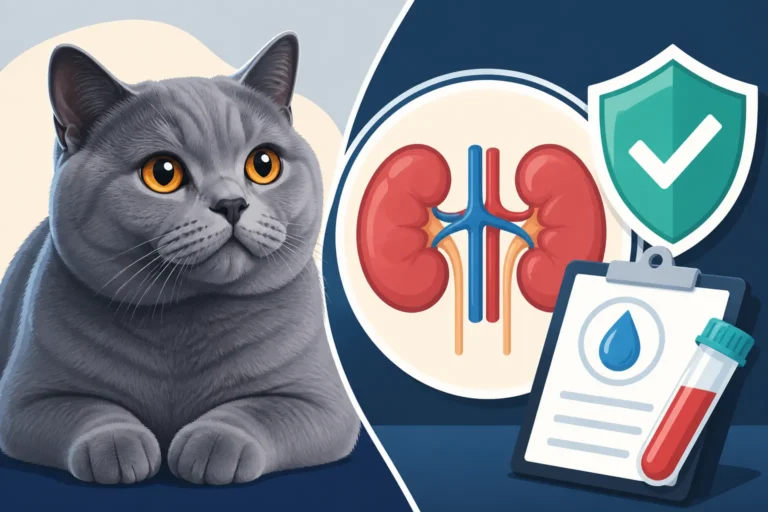
Polycystic kidney disease in British Shorthairs causes fluid-filled cysts, leading to eventual kidney failure without early DNA testing.
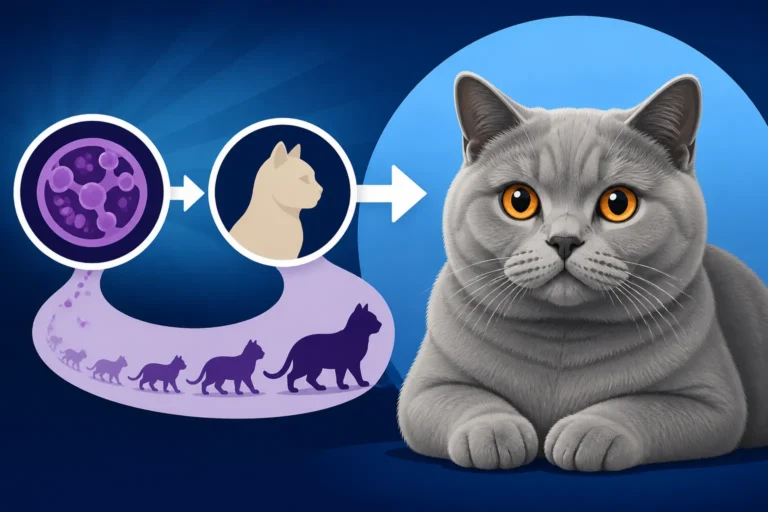
Polycystic Kidney Disease history in British Shorthair cats explains the defective gene mutation and how breeders combat the hereditary condition.
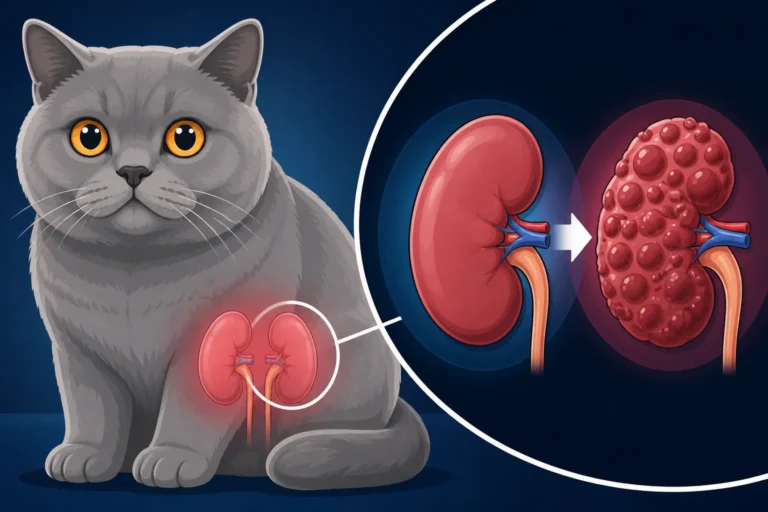
Polycystic Kidney Disease causes fluid-filled cysts in British Shorthair kidneys, leading to progressive tissue damage and eventual failure.
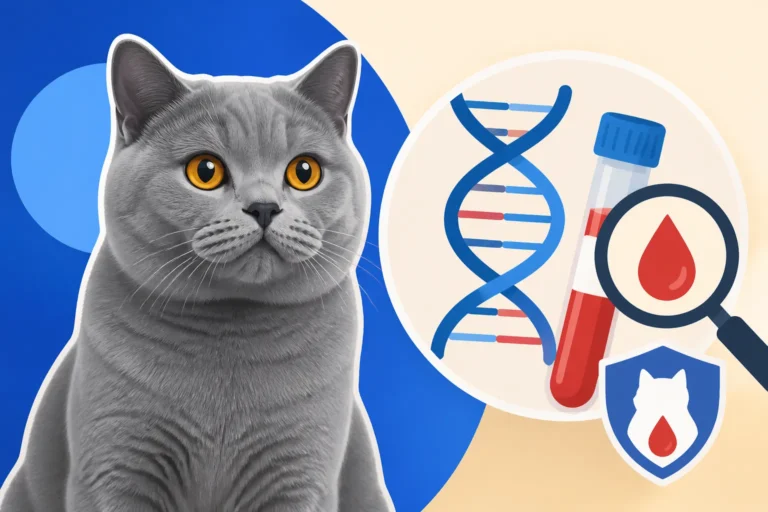
Hemophilia B is an inherited X-linked recessive bleeding disorder in British Shorthairs caused by a deficiency in Factor IX.
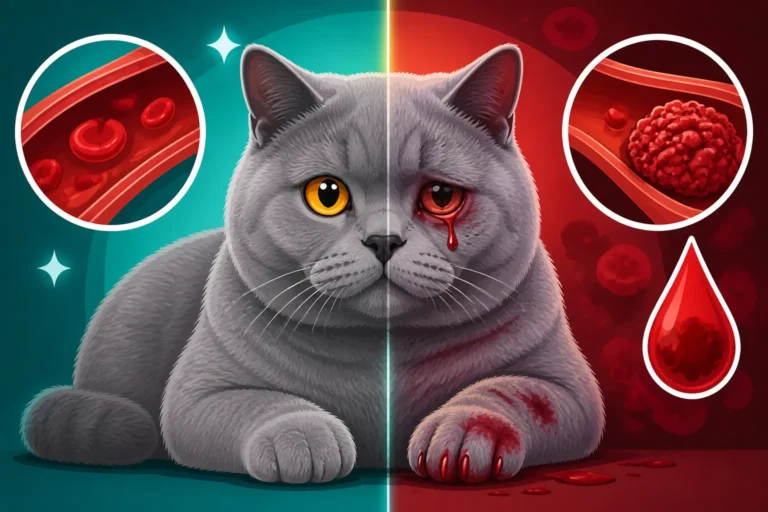
Hemophilia B in British Shorthairs is a genetic bleeding disorder caused by Factor IX deficiency that impairs blood coagulation.
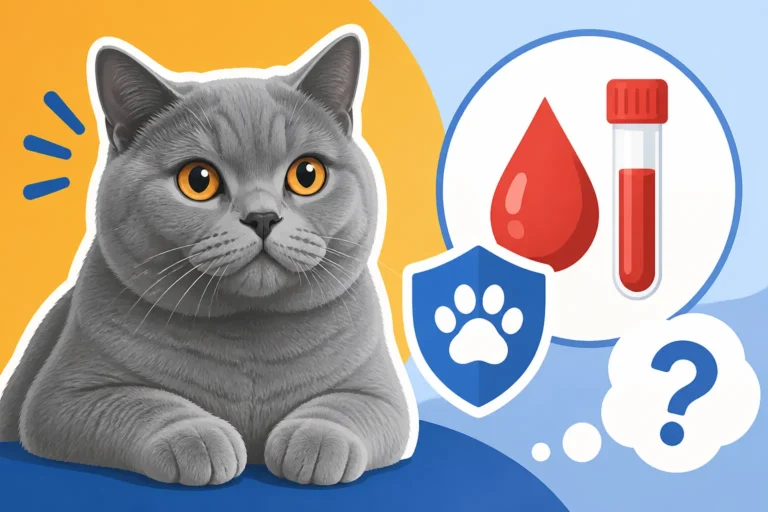
British Shorthair blood typing prevents fatal transfusion reactions and neonatal isoerythrolysis in Type A and Type B breeding programs.
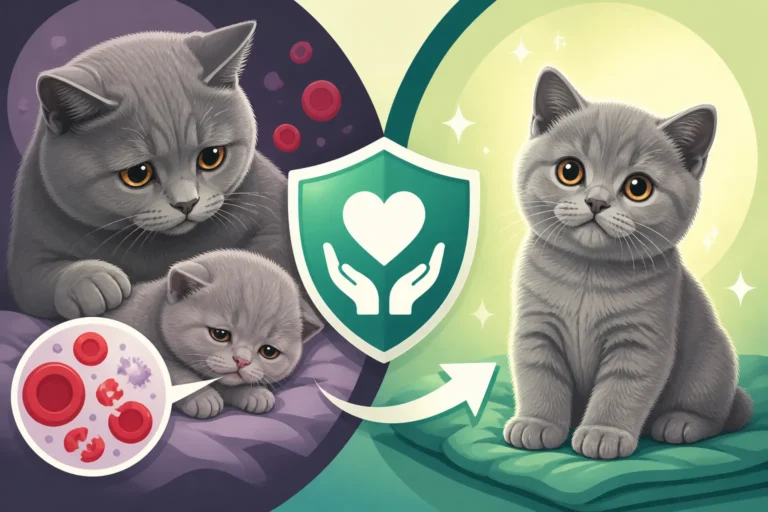
Neonatal isoerythrolysis causes hemolytic anemia in British Shorthair kittens consuming incompatible colostrum from Type B queens.
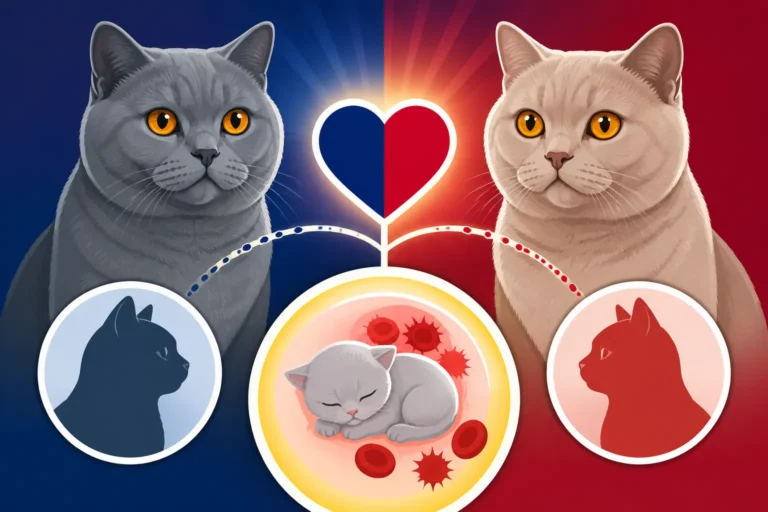
British Shorthair breeding pairings between Type B queens and Type A toms cause fatal neonatal isoerythrolysis in kittens.