How Much a British Shorthair Uses a Window Perch
Many British Shorthair owners invest in window perches, hoping their calm, curious cats will spend hours enjoying the view, only to find them largely ignored. It's a common frustration, wondering if your plush companion is just too laid-back for such elevated adventures. This guide will explore exactly how much a British Shorthair typically uses a window perch, diving into the reasons behind their habits and offering practical tips to ensure your feline friend makes the most of this delightful enrichment opportunity.
The British Shorthair's Unique Relationship with Elevated Spaces
When we picture a cat, we often imagine a sleek, agile creature effortlessly leaping to the highest shelf or balancing precariously on a narrow ledge. British Shorthairs, however, defy many of these stereotypical feline images. Their robust, "cobby" build and generally placid demeanor mean their relationship with vertical spaces is a little different, and it's essential to understand this before setting up a window perch.
Understanding Their Natural Inclinations
Unlike some of their more athletic cousins, British Shorthairs aren't typically known for being champion climbers or daring aerialists. Their strong, compact bodies are built for stability and comfort on solid ground, not for scaling curtains or vaulting onto the top of a refrigerator. This isn't to say they can't jump or climb; they certainly can when motivated. However, their preference leans towards secure, broad surfaces where they can relax without feeling off-balance. A rickety, narrow window perch might be a source of anxiety rather than enjoyment for them, and you might find them peering up at it with a look that says, "You expect me to go up there?" They want to feel completely safe and supported, especially given Why a British Shorthair Looks Heavier Than It Is than they actually are, making them appear more imposing.
The Allure of the Window World
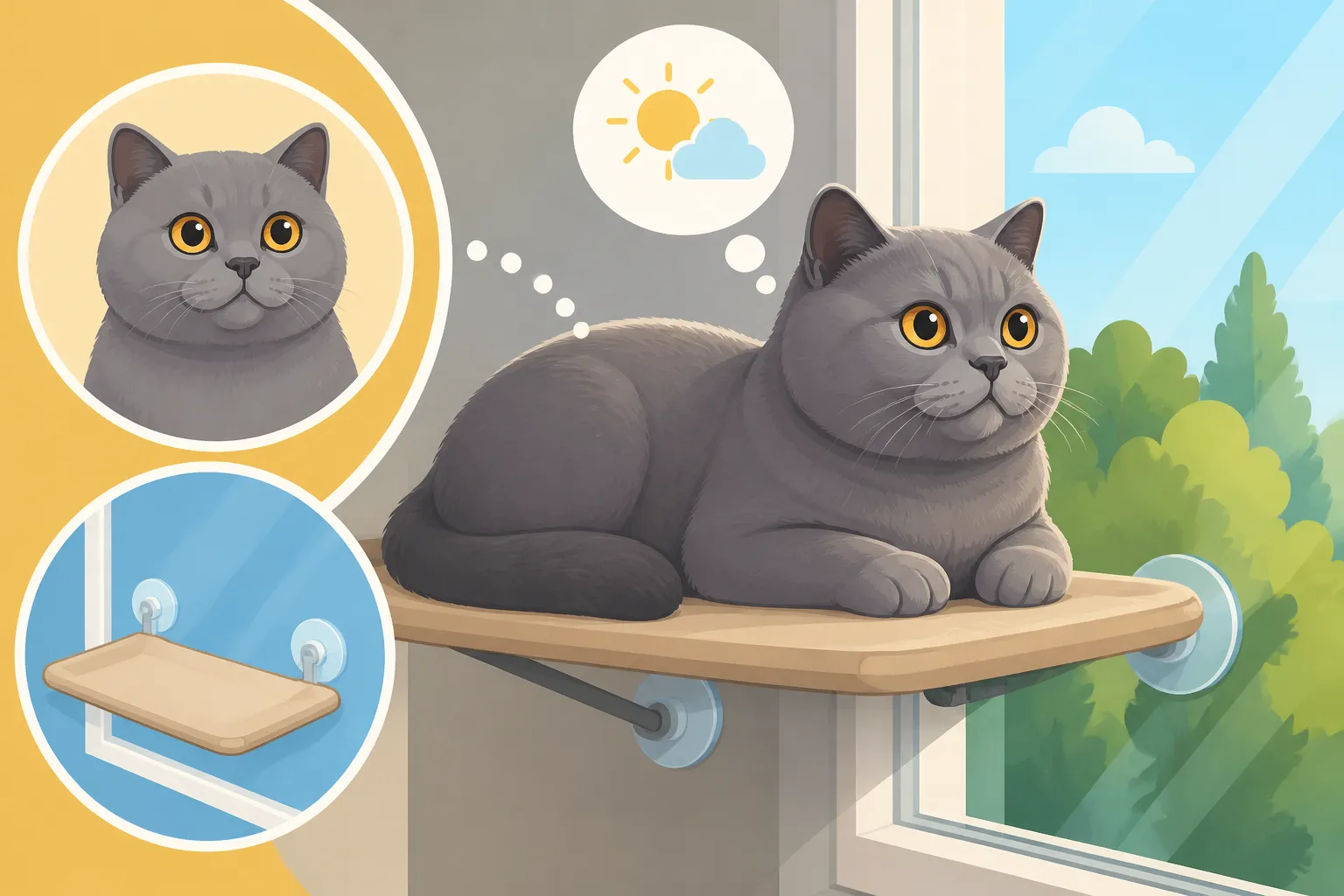
Despite their grounded nature, British Shorthairs are still undeniably cats, and like all felines, they possess an innate fascination with the outside world. Think of it as their personal cinema, a constant stream of "cat TV" that provides invaluable mental stimulation. The rustle of leaves, the chirping of birds, the distant sound of traffic, or even the slow drift of a cloud across the sky—these seemingly mundane events are a source of endless entertainment and intrigue for an indoor cat. A well-placed window perch offers a front-row seat to this captivating world, allowing them to observe safely, mentally "hunt," and engage with their environment. It transforms a simple window into a dynamic, ever-changing landscape that can alleviate boredom and satisfy their natural curiosity.
Comfort as a Priority
For a British Shorthair, comfort isn't just a bonus; it's a fundamental requirement for any chosen resting or viewing spot. These are substantial cats, with broad chests and full bodies, and they need space to sprawl, stretch, and truly unwind. A small, cramped perch designed for a svelte, petite breed simply won't do. Imagine trying to comfortably nap on a stool—that's how a British Shorthair might feel on an undersized perch. They desire a wide, stable surface that can accommodate their entire body, allowing them to shift positions, perhaps curl up into a perfect round ball, or stretch out fully for a sunbath. If the perch isn't spacious and inviting, it's far more likely to remain pristine and unused, becoming more of a decorative dust-collector than a beloved feline amenity.
Factors Influencing British Shorthair Window Perch Usage
While the general characteristics of the British Shorthair breed provide a good baseline, individual preferences and environmental factors play a huge role in how much your specific cat will actually use a window perch. It's not a one-size-fits-all situation, and what works for one British Shorthair might be completely ignored by another.
Individual Personality and Temperament
Just like people, every British Shorthair possesses a unique personality, and this heavily dictates their interaction with things like window perches. Some British Shorthairs are naturally more curious, active, and exploratory. They might be the ones constantly peering out windows from the back of the sofa, tracking every bird or person walking by. For these more inquisitive cats, a window perch is a natural extension of their existing habits and will likely be adopted quickly and enthusiastically. On the other hand, some British Shorthairs are true homebodies, perfectly content to spend their days lounging in a favorite Whether a British Shorthair Prefers a Floor Bed or snuggled next to you. These more placid individuals might view a window perch as unnecessary effort, preferring to observe the world from a more grounded, familiar spot. There's no right or wrong personality; it's simply a matter of knowing your own cat and understanding their natural inclination. Some cats are simply more prone to their What a British Shorthair Does All Day being a nap on the armchair.
The Quality and Location of the Perch
This is perhaps the most critical factor in determining whether your British Shorthair will become a perch enthusiast or a perch snob. A flimsy, wobbly perch that shifts under their weight is an immediate deterrent. Remember, stability is paramount for these sturdy cats. If a perch feels insecure, they simply won't trust it. Beyond stability, the view itself is the main draw. A window overlooking a bustling garden with birds, squirrels, and passing pedestrians is far more appealing than one facing a blank wall or a quiet, uninteresting alley. Consider sun exposure too; a perch that catches a warm ray of sunshine for part of the day can be irresistible, transforming it into a luxurious sunbathing platform. A high-quality, securely mounted perch in a prime viewing location is almost guaranteed to see more action than a cheap, unstable one with a boring view.
Competition and Alternatives
Cats are masters of resource allocation, and they will always gravitate towards the most comfortable, secure, and stimulating spots available in your home. If you have several appealing window-side options, such as a cozy armchair, a multi-level cat tree with a prime viewing platform, or even just a warm blanket on the floor by a sunny window, your British Shorthair might distribute their lounging time among these various spots. They're not necessarily rejecting the window perch, but simply exercising their preference for variety and choosing what feels best at a given moment. Don't expect them to exclusively use the perch if other appealing alternatives exist. For example, if you already have a robust cat tree that provides a good view, your British Shorthair might prefer the cat tree (Whether a British Shorthair Uses a Cat Tree at All) over a separate window perch, especially if the cat tree offers additional scratching or sleeping areas.
Choosing the Right Window Perch for Your British Shorthair
Selecting the perfect window perch for a British Shorthair isn't just about aesthetics; it's about engineering and understanding the unique needs of this wonderful, chunky breed. A perch that's ideal for a slender, athletic cat might be a complete flop for your British Shorthair.
Prioritizing Stability and Size
When it comes to a British Shorthair, "sturdy" and "spacious" are your watchwords. These cats are not delicate creatures; a typical adult male British Shorthair can easily weigh How Much a Male British Shorthair Weighs, with some being even larger. This means any perch needs to be able to comfortably support their weight without bowing, swaying, or giving the slightest hint of instability.
Forget suction cup perches unless they specifically boast an extremely high weight capacity and feature very large, strong, and reliable suction cups that you can clean and re-apply religiously. Even then, many experienced British Shorthair owners opt for more secure solutions. Wall-mounted shelves that are screwed directly into wall studs or window frame-mounted perches that use robust hardware are often the best choices. These offer unparalleled stability, giving your cat the confidence they need to truly relax.
Beyond stability, consider the actual size of the platform. Your British Shorthair needs ample room to stretch out fully, turn around, and shift positions comfortably. A narrow ledge might be fine for a brief sit, but for extended naps and serious bird-watching sessions, they need space. Look for platforms that are at least 15-20 inches deep and wide, giving them a real estate they can claim. You can find a good range of options that cater to larger breeds on marketplaces like Amazon, but always, always check the listed weight limits and read reviews from owners of larger cats.
Material and Comfort Considerations
Once you've ensured stability and size, focus on comfort. British Shorthairs love soft, cozy spots, and a cold, hard surface will do little to entice them, no matter how great the view. Look for perches that come with a thick, plush cushion, faux fur covering, or a soft fabric bed. Fleece is often a popular choice for its warmth and comfort.
Durability and ease of cleaning are also crucial. Your British Shorthair's dense coat means shedding, so a washable cover or a material that can be easily vacuumed is a huge plus. Some perches come with removable covers that can be tossed into the washing machine, which is a lifesaver for keeping the perch fresh and inviting. A comfortable perch isn't just about softness; it's about creating a truly inviting sanctuary that feels luxurious.
Access and Safety
Even the most perfect perch is useless if your British Shorthair can't safely and easily get onto it. Due to their cobby build and sometimes less-than-athletic nature, a direct jump to a high perch might be challenging, especially for older cats or those who are Signs a British Shorthair Is Overweight. Consider placing the perch at a height that's easily accessible from a nearby piece of furniture, like a sturdy bookcase, a side table, or a lower-level cat tree. You could even provide a ramp or a set of stable steps if the perch is particularly high and your cat struggles with jumps.
Safety also extends to the surrounding environment. Ensure there are no dangling blind cords or curtain ties that could pose a strangulation hazard. Check for any sharp edges on the perch itself or the window frame. Make sure the window is secure and won't unexpectedly open if your cat leans against it. The goal is to create a safe, inviting, and effortlessly accessible high-up haven where your British Shorthair can enjoy their elevated view without any worries.
Encouraging Your British Shorthair to Embrace the Perch
It's entirely possible to invest in the perfect, sturdy, comfortable window perch and still find your British Shorthair giving it the cold shoulder. Don't despair! Cats, especially the discerning British Shorthair, often need a little encouragement and time to accept new additions to their territory.
Scent and Familiarity
Cats are incredibly scent-driven creatures, and a new item in their environment can initially be viewed with suspicion. To make the window perch more appealing, try transferring familiar scents onto it. Place one of their favorite blankets, a well-used bed, or even an old t-shirt of yours on the perch. This immediately imbues the new object with comforting, known smells, making it less intimidating and more inviting. Another trick is to use catnip. A sprinkle of high-quality catnip directly on the perch can pique their curiosity and encourage them to investigate. Some cats respond better to catnip spray, which you can apply to the fabric. Just remember to use catnip sparingly at first to gauge their reaction. It's all about making the perch feel like an extension of their safe, familiar home.
Positive Reinforcement and Treats
Cats learn through association, and positive reinforcement is a powerful tool. Whenever your British Shorthair shows even the slightest interest in the perch—sniffing it, touching it, or even just looking in its direction—offer immediate praise and a small, high-value treat. If they dare to hop on, make it a party! Gently pet them, use a soft, encouraging voice, and give them a treat or two. This creates a strong positive association: "Going on the perch means good things happen!"
You can also use interactive play to gently guide them. A wand toy can be incredibly effective. Dangle the toy just above the perch, enticing them to jump up and bat at it. Once they're on, let them "catch" the toy and give them praise. This turns the act of getting onto the perch into a fun, rewarding game. Which Toys a British Shorthair Will Actually Chase often involve a slow, deliberate movement, which is perfect for luring them without demanding too much exertion. Brands like PetFusion often offer interactive toys that are perfect for this gentle coaxing.
Patience is Key
One of the biggest lessons in owning a British Shorthair is patience. These cats operate on their own timeline, and that includes adopting new furniture. Don't be discouraged if your new window perch isn't an instant hit. Many cats need time—sometimes days, sometimes weeks—to fully investigate, assess, and decide that a new item is worthy of their magnificent presence.
Leave the perch alone, continue with gentle encouragement if they seem receptive, and let them discover it on their own terms. One day, you might just walk into the room to find your British Shorthair perfectly content and deeply asleep on their new elevated lookout, as if it had always been there. It's a testament to their calm, observant nature; they simply need to be sure before committing to a new favorite spot. The key is never to force them, as negative experiences can create long-lasting aversion.
Perch Options for Your British Shorthair
To help you visualize the different types of window perches and their suitability for a British Shorthair, here's a comparison table:
| Perch Type | Description | Pros | Cons | Ideal British Shorthair User |
|---|---|---|---|---|
| Suction Cup Perch | Attaches directly to the window glass with large suction cups. | Easy to install/remove, offers maximum window view, space-saving. | Must have very strong, large suction cups; prone to failure if not clean; limited weight capacity for heavy cats. | Lighter, more agile BSH; only with high-quality, reputable brands (e.g., K&H, Amazon Basics options) and clean windows. |
| Wall-Mounted Shelf | Screws securely into the wall below the window. | Extremely sturdy, high weight capacity, very durable, customizable. | Requires drilling into walls; permanent fixture; less flexible in relocation. | All British Shorthairs, especially heavier ones; owners seeking ultimate stability and longevity. |
| Over-the-Radiator Perch | Hooks over a radiator, often with a fabric bed. | Warm and cozy, provides a good view if radiator is under window. | Only works with radiators directly under windows; can block heat; typically less secure than wall-mounted. | Cats who love warmth; those in colder climates; if radiator is stable and perch is wide. |
| Cat Tree with Platform | A multi-level cat tree with a platform positioned near a window. | Combines climbing, scratching, and viewing; very stable base; multi-functional. | Takes up floor space; may not be flush with window for optimal view; can be bulky. | Any British Shorthair; households with multiple cats; provides additional enrichment. |
| Window Sill Extender | A wider platform that attaches to or extends an existing windowsill. | Utilizes existing sill; usually very sturdy if properly installed; custom-fit feel. | Requires existing sill; installation can vary in complexity; may still need additional padding for comfort. | British Shorthairs with wide, deep sills; owners wanting a less intrusive option than a full shelf. |
Remember that for any option, especially those found on a site like Amazon, checking user reviews for feedback from other large cat owners is highly recommended to ensure it truly meets the robust needs of a British Shorthair.
Disclaimer
This article is for general informational purposes only and does not constitute professional advice. Laws, prices and regulations vary by location and change over time. Consult a qualified professional for guidance on your specific situation.