How a British Shorthair Reacts to a Laser
Many British Shorthair owners find themselves scratching their heads, wondering if their typically calm and composed felines will ever truly engage with a fast-moving laser pointer. It's a common frustration to invest in a fun-looking cat toy, only for your British Shorthair to give it a brief, unenthusiastic stare before resuming their nap. This guide will dive deep into how these delightful cats typically react to laser pointers, explain the nuances behind their unique play style, and arm you with strategies to make playtime both stimulating and satisfying for your beloved furry companion.
The Typical British Shorthair Reaction to Laser Pointers
When you first flick on that little red dot, it's a moment of truth for many British Shorthair owners. Will your usually placid cat suddenly transform into a sleek, silent hunter, or will they simply blink at you with their signature stoic expression? The reality often lies somewhere in between, heavily influenced by their innate temperament and the specific dynamics of laser play.
Initial Curiosity and Pouncing Instincts
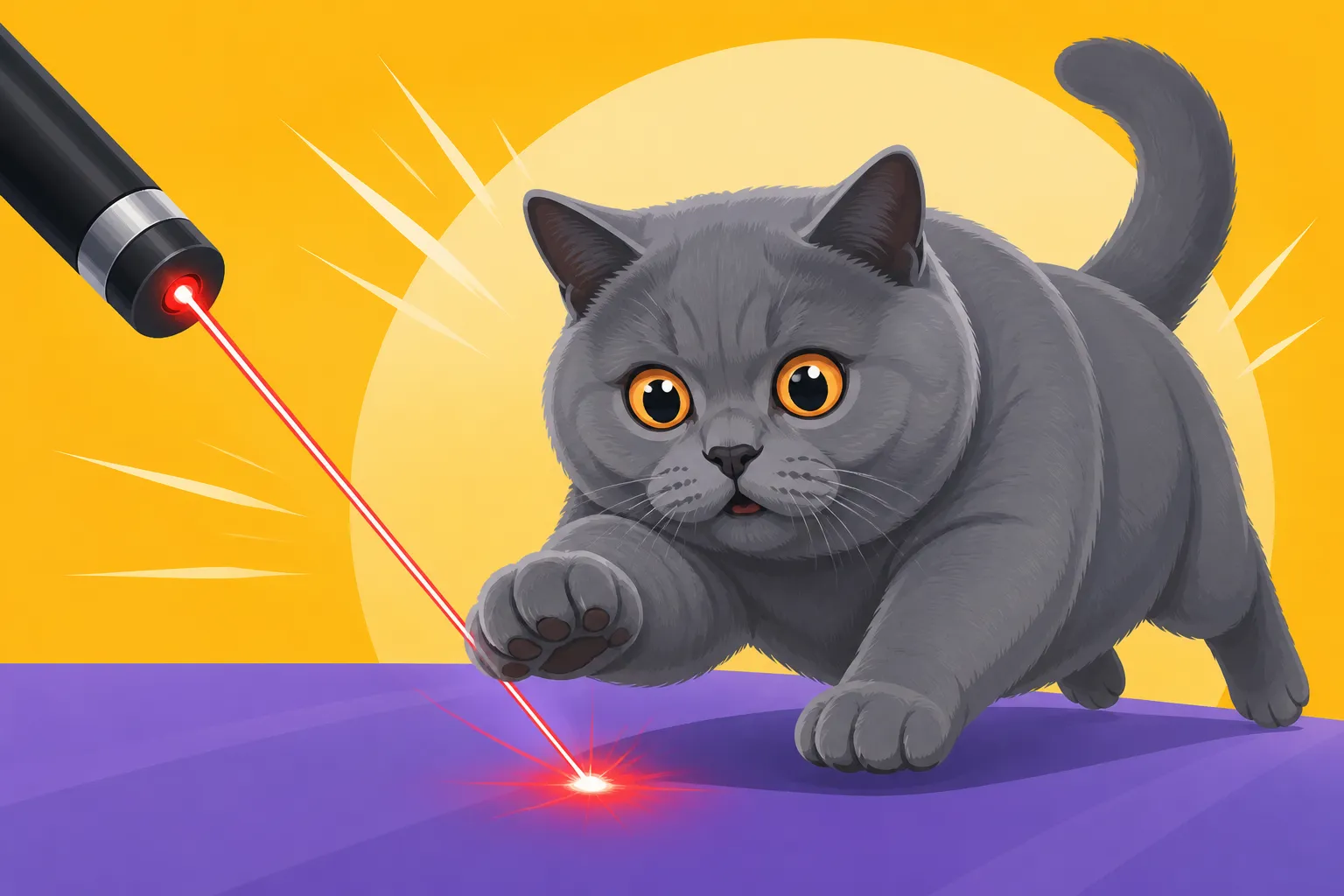
It’s rare for a British Shorthair to ignore a laser pointer entirely. Even the most laid-back of them possess a fundamental prey drive, and a small, darting red dot triggers that instinct on some level. You’ll likely observe an initial flicker of interest: eyes tracking, ears swiveling, and maybe even a slow, deliberate head tilt as they try to ascertain what this mysterious moving light is.
Once they've "locked on," you might see the classic cat hunting posture: a low crouch, tail twitching ever so slightly, and pupils dilating to maximize light absorption. They might perform a slow, measured stalk, creeping forward with immense focus. Then, with surprising speed for such a solid cat, they'll launch into a pounce. It's often less frantic than, say, an Oriental Shorthair, but it’s a pounce nonetheless. My own British Shorthair, Bartholomew, will watch the dot for a solid minute, looking like he's deep in thought, before executing a single, powerful swat at where the dot was. It's a calculated effort, not a wild, energy-sapping chase. This measured approach is quite typical; they conserve energy, making each movement count, which is a hallmark of their generally calm demeanor.
The Lack of a Satisfying Catch
Herein lies the rub for laser pointers with any cat, and it's particularly pronounced with the British Shorthair's practical nature. The fundamental problem is that a laser pointer provides no tangible reward. A cat's hunting sequence involves stalking, chasing, pouncing, and then, crucially, capturing and often delivering a "kill bite" to its prey. This final step is immensely satisfying for them, releasing pent-up hunting energy and providing a sense of accomplishment.
With a laser pointer, that final, critical step is always missing. The red dot vanishes when caught, leaving the cat with nothing but empty paws and a lingering sense of frustration. Imagine working hard for something, only for it to disappear right as you grasp it. Over time, this can lead to several undesirable outcomes. Some British Shorthairs might become overly frustrated or anxious, pacing and looking for the "prey" long after the laser is off. Others, particularly those with a more discerning or less obsessive prey drive like many British Shorthairs, might simply lose interest. They might look at you as if to say, "What's the point of this silly game when I never get to catch it?" This isn't laziness; it's a logical conclusion for a creature whose instincts demand a concrete outcome.
Why British Shorthairs React the Way They Do
Understanding the British Shorthair's reaction to laser pointers means understanding the breed itself. Their distinct personality traits and physical characteristics play a significant role in how they perceive and engage with playtime.
Their Calm and Collected Nature
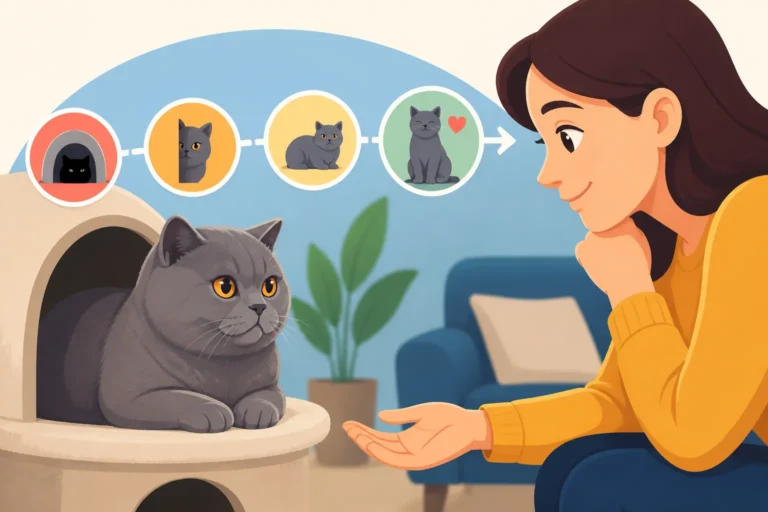
British Shorthairs are renowned for their mellow, easygoing temperament. They are the quintessential "gentle giants" of the cat world, preferring a quiet, predictable home life over constant hustle and bustle. While they certainly enjoy interaction and affection, it's often on their own terms, and usually involves being near you rather than directly on your lap for hours. This inherent calmness directly impacts their play style.
They aren't typically the type of cat that will endlessly zoom around the house or demand constant, high-intensity play sessions. How Active a British Shorthair Is Instead, their play tends to be more deliberate and less frenetic. A laser pointer's rapid, erratic movements might initially pique their curiosity, but it rarely ignites the kind of sustained, high-energy chase you might see in more boisterous breeds. They might participate for a few minutes, executing a few powerful pounces, and then decide they've had enough, retreating to a comfy sunbeam for a nap. This isn't disinterest; it's simply their natural inclination to conserve energy and engage in a more measured way. They appreciate mental stimulation, but intense physical exertion for prolonged periods isn't usually their primary mode of operation.
The Importance of a Tangible Reward
Cats, fundamentally, are predators. Their brains are hardwired for the hunting sequence, which, as we discussed, culminates in a successful capture. This isn't just about food; it's about fulfilling a deep-seated instinct. The act of feeling their claws sink into a toy, or gripping it with their teeth, provides a crucial psychological and physical release. It affirms their hunting prowess and provides a sense of achievement.
For a British Shorthair, whose play drive might already be less intense than some other breeds, the absence of this tangible reward can be particularly deflating. If the game doesn't end with a "win," they quickly learn that it's an unfulfilling endeavor. They might continue to bat at the dot out of pure instinct, but the true satisfaction of the hunt eludes them. This can lead to what cat behaviorists call "frustration aggression," where the cat, unable to complete its hunting sequence, might redirect its pent-up energy towards other objects, or even become generally more agitated. It's why many British Shorthair owners might observe their cat getting bored with the laser quickly, or simply walking away mid-game; their discerning nature tells them that this particular form of play isn't delivering the goods.
Making Laser Play More Enjoyable and Less Frustrating
While laser pointers have their drawbacks, they don't have to be entirely off-limits for your British Shorthair. With a few thoughtful adjustments, you can turn a potentially frustrating experience into a more engaging and satisfying one for your cat. The key is to understand how to complete the "hunt" in a way that truly rewards your British Shorthair's efforts.
Ending the Session with a Real Toy
This is perhaps the single most important rule when using a laser pointer with any cat, especially a British Shorthair. Never end a laser session with the dot simply vanishing into thin air. Instead, before you turn off the laser, direct the dot onto a physical toy that your British Shorthair can actually catch. This could be a soft mouse, a kicker toy, a crinkle ball, or even the feather end of a wand toy.
Guide the laser dot to "hide" under the toy, or "lead" your cat to pounce on the toy by shining the dot right next to it. Once your cat pounces and "captures" the real toy, immediately turn off the laser. Let them have their moment of triumph, batting at the toy, biting it, or bunny-kicking it. This crucial step completes their hunting cycle, providing the tangible reward and mental satisfaction that the laser alone cannot. It tells their primal brain, "Yes, I caught it! I am a successful hunter!" You can even offer a small, healthy treat afterward as an extra reward for their "successful hunt." This simple change can dramatically reduce frustration and keep your British Shorthair much more engaged in future play sessions. Play for a British Shorthair That Would Rather Not
Incorporating Variety and Moderation
While a laser pointer can be a fun, short burst of activity, it should never be the sole source of exercise or enrichment for your British Shorthair. Think of it as an appetizer, not the main course. British Shorthairs, despite their generally placid nature, still need a variety of mental and physical stimulation to stay healthy and happy. Relying too heavily on a laser pointer can lead to boredom, or worse, those feelings of frustration we've discussed.
Keep laser sessions short, perhaps 5-10 minutes at a time, and limit them to once or twice a day. Mix these sessions with other forms of interactive play. Wand toys, for example, are fantastic because they allow you to mimic prey movements while still offering a physical object for your cat to catch. Which Toys a British Shorthair Will Actually Chase You can find excellent, durable wand toys, often with interchangeable attachments, on platforms like Amazon. Puzzle feeders are another brilliant option, tapping into their foraging instincts and providing mental enrichment, especially if your British Shorthair is one who would rather not exert itself too much otherwise. Whether a Puzzle Feeder Motivates a British Shorthair Remember, a well-rounded play routine is key to keeping your British Shorthair engaged and preventing them from becoming overly sedentary, which is important given their propensity for weight gain. Getting a Low Energy British Shorthair to Move
Avoiding Problematic Laser Pointer Habits
Beyond ensuring a tangible "kill," there are other important considerations when using a laser pointer to ensure a safe and positive experience for your British Shorthair. These habits are good practice for all cat owners, but particularly relevant for a breed that values peace and predictability.
Firstly, never, ever shine the laser directly into your cat's eyes. This can cause permanent eye damage. Always keep the beam directed at the floor or a wall. Secondly, don't use the laser pointer to tease or punish your cat. It should be a tool for positive interaction and play, not a source of annoyance or fear. Using it to herd them or prevent them from going somewhere can create negative associations and damage your bond. Thirdly, be mindful of where the laser dot is moving. Avoid shining it into busy areas where your cat might bump into furniture or other pets. Keep play areas clear. Lastly, consider the quality of the laser pointer itself. While many inexpensive options are widely available, including on Amazon, some might have very powerful beams or inconsistent quality. Stick to those designed specifically for pets, which often have lower power output and are generally safer. Always supervise play, and if your British Shorthair shows signs of distress or extreme frustration, it's best to put the laser away and try a different type of toy.
Alternative and Complementary Play for British Shorthairs
Given their unique blend of calm demeanor and playful curiosity, British Shorthairs often thrive with a variety of play that balances their need for mental and physical activity with their preference for a more relaxed pace. Diversifying your play routine can significantly enhance their quality of life.
Wand Toys and Feather Teasers
These are often the unsung heroes of British Shorthair playtime. Unlike a laser, a wand toy or feather teaser provides a physical, tangible "prey" for your cat to stalk, chase, and ultimately, catch. You control the movement, mimicking the erratic flight of a bird or the darting movements of a mouse, making the game infinitely more satisfying for your cat's natural hunting instincts.
When your British Shorthair finally pounces and captures that feather or soft lure, they get the full, rewarding experience: the feel of the "prey" in their paws, the satisfying tug of war, and the chance to deliver those delightful bunny kicks. This completes their predatory sequence, releasing all that built-up hunting energy in a healthy way. Look for sturdy wand toys that can withstand a British Shorthair's powerful pounces and subsequent "kill" actions. Many brands offer durable options with interchangeable attachments, allowing you to vary the "prey" and keep things interesting. You can find a huge array of quality wand toys, from simple strings to elaborate feather attachments, on Amazon. My British Shorthair, Jasper, absolutely adores a wand with a long, iridescent streamer, which he proudly carries off after every successful "hunt."
Puzzle Feeders and Interactive Treat Toys
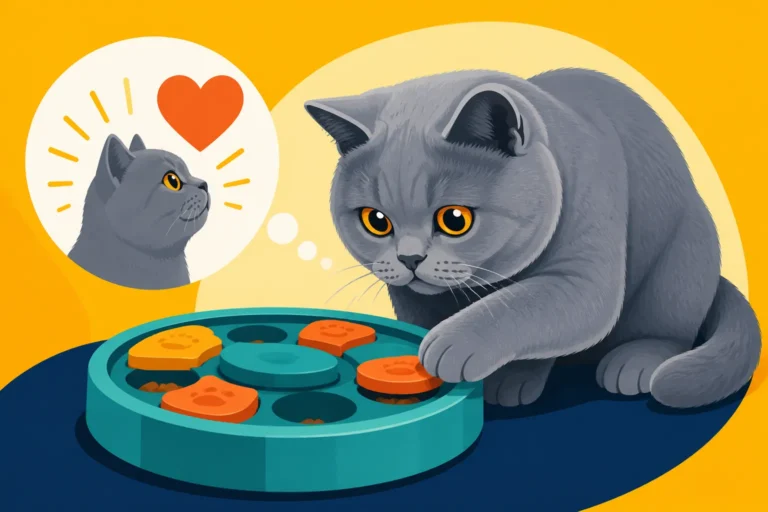
For a breed that can sometimes be less enthusiastic about vigorous exercise, puzzle feeders are a fantastic way to engage their minds and encourage gentle physical activity. These toys require your British Shorthair to use their problem-solving skills to extract treats or kibble, tapping into their natural foraging instincts. It's a "hunt" for food, which is just as satisfying as a hunt for a toy for many cats.
Puzzle feeders come in various designs, from simple balls with holes to more complex mazes and chambers. They not only provide mental stimulation but also help slow down eating, which can be particularly beneficial for British Shorthairs who might be a little too fond of their food and prone to packing on the pounds. This form of enrichment combats boredom and can prevent behaviors that stem from a lack of engagement. It’s a low-impact way to keep them active and thinking, and many British Shorthairs genuinely enjoy the challenge. These are also readily available from pet supply retailers, often with a wide selection found on Amazon.
Short, Frequent Play Sessions
Instead of trying to squeeze all your British Shorthair's activity into one long, grueling session, consider breaking up playtime into several shorter, more frequent bursts throughout the day. British Shorthairs often have short attention spans for intense play, preferring quick, engaging interactions followed by periods of rest. This approach aligns perfectly with their natural rhythm of napping, waking, and having a brief burst of energy before settling down again.
Aim for 2-3 sessions of 5-10 minutes each, perhaps in the morning before you head out, in the evening when you return, and maybe one more before bedtime. This keeps them stimulated without overwhelming them or leading to disinterest. It ensures they get enough mental and physical activity to stay healthy, helps manage their weight, and reinforces your bond through positive interaction. Remember, consistency is more important than intensity. Even a few minutes of focused, rewarding play each day can make a significant difference to their overall well-being and happiness. How Many Hours a Day a British Shorthair Sleeps
| Play Type | Engagement Level for BSH | Pros | Cons |
|---|---|---|---|
| Laser Pointer | Moderate to High | Easy to initiate, requires little effort from owner, covers large areas | No tangible reward, can cause frustration, limited physical exercise |
| Wand Toys | High | Provides tangible catch, fulfills hunting instinct, owner-interactive | Requires owner participation, may need various attachments |
| Puzzle Feeders | Moderate | Mental stimulation, slows eating, encourages foraging, independent play | Not all BSH are motivated by food puzzles, can be messy with wet food |
| Crinkle Balls/Mice | Low to Moderate | Independent play, satisfying texture/sound, easy to find | Can be ignored if BSH isn't in a playful mood, easily lost under furniture |
Disclaimer
This article is for general informational purposes only and does not constitute professional advice. Laws, prices and regulations vary by location and change over time. Consult a qualified professional for guidance on your specific situation.