Whether a DNA Test Confirms a British Shorthair
A DNA test can sound like an easy way to settle whether a cat is a British Shorthair, especially when a shelter history is unclear or a kitten looks strikingly like the breed. The important distinction is that ancestry estimates are not the same as pedigree proof. This guide explains what a cat DNA test can suggest, what it cannot confirm, and what evidence is more useful.
Can a DNA test confirm a British Shorthair?
An ancestry estimate is not pedigree certification
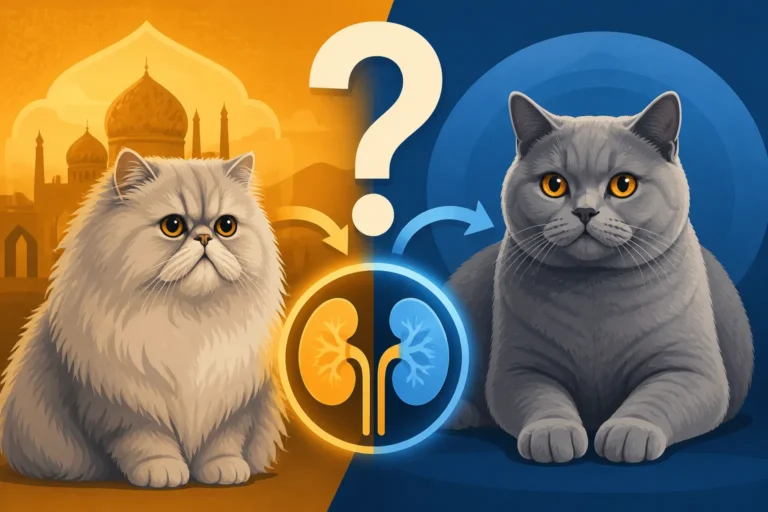
Most consumer cat DNA tests compare a cat’s genetic markers with reference data used by that particular testing company. The result may suggest that the cat shares ancestry with certain populations or breeds. It does not, by itself, prove that the cat is a registered, purebred British Shorthair.
A pedigree is a documented family history. It connects a cat to identified parents and earlier generations, usually with records maintained by a recognized registry or breeder organization. A DNA report is not a substitute for those records, even if its breed estimate sounds precise.
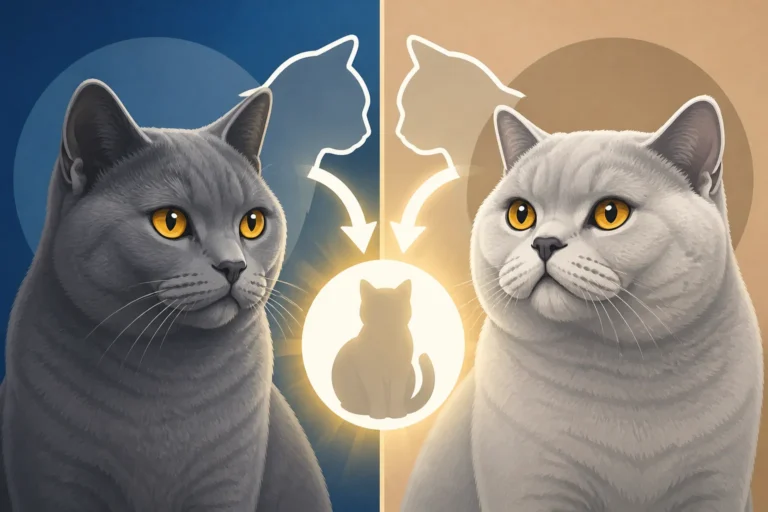
This distinction matters because cats can resemble a breed without having a documented pedigree. A round face, dense coat, sturdy body, and copper-colored eyes may make a cat look very much like a British Shorthair, but physical resemblance does not establish ancestry. For a broader look at how appearance and background can differ, see Whether a British Shorthair Mix Keeps the Look.
Why test results can differ
A breed estimate depends on the comparison data and methods used by the company that processes the sample. If one company has more detailed reference samples for a particular population than another, its report may describe the same cat differently. Results can also be less clear when a cat’s ancestry includes several populations or is not well represented in a company’s database.
That is why a report’s percentages should be read as an estimate, not as a certified family tree. A result that assigns a high share of a cat’s ancestry to a particular group still does not show that the cat’s parents were registered British Shorthairs. Nor does it prove that the cat meets a registry’s breed standard.
If you are comparing test-related information while browsing pet retailers such as Chewy, look closely at what the test claims to establish. An ancestry estimate and a health-screening result answer different questions, and neither automatically serves as pedigree documentation.
What a DNA report can reasonably tell you
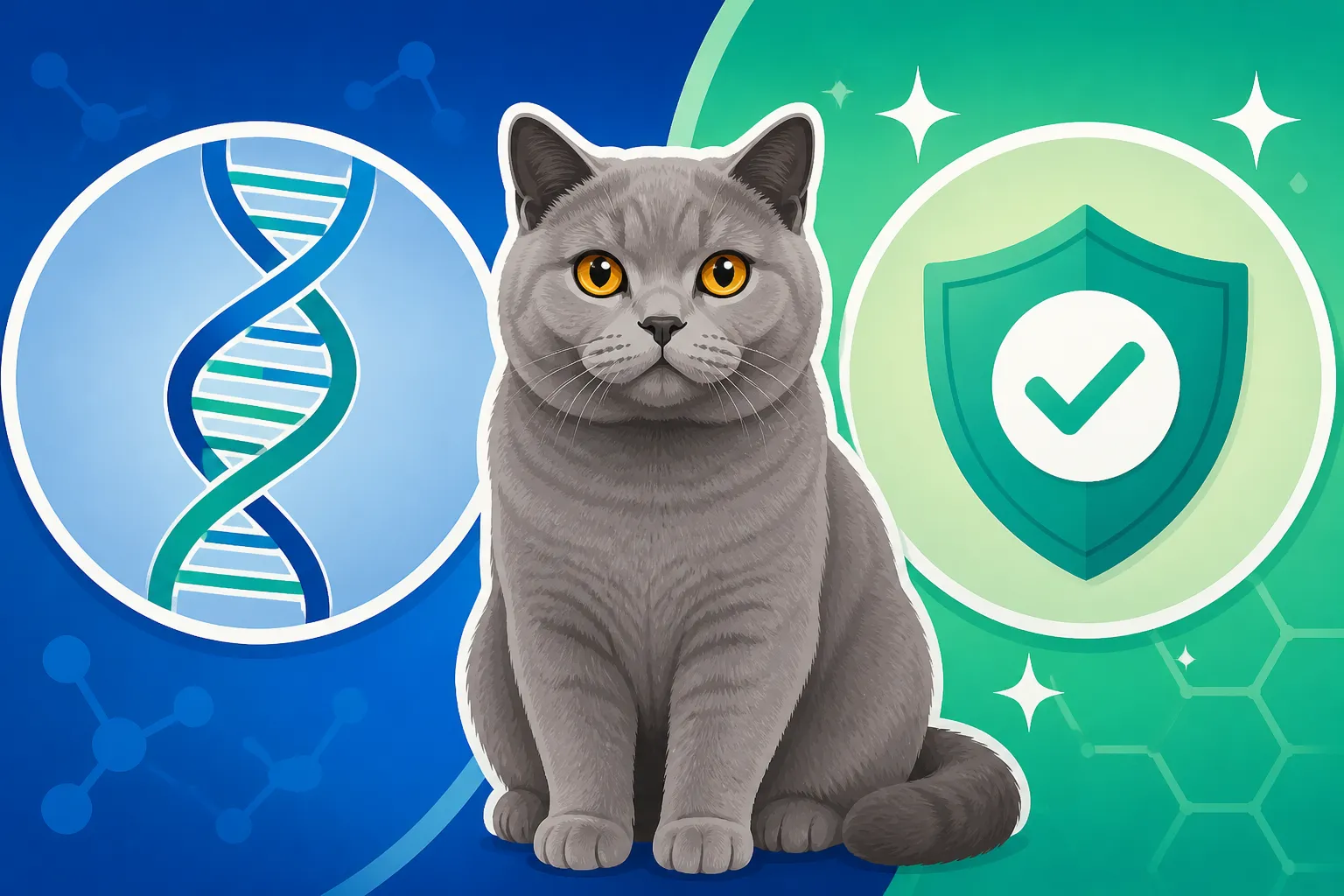
Depending on the test and its reference data, a report may offer clues about broad ancestry or inherited traits. Some tests also screen for selected genetic variants associated with health conditions. Those are separate kinds of results: an ancestry section concerns genetic similarity, while a health section looks for particular variants included in that test.
Neither result should be treated as a complete description of the cat. A health screen does not prove breed, and an ancestry estimate does not establish that a cat is free of inherited disease. If a health concern is the reason you are considering testing, ask a veterinarian which test is appropriate and how its result should be interpreted.
What evidence is more useful than a DNA test?
Pedigree and registry records
If you need to know whether a cat is a registered British Shorthair, the most useful evidence is documentation that can be traced to the breeder and relevant registry. Ask for the cat’s registration information, pedigree, and identifying details, and check that the documents refer to the same cat. When possible, contact the registry or breeder organization named in the paperwork to understand how its records work.
A certificate with an attractive design is not automatically proof of registration. Check the issuing organization, the recorded parentage, and whether the document is a formal pedigree or simply a breeder’s description. If you are purchasing a kitten, these questions are best asked before paying a deposit.
Breed standards and registry rules can differ. A cat may be described as a British Shorthair in everyday conversation while its paperwork uses a different classification, or it may not be registered at all. For context, Which Registry Standard a British Shorthair Is Judged Against explains why it is useful to know which organization’s rules are being discussed.
Parentage documentation and breeder transparency
A responsible breeder should be able to explain the kitten’s parentage and provide records that support the claimed breed. Ask to see the mother, where practical, and ask for the father’s details and documentation. A breeder who answers questions clearly is more reassuring than one who relies only on photos, a verbal promise, or a DNA estimate.
A DNA parentage test, when arranged for a specific purpose, can help assess whether an offspring is genetically consistent with named parent cats. But that is different from a test that identifies a cat as a purebred British Shorthair. Parentage verification can support a documented pedigree; it does not independently create one.
If a seller uses words such as “purebred,” “registered,” or “pedigreed,” ask what each claim means and request the related records. You can also read Which Questions to Ask a British Shorthair Breeder for a practical list of questions to bring to the conversation.
Appearance is a clue, not a verdict
British Shorthairs are known for a stocky build, broad head, rounded cheeks, and plush coat, but individual cats vary. Age, nutrition, grooming, health, and mixed ancestry can all affect how a cat looks. Kittens in particular may not yet have the adult proportions people associate with the breed.
Appearance can also lead to mistaken identity. Several cats may have a round face or dense coat without being British Shorthairs, and a British Shorthair mix may retain some recognizable features. Breed comparison can help explain the confusion: How a British Shorthair Differs From an American Shorthair and How a British Shorthair Differs From an Exotic Shorthair discuss similarities that can make visual identification tricky.
| Evidence | What it can help establish | What it cannot establish by itself |
|---|---|---|
| Consumer ancestry DNA test | An estimate of genetic similarity to the test’s reference groups | Formal pedigree or registry status |
| Pedigree and registry records | Documented ancestry and, where applicable, registration | A guarantee of health or temperament |
| Parentage testing | Whether a cat is genetically consistent with named parents | Breed status without supporting pedigree records |
| Appearance and breed traits | Whether a cat resembles the breed | Confirmed ancestry or registration |
| Veterinary health testing | Information about selected health risks or conditions | Whether a cat is a British Shorthair |
How to evaluate a British Shorthair DNA test
Read the test’s stated purpose
Before ordering a test, look for a clear explanation of what it measures. Does it provide ancestry estimates, screen for specified health variants, check parentage, or offer some combination? Those purposes are not interchangeable. A product described broadly as a “cat DNA test” may focus on only one of them.
Pay attention to the limitations, too. Find out whether the company explains its reference data, how it handles uncertain results, and whether it provides access to a qualified professional for interpreting health findings. If the marketing promises to “prove” a cat’s breed without explaining how that claim is supported, treat that wording cautiously.
When comparing information on platforms and retailers such as Chewy, use the test maker’s own description to confirm what a kit is designed to do. A retailer’s product listing can help you identify a product, but the test provider’s methodology and documentation are what matter when interpreting the result.
Keep health testing separate from breed identification
A cat can be a British Shorthair without carrying a particular tested variant, and a cat of mixed ancestry may carry one. Health tests look for specific genetic changes; they do not assess every possible disease or predict an individual cat’s entire future health.
For example, a negative result means only that the test did not find the variant it was designed to detect, subject to the test’s stated limitations. It does not mean the cat is generally “genetically healthy.” A positive finding also needs context: the effect can depend on the condition, the variant, the cat’s other genes, and the clinical picture.
If the goal is to understand risk rather than breed, take the report to your veterinarian. The vet can explain whether the result has practical implications and whether additional checks are appropriate. For a related discussion of why mixed-breed identity and ancestry can be complicated, see Whether a Shelter Cat Can Be a British Shorthair.
Be cautious with percentages and breed labels
A report may show percentages or use labels that look definitive. Those numbers can be easy to overread, particularly when a cat has the classic British Shorthair appearance. But the percentage is an interpretation based on the company’s comparison set, not a measurement of how “pure” a cat is.
Different companies may group populations differently or use different names for similar genetic backgrounds. A result from one provider may therefore not match another provider’s language. That does not necessarily mean one test is fraudulent; it can reflect differences in methods and available reference data.
For a second opinion, ask the company what the estimate means and what evidence supports the breed label. If the answer is vague, do not use the result as proof in a sale, adoption dispute, breeding decision, or registration application. For registry-specific definitions, Whether GCCF and CFA British Shorthair Standards Differ offers useful context.
What to do if your cat looks like a British Shorthair
If you adopted the cat
If your cat came from a shelter or rescue, it is perfectly reasonable to describe the cat as British Shorthair-looking or as a possible mix when the background is unknown. That wording acknowledges the resemblance without claiming a pedigree you cannot verify. A DNA estimate may be interesting, but it is not necessary to love or care for the cat well.
Focus first on the information that affects daily care: age estimate, vaccination and medical history, current diet, body condition, and any symptoms that need attention. If a DNA test includes health screening, discuss relevant findings with a veterinarian rather than making treatment decisions from an online report alone.
Shelters often have incomplete histories, and a cat’s appearance may be the only clue available. That uncertainty is common and does not diminish the cat’s value. You can read Whether a Shelter Cat Can Be a British Shorthair for more on why shelter cats are difficult to classify with certainty.
If you are buying a kitten
Before choosing a kitten, ask the breeder for the pedigree and registration details, health information for the parents, and a written agreement describing what is being sold. Ask whether “British Shorthair” refers to documented parentage and registration or is being used as a visual description. A DNA ancestry result should not replace the records you would expect for a registered pedigree kitten.
Be especially careful if a seller presents a DNA test as the only proof of breed or pressures you to decide quickly. Request time to review documents and verify the organization listed on them. If the seller cannot provide a pedigree, that does not automatically mean the kitten is unhealthy or unlovable, but it does mean you should not assume registered purebred status.
An informed purchase is about more than a breed label. Ask how the kittens are raised, what veterinary care they have received, and what support the breeder offers after they go home. For a deeper overview of documentation and health questions, see What a British Shorthair Breeder Should Have Tested.
If you need an official breed designation
Contact the registry or organization that would be responsible for the designation and ask what evidence it accepts. Requirements may involve registered parentage, approved documentation, or other rules specific to that organization. Do not assume that a consumer DNA kit will satisfy those requirements unless the registry confirms that it does.
If the cat has no known pedigree, a test is unlikely to turn uncertain ancestry into official registration. You can still record the cat’s likely appearance or possible background in everyday settings, while avoiding claims that require proof. When accuracy matters, use the precise language that the records support.
A DNA test can be a curious extra piece of information, and selected genetic tests can contribute to health discussions. But for confirming a British Shorthair as a pedigree breed, the decisive evidence is documented lineage and applicable registry records—not a resemblance, a percentage, or a commercial ancestry label.
Disclaimer
This article is for general informational purposes only and does not constitute professional advice. Laws, prices and regulations vary by location and change over time. Consult a qualified professional for guidance on your specific situation.